
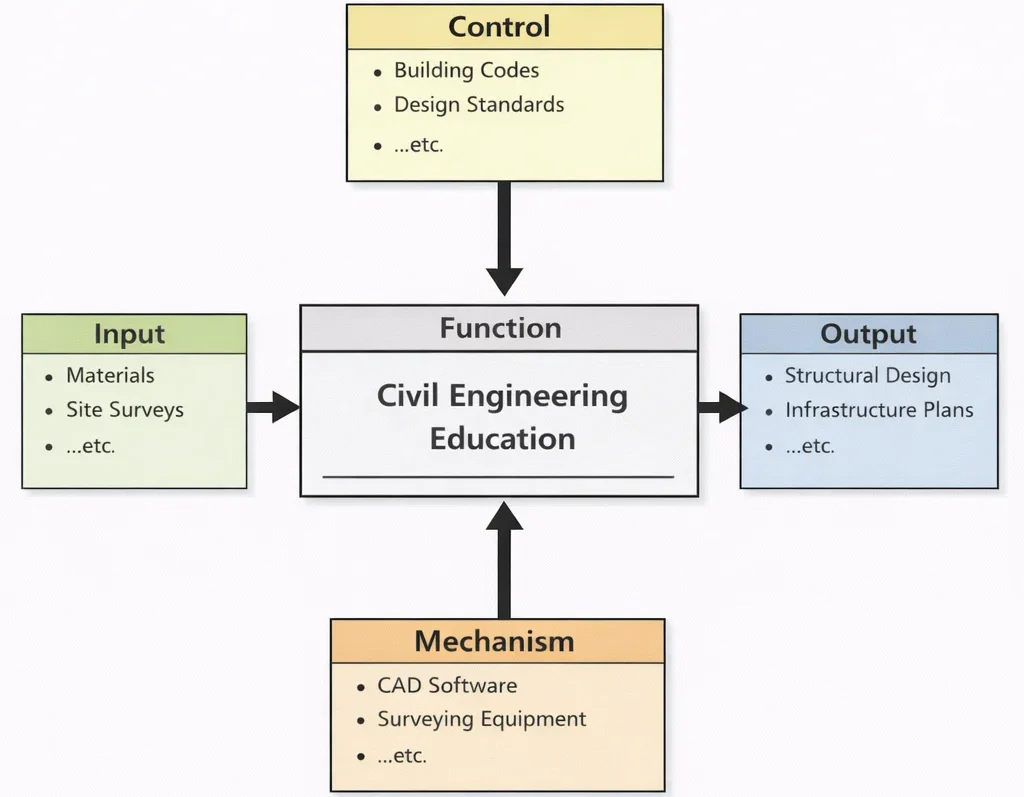
Civil Engineering forms the bedrock of the built environment, encompassing the design, construction, and maintenance of infrastructure that underpins daily life. From towering skyscrapers and sprawling highways to water treatment systems and resilient bridges, civil engineers translate vision into structure. This discipline collaborates closely with specialties such as Structural Engineering to ensure safety and durability in everything from residential homes to large-scale urban projects.
Planning and oversight of complex infrastructure projects also require expertise in project delivery, budgeting, and resource allocation, making Environmental Engineering and Urban and Regional Planning critical partners. The increasing importance of sustainability and resilience is seen in the integration of Climate Change Mitigation and Adaptation strategies into infrastructure design.
Engineers working in Earthquake and Disaster Engineering help ensure structures can withstand natural hazards, while those in Geotechnical Engineering analyze soil and foundation conditions to support structural integrity. The movement of people and goods depends on insights from Transportation Engineering, which interfaces with digital infrastructure and data systems.
Efficient water distribution and wastewater treatment are managed by experts in Water Resources Engineering. These systems interact with efforts to preserve air and ecological health, supported by disciplines such as Air Quality Engineering and Ecological Engineering. Civil Engineering also benefits from insights in Renewable Energy and Energy Storage as urban infrastructure adapts to sustainability goals.
Interdisciplinary collaboration is growing across Electrical and Electronic Engineering domains. Smart infrastructure incorporates Internet of Things (IoT) and Smart Technologies to manage energy consumption and system performance. Control and automation technologies from Control Systems Engineering and Robotics and Automation in E&E increasingly support maintenance, monitoring, and inspection.
Signal monitoring tools developed in Signal Processing, and instrumentation capabilities from Instrumentation and Measurement, enhance the precision of civil systems diagnostics. Fields like Communication Engineering and Embedded Systems and Microelectronics enable real-time communication and data processing in civil infrastructure. Additionally, integration with Power Systems Engineering supports smart grids and efficient energy flow within urban areas.
Advanced research areas, such as Quantum Electronics, may offer new sensing and material capabilities that revolutionize how civil systems operate. A grounding in Electronics Engineering and its biomedical applications via Biomedical Electronics also contributes to public infrastructure related to health and safety. In all these ways, Civil Engineering serves as a multidisciplinary anchor for building the future.

Civil Engineering: Designing Infrastructure, Systems, and Sustainable Environments
How Civil Engineering connects to other Prep4Uni.Online pages Civil Engineering draws heavily on Physics and Applied Mathematics for mechanics, fluid flow, and structural analysis, and it links closely to Renewable Energy Systems Engineering for sustainable infrastructure and energy planning. It also intersects with environmental and social themes across the Humanities and Social Sciences, such as urban history, governance, and social policy, helping you see infrastructure as part of a wider human and ecological system.
Civil Engineering is concerned with planning, designing, constructing, and maintaining the built environment: roads, bridges, tunnels, dams, water networks, public transport, and entire neighbourhoods. On this hub you move from core technical areas such as structural and geotechnical engineering to specialised topics like water resources, transportation systems, earthquake and disaster resilience, and construction management. The subpages below help you connect classroom concepts to real-world questions about climate adaptation, urbanisation, and long-term infrastructure stewardship.
Sub-Areas of Study in Civil Engineering
Structural Engineering
- Focuses on the analysis, design, and construction of buildings, bridges, and other structures.
- Addresses load-bearing capacities and resistance to external forces like earthquakes and wind.
- Involves the use of cutting-edge materials such as fiber-reinforced polymers and smart concrete to enhance durability and performance.
- Embraces structural health monitoring systems for ongoing assessment of integrity and safety.
- Structural engineers play a key role in developing infrastructure that is resilient to climate-related stresses.
Transportation Engineering
- Involves the planning, design, and operation of transportation systems such as highways, railways, airports, and public transit.
- Focuses on improving traffic flow, safety, and environmental sustainability through smart traffic systems and multimodal integration.
- Transportation engineers apply data analytics to forecast demand and model transportation behavior.
- Works closely with urban planners to ensure equitable access to transportation infrastructure.
- Emerging technologies such as autonomous vehicles and intelligent transport systems are reshaping the field.
Geotechnical Engineering
- Studies soil and rock mechanics to ensure stable foundations for buildings, tunnels, and other infrastructure.
- Includes site investigation, slope stability analysis, and design of retaining walls, foundations, and embankments.
- Utilizes advanced techniques such as ground improvement and geosynthetics to enhance soil behavior.
- Geotechnical engineers are vital for projects in seismically active or flood-prone zones.
- Tools like cone penetration testing (CPT) and finite element modeling are widely used in modern practice.
Water Resources Engineering
- Focuses on the management and distribution of water resources, including dams, reservoirs, irrigation systems, and flood control.
- Models hydrological systems to predict water availability and manage flood risks.
- Designs sustainable urban drainage systems and stormwater harvesting solutions.
- Works closely with environmental engineers to ensure water quality and ecosystem health.
- New advances are being made in smart water grids and real-time monitoring of water infrastructure.
Urban and Regional Planning
- Encompasses the development and organization of cities, towns, and regions to accommodate population growth sustainably.
- Plans infrastructure, land use, transportation, and public spaces for efficient urban functioning.
- Urban planners integrate climate resilience and disaster preparedness into city design.
- Participatory planning is increasingly emphasized, allowing public input to shape urban development.
- Incorporates smart city principles and digital twin technologies to visualize and simulate urban growth.
Construction Management
- Specializes in project management, cost estimation, scheduling, and quality control in construction projects.
- Ensures projects are delivered on time, within budget, and to the required quality standards.
- Uses project management software such as Primavera and BIM for planning and execution.
- Construction managers also oversee safety protocols and regulatory compliance on-site.
- Embraces lean construction and modular building practices for greater efficiency.
Earthquake and Disaster Engineering
- Develops techniques and structures to withstand natural disasters like earthquakes, floods, and hurricanes.
- Applies seismic design principles and structural retrofitting to improve resilience.
- Models natural hazards and simulates disaster scenarios using software like OpenSees.
- Collaborates with emergency planners to design evacuation routes and response infrastructure.
- This field is increasingly important due to the global rise in disaster frequency and intensity, as highlighted by the UNEP’s latest report on climate adaptation.
Key Applications of Civil Engineering
Construction of Skyscrapers, Tunnels, and Dams
- Civil engineers design towering buildings and extensive tunnel systems, ensuring structural integrity and functionality.
- High-rise buildings require detailed analysis of load distribution, wind resistance, and seismic activity, using materials like reinforced concrete, steel frames, and composite systems.
- Underground tunnels for subways and roadways demand advanced geotechnical surveys and tunneling methods such as TBM (Tunnel Boring Machines) and NATM (New Austrian Tunneling Method).
- Dams are constructed for hydroelectric power generation, irrigation, and flood control, involving large-scale hydraulic engineering and environmental impact studies.
- Modern dam projects also integrate smart monitoring systems to detect structural shifts and water pressure changes in real time, ensuring long-term safety.
- Notable examples include the Hoover Dam and the Gotthard Base Tunnel, highlighting engineering excellence on a global scale.
Development of Sustainable Urban Infrastructure
- Projects include green buildings, energy-efficient urban layouts, and eco-friendly public spaces designed for improved livability.
- Urban infrastructure planning includes transportation networks, stormwater systems, and waste management integrated into cohesive city models.
- Engineers apply sustainable design principles, such as Leadership in Energy and Environmental Design (LEED) certification, passive solar techniques, and rainwater harvesting.
- Smart city technologies are employed to monitor traffic, utilities, and air quality, helping reduce resource consumption.
- The integration of nature-based solutions, such as green roofs and urban forests, also helps mitigate heat islands and improve public well-being.
- International case studies, including Copenhagen and Singapore, serve as leading examples in green urban development.
Disaster-Resilient Structures
- Engineers design buildings and infrastructure that can withstand natural calamities, including hurricanes, earthquakes, and floods.
- This involves seismic design codes, wind tunnel testing, and flood defense mechanisms such as levees and surge barriers.
- Advanced materials like shape-memory alloys and energy-dissipating devices are used in structures to absorb shock and reduce damage.
- Disaster resilience also includes retrofitting existing buildings with base isolators and dampers for improved performance.
- Urban risk mapping and predictive modeling allow for better site selection and emergency planning.
- The UNDRR (United Nations Office for Disaster Risk Reduction) promotes global frameworks for disaster-resilient infrastructure.
Water Resource Management
- Includes the design and maintenance of reservoirs, irrigation channels, and pipelines for clean water distribution.
- Focuses on sustainable and efficient usage of water resources, especially in water-scarce regions.
- Civil engineers create models to predict water demand, rainfall variability, and the impact of climate change on supply systems.
- Techniques such as drip irrigation, desalination, aquifer recharge, and greywater recycling are employed to maximize water reuse.
- Infrastructure like spillways, weirs, and sluice gates ensures controlled water flow and flood mitigation.
- Urban water systems now integrate real-time IoT sensors for leak detection and pressure optimization.
- Leading projects such as the California WaterFix and Singapore’s NEWater illustrate advanced water management solutions at scale.
Current Developments in Civil Engineering
Smart Cities
- Integration of Internet of Things (IoT) technologies for real-time monitoring and efficient infrastructure management has become a hallmark of modern civil engineering.
- Smart cities utilize sensor networks to optimize traffic flow, monitor environmental pollution, and manage utilities such as water and electricity in a more responsive manner.
- Urban planners are increasingly adopting digital twins—virtual replicas of city environments—for real-time simulations and decision-making.
- Examples include intelligent traffic systems that adapt to live congestion data, automated waste management using smart bins, and energy-efficient utilities powered by predictive analytics.
- Singapore and Barcelona stand out as pioneers in this domain, setting global benchmarks for data-driven urban development through smart city innovation.
Green Construction Materials
- The shift toward sustainable construction has led to the widespread adoption of eco-friendly materials such as recycled concrete, bamboo, hempcrete, and geopolymer cement.
- These materials not only reduce the carbon footprint of projects but also enhance energy efficiency and resource conservation across the building lifecycle.
- Self-healing concrete, which uses embedded bacteria or capsules to repair cracks autonomously, is a breakthrough innovation enhancing long-term durability.
- Green roofs, permeable pavements, and bio-based insulation materials are also being integrated to minimize urban heat islands and improve air quality.
- Organizations such as the World Business Council for Sustainable Development (WBCSD) are supporting research and deployment of these materials globally.
Advanced Modeling Tools in Civil Engineering
- Building Information Modeling (BIM): A digital representation of physical and functional characteristics of structures, enabling better planning and execution across stakeholders.
- It fosters greater collaboration among architects, engineers, and contractors, reducing rework and improving cost control.
- Beyond BIM, the use of finite element modeling (FEM), generative design, and AI-powered simulation tools allows engineers to predict structural behavior under seismic, wind, and load conditions.
- Digital twins are now being paired with BIM to provide continuous monitoring and predictive maintenance for critical infrastructure such as bridges and tunnels.
- These tools also support compliance with increasingly stringent building codes and environmental regulations.
Automation and Robotics in Civil Engineering Construction
- Robots for tasks like bricklaying, concrete pouring, welding, and inspection are transforming traditional construction practices by improving precision and reducing construction time and labor costs.
- Autonomous drones are widely used for site surveying, progress monitoring, and 3D scanning of structures.
- 3D printing technologies are now being deployed to fabricate entire homes and custom components directly on-site using cementitious and polymer materials.
- Exoskeletons and wearable robotic systems are improving worker safety and productivity, especially in high-risk tasks such as lifting and repetitive motion.
- Automation also supports quality assurance, enabling real-time detection of errors and material inconsistencies before they escalate.
Climate-Resilient Infrastructure
- As climate change intensifies, civil engineers are designing adaptive infrastructure that can withstand rising sea levels, extreme weather, and fluctuating temperatures.
- Elevated roads, floating buildings, and porous pavements are among the many innovations aimed at reducing vulnerability to flooding and storms.
- Modular and relocatable infrastructure is gaining traction in coastal areas and disaster-prone zones, offering rapid deployment and flexibility.
- Green infrastructure such as urban wetlands and bioswales is used to manage stormwater naturally and restore ecological balance in built environments.
- Global guidelines, such as those by the United Nations Environment Programme, support the integration of climate-resilience strategies into civil engineering practice.
Future Trends and Challenges in Civil Engineering
Sustainability Focus
- With growing environmental concerns, civil engineering is transitioning toward the design and construction of carbon-neutral buildings and low-emission infrastructure. Emphasis is placed on using renewable materials, reducing energy consumption, and minimizing construction waste.
- Circular economy principles are increasingly being adopted. This involves designing for disassembly, repurposing building components, and using life cycle assessments to guide material selection and project planning.
- Innovations such as green roofs, passive solar heating, and thermal insulation techniques are now standard practices in sustainable urban developments.
- The integration of green building certification systems like BREEAM and LEED has enabled greater accountability and benchmarking for sustainability in large-scale projects.
Global Urbanization
- Urban centers across Asia, Africa, and Latin America are experiencing exponential population growth, requiring scalable, resilient, and affordable infrastructure solutions.
- This trend challenges civil engineers to rethink urban layouts, promote vertical expansion, and optimize land usage through mixed-use developments and transit-oriented designs.
- Slum rehabilitation, smart utility grids, and affordable housing technologies are critical to managing urban migration without overwhelming existing resources.
- Urban resilience plans are increasingly integrated with disaster management, enabling cities to withstand floods, earthquakes, and heatwaves more effectively.
Integration with AI and Machine Learning
- Artificial intelligence and machine learning are transforming civil engineering workflows through data-driven insights that enhance decision-making across planning, construction, and maintenance stages.
- Predictive analytics are now used for proactive maintenance of bridges and tunnels, detecting structural anomalies before they pose safety risks.
- Autonomous drones and robotic systems are employed for topographic surveys, structural inspections, and progress tracking on construction sites.
- AI-enhanced Building Information Modeling (BIM) platforms are enabling real-time design optimization, energy simulation, and clash detection among different systems.
- Advanced digital tools are also helping to forecast project timelines and budgets, increasing efficiency and reducing delays.
Resource Efficiency
- The depletion of natural resources such as sand, gravel, and limestone has driven innovation in using alternative materials like recycled aggregates, geopolymer concrete, and industrial by-products such as fly ash and slag.
- Material-efficient designs such as thin-shell structures, modular building blocks, and prestressed elements are being explored to reduce consumption while maintaining structural integrity.
- Recycling techniques have become more advanced, allowing for selective demolition and material sorting to recover usable resources for future projects.
- Water-efficient construction practices and closed-loop systems are being implemented to minimize water usage and runoff at construction sites.
- Organizations like the Committee for European Construction Equipment (CECE) advocate for resource-efficient machinery and best practices in construction logistics.
Workforce Skill Upgradation
- The increasing complexity of civil engineering demands a highly skilled workforce that is proficient in digital tools, automation, and data analytics.
- Engineers and construction professionals must continually update their knowledge of advanced systems such as BIM, IoT-based infrastructure monitoring, robotics, and augmented reality (AR) applications.
- Educational institutions are revising curricula to include interdisciplinary skills that combine traditional engineering fundamentals with digital literacy and sustainability principles.
- Upskilling also includes soft skills such as collaborative project management and stakeholder communication, essential for navigating multi-disciplinary projects.
- Professional development programs, MOOCs, and certifications are expanding to equip engineers with competencies that align with Industry 4.0 standards.
Career Opportunities in Civil Engineering
- Design Engineers: Design engineers play a pivotal role in the early stages of infrastructure development. They are responsible for conceptualizing, drafting, and refining blueprints using software like AutoCAD, Revit, and Civil 3D. Their work influences the aesthetics, structural integrity, and functionality of bridges, buildings, roads, and dams. Increasingly, design engineers must integrate sustainability principles into their work, aligning with green building codes and energy efficiency standards. Additionally, collaboration with architects, urban planners, and geotechnical experts is essential to ensure interdisciplinary success in complex projects.
- Construction Managers: These professionals oversee the physical realization of civil engineering projects. Their tasks include managing construction crews, sourcing materials, scheduling tasks, and ensuring compliance with safety standards and legal regulations. Construction managers often work on-site and are responsible for mitigating delays caused by weather, logistics, or unforeseen issues. In the modern era, they are expected to utilize project management software and Building Information Modeling (BIM) tools to optimize workflows. According to McKinsey, digital tools can significantly improve project outcomes and budget adherence in construction management.
- Structural Analysts: Structural analysts apply principles of mechanics and materials science to evaluate whether a design can withstand expected loads and environmental conditions. Using Finite Element Analysis (FEA) and structural modeling software, they assess factors such as stress, strain, vibration, and load distribution. Their role is critical in disaster-prone areas, where building codes require careful consideration of earthquakes, high winds, and flooding. Structural analysts must also interpret soil and geotechnical reports to validate foundation designs, and their assessments help ensure long-term safety and regulatory compliance.
- Environmental Consultants: These specialists are increasingly vital in the face of climate change and tightening environmental regulations. Environmental consultants conduct environmental impact assessments (EIAs), oversee pollution control, manage hazardous materials, and guide the sustainable use of resources during construction. They often liaise with government agencies and stakeholders to ensure environmental compliance. The use of Geographic Information Systems (GIS) and remote sensing technologies allows them to assess large ecosystems quickly. More information on the growing role of environmental consulting in infrastructure can be found on the U.S. Environmental Protection Agency website.
- Urban Planners: Urban planners collaborate closely with civil engineers to develop zoning plans, transportation systems, and urban renewal strategies. They analyze population data, traffic patterns, and land use to ensure cities grow sustainably and inclusively. With a focus on public transit integration, green infrastructure, and smart city technologies, planners contribute to shaping livable urban environments. Their work requires coordination across various municipal departments and the application of socio-economic modeling to predict growth patterns and service needs. Urban planning is increasingly data-driven, using 3D city modeling and real-time simulations to test development scenarios.
Other Emerging Career Paths
- Geotechnical Engineers: They specialize in soil and foundation mechanics, performing subsurface investigations and recommending appropriate foundation types for structures, particularly in seismically active zones or soft soil environments.
- Transportation Engineers: Responsible for improving road safety, optimizing traffic flow, and designing intelligent transportation systems that integrate autonomous and electric vehicles.
- Hydraulic and Water Resources Engineers: Work on dam design, stormwater management, flood control, and urban drainage systems, ensuring efficient and sustainable water distribution.
Global Opportunities and Cross-Disciplinary Roles
- As civil engineering projects expand globally, many professionals find opportunities in international development, working on megaprojects such as airports, railways, and smart cities in Asia, Africa, and the Middle East.
- Cross-disciplinary roles have emerged where civil engineers work with data scientists, AI specialists, and IoT experts to develop infrastructure monitoring systems, predictive maintenance tools, and digital twins of cities and structures.
- The demand for civil engineers with expertise in climate adaptation, carbon accounting, and disaster resilience continues to grow, especially in regions facing frequent natural hazards or resource scarcity.
From Subjects to Roles
| Subject focus | What you actually do | Typical entry roles |
|---|---|---|
| Structural | Member sizing, load paths, detailing, review shop drawings | Graduate Structural Engineer, BIM/Structural Designer |
| Geotechnical | Site investigation, lab tests, foundation/retaining design | Geotech Engineer, Ground Investigation Engineer |
| Transportation | Traffic counts, capacity analysis, geometric design, safety audit | Traffic / Highway Engineer, Transport Planner |
| Water Resources | Hydrology/hydraulics calcs, drainage networks, flood studies | Hydraulic/Drainage Engineer, Water Engineer |
| Construction Mgmt | Estimating, scheduling, subcontractor coordination, QA/QC | Project Engineer, Site/Field Engineer |
| Urban & Regional | Land-use plans, mobility + utilities layouts, stakeholder consults | Planning Officer, Junior Urban Planner |
Why Study Civil Engineering
Building the Foundations of Society
Civil engineering plays a central role in shaping the physical world—roads, bridges, dams, and buildings. Students learn how to design safe and efficient infrastructure. This work supports public health, safety, and economic growth.
Specializations in Structural, Geotechnical, and Environmental Areas
Students can focus on structural analysis, soil mechanics, water resources, or environmental systems. These specializations enable them to tackle diverse engineering challenges. The breadth of the field offers both depth and flexibility in career paths.
Technical Design and Analytical Skills
Civil engineering requires strong analytical skills and proficiency in software tools such as AutoCAD and structural simulation platforms. Students learn to calculate loads, design supports, and plan layouts. These technical competencies are essential for engineering practice.
Sustainability and Smart Cities
Students explore how to make infrastructure more resilient, sustainable, and efficient. They study materials, energy usage, and environmental impact. This aligns engineering with the development of green, smart cities.
Reliable and High-Demand Career Paths
Civil engineers are needed globally in both public and private sectors. Students can find employment in construction, consulting, transportation, and government agencies. The profession offers stability, societal impact, and long-term relevance.
Mini-projects (≈10 hours)
- Neighborhood drainage check (water resources)
- Trace a 5–10 ha catchment in Google Maps; estimate runoff for a 1-in-5-year storm (Rational Method).
- Size a short open channel or pipe; suggest 2 fixes for a ponding hotspot.
- Deliverable: 1-page calc sheet + plan sketch with flow arrows.
- Footbridge concept & load path (structural)
- Sketch a 15–20 m pedestrian bridge; define primary members and supports.
- Do a quick hand calc for deck load, member axial/bending and a buckling check.
- Deliverable: annotated sketch + assumptions + calc page.
- Intersection survey & timing suggestion (transportation)
- Count turning movements for 30 mins; compute peak 15-min flows (pcu).
- Identify critical movements; propose a simple signal phase & green split.
- Deliverable: table of counts + one diagram of proposed phasing.
Interactive Tool: Hydro-Structural Load & Runoff Simulator
Interactive Rational Method Peak Discharge (Q) & Hydrograph Canvas
Adjust runoff variables to dynamically calculate peak flow rate Q using the Rational Method (Q = 0.278 × C × i × A) and observe the simulated storm hydrograph over a 10-year timeline projection.
Frequently Asked Questions
What is a load path and why does it matter?
It is the route loads take from slabs/decks through structural members and supports down to the foundations. Clear load paths prevent unexpected stress concentrations and catastrophic failures.
Rational Method essentials?
SI Formula (A in km2, i in mm/h): Q (m3/s) = 0.278 × C × i × A. Steps: 1) Pick return period. 2) Estimate time of concentration Tc. 3) Read rainfall intensity i from IDF curve at duration = Tc. 4) Compute weighted runoff coefficient C. 5) Calculate peak flow Q. Typical C values: parks 0.10–0.25, suburban 0.30–0.50, commercial/paved 0.70–0.95.
SPT-N vs undrained shear strength (su)?
SPT-N is a standardized field penetration test index; su is an intrinsic soil strength property obtained from lab or field testing. Empirical correlations exist but must be verified against site-specific geotechnical conditions.
What controls traffic signal green splits?
Critical lane volumes, saturation flow rates, intersection clearance times, total lost time per cycle, coordination across traffic corridors, and pedestrian safety requirements.
Why use BIM on civil projects?
3D spatial clash detection, automated quantity takeoff, 4D/5D time and cost schedule integration, and multi-disciplinary data coordination drastically reduce field rework and lifecycle asset costs.
Road widening or demand management?
Road widening frequently leads to induced traffic demand. Long-term network performance is more effectively improved through congestion pricing, public transit priority, active mobility, and targeted spot improvements.
Retrofit or rebuild for earthquake-prone structures?
Seismic retrofitting usually provides rapid risk reduction and preserves embodied carbon; complete rebuilding is justified only when structural degradation or functional re-configuration makes retrofitting unviable.
Do I need to code as a civil engineer?
Light scripting in Python or VBA accelerates engineering calculations and data parsing; programming skills are increasingly required for finite element modeling, GIS automation, and digital twin development.
Civil Engineering: Conclusion
Civil engineering stands as a foundational discipline that continues to influence nearly every aspect of modern civilization—from the design of resilient cities to the development of sustainable infrastructure. As the world faces increasingly complex challenges such as rapid urbanization, aging infrastructure, climate adaptation, and resource depletion, civil engineers are uniquely positioned to craft transformative solutions that balance technical innovation with environmental responsibility.
One of the most significant contributions of civil engineering is in shaping urban environments that are not only functional and efficient but also livable and inclusive. The field has moved far beyond traditional construction practices to embrace smart city design, green buildings, and adaptive reuse strategies that reduce environmental impact. Technologies such as Building Information Modeling (BIM) and Geographic Information Systems (GIS) are now widely employed to model infrastructure systems, predict performance, and optimize resources throughout a structure’s lifecycle.
At the forefront of innovation is the integration of sustainability principles in every stage of civil infrastructure planning and execution. Engineers are now designing net-zero energy buildings, carbon-neutral transport systems, and water-sensitive urban layouts. As highlighted by the American Society of Civil Engineers, professionals in the field are tasked not only with constructing but also with future-proofing society’s most critical assets—bridges, roads, water systems, and buildings—against extreme weather events and rising population demands.
Is Civil Engineering Right For You?
Explore career pathways, check your fit, and assess your skills — before you commit to a degree.
Interactive Review Questions
Click on each question below to expand and reveal the in-depth solution and theoretical explanation.1. What is civil engineering, and what are its key responsibilities?
2. How does structural engineering fit into the broader scope of civil engineering?
3. What is the role of transportation engineering in modern society?
4. Why is geotechnical engineering critical in construction projects?
5. What are the main challenges in water resources engineering today?
Comprehensive End-of-Page Exercises
Section 1: Foundational Concept Review Questions
- What defines a statically determinate structure versus a statically indeterminate structure?Answer: A statically determinate structure can be fully analyzed using equilibrium equations alone (∑Fx = 0, ∑Fy = 0, ∑M = 0). A statically indeterminate structure has more support reactions or internal members than independent equilibrium equations, requiring deformation/compatibility equations for solution.
- Define the coefficient of permeability (hydraulic conductivity, k) in Darcy's Law.Answer: Hydraulic conductivity k represents the ease with which a fluid moves through pore spaces in soil or rock, defined by Darcy's Law: v = k × i, where v is discharge velocity and i is hydraulic gradient.
- Explain the difference between dead loads and live loads in structural design.Answer: Dead loads are permanent, static forces caused by the self-weight of structural members and permanent fixtures. Live loads are transient, variable forces produced by occupants, furniture, vehicles, or temporary maintenance equipment.
- What is the primary function of Building Information Modeling (BIM) Level 2?Answer: BIM Level 2 involves collaborative working where all parties use their own 3D CAD models, but data is exchanged using a common file format (such as IFC), allowing clash detection and automated quantity takeoff across disciplines.
- State the core purpose of a Standard Penetration Test (SPT) in geotechnical investigations.Answer: The SPT measures soil resistance in situ by driving a split-spoon sampler into a borehole using a standard hammer weight, providing an SPT-N value correlated to soil density, friction angle, and bearing capacity.
- What is the time of concentration (Tc) in watershed hydrology?Answer: Time of concentration is the time required for stormwater runoff to travel from the most hydraulically distant point of a catchment basin to the basin outlet.
- What are the main components of Level of Service (LOS) in traffic engineering?Answer: Level of Service (LOS A through F) measures operating conditions on a roadway based on speed, travel time, freedom to maneuver, traffic interruptions, and average control delay at intersections.
- How does a seismic base isolation system protect a high-rise building?Answer: Base isolation decouples the building superstructure from the foundation using flexible bearings, absorbing ground motion energy and significantly increasing the structure's natural period to reduce lateral shear forces.
Section 2: Analytical & Scenario-Based Thought Questions
- How does urban population growth impact infrastructure resilience, and what strategies reduce long-term risk?Answer: High density increases peak loading on utilities and transport networks. Engineers use vertical urbanization, transit-oriented development, decentralised stormwater harvesting, and modular infrastructure to maintain service quality and resilience.
- Compare the environmental trade-offs between retrofitting an old bridge vs. constructing a new bridge.Answer: Retrofitting preserves embodied carbon and minimizes ecological disruption. Construction of a new bridge requires high initial energy and raw materials but provides higher hydraulic capacity and lower long-term maintenance costs.
- Why does road widening often fail to solve urban traffic congestion?Answer: Induced demand: added highway capacity lowers travel time temporarily, encouraging more commuters to drive, eventually returning congestion to baseline levels. Demand management and public transit yield better long-term outcomes.
- Evaluate the geotechnical risks of building a major foundation in soft clay near a riverbank.Answer: Risks include low shear strength, high primary/secondary consolidation settlement, and lateral slope instability. Solutions include deep pile foundations, ground improvement (wick drains), or tie-back retaining walls.
- How can digital twins transform civil asset maintenance over a 50-year lifecycle?Answer: Digital twins integrate live IoT sensor data with 3D structural models to predict fatigue, detect micro-cracks, optimize preventative maintenance schedules, and reduce unexpected structural failures.
- What ethical issues arise when designing flood protection infrastructure that protects one community but increases downstream water levels?Answer: It creates environmental justice conflicts. Engineers must perform basin-wide hydraulic modeling, compensate affected communities, and implement downstream flood retention zones to distribute risk equitably.
- How does life cycle assessment (LCA) influence material selection in green construction?Answer: LCA evaluates environmental impacts from raw material extraction to demolition. It reveals whether higher initial carbon costs (e.g., durable composite steel) are offset by extended service life and operational energy savings.
- In what ways do nature-based solutions (NBS) complement traditional "grey" hydraulic infrastructure?Answer: Wetlands and bioswales slow peak runoff and filter pollutants naturally, reducing the required storage volume and pipe diameters of concrete drainage networks.
Section 3: Numerical Step-by-Step Calculation Problems
- Problem 1 (Water Resources): Calculate peak runoff rate Q (in m3/s) for a commercial catchment with area A = 0.25 km2, weighted runoff coefficient C = 0.75, and rainfall intensity i = 80 mm/h.Solution: Formula: Q = 0.278 × C × i × A Step 1: Substitute parameters into formula: Q = 0.278 × 0.75 × 80 × 0.25 Step 2: Calculate product: Q = 4.17 m3/s.
- Problem 2 (Structural Engineering): A simply supported steel beam of span L = 6 m carries a uniform dead load w = 12 kN/m. Compute the maximum bending moment Mmax.Solution: Formula: Mmax = (w × L2) / 8 Step 1: Calculate L2 = 62 = 36. Step 2: Multiply by load: 12 × 36 = 432. Step 3: Divide by 8: Mmax = 432 / 8 = 54 kN·m.
- Problem 3 (Geotechnical Engineering): Determine vertical effective stress σ' at depth z = 5 m in soil with saturated unit weight γsat = 19 kN/m3 and water table at ground surface (unit weight of water γw = 9.81 kN/m3).Solution: Formula: σ' = (γsat - γw) × z Step 1: Compute submerged unit weight γ' = 19 - 9.81 = 9.19 kN/m3. Step 2: Calculate effective stress at depth z = 5 m: σ' = 9.19 × 5 = 45.95 kPa.
- Problem 4 (Transportation Engineering): A highway segment has an hourly volume V = 1800 vehicles/hour and average space mean speed v = 60 km/h. Compute traffic density k in vehicles/km.Solution: Formula: V = k × v → k = V / v Step 1: Substitute parameters: k = 1800 / 60 Step 2: Calculate density: k = 30 vehicles/km.
- Problem 5 (Hydraulics): Compute velocity of flow v in a rectangular pipe where discharge Q = 1.2 m3/s and cross-sectional area A = 0.6 m2.Solution: Formula: v = Q / A Step 1: Substitute values: v = 1.2 / 0.6 Step 2: Calculate velocity: v = 2.0 m/s.
- Problem 6 (Construction Management): A concrete pouring task has an optimistic time a = 4 days, most likely time m = 7 days, and pessimistic time b = 16 days. Calculate PERT expected time Te.Solution: Formula: Te = (a + 4m + b) / 6 Step 1: Compute weighted sum: 4 + (4 × 7) + 16 = 4 + 28 + 16 = 48. Step 2: Divide by 6: Te = 48 / 6 = 8.0 days.
- Problem 7 (Structural Stress Analysis): A solid steel column with cross-sectional area A = 0.02 m2 carries an axial compressive force P = 400 kN. Calculate axial compressive stress σ in MPa.Solution: Formula: σ = P / A Step 1: Convert load to N: P = 400,000 N. Step 2: Calculate stress in Pascals: σ = 400,000 / 0.02 = 20,000,000 Pa = 20 MPa.
- Problem 8 (Surveying & Geomatics): A total station measures a slope distance S = 150.00 m at a zenith angle Z = 85° (vertical angle θ = 5° above horizontal). Calculate horizontal distance H.Solution: Formula: H = S × cos(θ) Step 1: Evaluate cos(5°) ≈ 0.99619. Step 2: Multiply by slope distance: H = 150.00 × 0.99619 = 149.43 m.