
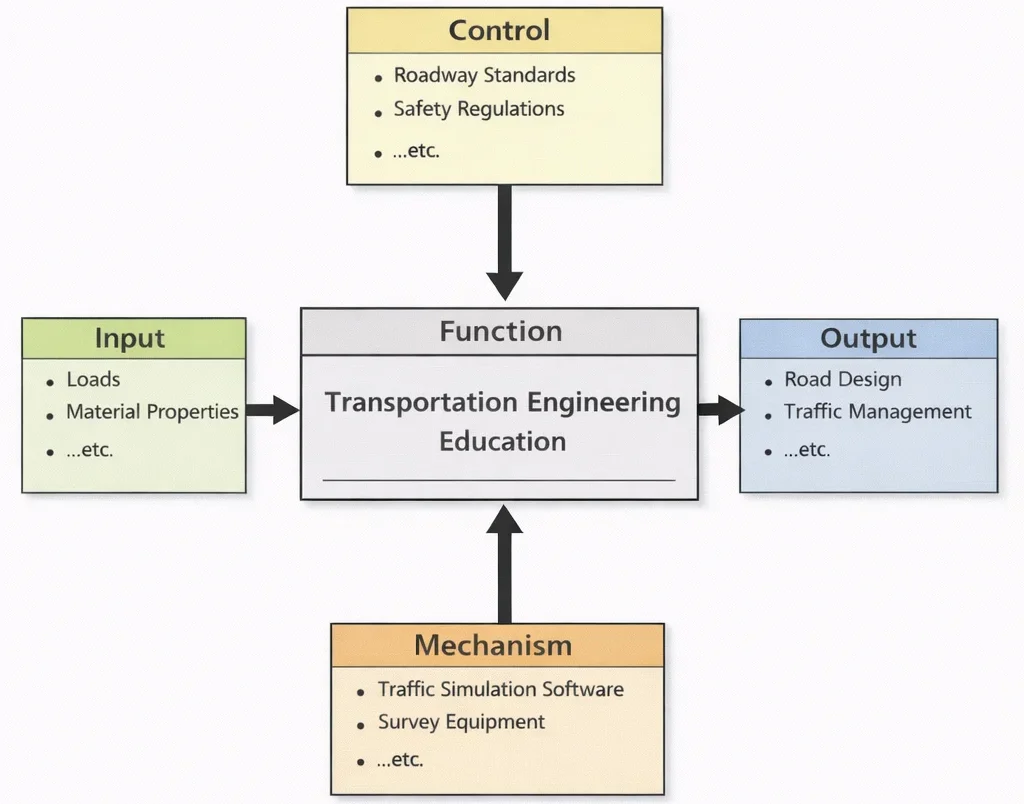
Transportation Engineering is a vital discipline within Civil Engineering that addresses the planning, design, operation, and maintenance of systems for moving people and goods efficiently and safely. It supports the development of roads, highways, railways, airports, ports, and public transport networks, connecting infrastructure with economic growth and urban development. This field collaborates closely with Urban and Regional Planning to shape smart, accessible cities.
The construction of transportation systems requires careful integration with Construction Management, while geotechnical considerations—such as soil stability and ground behavior—are informed by Geotechnical Engineering. The durability of bridges, overpasses, and tunnels draws heavily from the expertise of Structural Engineering.
As natural hazards and climate-related events grow more frequent, Earthquake and Disaster Engineering plays a role in ensuring infrastructure resilience. Likewise, sustainable roadway drainage and water management practices benefit from Water Resources Engineering.
Technological innovations are reshaping how transportation systems are monitored and controlled. Electrical and Electronic Engineering provides the backbone for systems like traffic signals, vehicle detection, and communication networks. Intelligent transportation systems rely on Control Systems Engineering and Signal Processing to enable real-time decision-making and automation.
Sensors and monitoring devices, grounded in Instrumentation and Measurement, help optimize traffic flows and detect incidents. Embedded traffic control units and vehicle electronics are developed through Embedded Systems and Microelectronics, while vehicle-to-infrastructure communication advances through Communication Engineering.
As cities adopt smart mobility solutions, Internet of Things (IoT) and Smart Technologies are transforming traffic management, public transit systems, and autonomous vehicle networks. With the electrification of transport, Power Systems Engineering and Renewable Energy and Energy Storage provide sustainable power solutions for electric vehicles and charging infrastructure.
Innovations from Robotics and Automation in E&E are also enhancing infrastructure maintenance, using autonomous systems to inspect bridges and tunnels. Advanced sensors designed with Biomedical Electronics principles are adapted for passenger health monitoring in high-capacity transit systems.
The environmental impact of transport systems is a growing concern, making Environmental Engineering essential for pollution control and green infrastructure planning. Studies in Air Quality Engineering examine emissions and their effects on urban populations, while Climate Change Mitigation and Adaptation strategies help reduce transportation’s carbon footprint.
The integration of eco-sensitive design is further enriched by Ecological Engineering, promoting biodiversity and habitat conservation even in highway development. Furthermore, foundational knowledge from Electronics Engineering supports innovations in vehicle electronics and smart grid interfaces for transport infrastructure.

Networks, Mobility, and Infrastructure Flow
Frames transportation systems within broader infrastructure networks, economic development, and civil engineering foundational principles.
Transportation Engineering (Current Unit)
Designs, operates, and optimizes systems for the efficient, safe, and sustainable movement of people and goods across multimodal networks.
Provides structural design and load-capacity calculations for transport corridors including bridges, elevated transit lines, and tunnels.
Evaluates soil stability, subgrade materials, and foundation mechanics essential for highway pavements, railway beds, and runways.
Aligns transportation corridors with long-term land-use policies, transit-oriented development (TOD), and smart growth strategies.
Manages project delivery schedules, capital budgeting, and site operations for large-scale transportation infrastructure builds.
Earthquake & Disaster Engineering
Enhances system resilience and ensures critical emergency evacuation corridors remain operational during seismic or extreme weather events.
Designs stormwater drainage, culverts, and runoff mitigation systems to protect roadways and rail lines from flooding and erosion.
Interactive Traffic Flow & Greenshields Model Simulator
Explore fundamental macroscopic traffic stream relationships using Greenshields’ Linear Model: v = vf × (1 – k / kj), where speed v decreases linearly with density k. Adjust free-flow speed and jam density below to analyze traffic volume (q = k × v) and capacity boundaries.
Core Areas of Transportation Engineering
Transportation Planning
Transportation planning involves developing strategies to meet future mobility demands. Key tasks include:- Demand Forecasting: Predicting travel behavior using models like the four-step model (trip generation, trip distribution, mode choice, route assignment).
- Land Use Integration: Coordinating transportation networks with urban and regional development plans.
- Sustainability Goals: Promoting public transport, non-motorized transport (e.g., cycling, walking), and reducing environmental impacts.
Highway Engineering
Highway engineering focuses on the design, construction, and maintenance of roadways. Key aspects include:- Geometric Design: Ensuring safe and efficient roadway layouts, including lane width, curve radii, and gradients.
- Pavement Design: Selecting materials and structural layers to withstand traffic loads and environmental conditions.
- Traffic Flow Analysis: Optimizing road capacity and minimizing congestion using tools like traffic signal coordination and ramp metering.
Traffic Engineering
Traffic engineering aims to improve the efficiency and safety of vehicular and pedestrian traffic:- Traffic Control Devices: Designing signals, signage, and road markings.
- Intersection Design: Balancing capacity and safety for intersections and roundabouts.
- Intelligent Transportation Systems (ITS): Leveraging technologies like adaptive traffic signals, electronic toll collection, and real-time traffic monitoring.
Railway Engineering
This domain focuses on the design and operation of rail systems:- Track Design: Optimizing track alignment, spacing, and materials for durability.
- Signaling Systems: Ensuring safe train operations using modern communication-based train control (CBTC) systems.
- High-Speed Rail: Addressing the engineering challenges of high-speed train operations, such as track stability and noise reduction.
Airport Engineering
Airport engineering ensures the efficient design and operation of aviation facilities:- Runway Design: Determining length, orientation, and load-bearing capacity.
- Terminal Design: Optimizing passenger flow and baggage handling systems.
- Air Traffic Management: Developing systems for safe aircraft navigation and coordination.
Port and Harbor Engineering
This area involves designing facilities for maritime transport:- Dock and Wharf Design: Accommodating cargo handling and passenger operations.
- Breakwaters and Dredging: Ensuring port accessibility and protection from waves.
- Container Terminals: Enhancing efficiency in loading, unloading, and storage of shipping containers.
Public Transit Systems
Public transportation systems include buses, subways, and trams. Engineers focus on:- Network design and scheduling.
- Fare collection systems and accessibility.
- Multimodal integration for seamless transit options.
Tools and Techniques in Transportation Engineering
Transportation Modeling Software
Transportation modeling software plays a pivotal role in modern transportation engineering by enabling professionals to simulate, analyze, and optimize traffic operations across diverse environments. Tools such as PTV Vissim, Aimsun, and TransCAD are widely used to model the behavior of individual vehicles, pedestrian flows, and multi-modal transport systems. These platforms allow engineers to forecast the effects of infrastructure changes, evaluate policy interventions, and assess network performance under varying demand conditions. For instance, urban planners might use simulation outputs to determine whether adding a dedicated bus lane improves travel time and reduces emissions. The precision of these tools enables evidence-based decision-making, especially when dealing with congested urban networks or planning for future transport demands.Data Collection and Analysis
Effective transportation planning relies heavily on robust data collection methods and rigorous analysis techniques.- Surveys: Origin-destination studies help establish travel patterns by tracking where trips begin and end, enabling planners to optimize route designs and scheduling. Travel time surveys measure the duration of commutes, revealing potential bottlenecks or delays and aiding in congestion management strategies.
- Sensors and Cameras: Modern transportation networks increasingly incorporate automated data collection tools such as inductive loop detectors, radar-based sensors, and CCTV cameras. These technologies provide real-time traffic flow, speed, and occupancy data, which are vital for managing signals, enforcing traffic regulations, and responding to incidents. This data also feeds into adaptive traffic control systems that adjust in real-time to changing conditions.
Furthermore, crowdsourced data from mobile apps like Google Maps and Waze has become an invaluable supplement to traditional monitoring systems. Engineers utilize machine learning techniques to mine this large-scale data for insights on travel behavior, accident hotspots, and infrastructure needs.
Geospatial Technologies
Geographic Information Systems (GIS) form the backbone of spatial analysis in transportation engineering. GIS platforms enable professionals to visualize complex spatial datasets, such as road networks, population density, land use, and environmental constraints. By overlaying multiple data layers, engineers can pinpoint optimal alignments for new highways, evaluate accessibility to public transport, or prioritize maintenance for aging infrastructure.Advanced GIS applications also assist in emergency evacuation planning and environmental impact assessments. By modeling hazard zones and critical infrastructure locations, planners can simulate scenarios like flood-induced detours or earthquake responses. The role of GIS has expanded to real-time traffic monitoring, integration with IoT systems, and mobile GIS applications used by field teams for infrastructure inspection and incident reporting.Sustainability Assessment
With growing concern over the environmental impact of transportation systems, sustainability assessments have become a core aspect of transportation engineering. Life-cycle analysis (LCA) is used to evaluate the cumulative environmental effects of infrastructure projects—from material extraction and construction to operation and decommissioning. Engineers assess energy consumption, greenhouse gas emissions, and resource usage throughout a project’s lifespan.Carbon footprinting tools also help in selecting greener design alternatives, such as promoting active transport infrastructure (bike lanes, sidewalks), electrifying public transit fleets, or using recycled materials in road construction. Projects that prioritize sustainability often qualify for federal green transportation grants or incentives aimed at reducing emissions.Incorporating sustainable transport principles goes beyond construction—it also involves policy, such as congestion pricing, incentives for low-emission vehicles, and the integration of transport and land use planning. These tools allow cities to reduce their environmental footprint while maintaining accessibility and mobility.Emerging Tools and Integrated Systems
Modern transportation engineering increasingly involves the use of integrated systems that combine the aforementioned tools. For example, smart city frameworks integrate real-time data from sensors with simulation models and geospatial platforms to support adaptive traffic control, demand-responsive transit, and multimodal journey planning. Artificial intelligence is being leveraged to identify patterns in traffic congestion, while blockchain is being explored for secure and transparent tolling and logistics.As data sources grow and computational tools advance, transportation engineers are better equipped to create systems that are not only efficient and cost-effective but also resilient to future uncertainties such as climate change, rapid urbanization, and evolving travel behavior.Applications of Transportation Engineering
Urban Transportation
Urban transportation is one of the most dynamic and challenging domains within transportation engineering. As cities grow denser, engineers must devise innovative ways to move people efficiently while minimizing environmental impact. Solutions include integrated metro rail systems, high-capacity bus rapid transit (BRT) corridors, and walkable urban environments that reduce reliance on private vehicles. Transit-oriented development (TOD) is increasingly being adopted to create mixed-use neighborhoods centered around public transport. Urban engineers also focus on designing bike lanes, scooter-sharing programs, and accessible infrastructure for the elderly and disabled. With rising concerns over air quality and emissions, sustainable public transport options such as electric buses and trams are being prioritized.Rural and Regional Transportation
Transportation engineering also plays a vital role in developing countries and under-served areas by improving rural and regional connectivity. Building reliable road networks, maintaining gravel roads, and constructing rural bridges ensure access to education, healthcare, and markets. Engineers must consider local geography, seasonal variations, and limited budgets when designing transport solutions. In many cases, all-weather roads, small-scale ferry systems, and hybrid transport models are deployed to meet the needs of remote populations. According to the World Bank, rural connectivity is a key driver of poverty reduction and economic inclusion.Freight Transportation
Efficient freight transportation is crucial for economic development and global trade. Transportation engineers are tasked with planning intermodal facilities, logistics hubs, and distribution corridors that allow seamless cargo movement across railways, highways, airports, and seaports. Freight corridors must accommodate heavy loads while reducing bottlenecks and ensuring safety. Advanced modeling tools help simulate cargo flows, assess pavement deterioration from truck loads, and manage environmental impacts. Moreover, engineers work closely with supply chain experts to optimize delivery routes, enhance warehousing layouts, and reduce last-mile delivery delays. The advent of smart freight platforms and AI-driven fleet management is revolutionizing cargo logistics worldwide.Smart Mobility
Smart mobility is transforming the way engineers plan and operate transportation systems. It integrates emerging technologies such as Internet of Things (IoT), Artificial Intelligence (AI), and 5G to create adaptive, data-driven infrastructure. Smart traffic signals, connected vehicle-to-infrastructure (V2I) systems, and predictive traffic analytics contribute to smoother travel experiences and reduced congestion. Autonomous vehicles (AVs) are a major focus area, requiring new design standards for lanes, signage, and communication networks. Transportation engineers are also supporting the transition to electric vehicles (EVs) by mapping out charging infrastructure and assessing grid impacts. Shared mobility models such as ride-hailing, carpooling, and e-scooters are reshaping travel behavior and urban design. As noted by the International Transport Forum, shared and smart mobility systems offer significant potential for reducing carbon emissions and improving accessibility.Disaster Management
Transportation engineers are indispensable during disaster preparedness, response, and recovery. They design resilient road and rail systems capable of withstanding earthquakes, floods, and landslides. During emergencies, well-planned evacuation routes, clearly marked signage, and reliable emergency communication systems are critical for saving lives. Engineers collaborate with emergency response teams to simulate evacuation scenarios, optimize logistics chains for relief supplies, and retrofit vulnerable bridges and culverts. Post-disaster reconstruction often includes rebuilding transport infrastructure with enhanced specifications to withstand future hazards. Geospatial mapping, drone assessments, and AI-enabled hazard prediction tools help engineers make rapid, informed decisions during crises.Air and Maritime Transportation
In addition to land-based systems, transportation engineers contribute significantly to the aviation and maritime sectors. Airport planning involves runway layout, terminal design, air traffic flow management, and passenger movement optimization. Maritime engineering includes harbor design, dredging plans, and integrating ports with inland logistics networks. Both sectors are moving toward automation and green technologies to reduce delays and environmental damage. Air and sea transport play pivotal roles in global supply chains, tourism, and emergency aid, requiring coordination with international standards and regulations.Transportation Equity and Accessibility
Modern transportation engineering is not just about efficiency and cost-effectiveness—it also prioritizes equitable access for all. Engineers are working to remove barriers for people with disabilities, ensuring ADA-compliant infrastructure such as tactile paving, audio announcements, and low-floor buses. Planners consider gender-sensitive transport design, safety in poorly lit areas, and affordability of public transit. Involving community stakeholders in the planning process ensures that transport systems meet the actual needs of users across diverse demographics.Tourism and Recreational Transport
Transportation systems designed for tourism contribute significantly to regional economies. Engineers design scenic routes, heritage railways, bike trails, and cable cars that provide access to cultural and natural attractions. These systems must balance tourist flows with environmental conservation and integrate smoothly with local transportation networks.Education and Workforce Commuting
Special consideration is given to student and workforce commuting patterns. Engineers plan safe school zones, pedestrian bridges, and campus shuttle systems. For business districts, commuter rail, park-and-ride facilities, and flexible working-hour transport strategies help reduce peak congestion and carbon emissions.Military and Strategic Transportation
Finally, transportation engineering extends into strategic domains such as defense and national security. Engineers develop and maintain transport corridors critical for military mobilization, border control, and supply chain security. These projects often involve specialized design parameters for rapid deployment, resilience to sabotage, and coordination with defense logistics.Challenges in Transportation Engineering
Traffic Congestion
One of the most persistent challenges in transportation engineering is traffic congestion. As urban populations swell, so does the volume of vehicles on the road. This growth leads to gridlock, prolonged commute times, reduced productivity, and increased fuel consumption. Transportation engineers must continuously analyze traffic patterns using advanced tools such as PTV Vissim to simulate and propose traffic flow improvements. Solutions include implementing synchronized traffic signals, dedicated bus lanes, and encouraging carpooling and non-motorized transport.
Environmental Concerns
The transportation sector is a major contributor to air pollution and greenhouse gas emissions, especially in regions dependent on fossil fuels. This has led to growing pressure on engineers to devise greener alternatives such as low-emission zones, electric vehicle (EV) infrastructure, and energy-efficient public transit systems. Environmental assessment tools like life-cycle analysis help determine the long-term sustainability of various projects. Furthermore, institutions like the International Energy Agency provide crucial research and policy recommendations for transitioning to sustainable transport.
Funding and Maintenance
Building and maintaining modern transportation infrastructure is extremely capital-intensive. Bridges, tunnels, roads, and railways require long-term financial planning and substantial public and private investment. Compounding the issue is the aging infrastructure in many developed nations that now demands expensive rehabilitation. Engineers must balance cost-efficiency with performance, often prioritizing high-traffic routes and critical freight corridors. Value engineering, asset management systems, and public-private partnerships are increasingly used to address these economic hurdles.Safety
With millions of lives lost annually due to road accidents, safety remains a top concern. Transportation engineers work to minimize hazards by implementing better road designs, visibility standards, pedestrian crossings, and speed-calming measures. Technologies like AI-enabled traffic cameras and vehicle-to-infrastructure (V2I) communication are also being used to reduce collisions. Educational campaigns and behavioral interventions complement engineering solutions, helping shape a culture of safety among all road users.Integration of New Technologies
The transportation landscape is rapidly evolving with the emergence of autonomous vehicles, drones, Internet of Things (IoT), and artificial intelligence (AI). However, integrating these technologies into existing systems poses significant design, ethical, and logistical challenges. Questions regarding cybersecurity, data privacy, interoperability, and legal frameworks must be addressed. For example, engineers must ensure that autonomous vehicles can communicate safely with traditional cars and infrastructure. Leading global initiatives such as the AI for Autonomous and Assisted Driving by the International Telecommunication Union aim to establish universal standards.
Urban-Rural Disparities
Another pressing challenge is the imbalance between urban and rural transportation development. While cities often receive prioritized funding and technological upgrades, rural areas struggle with poor connectivity, deteriorating road conditions, and minimal access to public transit. Transportation engineers must bridge this gap by developing scalable, cost-effective designs that enhance rural mobility while ensuring equitable distribution of services and resources.Multimodal Integration
Achieving a seamless transition between different modes of transport—such as buses, trains, bikes, and walking—is another area that requires innovation. Poor integration results in inefficiencies, long wait times, and user dissatisfaction. Planners and engineers must coordinate across agencies to develop unified ticketing systems, real-time data sharing, and spatial planning that supports interconnectivity.Resilience Against Disasters
Transportation networks are vulnerable to natural disasters like earthquakes, floods, and hurricanes. Engineers must incorporate resilient designs and develop emergency response strategies to ensure that critical corridors remain operational during crises. The use of advanced materials, early warning systems, and redundancy in network design are crucial for protecting infrastructure and enabling quick recovery.Legal and Regulatory Hurdles
Transportation innovations often face delays due to outdated regulations and complex approval processes. Engineers must work closely with legal experts, policymakers, and urban planners to ensure that infrastructure keeps pace with innovation without compromising safety or compliance. Streamlined regulatory frameworks can foster faster deployment of new technologies while maintaining oversight.Public Acceptance and Behavioral Change
Even the most advanced transportation solutions can fail if public behavior does not align. Encouraging shifts from private to public transit, promoting cycling or walking, and accepting shared mobility models require effective communication and incentives. Engineers, therefore, must consider social and psychological factors during the design phase, ensuring user-centric, accessible, and inclusive systems that reflect the needs of diverse populations.Future Trends in Transportation Engineering
Sustainable Transportation
- Emphasis on public transit, cycling infrastructure, and renewable energy-powered vehicles continues to grow as cities strive to reduce emissions and enhance livability. Integrated networks that prioritize non-motorized transport such as cycling and walking paths are being embedded into city master plans.
- Development of car-free zones in urban areas promotes pedestrian safety, reduces noise pollution, and encourages active lifestyles. Such zones are becoming central to sustainable urban mobility frameworks, particularly in European cities and smart city initiatives worldwide.
- Additionally, lifecycle assessments are being used to evaluate transportation infrastructure, ensuring that road construction, maintenance, and end-of-life practices align with environmental goals.
- Governments are increasingly investing in green bus fleets and electrified metro systems, backed by policies such as the National Blueprint for Transportation Decarbonization in the U.S.
Connected and Autonomous Vehicles (CAVs)
- Leveraging AI and IoT for self-driving cars and smart traffic management is revolutionizing personal and commercial transportation. These vehicles communicate with each other and with roadway infrastructure to optimize travel paths, reduce travel time, and avoid collisions.
- Enhancing road safety and reducing congestion is a key benefit, especially with Vehicle-to-Infrastructure (V2I) and Vehicle-to-Vehicle (V2V) communication technologies enabling dynamic rerouting and automated hazard detection.
- Regulatory frameworks, such as those explored by the World Economic Forum, are critical in ensuring the responsible deployment of CAVs globally.
- In cities like Phoenix and San Francisco, autonomous taxis are already part of pilot programs, highlighting the potential for mainstream adoption within the next decade.
Hyperloop and Advanced Rail Systems
- High-speed transport systems like the Hyperloop promise faster, eco-friendly travel by using near-vacuum tubes and magnetic levitation to reach speeds exceeding 1,000 km/h.
- Advanced rail systems also include next-generation maglev trains in Japan and Europe, which operate with minimal noise and zero direct emissions, reshaping long-distance travel while easing pressure on air travel infrastructure.
- These systems are especially valuable in megaregions, where reducing travel time between economic hubs enhances business connectivity and regional development.
- Feasibility studies are currently underway in countries including the United States, India, and Saudi Arabia, signaling global interest and investment in scalable, high-speed rail technologies.
Urban Air Mobility
- Exploring air taxis and drone deliveries as future mobility options is gaining traction in cities facing ground congestion. Electric Vertical Takeoff and Landing (eVTOL) aircraft are being tested for short-range passenger and logistics applications.
- Companies like Joby Aviation and Volocopter are leading the development of urban air mobility services, with planned launches in major metropolitan areas by 2030.
- Drone corridors and urban vertiports are being designed to ensure safe air traffic management in low-altitude urban airspaces.
- UAM also has humanitarian potential, such as delivering supplies to remote or disaster-affected regions where traditional access is limited or compromised.
Decarbonization Initiatives
- Promoting electric and hydrogen-powered vehicles is central to transportation decarbonization strategies worldwide. This includes not only private vehicles but also buses, trains, ferries, and freight fleets.
- Encouraging modal shifts to public transit and active transport is equally important. Cities are investing in seamless multimodal integration—connecting buses, subways, bikes, and pedestrian pathways to facilitate convenient, low-emission travel.
- Policies such as low-emission zones, carbon pricing for vehicle emissions, and fuel economy standards are being implemented to drive systemic change in mobility patterns.
- Infrastructure support, including widespread EV charging stations and green hydrogen refueling depots, is expanding to support adoption.
Why Study Transportation Engineering
Designing Efficient Mobility Systems
Traffic Flow and Safety Analysis
Public Transit and Sustainable Transport
Data-Driven Planning and Smart Systems
Policy, Planning, and Infrastructure Investment
Transportation Engineering: Conclusion
Transportation engineering is essential for developing and maintaining the infrastructure that supports modern society. From highways and rail systems to airports and public transit, this field plays a pivotal role in facilitating economic growth, enhancing mobility, and improving the overall quality of life. It involves the meticulous planning, design, construction, and management of transportation systems that serve billions of people every day. As urbanization increases and populations grow denser, the demand for efficient, safe, and sustainable transport solutions is becoming more urgent than ever.Enabling Sustainable Urban Mobility
In the face of climate change and urban congestion, transportation engineers are now tasked with integrating environmentally responsible practices into their projects. This includes promoting the use of public transit, non-motorized transport like cycling and walking, and cleaner vehicle technologies such as electric and hydrogen-powered cars. The application of sustainable transportation policies is helping to reduce carbon emissions and create greener cities. Green infrastructure—like permeable pavements and urban greenways—is also being incorporated into transportation projects to enhance resilience and reduce urban heat island effects.Leveraging Technology for Smarter Systems
Advancements in intelligent transportation systems (ITS) are revolutionizing how people and goods move. Traffic management centers equipped with sensors and cameras provide real-time data to optimize traffic flow and respond to incidents efficiently. Automated toll collection, adaptive signal control, and smart parking solutions are transforming the commuting experience. With the rise of big data analytics and the Internet of Things (IoT), transportation engineers can now model traffic behavior, predict congestion hotspots, and proactively improve roadway safety. According to the U.S. Department of Transportation’s ITS Joint Program Office, connected vehicle technologies will further enhance mobility and safety by enabling communication between vehicles and infrastructure.
Ensuring Safety and Equity
Another critical area of focus in transportation engineering is safety. Engineers conduct crash analyses, implement traffic calming measures, and design road geometry to minimize accidents and fatalities. Equally important is ensuring transportation equity—making sure that underserved communities have access to reliable, affordable, and safe modes of transport. This includes expanding transit networks to reach low-income areas, improving accessibility for people with disabilities, and designing walkable neighborhoods that encourage active transportation.Preparing for Future Challenges
Transportation engineers are also preparing for future challenges, including autonomous vehicles, drones, and high-speed rail systems. The integration of these innovations requires updates to infrastructure, new regulations, and cross-disciplinary collaboration. Moreover, the global supply chain disruptions caused by events like pandemics and natural disasters have underscored the importance of designing flexible and robust freight systems.Interdisciplinary and Global in Scope
Modern transportation engineering is no longer a siloed discipline. It intersects with urban planning, environmental science, computer science, and public policy. Engineers must work with stakeholders at local, national, and international levels to implement large-scale, multi-modal transportation systems that are both effective and socially responsible.A Dynamic and Rewarding Career
For students and professionals alike, transportation engineering offers a dynamic and impactful career path. It allows individuals to contribute directly to societal well-being by solving real-world problems through innovation and analysis. Whether working on transit-oriented developments, redesigning intersections for pedestrian safety, or optimizing airport logistics, transportation engineers leave a tangible mark on the world around them.As urbanization accelerates and mobility demands evolve, transportation engineering will continue to play a transformative role in shaping sustainable, efficient, and resilient transportation systems for the future.Frequently Asked Questions
1. What does a transportation engineer actually do day-to-day?
A transportation engineer might analyse traffic counts, design an intersection layout, adjust signal timings, review road safety audits, or help plan a new bus corridor or cycle route. Their work ranges from computer-based modelling to on-site observations and community consultations.
2. How is transportation engineering different from traffic engineering?
Transportation engineering covers the whole system: long-term planning, corridor design, public transport, and policy. Traffic engineering focuses more narrowly on how vehicles and pedestrians move on existing roads, including signal control, lane use, and detailed junction design.
3. Why is congestion such a difficult problem to solve?
Congestion is driven by a mix of land-use patterns, car ownership, travel behaviour and limited road capacity. Building more roads alone often encourages more driving. Effective solutions combine better public transport, demand management, and smarter land-use planning.
4. How do engineers make roads safer for pedestrians and cyclists?
They use traffic calming, protected crossings, dedicated cycle lanes, lower speed limits, better lighting and clearer markings. Designs increasingly follow a “safe system” approach, assuming people will make mistakes and ensuring that those mistakes are not fatal.
5. What is meant by a “smart” or intelligent transportation system?
Smart systems use sensors, cameras, GPS and communication networks to monitor traffic and adjust operations in real time. Examples include adaptive traffic signals, variable message signs, and apps providing live bus arrival times or congestion alerts.
6. How does transportation engineering connect to climate change goals?
Transport is a major source of greenhouse gas emissions. Engineers contribute to climate solutions by supporting public and active transport, enabling electric vehicles, designing efficient freight networks and reducing the need for long car trips through better planning.
7. Why is public transportation so important for cities?
High-quality public transport moves many people using less space and energy than private cars. It cuts congestion, improves air quality, supports inclusive access to jobs and education, and allows cities to grow without gridlock.
8. What skills are useful if I want to study transportation engineering?
You will use mathematics, statistics, computer modelling, GIS, and basic physics of motion, together with communication skills and an interest in how cities work. Being curious about everyday travel experiences is also very helpful.
9. How might autonomous vehicles change transportation engineering?
Engineers will need to design roadways, signals and communication systems that can interact with self-driving vehicles, while still serving human drivers, cyclists and pedestrians. They will also analyse how automation affects traffic flow, safety and travel demand.
10. What are some examples of sustainable transportation projects?
Examples include bus rapid transit corridors, integrated rail–bus ticketing systems, city-wide cycling networks, pedestrianised town centres, and logistics hubs that shift freight from road to rail or waterways to reduce emissions.
Practice and Self-Assessment Module
Foundational Concepts & Review Questions
- What is transportation engineering, and why is it important?
Answer: Transportation engineering is a branch of civil engineering concerned with the planning, design, operation, and maintenance of systems that move people and goods, including roads, railways, airports, ports, and public transport networks. It is important because well-designed transport systems support economic activity, provide access to jobs and services, enhance safety, and reduce environmental impacts such as air pollution and greenhouse gas emissions. - What are the major components of a transportation system?
Answer: A transportation system consists of: Infrastructure (roads, bridges, tunnels, rail tracks, airports, ports, stations), Vehicles (cars, buses, trains, trams, aircraft, ships, bicycles), Control and Information Systems (traffic signals, signs, lane markings, ITS, GPS), and Users (drivers, passengers, pedestrians, cyclists, freight operators). - What are some key challenges in modern transportation engineering?
Answer: Major challenges include managing urban traffic congestion, addressing aging infrastructure under budget constraints, mitigating climate impacts and emissions, enhancing safety, and integrating automated or electric mobility systems into existing networks. - How does transportation engineering contribute to road safety?
Answer: Engineers apply geometric design standards for sight distance and curvature, implement traffic calming, eliminate hazard points at intersections, design protected pedestrian/cyclist infrastructure, and utilize data-driven crash analysis to improve high-risk corridors. - What role does traffic engineering play within transportation systems?
Answer: Traffic engineering focuses on vehicular and pedestrian dynamics on active networks. It optimizes traffic flow, signal timing, junction layout, parking allocation, and capacity using flow theory and real-time operational management tools. - How do smart transportation systems improve mobility and system performance?
Answer: Intelligent transportation systems (ITS) deploy connected sensors, dynamic message signs, automated tolling, adaptive signal control, and real-time traveler data to reduce bottlenecks, optimize intersection throughput, and respond rapidly to incidents. - What are some examples of sustainable transportation solutions?
Answer: Key examples include Bus Rapid Transit (BRT) corridors, urban cycle networks, transit-oriented development (TOD), electrification of public transit fleets, low-emission zones, and integrated congestion pricing policies. - Which factors influence the design of highways and roadways?
Answer: Key factors include expected traffic volumes and design vehicle type, terrain and soil geotechnical properties, design speed, sight distance requirements, environmental and drainage constraints, and multimodal user needs. - How does public transportation impact urban development and quality of life?
Answer: Efficient public transit provides high-capacity mobility using minimal spatial footprint, reduces reliance on private vehicles, cuts urban congestion and emissions, lowers household travel expenses, and fosters dense, walkable urban communities. - What are the potential benefits of integrating autonomous vehicles into transportation systems?
Answer: Potential benefits include reducing crashes caused by human error, improving traffic flow through cooperative adaptive cruise control, expanding mobility for non-drivers, and optimizing fuel or energy consumption through automated platooning.
Analytical & Scenario-Based Inquiry
-
How can transportation engineers design cities to be more pedestrian-friendly?
Engineers design pedestrian-friendly urban zones by incorporating widened sidewalks, protected signal phases, refuge islands, traffic-calming measures (e.g., raised tables, narrow travel lanes), grade-separated crossings where necessary, and high-density, mixed-use land integration that minimizes required walking distances.
-
What are the ethical considerations in implementing autonomous vehicles?
Ethical concerns encompass algorithm decision-making during unavoidable collisions (trolley problem scenarios), liability distribution among manufacturers and operators, data privacy risks from continuous GPS/sensor tracking, accessibility equity for low-income demographics, and workforce impacts on commercial transportation labor markets.
-
How can public transportation be made more attractive to commuters?
Enhancing transit attraction requires optimizing route reliability, maintaining high service frequencies, deploying unified electronic ticketing, providing real-time arrival predictions via mobile applications, upgrading vehicle cleanliness and security, and establishing dedicated right-of-way lanes to bypass highway congestion.
-
How do transportation systems affect economic growth?
Transport infrastructure acts as an economic multiplier by expanding labor market reach, reducing logistics freight transport costs, accelerating supply chain turnaround times, increasing land values around connected nodes, and facilitating international trade access through ports, rail terminals, and airports.
-
What are the biggest environmental concerns in transportation engineering?
Primary environmental challenges include fossil fuel greenhouse gas emissions contributing to climate change, localized air pollution (particulate matter, nitrogen oxides), urban runoff containing pavement pollutants, habitat fragmentation caused by linear highway corridors, and traffic noise pollution.
-
How can AI and big data be leveraged to improve traffic management?
Artificial intelligence analyzes real-time data streams from cameras, mobile GPS, and loop sensors to dynamically adjust signal timing matrixes, predict traffic bottleneck formation before gridlock occurs, automate incident detection, and route emergency response vehicles via optimal paths.
-
What innovations could revolutionize high-speed rail networks?
Key innovations include Magnetic Levitation (Maglev) removing mechanical friction, near-vacuum tube systems (Hyperloop) eliminating aerodynamic drag at extreme velocities, automated train control (ATC) optimization, and regenerative braking energy recovery systems fed directly into smart power grids.
-
How can transportation engineers design safer cycling infrastructure?
Safety is maximized through physically separated cycle tracks protected from motor vehicles, dedicated bike box stop lines at intersections, signal-prioritized bike signals, continuous network connectivity avoiding sudden lane terminations, and non-slip surface treatments.
-
What role do tunnels and bridges play in transportation networks?
Bridges and tunnels bypass major geographic obstructions (rivers, mountain ranges, ocean straits) and urban density barriers, significantly reducing corridor distances, lowering fuel usage, consolidating freight routes, and expanding regional market connectivity.
-
What impact does urban sprawl have on transportation infrastructure?
Urban sprawl dramatically increases vehicle miles traveled (VMT) per capita, inflates capital expenditure demands for sprawling road maintenance, weakens the financial viability of public transit due to low density, increases fossil fuel consumption, and amplifies traffic congestion on arterial routes.
Quantitative Engineering Computations
- Traffic Flow Fundamental Relationship: A highway section records a traffic stream density k = 35 vehicles per kilometer (veh/km) and an average speed v = 60 kilometers per hour (km/h). Calculate the traffic flow rate q in vehicles per hour (veh/h).
Solution:
Using the fundamental equation of traffic flow:
q = k × v
q = 35 veh/km × 60 km/h = 2,100 veh/h.
The traffic flow rate across the highway section is 2,100 veh/h. - Greenshields Model Capacity: A two-lane road has an estimated free-flow speed vf = 90 km/h and a jam density kj = 110 veh/km. Compute the theoretical maximum capacity (maximum flow rate qmax) of the roadway using Greenshields' model.
Solution:
Under Greenshields' linear speed-density relationship, maximum capacity occurs at critical density kc = kj / 2 and optimal speed vc = vf / 2.
qmax = (vf × kj) / 4
qmax = (90 × 110) / 4 = 9,900 / 4 = 2,475 veh/h.
The theoretical maximum capacity is 2,475 veh/h. - Stopping Sight Distance (SSD) Computation: Calculate the minimum Stopping Sight Distance required for a passenger car traveling at v = 90 km/h (25 m/s) on a level highway (grade G = 0). Assume a perception-reaction time t = 2.5 seconds and a deceleration rate a = 3.4 m/s2.
Solution:
Stopping sight distance consists of perception-reaction distance plus braking distance:
SSD = dreaction + dbraking
dreaction = v × t = 25 m/s × 2.5 s = 62.5 m
dbraking = v2 / (2 × a) = (25)2 / (2 × 3.4) = 625 / 6.8 ≈ 91.91 m
SSD = 62.5 + 91.91 = 154.41 m.
The minimum required Stopping Sight Distance is approximately 154.4 m. - Signal Pre-timed Cycle Length (Webster's Formula): A signalized intersection has a total lost time per cycle L = 12 seconds. The sum of critical lane group volume-to-saturation flow ratios ΣY = 0.55. Calculate the optimum signal cycle length Copt using Webster's equation.
Solution:
Webster's formula for optimum cycle length is:
Copt = (1.5 × L + 5) / (1 - ΣY)
Numerator = 1.5 × 12 + 5 = 18 + 5 = 23
Denominator = 1 - 0.55 = 0.45
Copt = 23 / 0.45 ≈ 51.11 seconds.
The recommended optimum cycle length is approximately 51 seconds. - Average Time Headway Determination: A traffic counting station observes a flow rate q = 1,800 vehicles per hour passing a designated lane line. Determine the average time headway ht in seconds per vehicle.
Solution:
Time headway is the inverse of flow rate expressed in time units:
ht = 3,600 seconds / q
ht = 3,600 / 1,800 = 2.0 seconds/vehicle.
The average time headway between successive vehicles is 2.0 seconds. - Space Headway from Density: A highway segment exhibits a density k = 25 vehicles per kilometer. Calculate the mean space headway hs in meters per vehicle.
Solution:
Space headway is the spatial distance between corresponding points on consecutive vehicles:
hs = 1,000 meters / k
hs = 1,000 / 25 = 40 meters/vehicle.
The average space headway is 40 meters. - Peak Hour Factor (PHF) Calculation: During a peak hour, traffic counts recorded in 15-minute intervals are 450, 520, 610, and 480 vehicles. Compute the total hourly volume V and the Peak Hour Factor (PHF).
Solution:
Total hourly volume V = 450 + 520 + 610 + 480 = 2,060 vehicles.
Maximum 15-minute volume V15,max = 610 vehicles.
PHF = V / (4 × V15,max)
PHF = 2,060 / (4 × 610) = 2,060 / 2,440 ≈ 0.844.
The Peak Hour Factor (PHF) is 0.84. - Horizontal Curve Minimum Radius: Determine the minimum safe radius R in meters for a highway curve with a design speed v = 100 km/h (27.78 m/s), maximum superelevation rate e = 0.06, and side friction factor f = 0.12. (Use g = 9.81 m/s2).
Solution:
The vehicle equilibrium formula on a banked curve is:
e + f = v2 / (g × R)
Rearranging for Radius R:
R = v2 / [g × (e + f)]
R = (27.78)2 / [9.81 × (0.06 + 0.12)]
R = 771.73 / [9.81 × 0.18] = 771.73 / 1.7658 ≈ 437.04 meters.
The minimum safe radius for the curve is approximately 437 meters.