
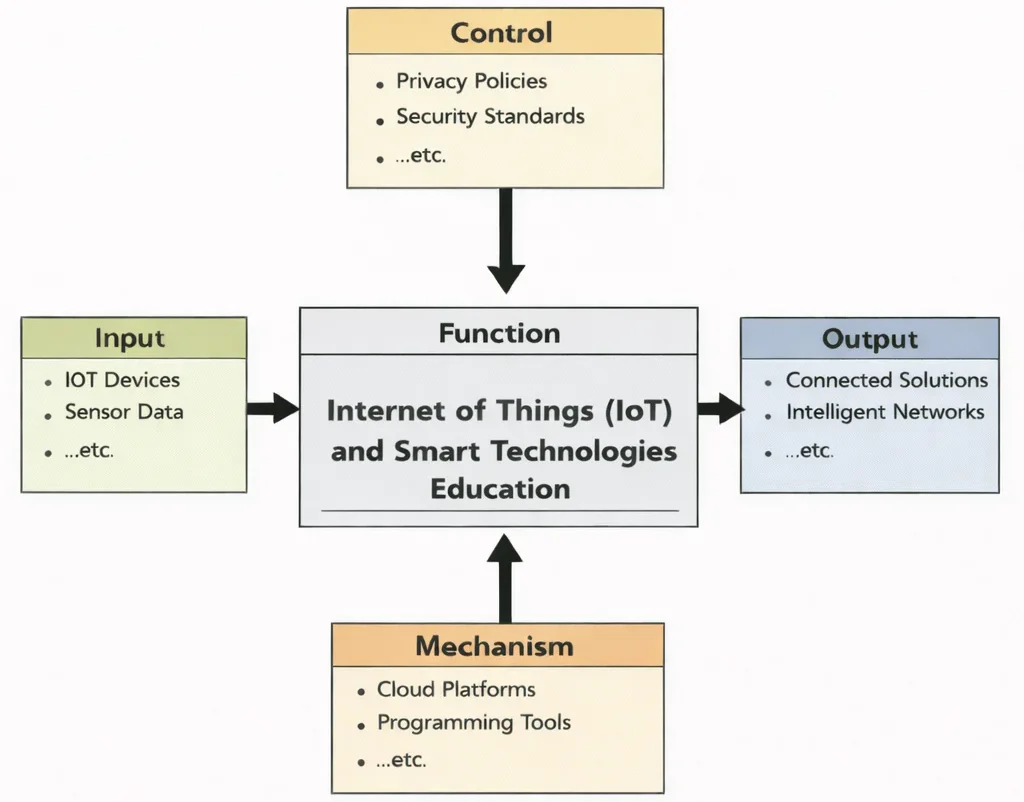
The Internet of Things (IoT) and Smart Technologies represent a transformative frontier in modern engineering, interlinking devices, sensors, and systems to collect and act upon real-time data. At the heart of this innovation is a deep integration with Electrical and Electronic Engineering, which provides the circuitry, power, and communication infrastructure necessary to support intelligent environments—from smart homes to connected factories. The design and deployment of sensors in Instrumentation and Measurement ensure that data collected is accurate and reliable.
IoT systems often include embedded components developed through Embedded Systems and Microelectronics, with microcontrollers programmed to handle data acquisition and control. In domains like Communication Engineering, IoT benefits from wireless technologies and protocols that transmit data across networks securely and efficiently. These data streams are frequently analyzed using techniques from Signal Processing to derive meaningful patterns and enable predictive responses.
IoT also intersects with specialized fields like Biomedical Electronics, where wearable health monitors provide continuous patient data, and Robotics and Automation in E&E, where intelligent machines adapt to their surroundings using sensor feedback. The foundational principles from Control Systems Engineering enable dynamic regulation in smart grids, automated transportation, and responsive infrastructure.
In large-scale applications, IoT plays a pivotal role in sustainable energy efforts, integrating with Power Systems Engineering and Renewable Energy and Energy Storage to balance loads and optimize consumption. These systems align closely with the aims of Environmental Engineering, where smart sensors monitor air and water quality and promote regulatory compliance.
IoT technologies are central to Air Quality Engineering, tracking pollutants across urban zones, and essential in Environmental Monitoring and Data Analysis frameworks used to assess ecosystem health. These initiatives support broader goals within Environmental Policy and Management and Climate Change Mitigation and Adaptation.
As cities evolve into smart environments, technologies from Green Building and Sustainable Design employ IoT for lighting control, energy metering, and occupant comfort optimization. In manufacturing, real-time feedback loops support process refinement in Industrial and Manufacturing Technologies, while resource efficiency is maximized through concepts from Industrial Ecology and Circular Economy.
IoT supports sustainable water practices in Water Resources Engineering and improves waste processing in Waste Management Engineering. Forward-looking applications are even emerging in areas like Quantum Electronics, where sensors and processors may harness quantum properties to enhance performance.
By combining sensing, computation, and connectivity, the Internet of Things is redefining how humans interact with the world. Students studying this dynamic field gain insights into systems thinking, cybersecurity, energy efficiency, and ethical design—skills that are critical to the next generation of engineers and innovators.
Interactive IoT Wireless Node & Edge Latency Simulator
Adjust wireless protocol selection, transmission power, node density, and edge vs cloud processing ratios to analyze real-time network throughput, latency, and node energy consumption.

Connected Intelligence: Distributed Systems and Smart Environments
Electrical & Electronic Engineering – Overview
Establishes the macro-system framework for integrating connectivity, raw power distribution, and intelligent hardware control.
IoT & Smart Technologies (Current Page)
Interconnects distributed physical devices, edge sensors, and cloud systems to enable automated data-driven decision-making.
Embedded Systems & Microelectronics
Engineers the ultra-low-power microcontrollers and System-on-Chip hardware running local IoT firmware at the edge.
Provides the wireless RF protocols, mesh topologies, and cellular standards linking remote nodes to gateways.
Filters and conditions noisy time-series sensor telemetry before executing local inferencing or cloud uploads.
Implements distributed closed-loop feedback algorithms across smart grid infrastructure and automated buildings.
Supplies precision physical transducers and calibrated ADC interfaces essential for capturing environment variables.
Extends IoT node sensing into active physical mechanisms, enabling autonomous robotic fleet actuation.
Deploys smart meters and synchrophasors to transform legacy electrical grids into responsive energy networks.
Renewable Energy & Energy Storage
Integrates distributed solar and battery storage systems into centralized IoT energy management platforms.
Designs hardware switching components, energy harvesting circuits, and printed circuit boards powering IoT nodes.
Explores quantum key distribution (QKD) to secure next-generation IoT communication channels against decryption.
Applies wearable IoT sensor nodes to continuous remote patient telemetry and automated clinical alerts.
Key Components of Internet of Things (IoT) and Smart Technologies
- Interconnected Devices
The foundation of the Internet of Things (IoT) is the global web of interconnected devices—each fitted with sensors, processors, memory, and network interfaces. These range from everyday household items like smart thermostats and security cameras to specialized industrial machinery equipped with rugged embedded systems. Wearable health trackers, automotive telematics units, smart lighting systems, and agricultural drones all count among these devices. Through seamless networking, these endpoints automatically send and receive data, enabling remote control, real-time alerts, and adaptive behavior based on environmental cues. This level of smart connectivity underpins smart home ecosystems, predictive maintenance in factories, and autonomous operations in sectors like logistics and healthcare.
- Sensors
At the core of every IoT device are sensors that tirelessly detect and measure environmental changes. Basic temperature sensors might track indoor heating patterns, whereas industrial pressure sensors can monitor fluid systems in manufacturing. More advanced sensing elements—such as air quality monitors for detecting pollutants or vibration sensors for machinery health—provide nuanced, contextual insights that drive smart responses. Each sensor translates physical phenomena into electrical signals, which are then digitized for processing. The evolution of sensor technologies has led to miniaturized MEMS devices, ultra-low-power solutions, and multi-modal sensor arrays capable of measuring multiple variables simultaneously with high accuracy.
- Communication Networks
For IoT systems to function cohesively, reliable communication networks are vital. Devices communicate via protocols like Wi-Fi, Bluetooth, Zigbee, NB-IoT, LoRaWAN, and emerging 5G, allowing them to share data with edge gateways or cloud servers. Network topology varies by use-case; smart homes may rely on short-range mesh networks, while smart cities utilize long-range, low-power networks. Industrial applications might leverage private LTE or 5G for real-time data and high bandwidth needs. Protocol selection is driven by factors such as power consumption, data rate, range, and latency, ensuring the right balance for each application.
- Cloud Computing
The cloud is the nerve center of modern IoT architectures, enabling massive data aggregation, scalable computation, and secure storage. Once data arrives from devices, cloud platforms—ranging from mainstream services like AWS, Azure, and Google Cloud to specialized IoT platforms—perform analytics, machine learning, and visualization. These platforms enable advanced use cases like anomaly detection, predictive despatching, and user behavior modeling. For example, energy providers use cloud analytics to forecast usage and manage distributed resources in real time. Explore IBM’s IoT cloud services for insights into how cloud platforms integrate IoT intelligence with enterprise-scale infrastructures.
Applications of Internet of Things (IoT) and Smart Technologies
- Smart Homes
The smart home ecosystem is one of the most widespread and consumer-visible applications of IoT technology. Devices like voice-controlled assistants (e.g., Amazon Alexa, Google Assistant), automated lighting systems, and smart appliances integrate seamlessly to provide convenience, energy efficiency, and security. These systems are capable of learning user behavior over time, adjusting lighting or temperature automatically, and even locking doors or closing curtains based on geolocation triggers. Smart thermostats like the Nest or Ecobee adjust temperature dynamically using weather forecasts, time of day, and occupancy detection. Additionally, advanced home security systems now use IoT cameras, motion sensors, and real-time notifications to deter intrusions and provide peace of mind.
- Smart Cities
Urban areas around the world are turning to IoT to build smart cities that efficiently manage infrastructure and services. Traffic flow is optimized using AI-powered traffic lights that adapt in real time to congestion data. Public buses and trains are tracked live, enabling passengers to plan journeys more efficiently and avoid delays. Waste management systems use sensors in bins to signal when they are full, improving route efficiency for collection vehicles. These technologies collectively help reduce carbon emissions, lower operational costs, and improve urban quality of life. For example, cities like Singapore and Barcelona are global leaders in deploying IoT solutions for sustainable urban planning and citizen engagement. Explore how IoT enables smart cities to operate more efficiently.
- Industrial IoT (IIoT)
In the industrial sector, IoT is revolutionizing how factories, supply chains, and heavy industries operate. IIoT involves embedding sensors in machinery, allowing real-time monitoring of equipment condition, production quality, and energy usage. Predictive maintenance is a key benefit—by detecting anomalies early, companies can avoid costly breakdowns and reduce downtime. For instance, vibration and thermal sensors in motors can signal degradation before failure occurs. Supply chains become more transparent and efficient as RFID tags and GPS trackers give real-time updates on the movement and condition of goods, reducing loss and enhancing delivery accuracy.
- Healthcare
The healthcare industry leverages IoT to deliver more personalized, data-driven, and accessible care. Wearable fitness trackers measure heart rate, oxygen saturation, and sleep quality, empowering users to monitor their wellness. Remote patient monitoring (RPM) devices, such as those used for chronic disease management, transmit real-time data to healthcare providers, enabling early intervention and reducing hospital readmissions. Smart implants like glucose monitors or pacemakers continuously monitor physiological parameters, enhancing treatment effectiveness and safety. Telehealth systems also use IoT to streamline consultations and remote diagnostics, making care more accessible in underserved regions.
- Agriculture
Smart agriculture, or precision farming, is transforming traditional agriculture by providing farmers with actionable data. Sensors placed in soil measure moisture content, pH, and nutrient levels, enabling optimized irrigation and fertilization schedules. Drones and autonomous tractors collect aerial imagery and perform tasks like sowing or spraying with great accuracy. Weather stations installed on fields provide hyperlocal data, improving forecasting and crop planning. IoT systems also support livestock management through GPS-enabled collars and health monitoring tags, enhancing animal welfare and productivity. The integration of AI with IoT ensures that farms can respond dynamically to changing environmental conditions, boosting yield while minimizing waste.
- Environment Monitoring
IoT plays a crucial role in protecting the environment through continuous monitoring and data-driven intervention. Smart sensors deployed across cities and rural areas measure air pollution, detecting harmful levels of gases such as NO2, SO2, and PM2.5. In water management, IoT helps monitor reservoirs, rivers, and groundwater levels for contamination, salinity, and usage trends. These insights guide conservation policies and disaster preparedness, such as predicting floods or droughts. In wildlife conservation, GPS collars and motion-activated cameras track animal movements and detect poaching threats. The real-time nature of IoT monitoring enables quicker responses and more informed policymaking to safeguard ecosystems.
Challenges in Internet of Things (IoT) and Smart Technologies
- Data Security and Privacy
With the proliferation of smart devices across homes, industries, and public infrastructures, the volume of sensitive data being collected and transmitted is enormous. This includes personal information, health records, financial data, and industrial metrics. Ensuring robust cybersecurity is essential to prevent unauthorized access, identity theft, data manipulation, or ransomware attacks. Hackers can exploit weak authentication protocols or unsecured networks to take control of devices or intercept data streams. In critical applications like smart grids or healthcare, such breaches can have catastrophic consequences. To counter these risks, manufacturers must implement end-to-end encryption, secure boot processes, frequent firmware updates, and user-controlled privacy settings. Moreover, regulatory frameworks like GDPR impose strict compliance obligations, requiring organizations to implement transparent data handling practices. A well-rounded strategy must also include cybersecurity best practices to build trust and resilience in the IoT ecosystem.
- Interoperability
One of the greatest technical barriers in IoT deployment is the lack of universal communication protocols and standards. Devices from different manufacturers often operate on incompatible systems, making integration across platforms cumbersome and inefficient. This fragmentation leads to isolated ecosystems or "walled gardens" where devices can only interact within a limited brand environment. For example, a smart light bulb may not be controllable through a home hub unless they share a compatible communication stack. Overcoming this challenge requires collaborative efforts among industry leaders to adopt open standards like MQTT, CoAP, or OPC-UA, which facilitate device interoperability and scalability. Organizations such as the Internet Engineering Task Force (IETF) and Industrial Internet Consortium (IIC) are pushing for harmonization in IoT protocols to streamline device-to-device communication and enhance cross-platform functionality.
- Scalability
As the number of IoT devices is projected to exceed 75 billion in the coming years, ensuring that networks and cloud infrastructures can handle this exponential growth becomes increasingly challenging. High device density can lead to network congestion, bandwidth limitations, and increased latency, especially in urban or industrial environments. Furthermore, the massive influx of data demands advanced storage, real-time processing capabilities, and load-balancing mechanisms to ensure system responsiveness and reliability. To address these concerns, edge computing is increasingly employed to process data locally and reduce reliance on centralized cloud systems. Additionally, scalable architecture must include modular components, automated device management tools, and dynamic network provisioning to support fluctuating workloads and diverse application requirements.
- Energy Efficiency
Many IoT devices are deployed in locations where power access is limited or where manual battery replacement is impractical. This includes environmental monitoring sensors in remote wilderness, agricultural fields, or structural health sensors embedded in bridges. Therefore, designing devices that consume minimal power while maintaining performance is a critical engineering goal. Solutions include using low-power communication protocols like Zigbee, LoRaWAN, or NB-IoT, as well as integrating energy-efficient microcontrollers and sleep modes that reduce activity when data collection is unnecessary. Additionally, energy harvesting technologies—such as solar panels, piezoelectric generators, or thermoelectric converters—offer a sustainable approach to powering IoT nodes, especially in autonomous or long-term deployments. Improved power efficiency also translates into cost savings and enhanced sustainability for large-scale IoT systems.
Future of Internet of Things (IoT) and Smart Technologies
The Internet of Things (IoT) ecosystem is moving into a new era where exponential growth in data, devices, and connectivity is being matched by major advances in underlying technologies. Innovations like ultra-fast 5G networks, intelligent edge computing nodes, and distributed ledger systems are converging to make IoT more reliable, secure, and capable than ever. In the coming years, we’ll see intelligent systems that not only report data but also understand context, predict needs, and act autonomously to optimize environments and workflows.
- Edge Computing: Edge computing reduces latency, bandwidth usage, and centralized computing loads by shifting data processing closer to the source—on devices or local gateways. For example, autonomous vehicles and industrial robots can analyze sensor inputs in milliseconds, without waiting for a cloud server response, enabling safer real-time decision-making. This model also improves privacy by keeping sensitive data local and decreasing the risk of exposure during transmission. IoT edge systems typically include microprocessors and pre-trained AI models tailored for quick, deterministic responses.
- AI Integration: Artificial intelligence is becoming a critical component of IoT, enabling predictive analytics, anomaly detection, and autonomous actions. Smart buildings, for instance, can use AI to learn usage patterns and automatically adjust lighting, HVAC, and security systems. Industrial IoT (IIoT) platforms apply machine learning models to anticipate equipment failures before they occur, reducing unplanned downtime and maintenance costs. These intelligent systems evolve through continuous learning from sensor data and use reinforcement learning to refine control strategies.
- Blockchain for IoT Security: Blockchain is emerging as a powerful tool to enhance IoT security and data integrity through decentralized authentication, tamper-proof transaction logs, and smart contracts. It ensures that IoT messages—such as sensor readings or device instructions—cannot be altered or spoofed. For example, in supply chain tracking, blockchain can ensure reliable provenance of goods thanks to immutable timestamps and authorized access records. Several pilot initiatives in industries like pharmaceuticals and food safety leverage blockchain to ensure compliance and traceability.
- IoT in Renewable Energy: Smart technologies are reshaping energy grids by enabling real-time coordination and optimization. IoT-enabled smart meters, solar inverters, and battery storage systems communicate and adapt to balance supply and demand instantaneously across the grid. These systems support dynamic pricing, peak shaving, and demand-response programs, reducing energy waste and enhancing sustainability. Explore how smart grids are using IoT to create more resilient and efficient energy systems.
In summary, the future of IoT lies in its ability to evolve from a “connected world” into a “thinking world”—one where distributed intelligence, secure architectures, and energy-aware systems converge to support transformative applications. From remote healthcare and precision agriculture to intelligent transportation and environmental stewardship, IoT's future promises to revolutionize how we live, work, and preserve our planet.
Why Study Internet of Things (IoT) and Smart Technologies
Internet of Things (IoT) and Smart Technologies: Conclusion
By seamlessly blending technology with daily life, IoT and smart technologies have the potential to revolutionize industries, improve sustainability, and create a more interconnected and intelligent world. These innovations are not merely enhancing convenience—they are fundamentally transforming how data is generated, shared, and acted upon across a wide range of environments, from homes and hospitals to factories and entire cities. As sensors and devices become more affordable and power-efficient, the barrier to entry for deploying IoT solutions is rapidly decreasing.
The power of IoT lies in its ability to deliver real-time insights that drive smarter decision-making. Whether it is a farmer using soil moisture sensors to optimize irrigation, or a manufacturer leveraging predictive analytics to prevent equipment failure, IoT platforms provide unprecedented visibility and control. These use cases show that IoT is not a niche innovation—it is becoming central to modern business operations. For instance, the application of IoT for sustainability has gained momentum as organizations seek to reduce their carbon footprint through intelligent energy management and resource optimization.
At the heart of this transformation are technologies such as edge computing, AI integration, and secure communication protocols. Edge computing minimizes latency and bandwidth use, allowing time-sensitive applications such as autonomous vehicles or smart grid systems to function efficiently. AI brings intelligence to the edge, enabling devices to adapt, predict, and respond autonomously. At the same time, cybersecurity frameworks are evolving to ensure these networks of connected devices remain resilient against threats and vulnerabilities.
As global connectivity infrastructure expands with technologies like 5G and LoRaWAN, IoT solutions will penetrate even the most remote and underdeveloped regions. This will unlock new possibilities for rural healthcare delivery, wildlife conservation, and disaster monitoring, ensuring no community is left behind in the digital revolution. Moreover, integration with blockchain will introduce new standards of data transparency and trust, critical for sectors such as supply chain management and healthcare data sharing.
In conclusion, the future of IoT and smart technologies is not just about gadgets—it is about building ecosystems that empower people, businesses, and governments to be more responsive, efficient, and sustainable. By connecting the physical and digital worlds, these technologies are set to redefine our relationship with information, infrastructure, and each other for generations to come.
Frequently Asked Questions
1. What exactly is the Internet of Things (IoT)?
The Internet of Things is a global network of connected “things” that can sense, communicate, and sometimes act. These things range from industrial machines and city infrastructure to home appliances and wearable devices. By collecting and sharing data over the internet, they allow organisations and individuals to monitor conditions in real time, automate routine tasks, and make decisions based on live information rather than guesswork.
2. Why are IoT devices often designed to be ultra low power?
Many IoT deployments place small devices in locations where frequent battery changes are impractical—inside machinery, in remote fields, or on moving assets. To operate for months or years, these devices must conserve every millijoule of energy. Engineers therefore use low-power chips, sleep modes, lightweight wireless protocols, and carefully optimised firmware so that devices wake only briefly to sense and communicate before returning to a low-energy state.
3. How do I choose between short-range and long-range communication technologies for an IoT project?
The choice depends on how far your devices are from the gateway, how much data they send, and how often they transmit. Short-range options like Wi-Fi or Bluetooth work well in homes, buildings, and factories where you can install access points and need higher data rates. Long-range technologies like LoRaWAN or cellular IoT are better when devices are spread across farms, cities, or supply chains and can tolerate lower data rates in exchange for wide coverage and long battery life.
4. What is edge computing, and why is it useful in IoT systems?
Edge computing means processing data near its source—on devices, gateways, or local servers—rather than sending everything to distant cloud servers. In IoT applications, this reduces communication delays, saves bandwidth, and improves resilience when connectivity is unreliable. For example, a smart camera might detect anomalies locally and send only alerts or compressed summaries to the cloud instead of streaming raw video continuously.
5. How do IoT analytics actually help organisations make better decisions?
IoT devices generate detailed time-series data about equipment health, environmental conditions, and user behaviour. When analysed with statistical tools or machine learning, this data reveals trends and patterns that would otherwise remain hidden. Companies can then schedule maintenance before failures occur, tune production lines for efficiency, adapt services to customer habits, and design more sustainable operations based on evidence, not assumptions.
6. Why is security such a challenge in IoT, and what can be done about it?
IoT ecosystems may include thousands of small, inexpensive devices that are difficult to monitor and update once deployed. Each device can become an entry point for attackers if security is weak. To reduce risk, designers use secure boot, strong authentication, and end-to-end encryption, and they plan for over-the-air updates so vulnerabilities can be patched. Network segmentation and continuous monitoring further limit the damage if a device is compromised.
7. What does interoperability mean for IoT and smart technologies?
Interoperability is the ability of devices and platforms from different vendors to work together smoothly. In practice, it means that a smart thermostat, lighting system, and energy meter can share data and coordinate their actions, even if they come from different manufacturers. Open standards, well-documented APIs, and shared data models are key enablers, helping to avoid “walled gardens” and allowing users to build truly integrated smart homes, factories, and cities.
8. How can IoT and smart technologies support sustainability goals?
Connected sensors and actuators can measure resource use in fine detail and adjust systems automatically to reduce waste. Smart buildings can switch off lighting and cooling in empty rooms, smart grids can balance renewable energy supply with demand, and precision agriculture can apply water and fertiliser only where needed. These continuous, data-driven adjustments make it easier to cut emissions, save costs, and meet regulatory or corporate sustainability targets.
9. What kinds of data do wearable IoT devices collect, and what ethical issues arise?
Wearables can track heart rate, physical activity, sleep patterns, location, and even stress levels. This data creates powerful opportunities for personalised health care and context-aware services—but it is also highly sensitive. Ethical issues include how clearly users are informed about data collection, who owns and can access the data, how long it is stored, and how it is protected against misuse or breaches. Responsible design places user consent, transparency, and privacy at the centre.
10. Which future trends are likely to shape IoT and smart technologies?
Emerging trends include ultra-reliable, low-latency 5G and 6G networks, AI-enabled edge devices that can interpret data locally, and energy-harvesting sensors that power themselves from light, vibration, or heat. Together, these advances will enable more autonomous vehicles, smarter healthcare devices, and responsive city infrastructure, weaving connected intelligence into many aspects of daily life.
IoT and Smart Technologies Practice Module
Core Concept Review Questions
- What defines the Internet of Things, and how does it extend traditional networking?
Answer: The Internet of Things is a network of physical objects—sensors, actuators, appliances, vehicles, and more—that are equipped with electronics and connectivity so they can collect data, communicate, and sometimes act on that data. Traditional networks mainly connect general-purpose computers and smartphones for human-centred tasks such as browsing, messaging, or streaming. IoT extends networking into the physical environment, allowing machines to talk to each other, track conditions continuously, and trigger automated responses. This shift turns networks into a tool not only for information exchange but also for monitoring and controlling the physical world. - Why is low-power operation a core design requirement for many IoT devices?
Answer: A large proportion of IoT nodes are deployed in locations where access is difficult and mains power is unavailable—embedded in equipment, scattered across fields, or installed on remote infrastructure. These devices often rely on small batteries or energy-harvesting techniques and are expected to last for years without maintenance. To meet this expectation, engineers design with ultra-low-power microcontrollers, energy-efficient radios, and carefully optimised firmware. Techniques such as duty cycling, event-driven processing, and lightweight communication protocols are critical for stretching limited energy budgets. - How do short-range and long-range communication technologies support different IoT scenarios?
Answer: Short-range technologies like Bluetooth Low Energy and Wi-Fi are suitable for environments where devices are close to an access point and need moderate to high data rates—such as smart homes, wearables, or factory floors. They provide high throughput but have limited coverage and can be power-hungry if not managed carefully. Long-range solutions like LoRaWAN, Sigfox, or cellular IoT are designed for wide-area deployments where devices send small amounts of data over large distances, for example in smart agriculture or city-wide environmental monitoring. Engineers choose a technology by balancing range, data rate, power consumption, cost, and the available network infrastructure. - What advantages does edge computing bring to IoT systems compared with cloud-only processing?
Answer: In a cloud-only model, raw data is transmitted to distant servers for analysis, which can introduce latency, consume significant bandwidth, and raise privacy concerns. Edge computing moves part of the processing closer to the data source—on the device, gateway, or local server. This allows time-critical decisions, such as shutting down a machine when a fault is detected, to happen with minimal delay. It also reduces the volume of data that must be sent to the cloud by performing filtering, aggregation, or inference locally. The cloud still plays a key role in long-term storage and large-scale analytics, but edge computing provides responsiveness, resilience, and better control over sensitive data. - In what ways do IoT data analytics enable more informed and proactive decision-making?
Answer: IoT deployments generate continuous streams of data about how systems behave in real operating conditions. By applying analytics—from simple trend analysis to advanced machine learning—organisations can detect anomalies, forecast failures, and identify inefficiencies. For instance, vibration patterns from a motor may reveal subtle signs of wear long before it fails, allowing maintenance to be scheduled at a convenient time. Energy use data can highlight opportunities to reconfigure equipment or shift loads. The combination of rich data and appropriate analytical methods turns IoT infrastructures into decision-support systems rather than mere monitoring tools. - Why does security become more complex in IoT ecosystems, and which measures help protect them?
Answer: IoT ecosystems may involve thousands of small, distributed devices, many of which are physically accessible and have limited processing and memory resources. Traditional security measures can be expensive to implement, and unsecured devices can be exploited for data theft, service disruption, or participation in botnets. To counter these risks, designers implement secure boot so that only trusted firmware runs on devices, encrypt data in transit and at rest, and use strong authentication to control access. Over-the-air update mechanisms allow vulnerabilities to be patched after deployment, while network segmentation and continuous monitoring help contain attacks and detect suspicious behaviour early. - What does interoperability mean for IoT, and why is standardisation so important?
Answer: Interoperability in IoT refers to the ability of devices, gateways, and platforms from different vendors to communicate seamlessly, exchange data in meaningful formats, and cooperate in shared applications. Without it, users are locked into isolated ecosystems where each device only works with a specific app or platform. Standards for communication protocols, data models, and application interfaces reduce fragmentation and integration effort. For students and practitioners, understanding the role of standards bodies and industry alliances provides insight into how large-scale, cross-vendor systems like smart cities or industrial IoT platforms are made practical. - How can IoT and smart technologies contribute to sustainability and resource efficiency?
Answer: IoT systems can track energy, water, and material flows with fine granularity, making it easier to spot waste and optimise usage. Smart grids match electricity supply to demand and integrate renewable sources more effectively. Smart buildings adjust lighting, heating, and cooling based on occupancy and weather. In agriculture, soil and climate sensors support precise irrigation and fertiliser application, reducing runoff and conserving water. By closing the loop between measurement, analysis, and control, IoT enables continuous small adjustments that add up to substantial environmental and economic benefits over time. - What opportunities and ethical issues arise with wearable IoT devices and smart personal technologies?
Answer: Wearable IoT devices have moved beyond basic fitness tracking to support remote health monitoring, rehabilitation, occupational safety, and context-aware assistance. They can detect irregular heart rhythms, track medication adherence, or alert workers to hazards. At the same time, they collect sensitive data about health, location, and daily habits. Ethical issues centre on consent, transparency, data ownership, and the potential for misuse or discrimination. Designers and policymakers must ensure that users understand what is being collected, can control how it is used, and are protected by robust security and governance frameworks. - Which emerging trends are likely to shape the future of IoT and smart technologies?
Answer: Several trends point toward more capable and pervasive IoT systems. Next-generation wireless networks, such as 5G and beyond, promise low-latency, high-reliability links for applications such as autonomous vehicles and remote surgery. AI at the edge will allow devices to interpret complex sensor data locally, enabling functions like on-device speech recognition or anomaly detection without constant cloud connectivity. Energy-harvesting hardware may support self-powered sensors in hard-to-reach environments. As these technologies mature and converge, they will support more adaptive, resilient, and personalised services in transportation, healthcare, manufacturing, and urban infrastructure.
Analytical & Scenario-Based Analysis
1. How does the convergence of sensors, connectivity, and cloud computing redefine a “smart” device?
2. Why is data-driven decision-making central to IoT, and what processing challenges arise?
3. How do IoT architectures evolve from simple device connections into complex mesh ecosystems?
4. How do smart cities balance municipal infrastructure investments with public well-being?
5. What strategic advantages does real-time IoT cargo tracking provide in global supply chains?
6. Why is ensuring interoperability complex, and how do open standards prevent vendor lock-in?
7. In what ways does edge intelligence offset bandwidth demands, and what trade-offs exist?
8. How does IoT automation alter workforce dynamics, and why is retraining critical?
Quantitative Engineering Calculations
- LoRaWAN Gateway Data Throughput & Airtime: An agricultural IoT sensor node transmits a 32-byte payload over a LoRaWAN link operating at a data rate of 292 bits per second (SF12, 125 kHz bandwidth). Calculate the packet airtime duration in seconds and determine the maximum messages per hour under a 1% duty-cycle regulation.
Answer:Convert payload to bits: 32 bytes × 8 = 256 bits
Airtime Tair = Payload bits / Data rate = 256 bits / 292 bps ≈ 0.8767 seconds
Allowed airtime per hour (1% duty cycle) = 3600 s × 0.01 = 36 seconds
Max messages per hour = 36 s / 0.8767 s ≈ 41.06 → 41 complete transmissions per hour - Battery Operational Lifetime Calculation: An IoT sensor node powered by a 2400 mAh, 3.3 V Li-ion battery operates on a duty cycle where it draws Iactive = 40 mA for 2 seconds during transmission, and then sleeps drawing Isleep = 15 µA for 58 seconds out of every minute. Calculate the average current draw and estimated battery lifetime in years.
Answer:Cycle period = 60 seconds
Active charge per cycle = 40 mA × 2 s = 80 mA·s
Sleep charge per cycle = 0.015 mA × 58 s = 0.87 mA·s
Total charge per cycle = 80.87 mA·s
Average current Iavg = 80.87 mA·s / 60 s ≈ 1.3478 mA
Battery lifetime = 2400 mAh / 1.3478 mA ≈ 1780.6 hours → 1780.6 / (24 × 365) ≈ 0.203 Years (approx. 2.44 Months) - MQTT Protocol Network Bandwidth Reduction: An industrial sensor sampling at 1 Hz sends 128-byte JSON messages over HTTP (which adds 450 bytes of HTTP header overhead per request). Converting the node to MQTT reduces header overhead to just 12 bytes per publish message. Calculate the total daily data transmission in Megabytes for both HTTP and MQTT, and compute the percentage savings.
Answer:Samples per day = 1 × 60 × 60 × 24 = 86,400 messages
HTTP payload size = 128 + 450 = 578 bytes/msg
Total HTTP daily data = 86,400 × 578 = 49,939,200 bytes ≈ 49.94 MB
MQTT payload size = 128 + 12 = 140 bytes/msg
Total MQTT daily data = 86,400 × 140 = 12,096,000 bytes ≈ 12.10 MB
Percentage Savings = [(49.94 - 12.10) / 49.94] × 100% ≈ 75.77% - Edge vs. Cloud Processing Latency Evaluation: A smart camera system captures video frames requiring 1.2 GFLOPs of computation per frame. Local edge processing on an embedded NPU computes at 4.0 TFLOPS (4000 GFLOPS) with 0 ms transmission delay. Cloud processing computes instantaneously (0 ms), but transmitting the frame over a 4G cellular link takes 45 ms latency. Calculate the processing latency for the edge node and state which architecture is faster.
Answer:Edge computation time = 1.2 GFLOPs / 4000 GFLOPS = 0.0003 seconds = 0.3 ms
Total Edge Latency = 0.3 ms + 0 ms = 0.3 ms
Total Cloud Latency = 0 ms + 45 ms = 45.0 ms
Edge processing is faster by 44.7 ms. - Wi-Fi Free Space Path Loss (FSPL) in IoT Networks: A 2.4 GHz Wi-Fi IoT smart meter transmits at a power of Ptx = +18 dBm. Using the Free Space Path Loss formula FSPL (dB) = 20·log10(d) + 20·log10(f) + 32.44 (where d is distance in km and f is frequency in MHz), calculate the signal loss at a distance of d = 0.1 km (100 meters) and determine the received signal strength Prx.
Answer:Frequency f = 2400 MHz, Distance d = 0.1 km
FSPL = 20·log10(0.1) + 20·log10(2400) + 32.44
20·log10(0.1) = -20
20·log10(2400) = 20 × 3.3802 = 67.60
FSPL = -20 + 67.60 + 32.44 = 80.04 dB
Received Power Prx = Ptx - FSPL = +18 dBm - 80.04 dB = -62.04 dBm - Energy Harvesting Supercapacitor Charging Time: An indoor solar harvesting circuit generates a constant charging current Ic = 500 µA to charge a C = 0.47 F supercapacitor backup. Calculate the time required in minutes to charge the supercapacitor from Vmin = 1.8 V to operational voltage Vmax = 3.3 V.
Answer:Formula: ΔQ = C × ΔV = I × t → t = (C × ΔV) / I
ΔV = 3.3 V - 1.8 V = 1.5 V
t = (0.47 F × 1.5 V) / (500 × 10-6 A) = 0.705 / 0.0005 = 1410 seconds
Time in minutes = 1410 / 60 = 23.5 minutes - Mesh Network Transmission Hop Delay: In a Zigbee multi-hop mesh network, a sensor payload must travel through H = 5 intermediate routing hops to reach the central coordinator node. If each hop introduces a processing and MAC queuing delay of thop = 12 ms with a 2% packet retransmission probability adding an extra 30 ms delay per retry, calculate the expected total transmission latency.
Answer:Base hop latency = 5 × 12 ms = 60 ms
Expected retransmission delay = 5 hops × 0.02 × 30 ms = 3.0 ms
Total expected latency = 60 ms + 3.0 ms = 63.0 ms