
Business, Economics, and Law form a vibrant field where ideas meet action, and principles meet practice. This isn’t just a blend of disciplines—it’s a conversation between growth and responsibility. It explores how ambition becomes structure, how rules guide behavior, and how leadership shapes society. At its heart lies a vision for interdisciplinary business and law education, where markets, governance, and ethics flow together into one powerful stream of insight and impact.
Within this rich terrain, areas like Business Administration, Economics, and Policy Analysis shape the choices we make every day. These are the tools through which governments earn trust, companies build innovations, and global partnerships resolve conflict. They are the living core of smart, ethical decision-making in today’s interconnected world.
In the business world, fields like Marketing, Management, Strategic Management, and International Business offer more than technical skill—they cultivate vision. These fields help leaders navigate uncertainty, embrace change, and make choices that echo beyond profit. They teach us to build value, grow impact, and lead with integrity.
Just as important are areas like Human Resource Management, Contract Negotiation, and Corporate Governance. These domains focus on the people behind the strategy. They ask how we nurture talent, foster fairness, and balance power with accountability. In doing so, they help shape workplaces that are not only productive—but also just and humane.
The legal side of Business, Economics, and Law brings another vital layer. Fields like Intellectual Property Protection and Environmental Law defend both ideas and ecosystems. Law becomes the safeguard of dreams, rights, and futures. On a global scale, areas such as Trade Regulation, Conflict Resolution and Arbitration, Human Rights, and Environmental Treaties require ethical negotiation and a shared moral compass.
Together, legal clarity and economic insight shape a world where justice meets innovation. In this context, interdisciplinary business and law education becomes more than training—it becomes a way of seeing. It equips students to understand systems, to act wisely, and to lead with conscience in an age of rapid change.
To fully grasp this field, one must also turn to the past and present cultures that shape it. Studies in Economic Thoughts and Theory reveal how earlier generations tackled fiscal crisis and growth. Insights from Cultural History and Sociology explore the social forces behind institutions. Even Popular Culture offers clues to how we see leaders, brands, and corporate purpose.
This field also reaches outward into everyday life. It drives change in Education, shapes how we use Technology in Education, and informs efforts in Public Health. Business plans shape school reforms. Economic models guide health decisions. Laws defend inclusion and access. The result is not a static field—but one that adapts, connects, and uplifts communities.
To study Business, Economics, and Law is to learn how to build with foresight, lead with fairness, and shape change that lasts. It’s about aligning ambition with ethics—crafting futures that are as just as they are bold. In today’s complex world, that kind of literacy is not just helpful—it’s essential.
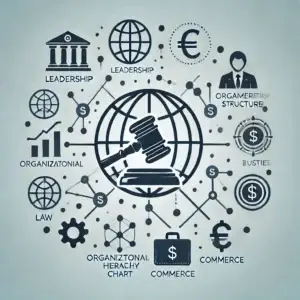
This conceptual infographic illustrates the interplay between core elements of business, economics, and law. At the center, a gavel over a globe symbolizes the rule of law within a globalized world. Surrounding it are icons for leadership, organizational structures, legal systems, economic growth, commerce, and monetary symbols (€, $, charts, and gears), connected by a network of dotted lines. Together, they represent the complexity and interdependence of institutional design, regulatory governance, market behavior, and strategic decision-making that shape modern society. The diagram highlights the foundational pillars taught in interdisciplinary education and applied in global corporate and legal environments.
Choose a Doorway into Business, Economics & Law
Business Administration
Lead teams, design operations, and shape strategy with data, empathy, and execution.
Accounting
Master financial statements, control, and assurance to guide decisions with credible numbers.
Economics
Understand incentives, markets, and policy to explain growth, risk, and real-world trade-offs.
Corporate Law
Navigate governance, contracts, and M&A to protect value and enable innovation.
International Law
Explore treaties, arbitration, and human rights across borders and legal systems.
Environmental Law
Balance development with stewardship through regulation, compliance, and policy design.
See the Bigger Picture
STEM
Leverage data, AI, and engineering to build scalable, defensible businesses.
Humanities & Social Sciences
Add ethical reasoning and cultural awareness to leadership and policy.
Arts, Design & Media
Strengthen brands with design systems, storytelling, and public trust.
Education
Build learning cultures and talent pipelines that support sustainable growth.
Health
Understand healthcare markets, regulation, and the business of wellbeing.
Leadership, Organizational Structure, Commerce, and Legal Systems: Point of Convergence
These fields work together to shape how organizations function, make decisions, and create value. By exploring leadership, organizational design, commerce, and legal systems, students gain powerful tools to guide change, uphold fairness, and meet the demands of a shifting global landscape.
- Lead Effectively: Leadership is more than managing—it’s about inspiring. True leaders bring people together under a shared vision, build trust, and lead with empathy. They adapt to uncertainty, communicate clearly, and energize diverse teams. Whether in business, government, or nonprofits, leaders today must foster innovation, manage conflict, and guide people through change. Courses in leadership explore models like transformational and servant leadership, while sharpening skills in emotional intelligence and ethical judgment. Through hands-on learning and real-world case studies, students prepare to lead with purpose, courage, and compassion.
- Optimize Structures: An organization’s structure defines how it thinks, moves, and grows. Good design helps teams collaborate, share information, and stay agile. Poor design leads to confusion, bottlenecks, and inefficiency. This area teaches students to evaluate and reshape how authority and workflow are distributed—whether through traditional hierarchies or more modern flat or matrix models. They also explore how to manage change, lead system-wide transformations, and apply systems thinking. A well-structured organization is never static—it evolves with the times, aligning structure with strategy and people with purpose.
- Drive Commerce: Commerce powers the flow of goods, services, and ideas. To drive it well, one must understand how markets behave, how customers think, and how innovation takes root. This domain explores everything from pricing and product development to digital disruption and data analytics. Students learn how companies use technology to optimize performance, predict trends, and deliver value globally. Topics include supply chains, brand building, consumer behavior, and business models. Critical thinking is key—balancing cost and quality, speed and service, growth and sustainability.
- Ensure Compliance: Law is the invisible scaffolding of every institution. It defines rights, duties, and boundaries. This area prepares students to understand legal systems, uphold standards, and protect both people and organizations. Topics include contracts, labor rights, environmental law, data privacy, and ethics. More than just knowing the rules, compliance means designing systems that prevent misconduct and manage risk. Students also explore public policy, global legal frameworks, and the role of governance in building trust. As scrutiny rises and regulation grows more complex, the ability to guide institutions with legal clarity and moral confidence becomes ever more vital.
Together, these areas offer a panoramic view of how institutions lead with vision, adapt with grace, build value with integrity, and serve society with accountability. They prepare individuals not just to succeed in their careers—but to help shape a wiser, fairer, and more resilient world.
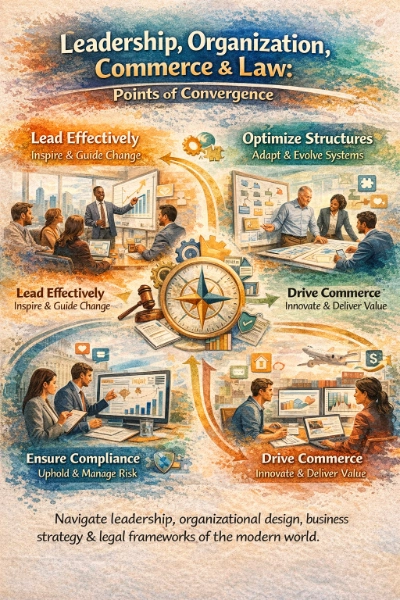
A watercolor-style infographic that presents leadership, organizational structure, commerce, and legal systems as interconnected foundations of effective institutions. A large compass at the center symbolizes direction, governance, and purposeful decision-making. Four illustrated scenes radiate outward: a leader guiding a meeting (inspiration and change), a team reviewing an organizational plan (structure and workflow), professionals analyzing performance and market data with logistics and finance cues (commerce and value creation), and a scene anchored by legal and security symbols (compliance, ethics, and risk management). Warm-to-cool gradients and linking arrows reinforce the idea that these domains converge to help organizations adapt responsibly, build trust, and operate with accountability in a global environment.
Interdisciplinary Business and Law Education: Learning Zones
1. Business Administration
- Overview: The study of managing organizations, focusing on decision-making, planning, and resource allocation.
- Key Aspects:
- Strategic management, operations, and organizational behavior.
- Data-driven decision-making and process optimization.
- Applications:
- Leading corporate restructuring efforts.
- Implementing performance management systems.
- Examples:

- Managing multinational corporations with diverse operations.

2. Accounting
- Overview: The systematic recording, reporting, and analysis of financial transactions.
- Key Aspects:
- Financial reporting, auditing, and tax compliance.
- Budgeting and cost management.
- Applications:
- Preparing financial statements for public companies.
- Conducting internal audits to improve efficiency.
- Examples:
- Managing budgets for government agencies.

- Advising businesses on tax strategies.

3. Economics
- Overview: Economics is the study of how individuals, businesses, and governments allocate scarce resources to satisfy needs and wants. It focuses on understanding markets, production, and consumption patterns, as well as the factors influencing economic growth and stability.
- Key Aspects:
- Microeconomics: Examining individual and firm-level decisions related to pricing, production, and consumption.
- Macroeconomics: Analyzing large-scale economic factors like inflation, unemployment, and GDP.
- Policy Analysis: Evaluating government policies and their impacts on economic performance.
- Applications:
- Forecasting economic trends to guide business strategies and investments.
- Designing public policies to address unemployment or economic inequality.
- Examples:
- Using demand and supply analysis to optimize pricing strategies.


4. Corporate Law
- Overview: The legal framework governing the formation, operation, and dissolution of corporations.
- Key Aspects:
- Contract negotiation, corporate governance, and compliance.
- Mergers, acquisitions, and intellectual property protection.
- Applications:
- Drafting shareholder agreements and bylaws.
- Advising on corporate restructurings and disputes.
- Examples:
- Negotiating joint ventures between international firms.

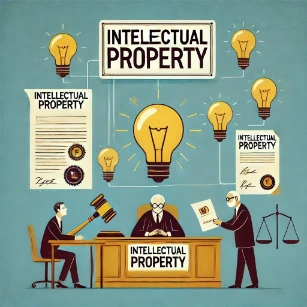
- Handling intellectual property lawsuits.
5. International Law
- Overview: The set of rules and agreements that govern relations between nations and international entities.
- Key Aspects:
- Human rights, trade regulations, and environmental treaties.
- Conflict resolution and arbitration.
- Applications:
- Mediating cross-border trade disputes.
- Advising governments on treaty compliance.
- Examples:
- Drafting trade agreements between global economic blocs.

- Representing NGOs in international courts.

6. Environmental Law
- Overview: The legal principles and policies aimed at protecting the environment and promoting sustainable practices.
- Key Aspects:
- Climate change legislation, conservation laws, and pollution control.
- Advocacy for renewable energy and sustainable development.
- Applications:
- Drafting policies for carbon emission reductions.
- Representing communities affected by environmental degradation.
- Examples:

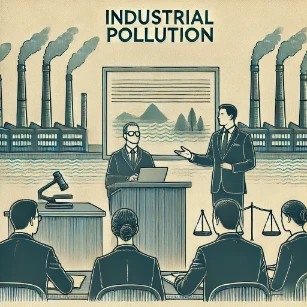
- Litigating cases involving industrial pollution.
How Interdisciplinary Leadership, Governance, and Regulatory Education Shape Society
Corporate Governance
- Good governance is the backbone of strong institutions. It defines how power is used, how decisions are made, and how leaders remain accountable. At its best, it ensures fairness, transparency, and a clear sense of responsibility to all stakeholders—employees, investors, clients, and the wider public.
- Governance isn’t just about rules. It’s also about culture—how ethical behavior, clear roles, and smart risk management are practiced every day. A well-run organization weaves these values into both its formal policies and its daily operations.
- Students in this field examine how boards function, how oversight is structured, and how systems like whistleblower protection help keep institutions honest. They study real-world breakdowns to understand how poor governance can lead to scandal and collapse.
- By the end, learners understand how to lead with integrity—meeting fiduciary duties, following protocols, and building ethical cultures that can endure pressure and change. Solid governance builds trust and helps organizations thrive.
Global Trade and Relations
- Trade now links every part of the world. Businesses, governments, and NGOs work across borders in an environment shaped by politics, regulation, and culture. Navigating this landscape requires more than just business sense—it calls for diplomacy, fairness, and deep cultural understanding.
- This area introduces students to trade laws, logistics, and conflict resolution. It also covers how to build ethical, sustainable relationships between countries and cultures.
- Learners explore how rising markets, regional partnerships, and digital tools are changing how goods, services, and ideas move across borders. They study infrastructure like ports and payment systems, and also the policies behind them.
- Through real-world examples—such as export bans or tariff disputes—students see how legal rules differ by country and how those differences can spark conflict or cooperation. They learn to work within complex systems while building trust between diverse parties.
- Ultimately, this field teaches how value can be shared fairly and responsibly in a connected world—supporting global growth while respecting local needs.
Sustainability and Social Responsibility
- Today, doing good isn’t optional—it’s expected. As society faces climate change and social injustice, institutions are being asked to act with conscience, not just chase profit. That means caring for people, the planet, and future generations.
- Social responsibility includes protecting the environment, supporting fair labor, reducing inequality, and practicing inclusion. Students explore how organizations report on their sustainability efforts and how they align with global standards like the UN Sustainable Development Goals.
- This education redefines success. It’s not just about money—but also about justice, equity, and stewardship. Learners study how to assess true impact, spot greenwashing, and build trust through honest reporting and third-party reviews.
- They also develop bold, practical solutions—like zero-waste programs, circular economy models, and partnerships that uplift local communities. These approaches create value for both the business and society at large.
- Students graduate with the skills to lead real change—shifting cultures, shaping policy, and guiding organizations toward a more ethical and sustainable future.
Technological Innovation
- Technology touches every corner of life. From factories to classrooms, from hospitals to homes, digital tools are reshaping how we work, learn, and live. Leaders today must know how to use these tools wisely and ethically.
- This field covers data science, AI, blockchain, cloud computing, and the Internet of Things. Students don’t just learn how these tools work—they also ask big questions about fairness, privacy, and the social cost of automation.
- They study how tech supports smart decision-making—through dashboards, simulations, and predictive models that help leaders respond fast and stay ahead. These tools turn data into insight and vision into action.
- Success in this space requires teamwork across disciplines. Students learn how to design projects that blend technical and human perspectives—keeping the user in mind and the mission in focus.
- With this knowledge, learners become changemakers. They use emerging technology not to replace people—but to empower them, unlocking better ways to serve, lead, and adapt in a fast-changing world.
What’s in Store for Interdisciplinary Education
AI and Automation in Institutional Practice
- AI and automation are rapidly changing how institutions work. Tasks once reserved for experts—like spotting patterns, managing supply chains, or checking compliance—can now be done by smart systems, often faster and with fewer errors.
- In the classroom, students are learning how to build and guide these systems responsibly. This includes understanding how AI is trained, how bias might creep in, and how technology changes how people interact at work.
- From smart healthcare diagnostics to robots handling routine office work, automation is everywhere. It boosts efficiency and accuracy, but also raises big questions about what jobs remain, who makes the decisions, and how much control we give machines.
- Ethics plays a central role. What happens when a machine makes the wrong call? Who is responsible? These are questions educators and future leaders must answer with care and insight.
- That’s why interdisciplinary learning is key. It combines tech knowledge with wisdom from ethics, sociology, public policy, and beyond—so that future systems are not just powerful, but also fair, transparent, and human-centered.
Global Collaboration
- Our world is more connected than ever. Solving today’s biggest problems—like climate change or digital inequality—requires people from different countries, cultures, and sectors to work together.
- Interdisciplinary education helps students build these bridges. They learn how to lead across cultures, manage conflict, and respect the many ways people see the world and define progress.
- Whether forming a climate pact, sharing medical data, or creating open-source tools, global partnerships blend diplomacy, tech, and shared values. Case studies offer lessons in both triumph and failure—giving students the tools to collaborate better next time.
- Students also learn to spot imbalance. Not all voices are equally heard in global forums. Good collaboration means ensuring equity—so that small, local, or marginalized communities help shape big agendas.
- This isn’t just about working together—it’s about rethinking how we relate to each other. True collaboration honors difference while pursuing common good.
Focus on Diversity and Inclusion
- Inclusive environments don’t just happen—they’re created with care. Diversity is no longer a box to tick, but a powerful force that brings fresh ideas and deeper understanding to every institution.
- Students explore diversity from many angles—race, gender, culture, language, ability, and beyond. They study how exclusion happens, and more importantly, how to break those barriers down.
- Inclusion means more than hiring fairly. It touches leadership, access, design, and the everyday experience of belonging. Whether it’s a boardroom, a classroom, or a website, inclusion makes space for everyone.
- Learners are encouraged to question assumptions, challenge unconscious bias, and design systems that uplift rather than just accommodate. They practice frameworks that foster equity and co-creation.
- The goal? To nurture changemakers who lead with empathy and courage—shaping institutions that truly reflect the diversity of the world they serve.
Sustainable Development Goals (SDGs)
- The SDGs set out a global vision—one where people live with dignity, nature is protected, and no one is left behind. From clean energy to equal rights, these goals unite diverse efforts under one banner of shared humanity.
- Interdisciplinary education is vital to this vision. It equips learners to see connections, uncover root causes, and create lasting solutions that don’t just treat symptoms but transform systems.
- Students work with real-world data from the UN and other global bodies, building skills to measure progress, identify gaps, and propose new paths forward. They draw insights from health, science, ethics, design, and more—bringing many voices to the table.
- Crucially, they learn to localize the SDGs—translating bold global targets into meaningful community actions. From city planning to grassroots advocacy, learners shape projects that reflect local needs and shared dreams.
- In the end, SDG education invites us all to become builders of a better world—grounded in justice, inspired by purpose, and guided by a deep sense of responsibility to future generations.
The Relevant Skills Developed For University and Beyond
1. By Studying Business Administration
Business Administration nurtures a powerful blend of strategic insight, leadership capacity, and organizational finesse. Students learn to read the business landscape, lead teams with purpose, craft effective marketing strategies, and make decisions backed by data and intuition. Along the way, they strengthen their abilities in communication, negotiation, and creative problem-solving—skills that flow naturally across all sectors.
These capabilities extend far beyond corporate boardrooms. Whether launching a startup, investing wisely, coordinating community projects, or navigating complex family decisions, the grounding in Business Administration helps individuals lead with vision, adapt to uncertainty, and move forward with clarity and purpose.
2. By Studying Accounting
Accounting develops a deep respect for accuracy, logical thinking, and financial clarity. Students gain fluency in key practices like budgeting, taxation, auditing, and cost control. Along the way, they sharpen their attention to detail, ethical decision-making, and mastery of accounting software—all essential for interpreting numbers as stories of value and accountability.
The wisdom of accounting lives on beyond the office. It empowers individuals to manage personal finances wisely, plan for the future, and support sound decision-making in businesses, nonprofits, and households. In a world that demands transparency and stewardship, accounting is a steady guide across life’s financial crossroads.
3. By Studying Economics
Economics teaches how choices shape outcomes—on both individual and global scales. Students learn to model data, reason through statistics, forecast trends, and think critically about how markets function. They also explore the far-reaching effects of policies, trade flows, and social inequality on people and nations.
These lessons become lifelong tools. Understanding inflation, job markets, or income gaps helps individuals make better personal decisions and engage meaningfully in public discourse. With economic literacy, one sees not only numbers but the human stories behind them—and gains the insight to shape fairer systems.
4. By Studying Corporate Law
Corporate Law reveals the legal fabric that holds businesses accountable and functional. Students learn to analyze legal texts, draft contracts, assess risk, and navigate regulatory frameworks. Along the way, they refine a strong sense of ethics, sharpen critical thinking, and gain the language of legal reasoning.
Its relevance goes well beyond law firms. From negotiating leases to managing investments or leading a nonprofit, corporate legal knowledge helps individuals engage with the rules that shape society. It offers the tools to protect rights, uphold integrity, and act responsibly in complex professional environments.
5. By Studying International Law
International Law trains minds to think across borders—with legal precision and diplomatic tact. Students learn to interpret treaties, mediate disputes, and advocate for justice within global institutions. They develop skills in cross-cultural communication, legal research, and evaluating the legitimacy of global governance systems.
In an era where global events ripple through every life, this knowledge is vital. Whether working for humanitarian causes, supporting international collaboration, or simply staying informed as a global citizen, International Law opens windows into the rules that shape peace, cooperation, and shared responsibility.
6. By Studying Environmental Law
Environmental Law teaches how to protect the natural world through legal frameworks and advocacy. Students analyze policy, litigate environmental cases, assess impacts, and balance ecological needs with economic development. They are trained to think critically about sustainability—and how laws can enforce it.
Its importance grows every day. As climate change, biodiversity loss, and pollution threaten communities, environmental law becomes a lifeline for the future. Whether shaping green policies or supporting sustainable living, the knowledge empowers individuals to be stewards of the Earth—defenders of a shared planetary home.
Deep Currents: Navigating the Confluence of Business, Economics, and Law
In today’s world, success is shaped not just by profit, but by purpose. The disciplines of leadership, organizational structure, commerce, and legal systems form the backbone of how societies grow and how values are passed on. These areas shape who holds power, how goods and ideas flow, and how justice is upheld across time and borders.
In business, the goal is more than making a product or earning revenue. It’s about bringing ideas to life, managing risk wisely, and building a culture where creativity and accountability thrive together. Great business administration is not just about short-term wins—it’s about building long-term legacies, where ethics guide ambition and strategy walks hand in hand with empathy.
In economics, every choice echoes beyond the numbers. Economic thinking influences policies, shapes global trade, and affects fairness in society. As new issues like climate risk, digital money, and wealth gaps emerge, economics becomes a mirror of what we value. Fields like behavioral economics and development economics remind us that human choices are complex, shaped by emotion, culture, and history—not just cold logic.
The study of law keeps society grounded in fairness and accountability. From ancient codes to modern digital frameworks, law defines the limits of freedom and the duties we owe to each other. In areas like environmental law, intellectual property, and algorithmic bias, law is not just a rulebook—it’s a living language of justice for changing times.
These fields don’t stand apart—they constantly influence one another. Legal systems shape markets. Economic shifts alter corporate strategy. Leadership decisions impact legal outcomes. Together, they form a dynamic whole—a kind of creative chemistry that builds ethical economies and institutions that serve society, not just shareholders.
Today’s world is asking for new ways of doing things. As businesses face climate challenges and digital change, we need systems that care for people and the planet. Ideas like sustainability, social justice, and stakeholder-driven business are no longer fringe—they are essential. Ethics must move from mission statements into supply chains, hiring, and daily choices.
Today’s professionals—whether CEOs, economists, or lawyers—must not only master their tools, but ask deeper questions. What do we mean by “value”? Who benefits from “growth”? What kind of leadership does our connected world truly need? The answers lie not just in strategy documents, but in the moral imagination of those shaping the future.
At its core, the meeting point of business, economics, and law is not about managing money or rules—it’s about rethinking how we thrive together. Can we design systems where profit doesn’t eclipse purpose, where law protects the vulnerable, and where success means health and dignity for all?
In this shared future, cooperation becomes the new currency. To study these fields is to prepare not just for a job, but for shaping the next chapter in the story of humanity.
Business, Economics and Law – Frequently Asked Questions
What is covered under the Business, Economics and Law category on Prep4Uni.online?
The Business, Economics and Law category brings together pages that help you understand how organisations operate, how markets and economies work, and how legal rules shape behaviour. It introduces key ideas from areas such as management, accounting, finance, economics, international business, corporate governance and legal studies, with a focus on university preparation and career pathways.
How can this hub help me decide between studying Business, Economics or Law at university?
This hub helps you compare Business, Economics and Law by showing what each area studies, how they approach problems differently, and what kinds of questions they ask. By exploring the individual pages, you can see whether you are more drawn to organisational decision-making, economic models of markets, or legal reasoning and institutions, and how these choices connect to future careers.
What kinds of skills do Business, Economics and Law subjects tend to develop?
Business, Economics and Law subjects develop analytical thinking, quantitative reasoning, argumentation, and communication skills. You learn to interpret data, read complex texts, construct logical arguments, and explain your conclusions clearly. Many topics also train you in problem-solving under constraints, evaluating trade-offs, and considering both ethical and practical consequences of real-world decisions.
Are Business, Economics and Law very mathematical at university?
Mathematics plays different roles in each area. Economics often uses models, graphs, and statistics; some programmes are quite quantitative, while others focus more on conceptual understanding. Business subjects frequently use numbers in accounting, finance, and data analysis, but also stress qualitative judgement. Law tends to be less mathematical and more text- and argument-based, though commercial and financial law still require numerical awareness.
How do Business, Economics and Law complement each other if I want to combine them?
Business applies tools from Economics and works within legal frameworks, while Law often deals with economic incentives and business practices. Economics offers models for thinking about markets and policy; Business translates those insights into organisational strategy; Law provides the rules and institutions that enable or constrain both. Studying them together gives a more rounded view of how real-world systems operate and change.
What kinds of real-world questions can I explore through this hub?
Through this hub you can explore questions such as how companies are governed and held accountable, why financial crises happen, how global trade is organised, how regulations shape markets, how contracts and intellectual property work, and how economic ideas influence public policy. Each page is designed to connect abstract concepts to concrete issues that appear in news, business practice, and everyday life.
How can I use these pages to prepare for university-style study in Business, Economics or Law?
You can use the pages to practise reading structured explanations, following chains of reasoning, and linking concepts across topics. The site encourages you to ask questions, compare different perspectives, and think about applications rather than just memorising terms. Treat each page as a starting point for deeper reading, note-taking, and discussion, much like an introductory lecture or seminar briefing.
What types of careers are connected to Business, Economics and Law studies?
Careers linked to Business, Economics and Law include roles in management, consulting, accounting, finance, banking, marketing, operations, public policy, economic analysis, regulation, legal practice, corporate governance, compliance, and non-profit or international organisations. The hub helps you see how different subfields support paths into these areas and how skills can transfer across sectors.
How important are writing and communication skills in these disciplines?
Writing and communication are crucial across Business, Economics and Law. You need to explain data and arguments clearly, draft reports or memos, present recommendations, and justify decisions to different audiences. Even highly quantitative work must be communicated in accessible language. University programmes therefore place strong emphasis on structured writing, oral presentations, and careful use of evidence.
Can I move between Business, Economics and Law later if I am unsure now?
In many education systems, there is some flexibility to shift emphasis as you progress, especially between Business and Economics or within broader business schools. Law usually has more specific professional requirements, but background knowledge in Business or Economics can still be helpful. Exploring this hub early allows you to build a foundation that keeps several pathways open while you refine your interests.
What prior subjects at school are useful for Business, Economics and Law?
Useful school subjects include mathematics, economics or business studies where available, and humanities subjects that build reading and writing skills, such as history, literature or geography. For Law, strong language and essay-writing skills are particularly important. For more quantitative Economics or finance-related Business pathways, mathematics and basic statistics are especially helpful.
How should I navigate the Business, Economics and Law section of Prep4Uni.online?
A good approach is to start with the overview material on this hub page, then visit specific sub-pages that match your current questions, such as accounting, corporate governance, international business, economics topics, or legal themes. As you read, follow internal links between pages to see how ideas connect. You can return to this hub whenever you want to compare disciplines or plan the next stage of your exploration.
Interactive Simulator: Business Valuation & Legal Risk Multiplier Modeler
Simulate enterprise valuation by adjusting operational revenue, profit margin, regulatory compliance risk, and macroeconomic growth rates.
Interactive Review Questions (Click to Reveal Answers)
Click on any question below to expand the collapsible toggle and reveal the detailed answer explanation.
What is the scope of business economics and law?
How do economic principles influence business decision-making?
What role does law play in regulating business practices?
How can understanding market structure benefit a business?
What is the significance of corporate governance in business?
How do fiscal and monetary policies affect the business environment?
What is the importance of risk management in business economics?
How does international trade law impact global business operations?
What is the role of ethics in business and legal practices?
How can businesses use economic analysis to drive innovation and competitive advantage?
Comprehensive Practice & Assessment Module
Section 1: Foundational Discipline Principles & Market Dynamics
-
Explain how price elasticity of demand influences business pricing strategy under microeconomic theory.
Answer: Price elasticity of demand measures consumer responsiveness to price changes. If demand is price elastic (elasticity > 1), lowering prices increases total revenue. If demand is price inelastic (elasticity < 1), raising prices increases total revenue without significantly reducing sales volume. -
What is the function of the fiduciary duty of care in corporate governance?
Answer: The duty of care requires corporate directors and officers to make business decisions prudently, in good faith, with reasonable diligence, and with the honest belief that their actions serve the best interests of the corporation and its shareholders. -
Distinguish between fiscal policy and monetary policy in macroeconomic management.
Answer: Fiscal policy involves government taxation and spending decisions managed by national legislatures. Monetary policy involves central bank controls over interest rates, reserve requirements, and money supply to manage inflation and employment. -
Define the economic concept of opportunity cost in capital allocation.
Answer: Opportunity cost represents the potential benefit or financial yield forgone when choosing one investment or business alternative over the next best alternative. -
What constitutes a breach of contract under contract law principles?
Answer: A breach of contract occurs when one party fails to perform a binding obligation promised in a legally valid contract without a recognized legal excuse, entitling the non-breaching party to damages or equitable remedies. -
Explain the function of the Herfindahl-Hirschman Index (HHI) in antitrust regulation.
Answer: The HHI measures market concentration by summing the squares of individual market shares of all firms in an industry. Regulatory bodies use HHI to evaluate whether proposed mergers and acquisitions significantly reduce market competition. -
What is the primary purpose of financial auditing in accounting and governance?
Answer: Financial auditing provides independent assurance that a company's financial statements accurately present its financial position in compliance with accepted accounting standards (such as GAAP or IFRS). -
Describe the principle of limited liability in corporate law.
Answer: Limited liability protects corporate shareholders from personal financial liability for the company's debts and legal obligations beyond the capital amount they originally invested in corporate shares.
Section 2: Advanced Applied Scenarios & Strategic Decision-Making
-
Scenario: Company A is considering an acquisition of competitor Company B. Antitrust regulators express concern over industry concentration. Analyze how regulatory approval might require divestiture remedies.
Answer: Regulators assess whether the combined entity's post-merger market share creates market power that hurts consumers. To secure regulatory approval under competition law, Company A can negotiate structural remedies—such as divesting overlapping business divisions or manufacturing plants to third-party competitors—to preserve market competition. -
Evaluate how central bank interest rate increases impact corporate capital budgeting and net present value (NPV) calculations.
Answer: Rising central bank interest rates increase borrowing costs and elevate the Weighted Average Cost of Capital (WACC), which serves as the discount rate in NPV calculations. A higher discount rate reduces the present value of future cash flows, leading companies to reject marginal expansion projects. -
Analyze the legal and economic trade-offs of patent protection in technology-driven industries.
Answer: Patents grant temporal monopoly rights (typically 20 years) that allow innovating firms to recoup high research and development costs. However, patent protection creates temporary economic deadweight loss and restricts immediate price competition, requiring balanced patent terms and compulsory licensing provisions. -
Explain how ESG (Environmental, Social, and Governance) compliance metrics alter corporate risk management strategies.
Answer: ESG integration shifts risk management from short-term financial returns to long-term sustainability. Incorporating ESG standards helps firms avoid regulatory penalties, mitigate supply chain disruptions, lower debt costs, and attract institutional capital focused on sustainable governance. -
Scenario: A domestic government enacts a 15% tariff on foreign solar panel imports. Predict the microeconomic impact on domestic solar installers and consumers.
Answer: The tariff increases the domestic price of foreign solar panels. While domestic solar panel manufacturers benefit from reduced competition, downstream solar installation firms face higher supply costs, raising installation prices for consumers and reducing total market demand for clean energy installations. -
Discuss how agency theory explains conflict between corporate management (agents) and shareholders (principals).
Answer: Agency theory addresses information asymmetry and goal misalignment where managers may prioritize short-term personal bonuses or empire-building over long-term shareholder value. Corporate governance mechanisms (such as performance-based stock options and independent boards) align manager and shareholder incentives. -
Explain the function of international commercial arbitration clauses in cross-border supply chain agreements.
Answer: Arbitration clauses allow contracting multinational firms to resolve disputes before neutral arbitral tribunals (e.g., ICC, SIAC) rather than navigating local foreign courts, ensuring confidential proceedings and cross-border enforcement under the New York Convention.
Section 3: Applied Mathematical & Financial Calculations
-
Profit Margin & Operating Performance Calculation: A corporation generates gross revenue of $500,000 with total operating expenses of $350,000.
Problem: Calculate the Net Profit ($) and Net Profit Margin Percentage (%):Margin = (Profit / Revenue) × 100
Solution:
1. Profit = $500,000 − $350,000 = $150,000.
2. Margin = ($150,000 / $500,000) × 100 = 30.0%.
Net profit is $150,000, yielding a 30.0% profit margin. -
Compound Annual Growth Rate (CAGR) Model: An enterprise investment valuation grows from an initial value of $10,000 to $15,000 over a holding period of 5 years.
Problem: Calculate the Compound Annual Growth Rate (CAGR):CAGR = (Final Value / Initial Value)(1 / t) − 1
Solution:
1. Value ratio = $15,000 / $10,000 = 1.50.
2. Exponent calculation = (1.50)0.20 = 1.08447.
3. CAGR = 1.08447 − 1 = 0.08447 = 8.45%.
The CAGR of the investment is 8.45%. -
Legal Retainer Billable Hours Calculation: A commercial legal firm charges an hourly billing rate of $250. Preparing a complex corporate merger case requires 45 billable lawyer hours.
Problem: Calculate the Total Legal Fee billed to the client.
Solution:
1. Total fee = 45 hours × $250 = $11,250.
The total legal preparation fee is $11,250. -
Operating Cost Reduction Savings Model: A logistics corporation cuts operating costs by 15% from its baseline operating budget of $200,000.
Problem: Calculate total cost savings ($) and new operating expense budget ($).
Solution:
1. Savings = $200,000 × 0.15 = $30,000.
2. New budget = $200,000 − $30,000 = $170,000.
Cost savings total $30,000, reducing the new budget to $170,000. -
Macroeconomic GDP Expansion Calculation: An annual economic report records a 5% GDP growth rate for an economy with a baseline GDP of $2.50 trillion.
Problem: Calculate the expanded total GDP value in dollars.
Solution:
1. GDP growth increment = $2.50 trillion × 0.05 = $0.125 trillion ($125 billion).
2. New total GDP = $2.500 trillion + $0.125 trillion = $2.625 trillion.
The new GDP total is $2.625 trillion. -
Marketing Return on Investment (ROI) Metric: A tech startup spends $75,000 on a digital customer acquisition campaign, generating $300,000 in incremental product sales.
Problem: Compute the Marketing ROI percentage:ROI = [(Sales Revenue − Marketing Cost) / Marketing Cost] × 100
Solution:
1. Net incremental profit = $300,000 − $75,000 = $225,000.
2. ROI calculation = ($225,000 / $75,000) × 100 = 300.0%.
The marketing campaign generated an ROI of 300.0%. -
Revenue Forecasting Growth Model: A financial analyst forecasts an annual growth rate of 10% for a business currently generating $1,200,000 in revenue.
Problem: Calculate expected annual revenue for next year.
Solution:
1. Growth factor = 1 + 0.10 = 1.10.
2. Forecasted revenue = $1,200,000 × 1.10 = $1,320,000.
Expected revenue next year is $1,320,000. -
Annual Inflation Price Adjustment Model: Economic indicators predict an annual inflation rate of 3.0%. A industrial equipment product currently costs $50.00.
Problem: Compute the inflation-adjusted product price after one year.
Solution:
1. Price increase = $50.00 × 0.03 = $1.50.
2. Adjusted price = $50.00 + $1.50 = $51.50.
The price after one year is $51.50.