

This bright illustration portrays an inclusive learning environment where students with diverse needs learn alongside peers. Several students use wheelchairs while working at tables in small groups, and teachers stand nearby guiding and encouraging collaboration. A large heart-shaped puzzle icon at the center symbolizes individualized learning plans, understanding, and the idea that each learner brings unique strengths. Around the room are icons for communication, accessibility, and learning tools, while a window with trees suggests a welcoming, supportive setting. The overall message is that special education combines care, adapted strategies, and community to help all learners succeed.
The Flow of Learning Within an Educational Ecosystem
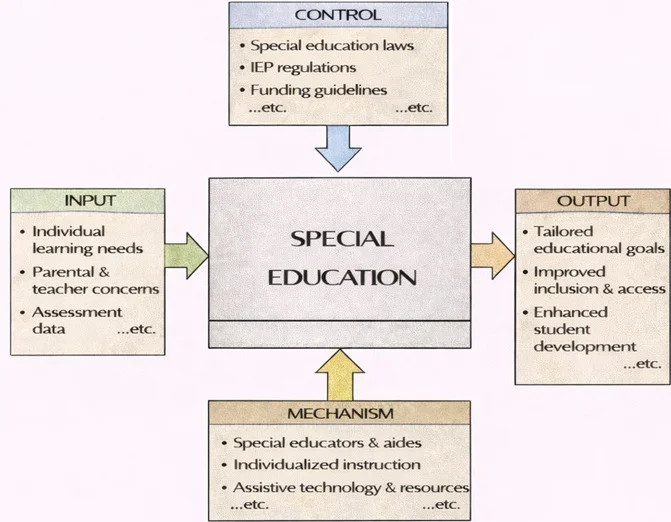
Education functions as a living ecosystem where knowledge flows between learners, educators, systems, and tools. Each domain contributes to this movement—shaping how learning begins, evolves, adapts, and extends across different stages and environments.
Focus of Special Education
Special education aims to provide tailored support to learners with diverse needs, recognizing that each student’s challenges and strengths are unique. This involves:
- Supporting Learners with Disabilities: Providing resources and interventions for students with conditions like autism spectrum disorder (ASD), attention-deficit/hyperactivity disorder (ADHD), and dyslexia.
- Nurturing Gifted Learners: Developing programs to challenge and stimulate intellectually advanced students.
- Fostering Inclusivity: Promoting environments where all learners feel valued, supported, and able to contribute.
Special education emphasizes the importance of collaboration among educators, families, and specialists. It combines innovative strategies, assistive technologies, and individualized attention to empower learners and help them thrive academically, socially, and emotionally.
Key Areas in Special Education
1. Inclusive Education
- Definition: Creating educational settings where students with diverse abilities learn together in a supportive environment.
- Principles of Inclusion:
- Ensuring that all students, regardless of abilities, have access to the same opportunities.
- Promoting collaboration among students to foster understanding and acceptance.
- Addressing physical, social, and instructional barriers to participation.
- Examples of Inclusive Practices:
- Co-teaching models where general and special education teachers collaborate.
- Modifying classroom materials and activities to accommodate various learning styles.
- Impact:
- Encourages peer interactions and reduces stigma around disabilities.
- Prepares all students for diverse workplaces and communities.
2. Individualized Education Plans (IEPs)
- Definition: A customized educational plan designed to meet the unique needs of a student with disabilities.
- Components of an IEP:
- Specific learning goals and objectives.
- Strategies and accommodations to address challenges.
- Assessment methods to track progress.
- Role of Educators and Specialists:
- Collaborating with families to set achievable goals.
- Regularly updating the plan based on student progress and evolving needs.
- Examples:
- Providing extended time for tests for students with dyslexia.
- Developing speech therapy goals for a child with language delays.
3. Assistive Technology
- Definition: Tools and devices that enhance learning and accessibility for students with disabilities.
- Types of Assistive Technologies:
- Communication Devices: Tools like speech-generating devices for nonverbal students.
- Learning Aids: Screen readers and text-to-speech software for visually impaired students.
- Mobility Tools: Wheelchairs and adaptive desks for students with physical disabilities.
- Applications:
- Supporting independent learning and communication.
- Reducing barriers to accessing curriculum materials.
- Examples:
- Using augmentative and alternative communication (AAC) devices for children with speech impairments.
- Providing noise-canceling headphones for students with sensory sensitivities.
Interactive Special Education Tool: IEP Goal & Accommodation Simulator
Use this interactive tool to evaluate instructional accommodations, universal design for learning (UDL) principles, and calculate recommended assessment time adjustments based on disability accommodations.
IEP Accommodation & Test Time Calculator
Accommodated Plan Summary
Applications of Special Education
1. Training Educators to Support Diverse Learners
- Overview: Special education equips teachers with the knowledge and skills to address the needs of students with disabilities or learning differences.
- Strategies:
- Professional development programs on inclusive teaching practices.
- Workshops on understanding conditions like autism or ADHD.
- Examples:
- Training teachers to use behavior management techniques for students with emotional disorders.
- Guiding educators in designing multi-sensory learning activities for students with dyslexia.
2. Advocating for Equitable Access to Education
- Overview: Special education promotes policies and initiatives that ensure students with diverse needs have access to quality education.
- Key Efforts:
- Campaigning for funding for special education programs and resources.
- Ensuring compliance with laws like the Individuals with Disabilities Education Act (IDEA).
- Examples:
- Lobbying for accessible school infrastructure, including ramps and elevators.
- Advocating for smaller class sizes to enhance individualized attention.
3. Supporting Emotional and Social Development
- Overview: Special education addresses the emotional well-being and social integration of students with diverse needs.
- Strategies:
- Providing counseling services to help students manage anxiety or behavioral challenges.
- Facilitating peer mentoring programs to build social skills.
- Examples:
- Teaching conflict resolution techniques to students with emotional regulation difficulties.
- Organizing group activities that encourage collaboration and teamwork.
Emerging Trends in Special Education
Universal Design for Learning (UDL):
- A framework that makes curriculum accessible to all learners by providing multiple ways to engage, represent, and express learning.
- Examples:
- Using visual aids, audio resources, and hands-on activities to teach concepts.
- Offering flexible seating arrangements to accommodate different needs.
Data-Driven Personalization:
- Leveraging data and analytics to customize educational strategies and interventions.
- Examples:
- Monitoring progress through digital learning platforms.
- Adjusting teaching methods based on real-time feedback.
Increased Use of Technology:
- Integrating advanced tools like AI and virtual reality into special education.
- Examples:
- Using VR simulations to teach life skills to students with autism.
- AI-driven apps that adapt content based on student performance.
Focus on Mental Health:
- Addressing the intersection of mental health and learning disabilities through integrated support systems.
Challenges in Special Education
Resource Constraints:
- Many schools lack funding for specialized staff, equipment, and programs.
Teacher Shortages:
- A global shortage of trained special education teachers limits the availability of quality support.
Stigma and Misconceptions:
- Persistent stigma around disabilities can hinder the inclusion of students in mainstream settings.
Policy Implementation:
- Ensuring that policies designed to support special education are effectively implemented across all schools.
Future Directions in Special Education
Expanded Inclusion Efforts:
- Increasing access to inclusive classrooms and promoting collaboration between general and special education teachers.
Enhanced Family Engagement:
- Providing resources and training to empower families as active participants in their children’s education.
Global Collaboration:
- Sharing best practices and innovations in special education across countries to improve access and equity.
Research and Innovation:
- Investing in research to develop new interventions and tools for learners with diverse needs.
Why Study Special Education
Understanding the Needs of Diverse Learners
Exploring Inclusive Practices and Educational Equity
Building Skills in Collaboration and Communication
Linking Theory to Practical Strategies
Preparing for Impactful Careers in Education and Support Services
Conclusion on Special Education
Special education is a transformative field that ensures every learner, regardless of ability, has access to quality education and opportunities for growth. By focusing on inclusivity, individualized plans, and advanced tools, special education fosters environments where all students can thrive. While challenges remain, emerging trends and innovations offer promising solutions to enhance accessibility and equity. Through collaboration among educators, families, policymakers, and communities, special education continues to build a more inclusive and supportive world for learners with diverse needs.
Is Special Education Right For You?
Explore career pathways, check your fit, and assess your skills — before you commit to a degree.
Frequently Asked Questions – Special Education
What is special education?
Special education is a tailored instructional approach designed to meet the unique needs of students with disabilities or learning differences. It provides individualized support, adaptive teaching methods, and specialized resources to ensure that all learners have equal opportunities for academic success.
Why is an inclusive classroom environment important in special education?
An inclusive classroom promotes social integration, enhances learning for all students, and fosters a sense of belonging. It benefits special education students by allowing them to learn alongside their peers, which can boost self-esteem and improve social skills.
What are some common strategies used in special education interventions?
Common strategies include differentiated instruction, individualized education programs (IEPs), assistive technologies, and multisensory learning approaches. These methods are tailored to address specific learning needs and help students overcome academic challenges.
How does curriculum adaptation support special education learners?
Curriculum adaptation involves modifying lesson plans, teaching materials, and assessment methods to accommodate the diverse needs of special education learners. It ensures that content is accessible and engaging, promoting better understanding and academic progress.
What role do teachers play in implementing special education programs?
Teachers are central to special education, as they design and deliver individualized instruction, monitor student progress, and collaborate with specialists and families. Their expertise in adaptive teaching is crucial for meeting the unique needs of each learner.
How do assistive technologies enhance learning in special education?
Assistive technologies, such as speech-to-text software, adaptive devices, and interactive learning tools, support students with disabilities by making information more accessible. They help bridge gaps in learning and enable students to participate more fully in classroom activities.
What are the legal frameworks that support special education?
Legal frameworks, including laws and regulations at national and international levels, mandate that schools provide appropriate educational services to students with disabilities. These laws ensure that special education students receive the accommodations and support they need to succeed.
How can family involvement improve outcomes in special education?
Family involvement is crucial because it fosters a collaborative approach between home and school. Engaged parents provide valuable insights into their child’s needs and reinforce learning strategies at home, contributing to a more consistent and supportive educational experience.
What challenges do educators face in special education settings?
Educators often encounter challenges such as limited resources, diverse learning needs, and balancing individualized instruction with group teaching. Overcoming these challenges requires ongoing professional development, effective planning, and strong support systems within the school.
How does early intervention in special education affect long-term student success?
Early intervention is critical because it addresses learning and developmental challenges as soon as they are identified. This proactive approach can lead to improved academic outcomes, enhanced social skills, and greater independence, laying a strong foundation for long-term success.
Special Education: Comprehensive Practice Module
Section 1: Core Concept Review Questions
-
What is special education?
Answer: Special education is a tailored instructional approach designed to meet the unique needs of students with disabilities or learning differences. It provides individualized support, adaptive teaching methods, and specialized resources to ensure that all learners have equal opportunities for academic success. -
Why is an inclusive classroom environment important in special education?
Answer: An inclusive classroom promotes social integration, enhances learning for all students, and fosters a sense of belonging. It benefits special education students by allowing them to learn alongside their peers, which can boost self-esteem and improve social skills. -
What are some common strategies used in special education interventions?
Answer: Common strategies include differentiated instruction, individualized education programs (IEPs), assistive technologies, and multisensory learning approaches. These methods are tailored to address specific learning needs and help students overcome academic challenges. -
How does curriculum adaptation support special education learners?
Answer: Curriculum adaptation involves modifying lesson plans, teaching materials, and assessment methods to accommodate the diverse needs of special education learners. It ensures that content is accessible and engaging, promoting better understanding and academic progress. -
What role do teachers play in implementing special education programs?
Answer: Teachers are central to special education, as they design and deliver individualized instruction, monitor student progress, and collaborate with specialists and families. Their expertise in adaptive teaching is crucial for meeting the unique needs of each learner. -
How do assistive technologies enhance learning in special education?
Answer: Assistive technologies, such as speech-to-text software, adaptive devices, and interactive learning tools, support students with disabilities by making information more accessible. They help bridge gaps in learning and enable students to participate more fully in classroom activities. -
What are the legal frameworks that support special education?
Answer: Legal frameworks, including laws and regulations at national and international levels, mandate that schools provide appropriate educational services to students with disabilities. These laws ensure that special education students receive the accommodations and support they need to succeed. -
How can family involvement improve outcomes in special education?
Answer: Family involvement is crucial because it fosters a collaborative approach between home and school. Engaged parents provide valuable insights into their child’s needs and reinforce learning strategies at home, contributing to a more consistent and supportive educational experience. -
What challenges do educators face in special education settings?
Answer: Educators often encounter challenges such as limited resources, diverse learning needs, and balancing individualized instruction with group teaching. Overcoming these challenges requires ongoing professional development, effective planning, and strong support systems within the school. -
How does early intervention in special education affect long-term student success?
Answer: Early intervention is critical because it addresses learning and developmental challenges as soon as they are identified. This proactive approach can lead to improved academic outcomes, enhanced social skills, and greater independence, laying a strong foundation for long-term success.
Section 2: Analytical & Scenario-Based Inquiry
1. How might emerging assistive technologies further transform the learning experiences of special education students?
Moreover, these technologies can facilitate greater collaboration between educators, therapists, and parents by providing detailed analytics on student progress. Such data-driven insights enable more effective intervention strategies and adjustments to individualized education plans (IEPs). As technology continues to evolve, its integration into special education promises to break down traditional barriers, offering innovative solutions that enhance accessibility and foster deeper, more meaningful learning outcomes.
2. In what ways can inclusive education practices be enhanced to support both special education students and their peers in mainstream classrooms?
Additionally, creating a culture of acceptance and support within the school community is key. Initiatives such as peer mentoring programs and cooperative learning groups encourage students to work together, fostering empathy and understanding. When all students feel valued and supported, it not only enhances academic outcomes but also builds social skills and resilience, contributing to a more harmonious and effective learning environment.
3. How does the implementation of individualized education programs (IEPs) contribute to personalized learning, and what challenges are associated with their use?
However, the implementation of IEPs can be challenging due to factors such as limited resources, time constraints, and variability in teacher expertise. Developing and maintaining effective IEPs requires ongoing assessment, frequent updates, and consistent communication among all stakeholders. These challenges necessitate a strong commitment to professional development and a supportive administrative framework to ensure that IEPs are successfully executed and that they truly enhance the educational experiences of special education students.
4. What impact does early childhood intervention have on long-term academic and social outcomes for students with special needs?
In the long run, early intervention can lead to improved self-esteem, greater independence, and better overall quality of life. Children who receive timely support are more likely to experience smoother transitions into mainstream education and later into higher education or employment. The benefits of early intervention extend beyond academic achievement, contributing to the holistic development of the child and ensuring a more inclusive and supportive society.
5. How can professional development programs for educators be designed to better support special education needs?
Additionally, ongoing professional development should include opportunities for collaborative learning, where teachers can share best practices and strategies with their peers. Mentorship programs, peer observation, and regular feedback sessions can further enhance the learning experience for educators. By continuously updating their skills and knowledge, teachers become more confident and effective in delivering personalized instruction, ultimately improving the outcomes for students with special needs.
6. What are the potential social implications of underfunding special education programs in schools?
Socially, underfunding special education can exacerbate inequality and contribute to the marginalization of individuals with disabilities. When students do not receive the necessary support to reach their full potential, it undermines the principles of equity and inclusion. Addressing funding gaps is essential not only for improving educational outcomes but also for fostering a more inclusive society where every individual has the opportunity to contribute meaningfully.
7. How might emerging research in neuroscience influence approaches to special education?
This research also paves the way for innovative teaching methods that leverage multisensory learning and targeted cognitive training. Neuroimaging and other advanced techniques can help identify the most effective strategies for addressing learning disabilities, ultimately leading to personalized education plans that maximize each student’s potential. As neuroscience continues to evolve, its integration into special education promises to enhance our ability to support diverse learners through evidence-based practices.
8. How can inclusive educational practices in mainstream schools benefit both special education students and their peers?
For peers, inclusive practices enhance empathy, communication skills, and an appreciation for diversity. Exposure to different learning styles and abilities prepares students for a diverse workforce and society, promoting a more inclusive and harmonious community. Overall, inclusive educational practices create a win-win situation, where every student benefits from a supportive and diverse learning environment that enriches the educational experience.
9. What role do parents and caregivers play in the success of special education programs, and how can schools strengthen this partnership?
Schools can strengthen this partnership by fostering open communication, hosting regular parent-teacher meetings, and providing resources and training to help caregivers support their children’s education at home. Collaborative initiatives such as family workshops and support groups can further enhance this relationship, ensuring that parents feel valued and empowered to contribute to the educational process. A strong partnership between schools and families is essential for creating a holistic support system that drives long-term success in special education.
10. How might the integration of technology in special education transform classroom practices and learning outcomes?
Additionally, technology fosters collaboration and communication among educators, students, and parents. Virtual classrooms and online resources can extend learning opportunities beyond the traditional classroom, providing continuous access to educational materials and support. As technology continues to advance, it will play a crucial role in shaping special education, resulting in more inclusive and effective learning environments that empower all students to achieve their full potential.
11. How do policy changes in education funding impact the quality and accessibility of special education programs?
Conversely, reduced funding can limit these opportunities, leading to larger class sizes, outdated materials, and insufficient support services. This can hinder student progress and exacerbate educational disparities. Therefore, policies that prioritize sustained investment in special education are essential for ensuring that all students receive the high-quality instruction and support they need to succeed academically and socially.
12. What are the long-term societal benefits of investing in high-quality special education programs?
Additionally, inclusive and effective special education programs promote social cohesion by fostering an environment where all individuals are valued and supported. This not only benefits the individuals receiving special education but also enriches the broader community by encouraging empathy, diversity, and equal opportunity. Over time, the cumulative effects of high-quality special education contribute to a more just and inclusive society, where every person has the chance to contribute meaningfully to the collective well-being.
Section 3: Mathematical & Quantitative Special Education Calculations
-
IEP Testing Time Multiplier Calculation: A standardized exam has a standard time limit of 90 minutes. An IEP specifies a time accommodation of 1.5x extended time. Calculate the total testing duration and the extra time provided.
Answer:Total Time = Standard Duration × Multiplier
Total Time = 90 × 1.5 = 135 Minutes (2 hours 15 minutes).
Extra Time = 135 – 90 = 45 Minutes. -
Special Education Caseload Compliance Ratio: State guidelines require a maximum ratio of 1 special education teacher per 15 students with active IEPs. If a school district has 108 students with IEPs, calculate the minimum number of full-time special education teachers required.
Answer:Minimum Teachers Required = Total IEP Students / Maximum Ratio
Teachers = 108 / 15 = 7.2
Conclusion: Since staffing must be in whole personnel, the district must employ at least 8 full-time special education teachers to remain in legal compliance. -
Least Restrictive Environment (LRE) Percentage: A student spends 25 hours per week in a general education classroom out of a total 30-hour school week. Calculate the LRE general education inclusion percentage.
Answer:LRE Inclusion Percentage = (General Ed Hours / Total School Hours) × 100
LRE % = (25 / 30) × 100 ≈ 83.33%
Interpretation: The student is in the general education setting for 83.33% of the school week, meeting the federal benchmark for general class placement (> 80%). -
Behavioral Intervention Frequency Rate (ABC Data): During a 45-minute observational period, a student exhibits 9 instances of off-task behavior. Calculate the rate of target behavior per hour.
Answer:Observation Duration = 45 minutes = 0.75 hours.
Behavior Rate = 9 instances / 0.75 hours = 12 instances per hour.
Interpretation: The baseline rate is 12 disruptive behavior occurrences per hour, establishing the metric for evaluating intervention efficacy. -
Assistive Technology Cost Efficiency Ratio: An augmentative communication (AAC) device costs $2,400 with an expected lifespan of 4 years. Calculate the annualized cost per student.
Answer:Annualized Cost = Total Equipment Cost / Lifespan in Years
Annualized Cost = $2,400 / 4 = $600 per year (or $50 per month across 12 months). -
Disproportionate Representation Risk Ratio: In a district of 10,000 students (2,000 Group A, 8,000 Group B), 100 Group A students and 160 Group B students are identified for special education. Calculate the risk ratio for Group A relative to Group B.
Answer:Risk for Group A = 100 / 2,000 = 0.05 (5.0%).
Risk for Group B = 160 / 8,000 = 0.02 (2.0%).
Risk Ratio = Risk(Group A) / Risk(Group B) = 0.05 / 0.02 = 2.50
Interpretation: Group A students are 2.5 times as likely to be identified for special education compared to Group B, indicating significant disproportionate representation requiring state audit. -
Speech-Language Intervention Growth Rate: A non-verbal student learns 4 new functional signs per month baseline. Following an enhanced tactile-visual intervention, sign acquisition increases to 10 signs per month. Calculate the percentage increase in learning velocity.
Answer:Absolute Gain = 10 – 4 = 6 signs per month.
Percentage Increase = (Gain / Baseline) × 100
Percentage Increase = (6 / 4) × 100 = 150% increase in acquisition velocity.