
From Confrontation to Cooperation: Resolving Conflict in a Complex World
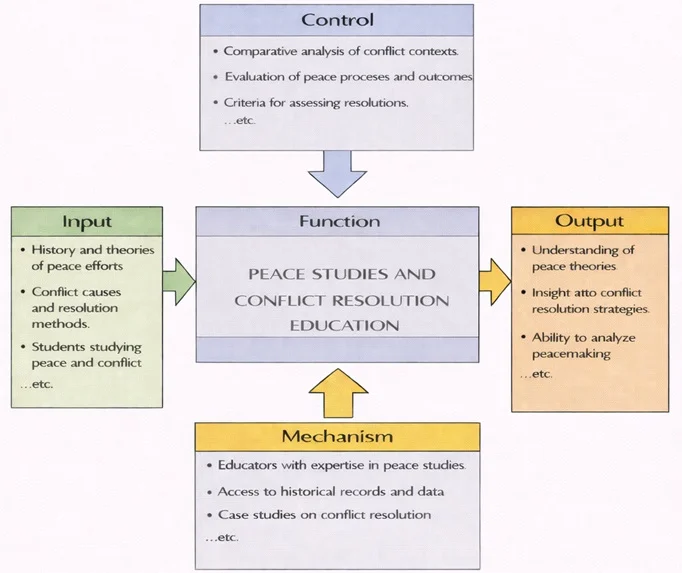
Peace Studies & Conflict Resolution (Current Unit)
Examines how diplomacy, negotiation, and institutions work systematically to prevent conflict, repair fractured societies, and build lasting structural stability.
Military Strategic Studies
Connects strategic decision-making and force posture with escalation control, deterrence theory, and realistic diplomatic pathways toward conflict resolution.
Economic History of Warfare
Explores how financial pressures, resource constraints, economic sanctions, and post-war reconstruction requirements dictate treaty viability and peace processes.
Social and Cultural History of Warfare
Highlights how war-torn communities process trauma, reconstruct identity, restore civil cohesion, and rebuild long-term interpersonal trust after conflict.
Guerrilla Warfare & Insurgency Studies
Examines how asymmetric and irregular conflicts require alternative resolution strategies, political integration, and non-traditional negotiation frameworks.
Naval History
Demonstrates how maritime security, freedom of navigation, and shared control of global trade routes foster maritime diplomacy alongside geopolitical competition.
Air Power History
Investigates how rapid projection capabilities and aerial deterrence influence ceasefire negotiations, enforcement, and escalation management.
Technological History of Warfare
Explores how technological advancements double as both instruments of escalation and essential tools for satellite verification, monitoring, and peacekeeping.
Military History Overview
Provides the macro-historical framework unifying military doctrine, geopolitical strategy, statecraft, and the overarching human pursuit of peace.
Key Focus Areas in Peace Studies and Conflict Resolution
Understanding the Causes of Conflict
Types of Conflict
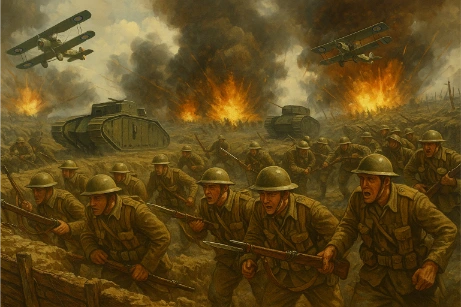
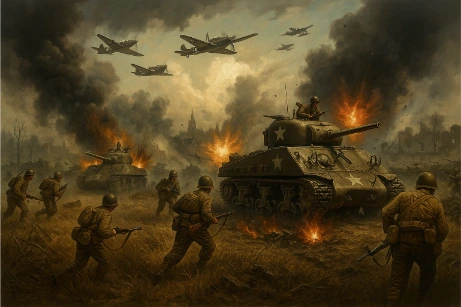
- Interstate Conflicts: Wars and disputes between nations. Example: World Wars I and II.
- Intrastate Conflicts: Civil wars and internal strife. Example: The Syrian Civil War.
- Ethnic and Religious Conflicts: Conflicts shaped by identity, fear, political exclusion, and historical grievance. Example: The Rwandan Genocide (1994).
- Resource-Based Conflicts: Disputes driven by access to land, water, minerals, energy, or other scarce resources. Example: Conflicts over water resources, such as disputes in the Nile Basin.
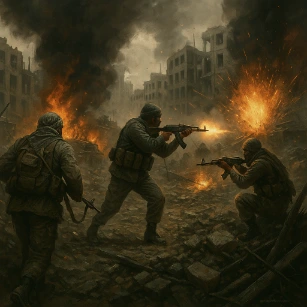
Examples of Conflicts in Pictures
Root Causes
- Political and economic inequality.
- Historical grievances and colonial legacies.
- Competition over resources and territorial disputes.
- Ideological, cultural, and religious differences.
Post-War Reconciliation Efforts
Transitional Justice
- Transitional justice refers to mechanisms that address past injustices and human rights violations.
- Examples:
- Truth and Reconciliation Commissions, such as in South Africa after apartheid.
- War crime tribunals, such as the International Criminal Tribunal for the former Yugoslavia, or ICTY.
Community Healing and Restoration
- Grassroots Approaches: Encouraging dialogue and mutual understanding among communities.
- Cultural Initiatives: Using art, music, and storytelling to heal wounds and preserve collective memory.
- Example: Rwanda’s Gacaca courts promoted restorative justice by involving local communities in addressing the aftermath of the genocide.
Treaty Negotiations
Historical Treaties
- Treaty of Westphalia (1648): Ended the Thirty Years’ War in Europe and established principles of state sovereignty and non-interference, shaping modern international relations.
- Treaty of Versailles (1919): Ended World War I but imposed heavy reparations on Germany, contributing to long-term instability.
Modern Peace Agreements
- Good Friday Agreement (1998): Ended decades of sectarian violence in Northern Ireland and focused on power-sharing, disarmament, and cross-border cooperation.
- Dayton Accords (1995): Ended the Bosnian War by establishing a framework for governance and territorial division.
Peace-Building Strategies
Key Components
- Institutional Development: Strengthening governance, rule of law, and democratic institutions.
- Economic Reconstruction: Promoting development, reducing poverty, and addressing economic inequalities.
- Social Integration: Encouraging inclusivity and participation across ethnic, religious, and cultural lines.
Examples of Peace-Building Efforts
- United Nations Peacebuilding Commission: Supports countries transitioning from conflict to peace by coordinating international resources and expertise.
- Post-War Japan and Germany: U.S.-led reconstruction efforts after World War II transformed these nations into stable democracies and economic powers.
Peacekeeping Missions
Key Roles of Peacekeepers
- Monitoring ceasefires and agreements.
- Protecting civilians from violence and human rights abuses.
- Supporting humanitarian aid and facilitating elections.
Examples of Peacekeeping Missions
- United Nations Interim Force in Lebanon, or UNIFIL: Monitors the cessation of hostilities between Israel and Lebanon.
- United Nations Mission in South Sudan, or UNMISS: Works to protect civilians and support the implementation of the peace agreement in South Sudan.
Challenges in Peacekeeping
- Limited resources and funding.
- Lack of coordination between international and local actors.
- Resistance from conflicting parties.
Nonviolent Conflict Resolution
Mediation and Negotiation
- Mediators act as neutral parties to facilitate communication and resolve disputes.
- Examples:
- Norway’s mediation in the Israeli-Palestinian peace process, including the Oslo Accords of 1993.
- The African Union’s role in mediating conflicts in Ethiopia and Sudan.
Civil Resistance
- Civil resistance includes nonviolent protests, boycotts, and civil disobedience.
- Examples:
- Mahatma Gandhi’s nonviolent resistance against British colonial rule in India.
- The Civil Rights Movement in the United States, led by figures such as Martin Luther King Jr.
Significant Examples in Peace Studies and Conflict Resolution
Treaty of Westphalia (1648)
- Impact:
- Marked the end of large-scale religious wars in Europe.
- Introduced the concept of state sovereignty, which remains foundational in international law.

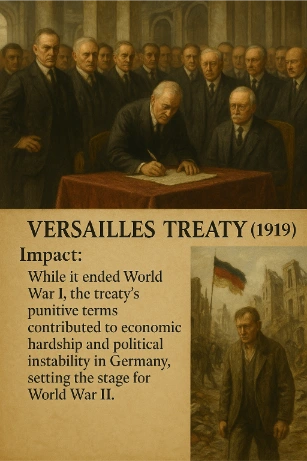
Versailles Treaty (1919)
- Impact: While it ended World War I, the treaty’s punitive terms contributed to economic hardship and political instability in Germany, setting the stage for World War II.
Modern Peacekeeping Missions
- Example: The United Nations in Rwanda (1994): Despite failures to prevent the genocide, lessons from Rwanda reshaped future peacekeeping practices, emphasizing the importance of early intervention and robust mandates.
Interactive Negotiation & Conflict Settlement Calculator
Use this programmatic simulator to model diplomatic compromise, bargaining zones, and potential agreement outcomes based on party flexibility and overlap.
Conflict Settlement Zone Calculator (BATNA & ZOPA Analysis)
Adjust party reservation points (minimum acceptable outcomes on a 0-100 scale) to identify the Zone of Possible Agreement (ZOPA) and calculate settlement probability.
Click Analyze Bargaining Zone to calculate the settlement zone.
Applications of Peace Studies and Conflict Resolution
- Conflict Prevention: Identifying early warning signs of conflict and implementing preventive measures.
- Policy Formulation: Informing governments and international organizations on effective strategies for peace-building and conflict resolution.
- Education and Advocacy: Promoting peace education and fostering a culture of nonviolence through community programs and international initiatives.
Challenges in Peace Studies and Conflict Resolution
- Complexity of Conflicts: Multi-faceted issues involving political, economic, cultural, and historical grievances.
- Resistance to Reconciliation: Deep-seated mistrust and trauma can hinder reconciliation efforts.
- Resource Limitations: Lack of funding and expertise often hampers effective peace-building initiatives.
Why Study Peace Studies and Conflict Resolution
Understanding the Roots of Conflict and Pathways to Peace
Exploring Conflict in Diverse Cultural and Political Contexts
Learning Practical Skills in Mediation and Dialogue
Engaging with Ethics, Human Rights, and Social Justice
Preparing for Meaningful Careers and Lifelong Engagement
Interactive Key Concept Explorer
Click on any concept below to reveal detailed explanatory insights and analytical applications.
Negative Peace vs. Positive Peace (Johan Galtung Model)
Track I vs. Track II Diplomacy
BATNA (Best Alternative to a Negotiated Agreement)
Peace Studies and Conflict Resolution: Conclusion
Frequently Asked Questions – Peace Studies and Conflict Resolution
What is peace studies and conflict resolution?
Peace studies and conflict resolution is an interdisciplinary field that examines the causes of violence and the conditions that make peace possible. It explores how conflicts arise, how they escalate, and how individuals, communities, and institutions can transform them through dialogue, negotiation, mediation, and structural change.
How is conflict resolution different from simply ending a conflict?
Simply ending a conflict may stop open violence, but deeper grievances and injustices can remain. Conflict resolution aims to address underlying issues, repair relationships where possible, and create fairer arrangements so that the same problems are less likely to reappear in a more destructive form later.
Why should students consider studying peace studies and conflict resolution?
Studying peace studies and conflict resolution helps students understand how personal, social, and international conflicts are connected. It builds skills in listening, empathy, critical thinking, and problem-solving that are useful not only in diplomacy or peacebuilding careers, but also in leadership roles in business, education, and community work.
What kinds of conflicts are examined in peace studies?
Peace studies looks at many levels of conflict, from interpersonal disagreements and school bullying to labour disputes, community tensions, ethnic violence, civil wars, and international crises. By comparing these cases, students learn how patterns of power, identity, and inequality can operate across very different settings.
What is the difference between negative peace and positive peace?
Negative peace usually refers to the absence of direct violence, such as a ceasefire or truce. Positive peace goes further and involves building just social structures, inclusive institutions, and respectful relationships, so that people can live with dignity and conflict is handled through nonviolent means.
What methods are commonly used in conflict resolution practice?
Common methods include negotiation, mediation, facilitation, dialogue processes, truth and reconciliation commissions, and community-based problem-solving. These approaches focus on helping parties clarify their interests, recognise each other’s perspectives, and jointly design practical, more sustainable agreements.
How do culture and identity influence peacebuilding and conflict?
Culture and identity shape how people interpret events, express grievances, and imagine fair outcomes. In peacebuilding, an awareness of language, symbols, rituals, and historical narratives is crucial. Effective conflict resolution respects cultural differences while encouraging shared norms such as mutual recognition, fairness, and nonviolence.
What role do international organisations and NGOs play in peace and conflict resolution?
International organisations and NGOs can help monitor ceasefires, support negotiations, protect civilians, and fund long-term reconciliation and development efforts. Peace studies examines both the potential and the limitations of these actors, including questions about neutrality, local ownership, and unintended consequences.
How do nonviolent movements contribute to conflict transformation?
Nonviolent movements use strategies such as protests, boycotts, civil disobedience, and creative communication to challenge unjust systems without resorting to armed struggle. Research shows that broad-based nonviolent campaigns can sometimes be more effective than violent uprisings, especially when they mobilise diverse social groups and maintain discipline.
What research skills can students gain from peace studies and conflict resolution?
Students learn to analyse case studies, conduct interviews and fieldwork, interpret peace agreements, and work with both qualitative and quantitative data. They also develop the ability to map stakeholders, identify root causes, and evaluate the impact of different interventions in complex, real-world settings.
What career paths are open to graduates in peace studies and conflict resolution?
Graduates may work in diplomacy, international organisations, non-governmental organisations, education, social services, community mediation, corporate social responsibility, journalism, or public policy. The field offers tools for any role that involves managing disagreement, building trust, and designing fairer systems.
How can this Peace Studies and Conflict Resolution page be used with other Prep4Uni resources?
Learners can pair this page with resources on political history, international relations, human rights, sociology, and regional studies. Linking these pages helps students see how conflicts emerge from broader social and historical processes, and how thoughtful peacebuilding connects law, economics, culture, and everyday life.
Comprehensive Practice & Assessment Module
Section 1: Foundational Review Questions
- What are peace studies and conflict resolution, and why are they important?
Answer: Peace studies and conflict resolution are interdisciplinary fields focused on understanding the causes of conflict and developing strategies to prevent or resolve disputes peacefully. They encompass theories from political science, sociology, psychology, and history to analyze conflicts at all levels, from interpersonal to international. These fields are important because they offer frameworks and tools to mitigate violence, promote dialogue, and foster sustainable peace. By studying past conflicts and resolutions, scholars and practitioners can design effective interventions that contribute to global stability and harmony. - How do historical conflicts contribute to the development of peace studies?
Answer: Historical conflicts provide a wealth of data and lessons that are crucial for developing theories and practices in peace studies. They offer concrete examples of what has led to violence and what measures have successfully reduced tensions. By examining these conflicts, researchers can identify common factors such as economic disparities, political grievances, and social injustices that often trigger wars. These insights are then used to formulate strategies for conflict prevention and resolution, making history a fundamental component in the field of peace studies. - What are some key theories underpinning conflict resolution?
Answer: Key theories underpinning conflict resolution include negotiation theory, mediation and facilitation models, and transformative justice. These theories emphasize the importance of communication, empathy, and mutual understanding in resolving disputes. They suggest that conflicts can be managed through structured dialogue and by addressing the underlying needs and interests of the parties involved. By applying these theoretical frameworks, practitioners can develop strategies that not only end conflicts but also contribute to long-term reconciliation and healing. - How has diplomacy historically contributed to conflict resolution?
Answer: Diplomacy has historically been a central tool in conflict resolution, serving as a means to negotiate peace and manage disputes without resorting to violence. Through diplomatic channels, conflicting parties have been able to communicate, build trust, and reach mutually beneficial agreements. Historical examples, such as the treaties that ended major wars, demonstrate how effective diplomacy can prevent the escalation of conflicts. This legacy underscores the value of dialogue and negotiation in fostering peaceful resolutions and stabilizing international relations. - In what ways do cultural factors influence conflict resolution strategies?
Answer: Cultural factors play a significant role in shaping conflict resolution strategies by affecting how parties perceive disputes and negotiate solutions. Different cultures have unique communication styles, value systems, and approaches to authority, all of which can impact the dynamics of conflict and resolution. Recognizing and respecting these cultural differences is essential for mediators and negotiators to tailor their approaches effectively. By incorporating cultural sensitivity into conflict resolution, practitioners can bridge gaps, build trust, and create solutions that are more likely to be accepted by all parties involved. - What role do non-governmental organizations, or NGOs, play in promoting peace and resolving conflicts?
Answer: Non-governmental organizations, or NGOs, play a vital role in promoting peace and resolving conflicts by facilitating dialogue, providing humanitarian aid, and advocating for policy reforms. NGOs often operate in areas where state institutions are weak or absent, offering grassroots support and conflict mediation services. They work to empower local communities, build capacities, and promote inclusive decision-making processes. Through their efforts, NGOs help to create an environment conducive to sustainable peace and long-term conflict resolution by addressing both immediate needs and underlying causes of conflict. - How do negotiation and mediation differ as conflict resolution techniques?
Answer: Negotiation and mediation are two primary conflict resolution techniques that differ mainly in their approach and the role of third parties. Negotiation involves direct dialogue between conflicting parties to reach an agreement, while mediation involves a neutral third party who facilitates the discussion and helps guide the parties toward a resolution. In negotiation, the parties have complete control over the outcome, whereas mediation provides an external perspective to overcome impasses and build trust. Both methods are essential in conflict resolution, and their effectiveness often depends on the context and the willingness of the parties to engage in open and constructive dialogue. - What challenges arise in resolving conflicts that have deep historical and ideological roots?
Answer: Conflicts with deep historical and ideological roots present significant challenges because they are often intertwined with identity, tradition, and long-standing grievances. Such conflicts tend to be more resistant to resolution due to the emotional and symbolic significance attached to the issues at stake. The complexity of these conflicts makes it difficult to address the underlying causes without challenging deeply held beliefs and historical narratives. Effective resolution often requires a long-term, multifaceted approach that includes reconciliation, truth-telling, and transformative justice measures to heal the wounds of the past and build a foundation for lasting peace. - How can educational initiatives contribute to the prevention of conflicts?
Answer: Educational initiatives contribute to the prevention of conflicts by fostering critical thinking, cultural awareness, and empathy among individuals from an early age. By integrating peace studies and conflict resolution into educational curricula, societies can equip future generations with the skills and knowledge to manage disputes constructively. Education promotes understanding and tolerance, reducing the likelihood of conflicts arising from ignorance and prejudice. Moreover, well-informed citizens are better able to engage in democratic processes and advocate for policies that promote social justice and peace, ultimately contributing to a more stable and harmonious society. - How do peace studies integrate interdisciplinary approaches to address complex global conflicts?
Answer: Peace studies integrate interdisciplinary approaches by combining insights from political science, sociology, history, psychology, and economics to understand and address the multifaceted nature of global conflicts. This approach allows scholars to analyze the underlying causes of violence and develop comprehensive strategies that consider economic, cultural, and social dimensions. By drawing on diverse perspectives, peace studies offer more holistic solutions that can effectively address both the symptoms and root causes of conflicts. This interdisciplinary framework is crucial for designing interventions that are adaptable, sustainable, and capable of fostering long-term peace and reconciliation.
Section 2: Analytical & Scenario-Based Questions
- How might emerging global challenges such as climate change and pandemics reshape conflict resolution strategies in the future?
Answer: Emerging global challenges such as climate change and pandemics are likely to reshape conflict resolution strategies by introducing new sources of tension and cooperation among nations. As these challenges create resource scarcities, mass migrations, and public health crises, they may lead to increased competition over essential resources and exacerbate existing conflicts. However, these shared global threats also offer opportunities for collaborative problem-solving, where nations come together to develop joint strategies for mitigation and adaptation. Future conflict resolution strategies will need to incorporate environmental sustainability and public health considerations, ensuring that solutions address both immediate security concerns and long-term resilience. In addition, these global challenges will likely necessitate the evolution of international institutions and diplomatic mechanisms to manage transboundary issues more effectively. - In what ways can technological innovations, such as virtual reality and artificial intelligence, enhance conflict resolution and peacebuilding efforts?
Answer: Technological innovations such as virtual reality (VR) and artificial intelligence (AI) have the potential to significantly enhance conflict resolution and peacebuilding efforts by transforming how stakeholders engage with and understand complex issues. VR can be used to create immersive simulations of conflict scenarios, allowing mediators and negotiators to visualize potential outcomes and explore the impacts of various strategies in a controlled environment. AI, on the other hand, can analyze vast amounts of data to identify patterns, predict conflict trends, and provide decision support in real time. By processing historical data, social media trends, and economic indicators, AI can offer insights into potential flashpoints and help design proactive interventions. - How might the role of non-state actors evolve in global conflict resolution processes in the coming decades?
Answer: The role of non-state actors—such as NGOs, multinational corporations, and civil society organizations—is expected to evolve significantly as their influence on international affairs grows. In the future, their involvement is likely to become even more prominent as they leverage technology, data, and global networks to mobilize resources and expertise in conflict zones. These organizations can offer neutral platforms for dialogue and contribute to comprehensive peacebuilding efforts by addressing both immediate humanitarian needs and underlying causes of conflict. As global governance evolves, collaboration between state and non-state entities will be essential for developing resilient conflict resolution frameworks. - How can historical examples of reconciliation and restorative justice inform modern peacebuilding initiatives?
Answer: Historical examples of reconciliation and restorative justice, such as post-apartheid South Africa’s TRC or Rwanda’s Gacaca courts, show that sustainable peace is not achieved solely through punitive measures but through restoring relationships and acknowledging suffering. Modern peacebuilding can adapt these historical practices by incorporating inclusive dialogue, community-level forums, and institutional truth-telling to ensure all stakeholders participate in societal healing. - How might the integration of economic development strategies with conflict resolution efforts enhance long-term stability?
Answer: Integrating economic development with conflict resolution ensures that post-war agreements address the structural inequalities and resource scarcities that originally fueled conflict. By combining job creation, infrastructure rebuilding, and equitable resource allocation with political treaties, peace agreements deliver tangible living improvements, reducing the economic incentive for groups to re-arm. - What impact does media coverage have on public perceptions of conflict resolution efforts, and how can this influence peace processes?
Answer: Media framing directly impacts public support for diplomatic compromises. Constructive reporting highlights shared interests and progress, building popular momentum for peace. Sensationalized reporting can widen divisions and incentivize political extremism. Digital and social media accelerate these dynamics, requiring peace negotiators to maintain transparent, strategic communication strategies. - How can peace studies utilize interdisciplinary approaches to develop more effective conflict resolution methodologies?
Answer: Interdisciplinary synthesis combines economic modeling (resource allocation), social psychology (group trauma and bias), and political science (institutional design) into a unified intervention model. This holistic perspective prevents peacebuilders from relying solely on political treaties while ignoring socio-economic drivers or psychological barriers to reconciliation. - What role do grassroots initiatives play in complementing formal peace processes, and how can their impact be measured?
Answer: Grassroots initiatives ground elite Track I political treaties in local communities through localized dialogue and joint civic projects. Their impact can be measured qualitatively through trust surveys and community attitude tracking, and quantitatively via civic participation rates, reduced localized violence incidents, and cross-group economic activity.
Section 3: Numerical Problems & Applied Analysis
1. Bargaining Zone (ZOPA): ZOPA = ReservationB – ReservationA
2. Success Rate Index: S = (InterventionsSuccessful / InterventionsTotal) × 100%
3. Troop Deployment Ratio: R = PeacekeepersDeployed / PopulationCivilian
- Peacekeeping Mission Coverage Index: A UN peacekeeping force dispatches 2,400 troops to protect a civilian displaced persons zone containing 120,000 refugees. Calculate the ratio of peacekeepers per 1,000 civilians.
Solution:
Ratio = (Peacekeepers / Total Population) × 1,000
Ratio = (2,400 / 120,000) × 1,000 = 0.02 × 1,000 = 20 peacekeepers per 1,000 civilians. - Bargaining Zone (ZOPA) Calculation: In territorial border negotiations, Nation Alpha’s minimum acceptable territory claim is 450 km2. Nation Beta is willing to concede up to 600 km2 to maintain peace. Calculate the size of the Zone of Possible Agreement (ZOPA).
Solution:
ZOPA = Max ConcessionBeta – Min DemandAlpha
ZOPA = 600 km2 – 450 km2 = 150 km2. (A positive 150 km2 bargaining zone exists). - Mediation Success Percentage: A non-governmental organization conducts 85 local dispute mediation sessions in a post-conflict district. 68 sessions lead to signed binding community agreements. Calculate the success rate.
Solution:
Success Rate = (68 / 85) × 100%
Success Rate = 0.80 × 100% = 80% success rate. - Ceasefire Compliance Rate: During a 30-day monitored ceasefire period, observers logged 6 armed border skirmishes. Calculate the percentage of conflict-free days achieved.
Solution:
Conflict-free days = 30 – 6 = 24 days
Compliance Rate = (24 / 30) × 100% = 0.80 × 100% = 80% compliance rate. - Post-War Reconstruction Fund Allocation: A global reconstruction grant of $50,000,000 is distributed among three sectors: 40% to Infrastructure, 35% to Democratic Institutions, and the remainder to Community Reconciliation. Calculate the exact dollar amount allocated to Community Reconciliation.
Solution:
Reconciliation Percentage = 100% – (40% + 35%) = 25%
Allocation = $50,000,000 × 0.25 = $12,500,000. - Disarmament Verification Index: An inspection team monitors a regional disarmament pact where 1,500 total heavy artillery units were pledged for decommission. On day one, 375 units are destroyed. Calculate the percentage of weapons remaining to be processed.
Solution:
Units Remaining = 1,500 – 375 = 1,125 units
Percentage Remaining = (1,125 / 1,500) × 100% = 0.75 × 100% = 75% remaining. - Dispute Resolution Efficiency Ratio: District A resolves 40 land disputes over 10 months using traditional litigation. District B resolves 120 land disputes over 6 months using community mediation. Calculate and compare the dispute resolution rate per month for both districts.
Solution:
District A Rate = 40 / 10 = 4 disputes/month
District B Rate = 120 / 6 = 20 disputes/month
District B mediation process is 5 times faster (20 vs. 4 disputes per month).