
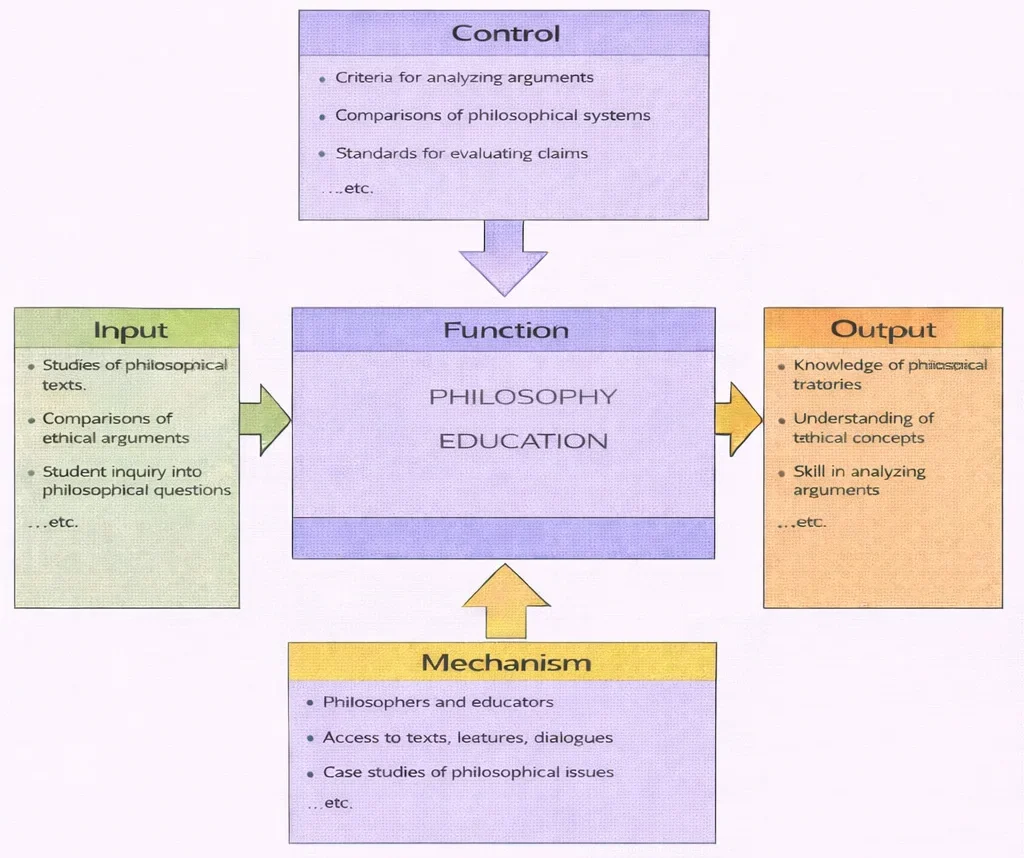
Philosophy Education, as the diagram suggests, is not merely “reading wise words,” but a disciplined transformation of curiosity into clarity. Inputs arrive as questions, texts, and contested claims; they are not accepted at face value, but filtered through controls—shared standards of reasoning, comparison, and evaluation. The mechanisms matter because philosophy is learned through guided dialogue: educators who model careful thinking, resources that expose learners to multiple traditions, and concrete cases where ideas must answer to real dilemmas. When these elements work together, the outputs are not only knowledge and vocabulary, but a sharpened habit of mind—an ability to test arguments, recognize hidden assumptions, and speak about ethics and truth with both humility and precision.
Philosophy invites us to grapple with the most fundamental questions of existence, ethics, logic, and knowledge. Its critical methods and conceptual frameworks underpin many other disciplines within the humanities and social sciences. At its core, philosophy encourages clarity of thought, rigorous argumentation, and the pursuit of meaning—skills that resonate with the interpretive analysis of literature and the contextual understanding cultivated in religious studies.
Modern philosophical inquiries often overlap with empirical insights from psychology, particularly when examining human consciousness, identity, or moral decision-making. Likewise, the sociopolitical dimensions of philosophy intersect with fields such as sociology and political science, especially in areas related to justice, authority, freedom, and rights. These concepts are further enriched when explored through the lens of international relations, where ethical reasoning is applied to diplomacy, global justice, and humanitarian intervention.
In our era of rapid transformation, philosophy remains deeply relevant in interrogating the implications of emerging technologies. Philosophical ethics and logic play a critical role in assessing the development and deployment of information technology, particularly when it intersects with robotics and autonomous systems or the ethical use of artificial intelligence and machine learning. Questions surrounding digital privacy, surveillance, and algorithmic bias tie into the evolving field of cybersecurity, where philosophical discussions about rights and responsibilities are more pertinent than ever.
Philosophy also informs our understanding of data-driven practices. Concepts of truth, representation, and inference underpin the methods employed in data science and analytics, as well as the ethical implications of widespread digital infrastructures like internet and web technologies. The abstract reasoning at the heart of philosophy complements the precision found in mathematics and statistics, and provides a foundation for developing rational arguments in both theoretical and applied contexts.
From metaphysics to environmental ethics, philosophical thought extends to practical domains as well. Students exploring environmental engineering and sustainable design often confront moral dilemmas regarding resource allocation, climate justice, and intergenerational responsibility. Likewise, those in fields such as earthquake and disaster engineering must consider ethical implications when balancing human needs and systemic resilience.
Philosophy can also interrogate the assumptions behind technological and infrastructural systems like urban planning, smart manufacturing, or IoT systems. Questions of autonomy, agency, and sustainability surface again in the context of renewable energy and global development. Even the deployment of satellite technology becomes subject to philosophical scrutiny concerning surveillance, access, and geopolitical power.
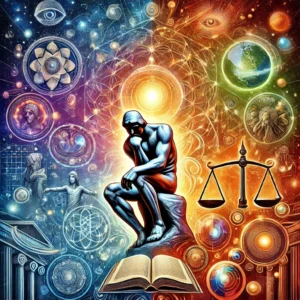
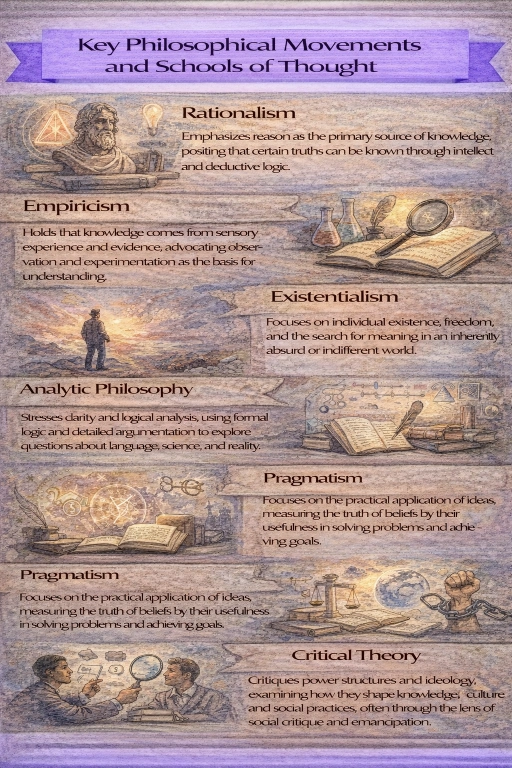
Key Philosophical Movements and Schools of Thought
Throughout history, various philosophical movements have emerged, each contributing distinct perspectives and methodologies. The ancient debates between rationalism and empiricism set the stage for understanding the sources of human knowledge—whether innate reason or sensory experience holds the key to truth. Existentialism and phenomenology, which gained prominence in the 19th and 20th centuries, focused on individual existence, subjective experience, and the inherent meaninglessness of life, prompting a search for personal authenticity and purpose.
Analytic philosophy, with its emphasis on clarity, logical rigor, and language analysis, has been influential in shaping modern philosophical discourse in the English-speaking world. In contrast, Continental philosophy has delved into broader cultural, historical, and social questions, often challenging conventional methodologies. Other movements such as pragmatism, critical theory, and post-structuralism continue to influence contemporary debates by questioning established narratives and exploring the dynamic interplay between knowledge, power, and identity.
Influential Philosophers and Their Contributions
The tapestry of philosophy is woven from the contributions of countless thinkers whose ideas have profoundly influenced human thought. Classical figures like Plato and Aristotle established foundational concepts in metaphysics, ethics, and political theory that remain central to philosophical inquiry today. During the Enlightenment, philosophers such as René Descartes, John Locke, and Immanuel Kant redefined the boundaries of knowledge and human understanding, fostering a spirit of skepticism and inquiry that has shaped modern science and political institutions. Political philosophers delve into essential questions about governance, justice, rights, and the relationship between individuals and the state.
In the modern era, figures like Friedrich Nietzsche challenged traditional moral values and introduced concepts such as the “will to power” and the “Übermensch,” while existentialists like Jean-Paul Sartre and Simone de Beauvoir explored themes of freedom, responsibility, and the human condition. Contemporary philosophers continue to expand on these legacies, engaging with new scientific developments, technological advancements, and the ethical dilemmas posed by globalization and digital communication. Their work not only pushes the boundaries of abstract thought but also addresses practical concerns in everyday life.
Philosophy in Practice: Critical Thinking and Everyday Life
Philosophy is not confined to dusty tomes and academic debate; it is a practical discipline that enriches everyday life. By fostering critical thinking and encouraging a reflective approach to life’s challenges, philosophy helps individuals navigate moral dilemmas, make informed decisions, and cultivate a deeper understanding of themselves and the world around them. The tools of logical analysis and ethical reasoning can be applied to personal relationships, professional challenges, and social issues, empowering individuals to articulate their values and engage in constructive dialogue.
Moreover, philosophy encourages lifelong learning and intellectual humility. In a world marked by rapid change and uncertainty, the ability to question assumptions and consider multiple perspectives is more valuable than ever. Whether through reading, discussion, or introspection, engaging with philosophical ideas can lead to greater self-awareness and a more nuanced appreciation of the complexity of life.
Philosophy and Society: Shaping Culture and Governance
The influence of philosophy extends far beyond individual introspection; it has a profound impact on society as a whole. Philosophical ideas underpin the development of legal systems, educational curricula, and political institutions. Concepts of justice, equality, and human rights, for example, are rooted in philosophical debates that have evolved over centuries. These discussions continue to inform public policy and shape the moral framework within which societies operate.
Philosophy also plays a critical role in cultural discourse, challenging prevailing norms and encouraging societal progress. Through critical examination of cultural narratives and power structures, philosophers help to foster social change and promote a more just and equitable society. In an era of increasing polarization and misinformation, the reflective and critical nature of philosophical inquiry is indispensable for fostering dialogue and mutual understanding.
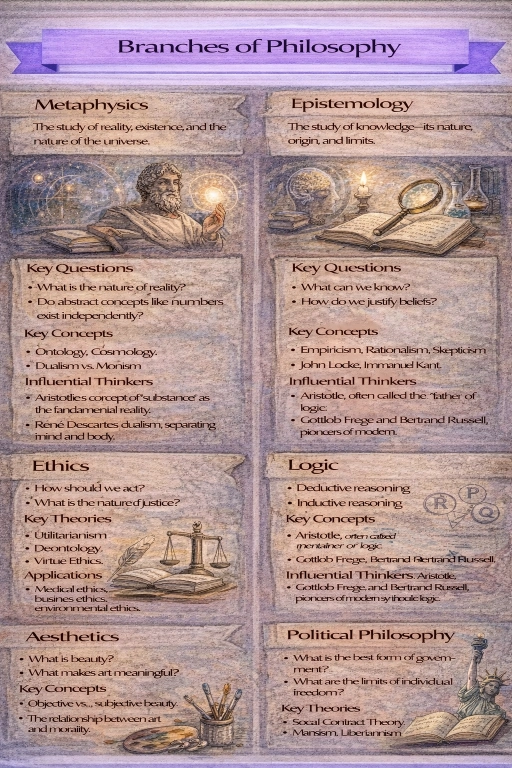
Branches of Philosophy
Philosophy is traditionally divided into several branches, each addressing specific types of questions and problems:
Metaphysics
- Definition: The study of reality, existence, and the nature of the universe. This branch delves into the fundamental nature of reality, asking questions about what exists beyond the physical world, the essence of being, and the relationship between mind and matter. Philosophers explore abstract concepts such as time, space, causality, and possibility.
- Key Questions:
- What is the nature of reality?
- Do abstract concepts like numbers exist independently?
- Key Concepts:
- Ontology: The study of being and existence.
- Cosmology: The study of the origin and structure of the universe.
- Dualism vs. Monism: Debates on whether reality is composed of two substances (e.g., mind and matter) or one.
- Influential Thinkers:
- Aristotle’s concept of “substance” as fundamental reality.
- René Descartes’ dualism separating mind and body.
Epistemology
- Definition: The study of knowledge—its nature, origin, and limits. Focused on the scope of knowledge, epistemology examines what it means to know something, how knowledge is acquired, and the limits of human understanding.
- Key Questions:
- What can we know?
- How do we justify beliefs?
- Key Concepts:
- Empiricism: Knowledge comes from sensory experience.
- Rationalism: Knowledge is derived from reason.
- Skepticism: Doubt about the possibility of certain knowledge.
- Influential Thinkers:
- John Locke’s empiricism, emphasizing experience.
- Immanuel Kant’s synthesis of rationalism and empiricism.
Ethics
- Definition: The study of morality, examining what is right and wrong, good and bad. Also known as moral philosophy, ethics examines principles that guide human behavior across personal conduct, professional practice, and governance.
- Key Questions:
- How should we act?
- What is the nature of justice?
- Key Theories:
- Utilitarianism: Actions are right if they maximize happiness (e.g., John Stuart Mill).
- Deontology: Actions are right if they follow moral duty/rules (e.g., Kant).
- Virtue Ethics: Emphasis on moral character and virtues (e.g., Aristotle).
- Applications: Medical ethics, business ethics, and environmental ethics.
Logic
- Definition: The systematic study of valid reasoning and argumentation. Logic provides the principles necessary to construct coherent arguments and analyze reasoning in formal and informal contexts.
- Key Concepts:
- Deductive reasoning: Drawing specific conclusions from general premises.
- Inductive reasoning: Generalizing from specific observations.
- Fallacies: Logical errors in reasoning.
- Influential Thinkers:
- Aristotle, often called the “father of logic.”
- Gottlob Frege and Bertrand Russell, pioneers of symbolic logic.
Aesthetics
- Definition: The study of beauty, art, and taste. Aesthetics examines how we perceive and evaluate artistic expression, emotional depth, and sensory judgment.
- Key Questions:
- What is beauty?
- What makes art meaningful?
- Key Concepts:
- Objective vs. subjective beauty.
- The relationship between art and morality.
- Influential Thinkers:
- Immanuel Kant’s theory of aesthetic judgment.
- Friedrich Nietzsche’s exploration of art and creativity.
Political Philosophy
- Definition: The study of government, justice, rights, and the ideal state. It explores the legitimacy of political systems, rights, obligations, and societal power.
- Key Questions:
- What is the best form of government?
- What are the limits of individual freedom?
- Key Theories:
- Social Contract Theory: Society based on implicit agreement (Hobbes, Locke, Rousseau).
- Marxism: Analysis of class struggle and economic power.
- Libertarianism: Emphasis on individual liberty and minimal state intervention.
Engaging with Philosophy: Resources and Pathways
For those inspired to delve deeper into philosophy, classic texts by Plato, Aristotle, Kant, and Nietzsche provide foundational insights, while contemporary works address modern challenges. Engaging through discussion groups, public lectures, reflective journaling, and open-ended debate helps cultivate a critical, philosophical mindset.
Historical Development of Philosophy
Philosophy has evolved over millennia. In ancient times, thinkers in Greece, China, and India laid the groundwork by questioning existence, ethics, and governance. Medieval scholars synthesized faith and reason. The Renaissance and Enlightenment championed empirical science, natural rights, and rationality, leading into modern and contemporary debates surrounding technology, existentialism, and global ethics.
1. Ancient Philosophy
- Focused on fundamental questions of existence, ethics, and politics.
- Key Figures: Socrates (ethical living), Plato (theory of forms), Aristotle (logic, natural sciences).
2. Medieval Philosophy
- Emphasized the relationship between faith, theology, and reason.
- Key Figures: Augustine (Platonic synthesis), Thomas Aquinas (Aristotelian synthesis).
3. Modern Philosophy
- Marked by scientific advancement, individual rights, and epistemology.
- Key Figures: René Descartes (rationalism), John Locke (empiricism), Immanuel Kant (transcendental idealism).
4. Contemporary Philosophy
- Diverse approaches tackling power, language, technology, and existence.
- Key Figures: Friedrich Nietzsche (critique of morality), Ludwig Wittgenstein (philosophy of language), Simone de Beauvoir (feminist existentialism).
Relevance of Philosophy
- Shaping Worldviews: Encourages empathy and deep appreciation of diverse cultural perspectives.
- Building Critical Skills: Develops rigorous analytical reasoning, research skills, and clear communication.
- Addressing Modern Challenges: Tackles complex issues such as digital ethics, global justice, and sustainability.
Applications of Philosophy
- Personal Growth: Fosters self-reflection, intellectual independence, and moral clarity.
- Education & Law: Serves as foundational preparation for legal reasoning, policy analysis, and pedagogy.
- Ethical Decision-Making: Provides frameworks for bioethics, medical choices, and corporate responsibility.
- Public Policy: Informs public debate regarding human rights, governance, and distributive justice.
- Technology: Evaluates the societal impact of AI, surveillance, privacy, and autonomous automation.
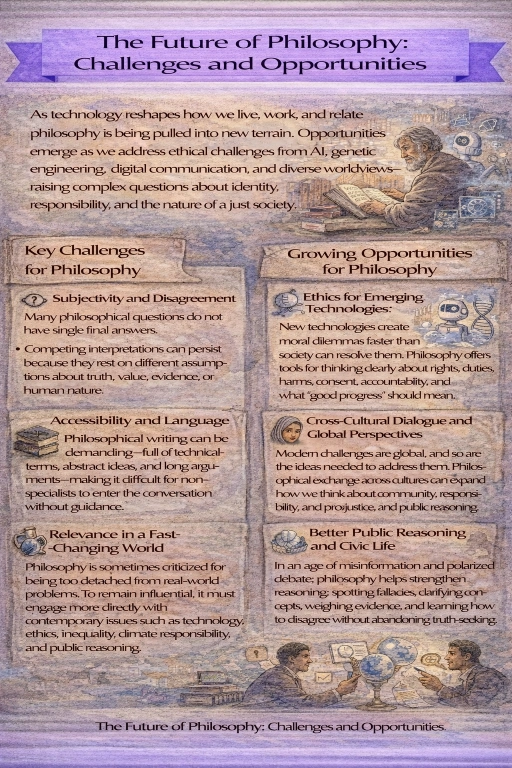
The Future of Philosophy: Challenges and Opportunities
As technology reshapes how we live, work, and relate to one another, philosophy is pulled into new terrain. Artificial intelligence, genetic engineering, and digital communication raise hard questions about privacy, autonomy, fairness, and human identity. In this landscape, philosophy is essential for building ethical maps where regulations fall short.
Simultaneously, global interconnection invites philosophy to become truly inclusive. When Western, Eastern, Indigenous, and modern traditions interact, robust solutions emerge for global challenges like climate change and social inequality.
Key Challenges for Philosophy
- Subjectivity and Disagreement: Philosophical queries rarely yield singular final answers; competing worldviews persist based on differing core axioms.
- Accessibility and Language: Dense jargon and abstract terminology can create entry barriers for non-specialists.
- Relevance in a Fast-Changing World: Philosophy must maintain direct engagement with active societal crises to avoid perceived ivory-tower detachment.
Growing Opportunities for Philosophy
- Ethics for Emerging Technologies: Designing moral frameworks for artificial intelligence, gene editing, and automated systems.
- Cross-Cultural Dialogue: Bridging global traditions to construct inclusive models of planetary governance and environmental ethics.
- Public Reasoning and Civic Life: Equipping citizens with fallacy detection tools to combat digital misinformation and polarization.
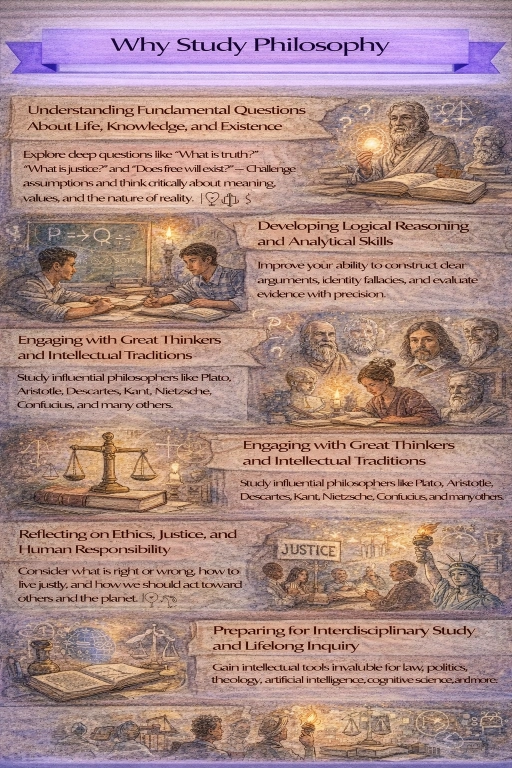
Why Study Philosophy
1. Understanding Fundamental Questions About Life, Knowledge, and Existence
Philosophy invites students to explore the deepest questions of human experience—What is truth? What is justice? Does free will exist? How should we live? For students preparing for university, studying philosophy offers a structured and rigorous approach to thinking critically about meaning, values, and reality.
2. Developing Logical Reasoning and Analytical Skills
At its core, philosophy trains students to construct clear arguments, identify fallacies, evaluate evidence, and articulate complex ideas with precision. These skills are essential for academic success and informed civic participation.
3. Engaging with Great Thinkers and Intellectual Traditions
Students explore the ideas of influential philosophers such as Plato, Aristotle, Descartes, Kant, Nietzsche, and Confucius across global traditions, seeing how philosophical inquiry has shaped science, religion, politics, law, and education.
4. Reflecting on Ethics, Justice, and Human Responsibility
Philosophy provides a foundation for ethical reasoning and moral judgment, addressing complex dilemmas in technology, medicine, politics, and environmental stewardship.
5. Preparing for Interdisciplinary Study and Lifelong Inquiry
A foundation in philosophy supports academic success in law, politics, theology, literature, artificial intelligence, and cognitive science, cultivating intellectual discipline and adaptability.
Philosophy Conclusion
Philosophy remains a dynamic and essential discipline that invites us to explore the deepest questions of existence, knowledge, and morality. Its historical evolution, diverse branches, and ongoing relevance remind us that the quest for wisdom is a lifelong journey—one that enriches our understanding of ourselves, our relationships, and the world we inhabit. As we confront new challenges and navigate an increasingly complex global landscape, the insights and tools of philosophy offer guidance, fostering critical thinking, ethical decision-making, and a profound appreciation for the beauty and complexity of life.
Interactive Logical Syllogism & Truth Visualizer
In formal logic, a categorical syllogism evaluates validity based on set inclusions (premises) and truth values. Test how altering the proportion of major premise support impacts the mathematical confidence score of a deductive conclusion.
Is Philosophy Right For You?
Explore career pathways, check your fit, and assess your skills — before you commit to a degree.
Interactive Philosophy Deep-Dives (Toggle to Reveal)
How does Gettier’s Problem challenge the classical definition of knowledge as "Justified True Belief"?
What is the core distinction between Act Utilitarianism and Rule Utilitarianism?
Frequently Asked Questions
What is philosophy as a field of study?
Philosophy is the disciplined study of fundamental questions about reality, knowledge, values, meaning, and reasoning. It asks what exists, how we can know, what we ought to do, how we should live together, and how good arguments are structured.
What kinds of questions do philosophers ask?
Philosophers ask questions such as: What is a person? Do we have free will? What makes actions right or wrong? How should we organise a just society? What is knowledge? Why should we trust science? What makes a life meaningful?
What are the major branches of philosophy?
Major branches include metaphysics, epistemology, ethics, political philosophy, logic, and aesthetics. Many programs also examine philosophy of mind, language, science, and technology.
How is philosophy studied at university?
At university, philosophy is studied through close reading of primary texts, argument construction, structured discussion, and writing argumentative essays.
Do you need a strong background in logic or mathematics to study philosophy?
No advanced mathematics background is required. Most introductory programs teach basic formal logic, valid inference, and analytical writing from the ground up.
How does philosophy relate to science, religion, and the arts?
Philosophy asks underlying conceptual questions that other disciplines assume, examining scientific evidence justification, religious faith claims, and aesthetic valuation in art.
Is philosophy only about abstract ideas, or does it connect to real-life issues?
It connects directly to real-life challenges including medical bioethics, AI rights, climate policy, democratic governance, and legal responsibility.
What skills do students gain by studying philosophy?
Students develop strong critical thinking, argument analysis, clear written exposition, fallacy identification, and multi-perspective problem-solving.
What kinds of careers can philosophy study support?
Careers include law, public policy, tech ethics, management consulting, journalism, publishing, higher education, and corporate communications.
How can students prepare for university-level philosophy?
Prepare by reading introductory texts, practicing logical argument breakdown, writing structured essays, and engaging in open-minded debate.
Is philosophy suitable only for students who already know what they think?
No. Philosophy welcomes students willing to question their own assumptions and refine their beliefs based on logical evidence.
Why study philosophy alongside another major?
It sharpens analytical writing and reasoning across all disciplines, enriching fields like computer science, pre-med, law, and business.
Comprehensive Philosophical Practice Module
Part 1: Foundational Review Questions
-
What is philosophy and what are its main branches?
Answer: Philosophy is the systematic study of fundamental questions regarding existence, knowledge, values, reason, mind, and language. Its main branches are metaphysics (reality), epistemology (knowledge), ethics (morality), logic (reasoning), aesthetics (art/beauty), and political philosophy (governance/justice). -
How does philosophy contribute to critical thinking and problem-solving?
Answer: Philosophy encourages rigorous analysis of arguments, evaluation of evidence, identification of cognitive fallacies, and questioning of underlying assumptions across multiple perspectives. -
What role do historical philosophical debates play in shaping modern thought?
Answer: Historical debates establish foundational methodologies—such as the scientific method born from empiricism vs. rationalism—that underpin modern legal, political, and scientific frameworks. -
How do ethical theories influence contemporary moral decision-making?
Answer: Frameworks such as utilitarianism (outcomes), deontology (duty/rules), and virtue ethics (character) provide structured methods to evaluate moral dilemmas in medicine, policy, and technology. -
What is the significance of logic in philosophical inquiry?
Answer: Logic supplies standard rules of inference to differentiate valid deductions and strong inductions from deceptive fallacies, ensuring sound conclusions. -
How do metaphysics and epistemology interact in studying reality and knowledge?
Answer: Metaphysics asks what exists (ontology), while epistemology asks how we can know it exists and justify our claims about that reality. -
What impact has philosophy had on other academic disciplines?
Answer: Philosophy birthed the natural and social sciences, giving rise to formal logic in computer science, ethical standards in medicine, and constitutional principles in political law. -
How does studying philosophy enhance our understanding of human existence?
Answer: It prompts structured reflection on identity, free will, moral duty, and purpose, moving learners from passive opinion to examined living.
Part 2: Analytical & Scenario-Based Questions
-
How can philosophy address ethical dilemmas in autonomous AI technology?
Answer: By applying deontology and utilitarianism to algorithmic choices (e.g., self-driving car accident scenarios), establishing clear rules for moral agency and legal responsibility. -
In what ways does philosophical study contribute to personal self-understanding?
Answer: It forces individuals to examine inherited biases, align actions with explicit values, and build intellectual resilience against fallacies. -
How does the tension between reason and emotion manifest in moral judgment?
Answer: Rationalism demands impartial duty (Kant), while sentimentalism (Hume) argues moral drive originates in emotional empathy, requiring a synthesis for humane decision-making. -
What can the history of philosophy teach us about scientific evolution?
Answer: Shifts in scientific paradigms (Kuhn) depend on philosophical epistemologies that redefine what counts as valid empirical evidence. -
How do differing philosophical traditions approach the concept of truth?
Answer: Correspondence theory measures truth against external reality, Coherence theory measures internal logical consistency, and Pragmatism measures real-world efficacy. -
What is the role of philosophical skepticism in acquiring genuine knowledge?
Answer: Skepticism acts as a systematic filter, exposing unexamined premises and demanding rigorous justification before accepting claims as true. -
How does postmodern philosophy affect contemporary truth debates?
Answer: Postmodernism critiques universal metanarratives, highlighting how power constructs localized "truths," encouraging pluralism while warning against total relativism.
Part 3: Quantitative Logic & Decision Theory Problems
-
Expected Utility Calculation: A policy decision offers a 70% chance of creating +100 units of societal happiness (utiles) and a 30% risk of causing -50 utiles. Calculate the expected utility E(U).
Solution: E(U) = (P1 × U1) + (P2 × U2)
E(U) = (0.70 × 100) + (0.30 × -50) = 70 - 15 = +55 utiles. -
Bayesian Epistemic Update: Prior belief in a hypothesis P(H) = 0.40. Probability of observing evidence E given H is P(E|H) = 0.80. Marginal probability of evidence P(E) = 0.50. Calculate updated posterior probability P(H|E).
Solution: Using Bayes' Theorem: P(H|E) = [ P(E|H) × P(H) ] / P(E)
P(H|E) = (0.80 × 0.40) / 0.50 = 0.32 / 0.50 = 0.64 (or 64%). -
Boolean Truth Table Combination Count: For a complex logical proposition containing n = 4 distinct atomic variables (p, q, r, s), calculate the number of rows required in its truth table.
Solution: Rows = 2n
Rows = 24 = 16 distinct truth-value combinations. -
Categorical Syllogism Validity Calculation: In a population of 200 propositions, 120 are empirical, and 80 of those empirical propositions are falsifiable. Calculate the probability that a randomly selected proposition is both empirical and falsifiable.
Solution: P = 80 / 200 = 0.40 (or 40%). -
Decision Matrix (Pascal's Wager Formalization): If Action A yields payout +∞ with probability p = 0.01 and cost -10 with probability 0.99, calculate the mathematical expectation.
Solution: E = (0.01 × ∞) + (0.99 × -10) = +∞. -
Information Loss in Fallacious Reasoning: A premises set contains 10 bits of true information. A fallacious deduction reduces validity accuracy by 40%. Calculate remaining reliable information bits.
Solution: Reliable bits = 10 × (1 - 0.40) = 10 × 0.60 = 6 bits. -
Social Choice Voting Index: 3 voters rank 3 policy options. Calculate total possible linear preference permutations (n!).
Solution: Permutations = 3! = 3 × 2 × 1 = 6 possible rankings.
Humanities & Social Sciences Curriculum Cluster
Explore related disciplines within the Prep4Uni Humanities and Social Sciences pathway to build a well-rounded foundation for university-level study.
Humanities & Social Sciences Hub
The central portal connecting foundational theories, methodological frameworks, and interdisciplinary pathways across human culture and society.
Anthropology
Examines human societies, cultural diversity, and evolutionary history, offering cross-cultural comparative perspectives to philosophical inquiries on human nature.
Cultural Studies
Investigates media, identity, and cultural power structures, expanding continental philosophy and critical theory into contemporary social practices.
History
Traces archival developments across eras, contextualizing the evolution of intellectual philosophy and political thought through historical evidence.
International Relations
Explores diplomacy, global governance, and state behavior, applying political ethics to international law, human rights, and just war theory.
Linguistics
Analyzes formal language structures, syntax, and semantics, directly informing logic, analytic philosophy, and philosophy of language.
Literature
Examines narrative forms, hermeneutics, and aesthetics, synthesizing creative expression with philosophical reflections on the human condition.
Philosophy
The systematic investigation of fundamental questions regarding existence, knowledge, ethics, reason, mind, and language.
Political Science
Studies political systems, governance, and institutional power, relying on political philosophy to define legitimacy, rights, and liberty.
Psychology
Investigates mind, perception, and behavior, interfacing closely with philosophy of mind, cognitive science, and moral psychology.
Religious Studies
Examines belief systems, theology, and sacred traditions, overlapping with philosophy of religion, metaphysics, and global ethics.
Sociology
Analyzes institutional dynamics, social stratification, and collective behavior, grounding political and social philosophy in empirical data.