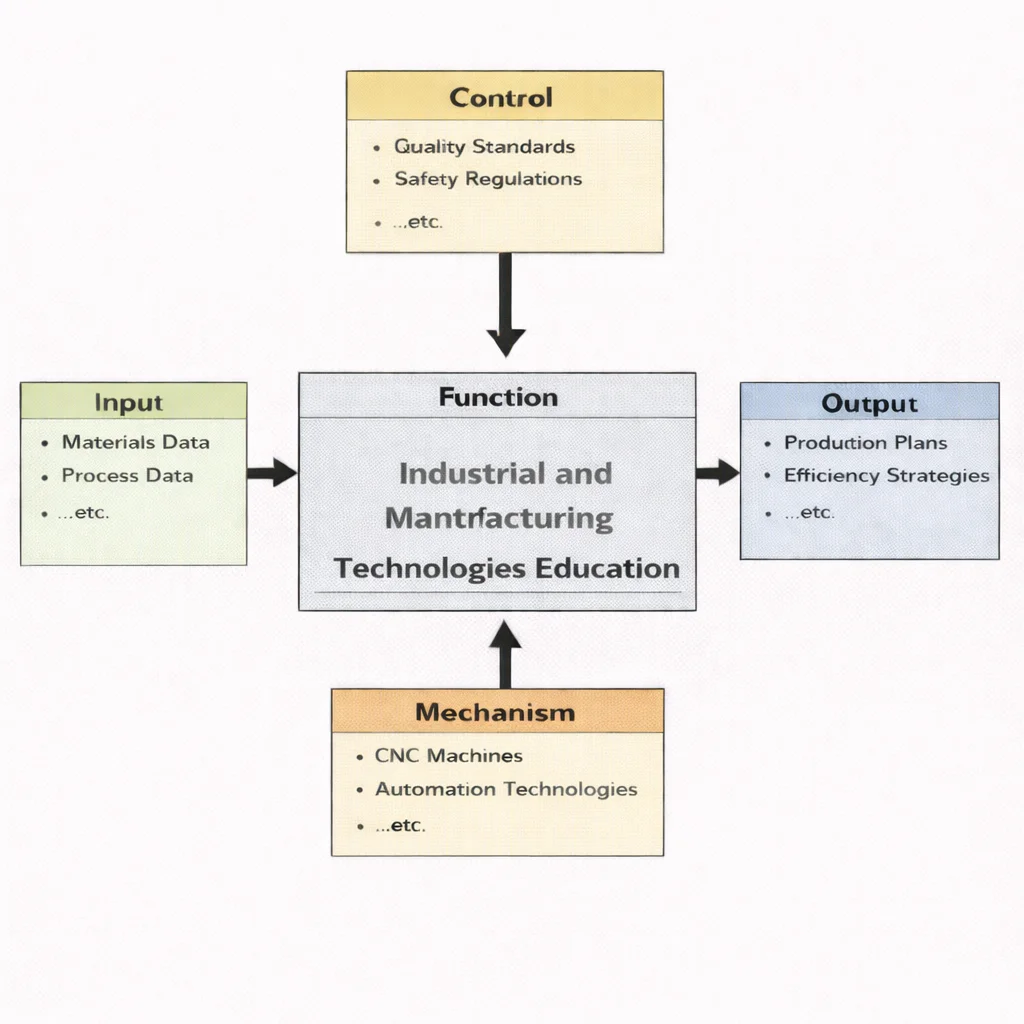
Industrial and Manufacturing Technologies form the backbone of modern production systems, enabling the transformation of raw materials into finished goods through efficient, scalable, and intelligent processes. The discipline encompasses a wide array of integrated approaches—ranging from Additive Manufacturing (3D Printing) to Energy and Resource Efficiency in Manufacturing—that together drive innovation and sustainability in global industries.
With the increasing complexity of industrial operations, new paradigms such as Smart Manufacturing and Industry 4.0 and Digital Twin Technology are transforming traditional workflows. These technologies allow real-time monitoring, predictive analytics, and closed-loop control systems that improve productivity while minimizing waste. The evolution of Computer-Integrated Manufacturing (CIM) plays a vital role in automating entire production lines for greater flexibility and precision.
To meet growing global demands, modern industries must optimize every aspect of design and delivery. This is where Lean Manufacturing, Sustainable Manufacturing, and Supply Chain Management come into play. These methodologies focus on reducing inefficiencies, conserving resources, and ensuring environmentally conscious production practices.
Material selection and innovation are equally critical. The integration of Advanced Materials and Manufacturing Technologies not only enhances product performance but also enables new applications across aerospace, biomedical, and automotive sectors. The contribution of Nanotechnology and Advanced Materials in Mechanical Engineering further extends the boundaries of what is possible in microfabrication and nanofabrication.
Industrial success relies not just on machines but also on people. Ergonomically sound workplaces—shaped by principles from Human Factors and Ergonomics in Manufacturing—enhance safety, comfort, and performance. Meanwhile, Manufacturing Quality Control and Assurance ensures consistency and compliance with standards at every stage of production.
The role of automation cannot be overstated. From factory floors to precision machining cells, Industrial Automation and Robotics continues to redefine efficiency and adaptability. Its close cousin, Robotics and Automation in Mechanical Engineering, supports interdisciplinary advancements that merge mechanical systems with smart electronics and control strategies.
The field draws from foundational engineering domains. Knowledge of Mechanical Engineering, Thermodynamics and Heat Transfer, and Solid Mechanics provides essential understanding of how machines behave and interact with forces and energy. These principles are applied practically in Manufacturing and Production Engineering and Mechanical Design and CAD, supporting everything from concept sketches to final assembly.
Industry is also evolving toward greater interdisciplinary integration. For example, Automotive Engineering leverages insights from control theory and software development, while Control Systems in Mechanical Engineering enhance system stability and precision. The growing field of Biomechanical Engineering applies manufacturing technologies to health-related innovations, bridging the gap between human physiology and machine design.
By exploring Industrial and Manufacturing Technologies, students prepare to shape the future of industry—one that is smart, sustainable, and human-centered. Whether through digital simulation, advanced automation, or process optimization, this field offers a comprehensive toolkit for driving meaningful innovation in a rapidly evolving world.

- Industrial & Manufacturing Technologies topics:
- Industrial & Manufacturing Technologies – Overview
- Sustainable Manufacturing
- Supply Chain Management
- Smart Manufacturing & Industry 4.0
- Manufacturing Quality Control & Assurance
- Manufacturing Process Design & Optimization
- Lean Manufacturing
- Industrial Automation & Robotics
- Human Factors & Ergonomics in Manufacturing
- Energy & Resource Efficiency in Manufacturing
- Digital Twin Technology
- Computer-Integrated Manufacturing (CIM)
- Advanced Materials & Manufacturing Technologies
- Additive Manufacturing & 3D Printing
Exploring Industrial & Manufacturing Technologies – From Factory Floor to Smart, Sustainable Systems
Industrial & Manufacturing Technologies examine how products are designed, produced, and delivered at scale. This hub moves from process design and quality control to automation, robotics, and digital twins, and then to sustainability, lean methods, and supply chains. It helps you see factories not just as machines and workflows, but as complex systems of people, data, materials, and energy.
The pages here connect closely with Mechanical Engineering, Environmental Engineering, Data Science & Analytics, and Operations Management. Together, they show how engineering design, digital technologies, and business decisions shape modern manufacturing—from high-precision aerospace components to consumer electronics and medical devices.
Industrial & Manufacturing Technologies – Overview
Start here if you want a big-picture map of how manufacturing works. This page introduces core ideas such as production systems, flow, bottlenecks, variability, and quality. It also signposts to the subpages below so you can explore sustainability, automation, digital twins, supply chains, and advanced materials in more depth.
Sustainable Manufacturing
Explores how factories reduce waste, emissions, and resource use while staying competitive. Topics include life-cycle thinking, eco-efficiency, cleaner production technologies, and links to circular economy and environmental engineering.
Supply Chain Management
Looks beyond the factory gate to sourcing, logistics, inventory, and distribution. You will see how data, forecasting, risk management, and global trade shape the flow of materials and products from raw resources to end customers.
Smart Manufacturing & Industry 4.0
Introduces cyber-physical production systems, sensors, IoT, cloud platforms, and real-time analytics. This subpage links automation and control with AI, digital twins, and data science to create more flexible, responsive factories.
Manufacturing Quality Control & Assurance
Focuses on how manufacturers define, measure, and maintain quality. You will meet tools such as control charts, capability indices, sampling plans, and root-cause analysis, connecting statistics to real-world production lines.
Manufacturing Process Design & Optimization
Covers how engineers choose and design processes such as machining, forming, joining, and assembly. Emphasis is placed on throughput, cost, quality, and robustness, with links to operations research and simulation techniques.
Lean Manufacturing
Examines lean principles such as value stream mapping, just-in-time, pull systems, and continuous improvement (Kaizen). This page shows how reducing waste and variability improves quality, speed, and staff engagement.
Industrial Automation & Robotics
Looks at PLCs, industrial robots, collaborative robots (cobots), and automated material-handling systems. You will explore how motion control, safety, and programming languages come together on the factory floor.
Human Factors & Ergonomics in Manufacturing
Focuses on people in production systems: workstation design, workload, safety, cognitive demands, and error reduction. This subpage bridges engineering design with psychology, occupational health, and inclusive workplace practices.
Energy & Resource Efficiency in Manufacturing
Investigates how factories monitor and reduce energy, water, and material use. Topics include utility mapping, waste-heat recovery, efficient drives and motors, and links to environmental and energy systems engineering.
Digital Twin Technology
Introduces virtual replicas of machines, lines, or entire factories that run in parallel with the physical system. You will see how sensor data, simulation, and control are combined to support design, optimisation, and predictive maintenance.
Computer-Integrated Manufacturing (CIM)
Shows how CAD, CAM, ERP, MES, and other digital systems are linked into an end-to-end production information flow. This subpage highlights data standards, interoperability, and the role of IT in coordinating design, planning, and shop-floor execution.
Advanced Materials & Manufacturing Technologies
Explores high-performance materials (composites, advanced alloys, functional materials) and the specialised processes used to shape them. It links materials science with aerospace, biomedical devices, and other high-value sectors.
Additive Manufacturing & 3D Printing
Focuses on layer-by-layer fabrication methods such as FDM, SLA, SLS, and metal additive. You will see how design-for-additive principles, topology optimisation, and customisation are changing product development and supply chains.
Table of Contents
Sub-Areas of Studies in Industrial and Manufacturing Technologies
Industrial Automation and Robotics
- Involves integrating automated machinery and robotics into production lines.
- Includes the use of AI and machine learning for intelligent automation.
Additive Manufacturing (3D Printing)
- Focuses on creating three-dimensional objects layer by layer from digital models.
- Applications include prototyping, custom manufacturing, and complex geometries.
Lean Manufacturing
- Aims to minimize waste and maximize value in production processes.
- Includes techniques like value stream mapping and Kaizen.
Quality Control and Assurance
- Involves monitoring and improving product quality through statistical analysis and inspection.
- Includes Six Sigma practices for defect reduction.
Supply Chain Management
- Focuses on the efficient flow of goods, information, and finances across the supply chain.
- Includes inventory management, logistics, and procurement.
Smart Manufacturing and Industry 4.0
- Integrates IoT, sensors, and data analytics to create connected and intelligent production environments.
- Enables real-time monitoring and decision-making.
Energy and Resource Efficiency in Manufacturing
- Studies methods to reduce energy consumption and optimize resource utilization in manufacturing.
- Includes renewable energy integration and sustainable practices i manufacturing and other industrial processes.
Manufacturing Process Design and Optimization
- Involves designing efficient manufacturing systems and workflows.
- Uses simulation tools to optimize production layouts and reduce downtime.
Computer-Integrated Manufacturing (CIM)
- Focuses on integrating CAD (Computer-Aided Design) and CAM (Computer-Aided Manufacturing) for seamless production.
- Includes CNC machining and automated assembly lines.
Sustainable Manufacturing
- Develops eco-friendly production techniques to minimize environmental impact.
- Includes recycling, waste reduction, and the use of sustainable materials.
Human Factors and Ergonomics in Manufacturing
- Examines the interaction between workers and machines to improve safety and efficiency.
- Focuses on designing workstations and processes that reduce fatigue and increase productivity.
Advanced Materials and Manufacturing Technologies
- Involves the use of advanced materials like composites, alloys, and nanomaterials.
- Includes research into material properties for specialized applications.
Digital Twin Technology
- Uses virtual models of manufacturing systems to simulate, predict, and optimize real-world processes.
- Enables predictive maintenance and process improvements.
Key Applications in Industrial and Manufacturing Technologies
Automation and Robotics in Assembly Lines
- Modern industrial environments have revolutionized the way goods are produced by integrating advanced robotics and automation technologies into assembly lines. Robots equipped with vision systems and precise end-effectors now handle intricate assembly tasks that were once exclusive to skilled human labor, ensuring higher consistency and repeatability across product lines.
- These robots are programmed to perform operations like welding, painting, screwdriving, and even component testing with remarkable speed and accuracy. Automation reduces the margin of human error and enhances throughput, especially in high-volume manufacturing settings such as automotive and electronics industries.
- Collaborative robots, or cobots, represent a major shift in automation by enabling human-robot teamwork. Unlike traditional industrial robots confined to cages, cobots are designed with safety features such as force sensing and vision guidance, allowing them to operate safely in proximity to humans. These cobots assist workers in tasks like lifting heavy parts, inserting precision components, or assembling delicate mechanisms, thus improving ergonomics and reducing workplace injuries.
- Advanced robotic systems are also integrated with machine learning algorithms that allow them to adapt to changing production conditions, detect anomalies, and self-optimize over time. This dynamic response capability leads to improved process efficiency and adaptability in low-volume, high-mix manufacturing environments.
- Integration of robotics with digital twins—virtual representations of physical systems—enables simulation of manufacturing processes before deployment, reducing commissioning times and optimizing layout design. Companies also leverage cloud-based robotic process management systems to monitor and control operations remotely across multiple facilities.
- According to International Federation of Robotics (IFR), the global industrial robot installation reached nearly 553,000 units in 2022, reflecting rapid adoption across various sectors.
Quality Control Systems and Predictive Maintenance
- Ensuring product quality is critical in maintaining customer trust and complying with international standards. Modern quality control systems use high-resolution cameras, infrared sensors, laser profilers, and X-ray scanning to inspect products in real-time during different stages of production. These systems are capable of detecting minute defects such as scratches, alignment errors, and material inconsistencies.
- Incorporating machine vision technology has drastically improved the accuracy and speed of defect detection. AI-powered visual inspection systems not only identify defects but also classify them based on severity, allowing for automated sorting or rework instructions to be issued without manual intervention.
- Statistical Process Control (SPC) software continuously monitors process variables and flags anomalies that could lead to out-of-spec products. These tools enable engineers to proactively intervene before deviations escalate, ensuring product consistency and reducing waste.
- Predictive maintenance has emerged as a game-changer in industrial operations by shifting the paradigm from reactive to proactive maintenance. Instead of waiting for machinery to fail, manufacturers now use data from vibration sensors, thermography, ultrasound, and oil analysis to forecast wear and degradation patterns.
- Using AI and machine learning models trained on historical equipment data, these systems identify potential failure points and recommend maintenance schedules tailored to real-world usage conditions. This approach not only minimizes unplanned downtime but also extends equipment lifespan and reduces maintenance costs.
- Predictive analytics platforms also integrate with Enterprise Resource Planning (ERP) systems to automate parts ordering, technician scheduling, and reporting. Maintenance dashboards provide managers with real-time KPIs, risk alerts, and cost analysis, facilitating data-driven decisions.
Lean Manufacturing and Six Sigma Practices
- Lean manufacturing emphasizes eliminating non-value-added activities in the production process. By adopting principles like just-in-time inventory, continuous flow, and takt time balancing, manufacturers achieve significant reductions in lead times and inventory holding costs.
- Value Stream Mapping (VSM) is a core tool used to visualize and analyze material and information flows. This allows cross-functional teams to identify bottlenecks, reduce handoffs, and streamline communication across departments. Tools like 5S and Kanban boards support workplace organization and demand-driven production scheduling.
- Kaizen, or continuous improvement, is ingrained in lean culture. It involves empowering frontline workers to suggest and implement process improvements, fostering a culture of collaboration and ownership. Daily Gemba walks and improvement huddles are common practices in lean environments.
- Six Sigma complements lean by focusing on reducing process variation and improving quality. It uses DMAIC (Define, Measure, Analyze, Improve, Control) methodology to tackle complex quality problems. Techniques such as Design of Experiments (DOE), Failure Mode and Effects Analysis (FMEA), and Root Cause Analysis (RCA) help uncover process inefficiencies and prevent recurrence of defects.
- Lean Six Sigma certification programs train professionals to lead improvement projects using statistical tools and data analysis software such as Minitab and JMP. These experts, known as Green Belts and Black Belts, drive initiatives that lead to cost savings, enhanced quality, and customer satisfaction.
- Organizations that embed lean and Six Sigma principles across their value chains often gain a competitive advantage by responding faster to market changes and customer needs while maintaining low operational costs and high product quality.
Supply Chain Optimization and Logistics
- In a globalized economy, efficient supply chain management is essential for timely product delivery and cost control. Advanced supply chain optimization uses real-time data, AI, and predictive analytics to manage inventory, forecast demand, and optimize logistics networks.
- Technologies such as RFID tags, barcoding, and IoT sensors provide granular visibility into product location, condition, and movement. This visibility reduces shrinkage, enhances accountability, and ensures compliance with traceability standards, particularly in food and pharmaceutical industries.
- GPS tracking and geofencing enable dynamic routing of delivery vehicles based on traffic and weather conditions, improving on-time performance and fuel efficiency. Digital twins of logistics networks help simulate disruptions and test contingency plans in a virtual environment before implementation.
- Warehouse automation through Automated Guided Vehicles (AGVs), robotic pickers, and high-density storage systems improves fulfillment speed and space utilization. Integration of these systems with Warehouse Management Systems (WMS) allows for real-time tracking of inventory levels and replenishment planning.
- Advanced planning systems use machine learning algorithms to balance supply and demand, optimize procurement schedules, and reduce stockouts and overproduction. These tools integrate with Customer Relationship Management (CRM) platforms to align inventory levels with market trends and promotional campaigns.
- Blockchain technology is being explored to ensure transparency, trust, and traceability in multi-tier supply chains. For example, verifying product origin and ethical sourcing practices is now possible through immutable digital ledgers.
Current Developments in Industrial and Manufacturing Technologies
Industry 4.0 Integrating IoT and Smart Sensors
- Industry 4.0 represents a transformative phase in industrial evolution where the physical and digital worlds are tightly integrated through the Internet of Things (IoT), cyber-physical systems, and cloud-based platforms. By embedding sensors, actuators, and connectivity into machines, manufacturers are now able to capture real-time data from virtually every component of the production process.
- Smart sensors play a pivotal role by continuously monitoring equipment performance metrics such as temperature, vibration, pressure, and operational speed. These devices feed information into central control systems that can trigger automated responses, such as adjusting machine parameters or initiating maintenance protocols without human intervention.
- IoT-enabled networks ensure seamless data communication between machines (machine-to-machine or M2M), enabling decentralized decision-making and self-optimization across the production line. This results in enhanced operational visibility, fewer production bottlenecks, and faster reaction times to system anomalies.
- Smart factories leverage edge computing to process data locally on devices, reducing latency and bandwidth usage. These systems can detect faults early, issue alerts, and support condition-based monitoring, reducing unplanned downtime and improving productivity.
- By integrating IoT with enterprise software platforms such as MES (Manufacturing Execution Systems) and ERP (Enterprise Resource Planning), companies achieve vertical and horizontal integration across manufacturing operations, supply chains, and business units.
- Adoption of open industrial standards like OPC UA facilitates interoperability between heterogeneous devices and systems, supporting scalability and future-proofing infrastructure. A detailed overview of these technologies and their impact can be found through the World Economic Forum’s Industry 4.0 initiative.
Advanced Manufacturing Techniques like Additive Manufacturing
- Additive manufacturing (AM), commonly referred to as 3D printing, continues to disrupt traditional production methods by enabling the fabrication of parts layer-by-layer directly from digital models. This technique eliminates the need for complex tooling and allows for the creation of highly customized components with intricate internal geometries that are impossible to achieve using subtractive processes.
- Industries ranging from aerospace and automotive to medical device manufacturing utilize AM to produce lightweight components, patient-specific implants, and rapid prototypes. Materials used in additive manufacturing now extend beyond plastics to include metals, ceramics, and composite materials, expanding its applicability in critical structural and functional components.
- Hybrid manufacturing systems are emerging that combine AM with CNC machining, enabling post-processing of printed parts to achieve desired tolerances and surface finishes. This hybrid approach combines the geometric freedom of AM with the precision of traditional machining.
- Advancements in software tools also play a key role. Generative design algorithms create optimal part geometries by simulating load paths and material usage, leading to designs that minimize weight while maintaining structural integrity. These geometries are then directly printed using metal laser sintering or electron beam melting technologies.
- Automation of the entire AM workflow, from design and slicing to printing and post-processing, is helping reduce lead times and improve consistency. Integration with quality assurance systems ensures that parts meet industry standards through in-situ monitoring and validation techniques.
Energy-Efficient and Sustainable Production Processes
- Sustainability is a cornerstone of modern manufacturing, with increasing emphasis on reducing energy consumption, minimizing waste, and lowering emissions. Manufacturing plants are adopting renewable energy sources such as solar photovoltaic panels, wind turbines, and biomass to power production lines, thereby cutting reliance on fossil fuels.
- Advanced building automation systems monitor and manage energy use across lighting, HVAC, and machinery to optimize consumption. In addition, variable frequency drives (VFDs), energy-efficient motors, and regenerative braking systems contribute to energy savings in mechanical systems.
- Lean production principles are integrated with green manufacturing strategies to design processes that reduce resource use per unit of output. This includes redesigning workflows to minimize material movement, optimizing batch sizes, and reusing scrap materials within closed-loop recycling systems.
- Manufacturers are investing in life cycle assessment (LCA) tools to quantify the environmental impact of products from raw material extraction through end-of-life. These assessments guide design decisions that reduce carbon footprints and enhance product sustainability.
- Water conservation measures, such as closed-loop cooling systems and rainwater harvesting, further improve the environmental performance of facilities. Compliance with international standards like ISO 14001 helps ensure environmental management is embedded into the core of manufacturing operations.
AI and Machine Learning in Manufacturing
- Artificial intelligence (AI) and machine learning (ML) are redefining manufacturing by enabling data-driven optimization at every level of the production cycle. Predictive analytics based on historical data sets allow manufacturers to anticipate production issues, forecast demand, and dynamically adjust inventory and schedules.
- ML models are used to analyze vast amounts of sensor and machine data to detect subtle deviations from normal operating conditions. This facilitates predictive maintenance and reduces costly machine breakdowns. AI-powered vision systems enhance quality control by identifying defects that may not be visible to the human eye.
- Natural language processing (NLP) interfaces allow operators to interact with machines using spoken or written commands, improving usability and reducing training requirements. Reinforcement learning algorithms enable robots to improve their performance through trial-and-error interactions with their environment.
- AI is also being used in demand forecasting, pricing optimization, and product design. For example, digital design assistants recommend design alternatives based on performance criteria and historical data. AI algorithms balance multiple objectives such as cost, weight, and manufacturability in real-time.
Digital Twin Technology
- Digital twin technology involves creating a real-time digital replica of a physical asset, such as a machine, production line, or entire factory. These virtual models enable simulation, monitoring, and control of physical systems in a digital environment, allowing for risk-free testing and performance evaluation before implementing changes in the real world.
- By integrating data from sensors, control systems, and enterprise software, digital twins provide a comprehensive view of system behavior under varying conditions. Engineers use them to test process improvements, optimize layouts, and predict system responses to disruptions.
- Predictive analytics based on digital twin data help identify performance trends and anticipate maintenance needs, improving asset reliability and operational efficiency. They also support training programs by providing immersive, hands-on experiences in a virtual space.
- Industries such as aerospace, automotive, and pharmaceuticals leverage digital twins to validate manufacturing processes for regulatory compliance. The use of digital twins is expanding beyond individual machines to encompass entire supply chains, where they simulate demand variability, transport logistics, and supplier dynamics.
Augmented Reality (AR) in Manufacturing
- Augmented Reality (AR) enhances manufacturing operations by overlaying digital information—such as instructions, blueprints, and diagnostic data—onto the physical workspace through smart glasses, tablets, or headsets. This technology streamlines tasks like assembly, maintenance, inspection, and training by providing workers with real-time, hands-free access to critical information.
- AR guides technicians through complex processes by displaying step-by-step instructions and animated 3D models aligned with physical components. This reduces errors, shortens training time, and enables less-experienced staff to perform tasks typically reserved for experts.
- AR-based remote assistance allows field technicians to collaborate with experts located anywhere in the world, who can see what the technician sees and provide guidance in real-time. This accelerates problem resolution and reduces service costs.
- Design and engineering teams use AR to visualize prototypes and production layouts at full scale, enabling early identification of spatial constraints and ergonomic issues. This enhances collaboration between design and manufacturing teams and shortens product development cycles.
Challenges in Industrial and Manufacturing Technologies
Integration of New Technologies
- Integrating cutting-edge technologies such as IoT, artificial intelligence, machine learning, and robotics into traditional manufacturing environments poses complex challenges. Legacy systems may lack compatibility with modern platforms, requiring extensive retrofitting or full replacement. This transition demands both technical and financial resources, often acting as a barrier for small and medium-sized enterprises (SMEs).
- In addition, the implementation phase can disrupt ongoing production due to downtime, calibration needs, or the requirement for extensive employee training. Ensuring interoperability between new and existing equipment—particularly when sourced from different vendors—requires standardized communication protocols and robust middleware solutions.
- Another layer of complexity involves aligning digital transformation efforts with broader business goals. Manufacturers must determine return on investment (ROI) metrics for new technologies while ensuring that integration aligns with productivity, safety, and sustainability objectives. Organizational resistance to change further complicates technology adoption, as teams accustomed to traditional workflows may be hesitant to embrace new systems.
- To address these issues, phased implementation strategies and pilot projects are often adopted to test compatibility and ROI before full deployment. Systems integrators and consultants can play a vital role in streamlining the transition and reducing associated risks.
Sustainability Goals
- As governments, investors, and consumers increasingly prioritize sustainability, manufacturers are under growing pressure to reduce their environmental impact. This includes lowering greenhouse gas emissions, minimizing material waste, optimizing energy usage, and sourcing eco-friendly materials. Achieving these goals, however, often entails additional costs in the short term, such as upgrading to energy-efficient machinery, investing in clean technologies, or reconfiguring supply chains.
- Compliance with international and local environmental regulations requires continuous monitoring and reporting. For example, achieving ISO 14001 certification involves significant documentation, audits, and operational adjustments. Manufacturers must also anticipate and adapt to evolving legislation related to carbon taxation, extended producer responsibility (EPR), and circular economy requirements.
- In some cases, environmentally friendly practices may be at odds with cost-efficiency or productivity goals. For instance, replacing inexpensive plastics with biodegradable materials may raise material costs, while energy-efficient systems might have longer payback periods. Nonetheless, sustainability can be a strategic advantage—enhancing brand reputation and long-term viability—if integrated thoughtfully into core manufacturing processes.
- Many organizations are now adopting environmental KPIs, digital monitoring systems, and green design principles to track and improve performance. A helpful resource for understanding how manufacturers balance profit and sustainability is the McKinsey report on Sustainability and Profit.
Workforce Adaptation
- The transition toward smart manufacturing and Industry 4.0 technologies has reshaped the skills required in modern factories. As automation takes over routine tasks, workers are increasingly expected to manage, troubleshoot, and optimize complex systems involving robotics, AI, and cloud-based platforms. However, the existing workforce may lack the training necessary to adapt to these new demands.
- Manufacturers face the dual challenge of upskilling current employees while also attracting a new generation of workers with expertise in mechatronics, cybersecurity, data analytics, and digital engineering. Traditional vocational training programs may be insufficient, necessitating partnerships with educational institutions, reskilling initiatives, and internal knowledge-sharing platforms.
- Beyond technical proficiency, change management is essential to overcome cultural resistance. Employees may perceive automation as a threat to job security, leading to reduced morale and cooperation. Clear communication, involvement in transformation processes, and retraining programs can help mitigate these concerns and foster a more collaborative environment.
- Organizations that proactively address workforce adaptation not only improve employee engagement but also enhance their competitive edge by creating a flexible and innovation-ready team. Cross-functional training and job rotation strategies further promote versatility and knowledge retention across departments.
Global Supply Chain Disruptions
- Recent events, such as the COVID-19 pandemic, the Russia-Ukraine conflict, and ongoing geopolitical tensions, have highlighted the fragility of global supply chains. Manufacturers dependent on just-in-time delivery models and overseas suppliers have faced material shortages, shipping delays, and volatile prices. Disruptions to raw material sourcing, port operations, and transportation infrastructure continue to challenge supply chain resilience.
- To mitigate these risks, companies are exploring localized or regionalized supply chains, diversifying their supplier base, and investing in supply chain visibility technologies. Digital twins and AI-powered analytics are being deployed to simulate disruption scenarios and identify contingency plans.
- In addition, geopolitical factors like trade tariffs, embargoes, and political instability in supplier regions must be considered in strategic planning. Supply chain managers must now incorporate risk assessment, supplier evaluation, and strategic buffering into their decision-making frameworks.
- Emerging trends such as nearshoring and reshoring are reshaping global manufacturing dynamics, offering new opportunities for regional economies while demanding adaptive strategies from existing production hubs. Blockchain is also being explored for traceability and accountability within complex, multi-tiered supply networks.
Cybersecurity
- As manufacturing systems become increasingly connected, they also become more vulnerable to cyberattacks. Threats such as ransomware, data breaches, and industrial espionage can severely disrupt operations, compromise intellectual property, and jeopardize customer data. The convergence of IT (Information Technology) and OT (Operational Technology) environments creates new attack surfaces that traditional security measures may not adequately protect.
- Securing smart factories requires a multi-layered approach, including network segmentation, firewalls, intrusion detection systems, secure authentication protocols, and regular software updates. Employee training in cybersecurity best practices is equally important, as phishing attacks and human error remain major causes of breaches.
- Manufacturers must also comply with cybersecurity regulations and standards such as NIST, ISO/IEC 27001, and GDPR, particularly when operating across borders. These frameworks ensure that data protection, incident response, and risk management are embedded in operational protocols.
- Incident response planning and cyber insurance are becoming standard components of risk management strategies. Manufacturers should routinely test backup systems, conduct penetration testing, and collaborate with cybersecurity experts to stay ahead of evolving threats.
Future Trends and Opportunities in Industrial and Manufacturing Technologies
Hyper-Automation
- Hyper-automation represents the next evolution in industrial automation by integrating a suite of advanced technologies such as artificial intelligence (AI), machine learning, Internet of Things (IoT), robotic process automation (RPA), and cloud computing to create intelligent, self-operating production systems. The core aim is to minimize human intervention across operational layers—from planning and scheduling to quality assurance and maintenance—by leveraging interconnected systems capable of learning, adapting, and optimizing in real time.
- For example, in a hyper-automated smart factory, AI algorithms analyze production data from IoT sensors to anticipate bottlenecks or equipment failures before they occur. Robotic arms, guided by machine vision and edge computing, autonomously reconfigure themselves for new production runs, while predictive analytics ensure that supply chains remain agile and responsive to changes in demand. This level of automation allows manufacturers to shift from reactive to proactive operations, dramatically increasing productivity and agility.
- The long-term vision for hyper-automation involves fully autonomous facilities that can handle dynamic product portfolios with minimal downtime. These factories will use digital twins to simulate different operational scenarios, blockchain for transparent supply chain traceability, and augmented reality (AR) for real-time diagnostics and support. By embracing hyper-automation, industries can unlock new levels of efficiency, cost savings, and scalability, positioning themselves to meet the rapidly evolving demands of global markets.
Personalized Manufacturing
- Personalized manufacturing, also known as mass customization, is transforming how goods are designed, produced, and delivered. By enabling consumers to tailor products to their unique specifications—whether it’s a custom-fit medical device, a personalized car interior, or tailored fashion—manufacturers are shifting from one-size-fits-all models to flexible, customer-centric production strategies. Technologies such as additive manufacturing (3D printing), digital design platforms, and flexible robotic systems are key enablers of this transformation.
- In the healthcare sector, for instance, 3D printing allows for the rapid production of prosthetics, dental implants, and surgical guides tailored to individual anatomy. In the automotive industry, digital twins and modular assembly lines facilitate the customization of interior layouts, infotainment systems, and even performance parameters based on driver profiles. These advances have led to greater customer satisfaction, reduced inventory overhead, and shorter lead times.
- To support personalized manufacturing, companies are also integrating advanced data analytics and AI to capture and interpret customer preferences. This data is then translated into production instructions without disrupting existing workflows. Cloud-based configurators and virtual showrooms further enhance the experience by allowing customers to visualize their choices in real time before placing an order. As demand for customization grows, manufacturers are investing in flexible, small-batch production technologies that maintain cost-efficiency and quality.
- For deeper insight into how 3D printing is revolutionizing customized product development, the Forbes article on 3D Printing and Personalized Manufacturing provides excellent examples and analysis.
Zero-Waste Manufacturing
- Zero-waste manufacturing aspires to eliminate waste from the production process entirely by rethinking how resources are used, reused, and recovered. Grounded in circular economy principles, this approach prioritizes material efficiency, closed-loop recycling, and energy recovery. By reducing waste generation at the source and reintegrating byproducts into new production cycles, manufacturers can lower environmental impacts, reduce costs, and improve regulatory compliance.
- Key strategies include designing products for disassembly, using biodegradable or recyclable materials, and implementing material flow analyses to identify waste hotspots. Advanced sorting and separation technologies, such as AI-enabled vision systems and sensor-based sorters, facilitate the separation of reusable components. Companies are also adopting modular product architectures that allow worn-out components to be replaced without discarding the entire unit.
- Wastewater from manufacturing processes can be treated and reused, while waste heat is captured for use in other stages of production. Additionally, digital tools like life cycle assessment (LCA) and material flow analysis help companies track and optimize their resource efficiency. By aligning with sustainability goals and stakeholder expectations, zero-waste manufacturing becomes both an environmental necessity and a competitive advantage.
5G Connectivity in Smart Factories
- 5G networks are unlocking new possibilities for smart factories by providing ultra-low latency, high-speed, and reliable wireless communication. Unlike traditional Wi-Fi or 4G systems, 5G can simultaneously support thousands of connected devices, making it ideal for dense industrial environments where robots, sensors, and machines must operate in synchrony. With real-time connectivity, production lines become more responsive, agile, and autonomous.
- In practice, 5G enables seamless communication between mobile robots and automated guided vehicles (AGVs), which navigate warehouses and shop floors with high precision. Maintenance teams use AR headsets connected via 5G for remote support and diagnostics, while machine vision systems transmit high-resolution video streams to central analytics hubs. Moreover, 5G’s network slicing allows for the creation of dedicated virtual networks for different applications, ensuring performance reliability.
- The integration of 5G also enhances safety by enabling faster response times for emergency shutdown systems and remote control of hazardous operations. Cloud-based manufacturing execution systems (MES) can now process and respond to sensor data in milliseconds, optimizing resource allocation and minimizing downtime. As deployment expands, 5G is set to become the digital backbone of Industry 4.0 ecosystems.
Green and Decarbonized Manufacturing
- Green manufacturing focuses on minimizing environmental impact by transitioning to carbon-neutral operations. This includes the use of renewable energy sources like solar, wind, and bioenergy; upgrading equipment for energy efficiency; and adopting green chemistry to replace hazardous substances. The goal is to decouple industrial growth from environmental degradation while maintaining profitability and innovation.
- Companies are now investing in lifecycle carbon accounting to track emissions at every stage of the production chain—from raw material extraction to final delivery. They are also exploring innovations such as carbon capture and storage (CCS), bio-based materials, and low-emission process redesigns. Industrial symbiosis, where waste from one process becomes input for another, is gaining popularity in eco-industrial parks.
- Regulatory bodies and investors are increasingly demanding transparency on environmental performance, prompting manufacturers to publish sustainability reports and participate in carbon disclosure programs. Certification standards like ISO 14064 and Science-Based Targets initiative (SBTi) offer frameworks for setting and verifying emissions reductions. As the urgency to combat climate change intensifies, decarbonized manufacturing will play a central role in building a sustainable global economy.
Human-Machine Collaboration
- Rather than replacing humans, the future of manufacturing lies in enhancing human capabilities through collaboration with intelligent machines. Cobots (collaborative robots) are designed to work safely alongside humans, performing repetitive, dangerous, or ergonomically challenging tasks while allowing workers to focus on higher-level functions. These interactions are facilitated by sophisticated safety systems, force sensors, and intuitive programming interfaces.
- AI-powered assistants can support decision-making by providing real-time insights into production metrics, quality control parameters, and predictive maintenance alerts. Workers equipped with wearable technologies or AR headsets gain instant access to manuals, training modules, and expert guidance, improving efficiency and reducing error rates. Human-centric design ensures that workstations accommodate a wide range of abilities and preferences.
- This collaboration extends beyond the shop floor to include co-design tools and virtual prototyping, where engineers interact with digital models to refine product features. Human input remains vital in managing exceptions, interpreting nuanced data, and driving innovation. Ultimately, human-machine collaboration enhances safety, boosts morale, and ensures inclusive technological adoption.
Career Opportunities in Industrial and Manufacturing Technologies
- Process Engineers:
Responsible for designing, analyzing, and optimizing manufacturing workflows to enhance productivity, reduce waste, and ensure consistency. Process engineers work closely with product designers, quality assurance teams, and operations managers to streamline processes from raw material input to final product output. They utilize tools such as process mapping, simulation software, and Lean Six Sigma methodologies to identify bottlenecks and implement continuous improvement initiatives. These professionals also play a crucial role in scaling up production for new product launches, ensuring compliance with environmental and safety regulations, and maintaining operational efficiency across facilities. - Robotics Engineers:
Tasked with developing, deploying, and maintaining robotic systems that automate repetitive or hazardous tasks in manufacturing environments. Robotics engineers combine knowledge of mechanical engineering, electrical systems, computer programming, and artificial intelligence to build machines capable of performing complex functions with precision. Their work involves designing robotic arms, programming movements, integrating machine vision, and ensuring seamless interaction between robots and human workers (cobots). In industries like automotive, electronics, and pharmaceuticals, robotics engineers help increase throughput, reduce labor costs, and improve workplace safety. These roles are evolving rapidly with the adoption of advanced automation and smart factory technologies. - Quality Assurance Specialists:
Focused on maintaining product excellence by enforcing rigorous quality standards throughout the manufacturing process. They design inspection protocols, conduct audits, and implement statistical process control to detect defects and inconsistencies. These specialists also lead root cause analysis for quality failures and work collaboratively with engineers and production teams to apply corrective and preventive actions. The use of automated inspection systems, such as machine vision and AI-powered quality control platforms, is becoming increasingly prevalent. Certifications such as Six Sigma, ISO 9001, and Total Quality Management (TQM) are often essential for professionals in this role, emphasizing the importance of quality in maintaining brand reputation and customer satisfaction. - Supply Chain Analysts:
Play a key role in ensuring that materials, components, and finished goods move efficiently through the supply chain. They analyze data on supplier performance, inventory levels, transportation logistics, and customer demand to identify areas for improvement. Tools such as ERP systems, predictive analytics, and real-time tracking technologies enable them to reduce lead times, prevent stockouts, and optimize warehouse operations. In a globalized economy, supply chain analysts must also assess risk related to geopolitical factors, climate disruptions, and pandemics. According to the Association for Supply Chain Management (ASCM), professionals with certifications such as CPIM or CSCP have an edge in this dynamic field. - Sustainability Engineers:
Responsible for integrating environmental considerations into industrial and manufacturing systems. They develop strategies to reduce carbon footprints, minimize waste, and optimize resource usage. This involves conducting life cycle assessments, selecting sustainable materials, and designing processes that comply with environmental regulations such as ISO 14001. Sustainability engineers also contribute to circular economy initiatives by promoting recycling, reuse, and renewable energy integration. Their role is critical in aligning manufacturing practices with corporate sustainability goals and in meeting the growing consumer demand for eco-friendly products. They often collaborate with policymakers, NGOs, and research institutions to drive innovation in green manufacturing. - Data Scientists:
Leverage advanced analytics, machine learning, and big data platforms to improve decision-making in manufacturing environments. By analyzing datasets generated from sensors, production logs, supply chains, and quality inspections, data scientists uncover insights that lead to operational improvements, cost savings, and predictive maintenance strategies. Their work enables the development of smart factories where real-time data is used to control production parameters, forecast demand, and prevent equipment failures. Data scientists also support R&D by analyzing experimental results and customer feedback. Proficiency in programming languages like Python or R, and tools such as TensorFlow, SQL, and Tableau, is essential for success in this evolving and impactful role.
Why Study Industrial and Manufacturing Technologies
Improving Production Efficiency and Quality
Industrial and manufacturing technologies involve the use of machines, automation, and systems to produce goods. Students learn how to optimize production lines and ensure consistent quality. This improves productivity and competitiveness.
Design for Manufacturing and Assembly (DFMA)
Students explore how to design products that are easy to manufacture and assemble. This reduces material waste, lowers cost, and shortens lead time. DFMA principles are widely used in modern manufacturing.
Automation and Smart Manufacturing
The course covers robotics, sensors, and industrial control systems. Students learn to integrate these technologies for real-time production monitoring. These innovations support Industry 4.0 and digital transformation.
Lean Manufacturing and Process Improvement
Students study methods like Six Sigma, Kaizen, and value stream mapping. These techniques help identify inefficiencies and drive continuous improvement. This supports sustainable and cost-effective operations.
Applications in Multiple Industries
Manufacturing technologies are used in automotive, electronics, aerospace, food, and more. Students gain transferable skills applicable across sectors. This provides a strong foundation for technical and managerial careers.
Industrial and Manufacturing Technologies: Conclusion
Industrial and manufacturing technologies are pivotal to the transformation and modernization of global industries. These technologies serve as the backbone of production systems, enabling manufacturers to respond swiftly to market demands, enhance efficiency, and maintain competitiveness. The integration of robotics, automation, and digital technologies has not only improved operational precision but also enabled round-the-clock production with minimal human intervention, contributing significantly to productivity gains.
At the heart of this transformation lies the convergence of mechanical systems with information technology, a hallmark of Industry 4.0. This includes the deployment of cyber-physical systems, real-time data analytics, and advanced sensors that communicate across the manufacturing ecosystem to facilitate predictive maintenance, optimize workflows, and enhance supply chain transparency. The rise of smart factories exemplifies this shift, where machines, systems, and humans collaborate seamlessly in adaptive and self-optimizing environments.
Moreover, sustainability has become a central concern. As environmental regulations tighten and consumer expectations evolve, manufacturers are increasingly adopting green technologies and circular economy principles. This means reducing energy consumption, recycling materials, minimizing waste, and designing for disassembly and reuse. Initiatives such as carbon-neutral production lines, closed-loop manufacturing, and environmentally friendly packaging are gaining traction, demonstrating that industrial progress and environmental stewardship can coexist.
Additive manufacturing, or 3D printing, represents another frontier of innovation, allowing companies to prototype rapidly, produce complex geometries, and personalize products with minimal waste. It has opened new avenues in fields like aerospace, healthcare, automotive, and construction. Meanwhile, advanced materials like nanocomposites and smart alloys are redefining the limits of performance and durability in manufacturing applications.
Workforce development is also undergoing transformation. As traditional roles evolve or become automated, new jobs are emerging in areas such as AI integration, robotics maintenance, data science, and industrial cybersecurity. This shift necessitates continuous education and upskilling programs to prepare workers for future manufacturing environments. Organizations are partnering with technical institutes and universities to develop targeted curricula aligned with industry needs.
Policy and global collaboration are playing increasingly important roles in guiding sustainable and equitable industrial growth. Governments are implementing initiatives to promote digital infrastructure, incentivize clean energy use, and support small- and medium-sized enterprises in adopting modern manufacturing techniques. According to McKinsey & Company, companies that effectively adopt digital manufacturing technologies could improve cost-effectiveness by 10–20% while reducing time to market and increasing flexibility.
Looking ahead, the pace of innovation is expected to accelerate. The integration of 5G, edge computing, and digital twins will further refine real-time operations and simulation capabilities. Hyper-automation, personalized manufacturing, and sustainable production models will redefine how products are conceived, made, and delivered. Manufacturers that embrace these advancements will not only drive efficiency but also contribute to broader societal goals, such as reducing emissions, improving labor conditions, and fostering economic resilience.
In conclusion, industrial and manufacturing technologies are not just tools for production—they are engines of transformation. As these technologies continue to evolve, they will unlock new potentials for productivity, customization, and environmental harmony. Their role in shaping a resilient, innovative, and sustainable future cannot be overstated, positioning them as a cornerstone of global development in the 21st century and beyond.
Industrial and Manufacturing Technologies: Frequently Asked Questions
1. What are the main differences between additive and subtractive manufacturing, and when is each most suitable?
Additive manufacturing, often called 3D printing, builds parts layer by layer directly from a digital model. It uses only the material needed and can create intricate internal structures and shapes that are difficult or impossible to machine. Subtractive manufacturing removes material from a solid block using operations like milling, turning and drilling. It generally provides tighter tolerances and better surface finishes. Additive approaches are most suitable for prototypes, customised parts, complex lightweight structures and low-volume production. Subtractive approaches are preferred for high-precision components, high-volume runs and applications where dimensional accuracy and surface quality are critical.
2. How do automation and robotics improve efficiency and safety in manufacturing?
Automation and robotics boost efficiency by allowing machines to run continuously with high speed and precision. Robots carry out repetitive tasks without fatigue, giving more consistent cycle times and fewer errors. Automated systems can quickly scale output to meet demand while maintaining quality. At the same time, they improve safety by taking over hazardous jobs, such as handling heavy loads, working with hot or toxic materials or operating in confined spaces. Sensors and control systems continuously monitor conditions and can stop equipment or trigger alarms, reducing the likelihood of accidents and keeping workers out of harm’s way.
3. What are the core principles of lean manufacturing and how do they reduce waste and improve processes?
Lean manufacturing is built on several core ideas: define value from the customer viewpoint, map the value stream, create smooth flow, use pull systems triggered by real demand and pursue continuous improvement. By studying the value stream, organisations identify where time, effort and materials are wasted. They then redesign processes to minimise waiting, unnecessary movement, excess inventory, transport, defects and overprocessing. Over time, this reduces costs, shortens lead times, simplifies workflows and improves quality, so the same resources deliver more value.
4. How does quality control differ from quality assurance in manufacturing, and why are both needed?
Quality control concentrates on the finished product and uses inspections, measurements and tests to detect defects. It is mainly reactive and ensures that only items that meet specifications leave the factory. Quality assurance focuses on the system that produces the product. It involves setting standards, documenting and stabilising processes, training staff and auditing performance so that defects are less likely to occur. Both are needed because quality assurance builds robust processes, while quality control verifies that those processes are working and prevents non-conforming products from reaching customers.
5. What is the role of supply chain management in industrial and manufacturing technologies, and how does it affect efficiency?
Supply chain management links suppliers, manufacturers, warehouses, transport providers and customers into a coordinated network. It manages purchasing, inventory, logistics, production planning and information flow. When supply chains are well managed, materials arrive on time and in the right quantities, storage and handling are optimised and information about demand is shared quickly. This reduces stockouts and excess inventory, avoids production stoppages, lowers logistics costs and shortens lead times, all of which increase the overall efficiency and reliability of manufacturing operations.
6. How do Computer-Aided Design (CAD) and Computer-Aided Manufacturing (CAM) work together to streamline production?
CAD tools allow engineers to build detailed three-dimensional models, check fits and tolerances and explore design alternatives digitally. These CAD models are then imported directly into CAM software, which automatically generates the CNC code and toolpaths needed for machining or other automated processes. This integration avoids manual transcription errors, supports simulation of the manufacturing steps and makes it easy to update programs when the design changes. As a result, the transition from design to production is faster, more accurate and less labour-intensive.
7. What are the benefits and challenges of adopting Industry 4.0 technologies, and how can firms address the challenges?
Industry 4.0 technologies such as IoT devices, cyber-physical systems, AI and cloud platforms turn factories into connected, data-rich environments. Benefits include real-time visibility of operations, predictive maintenance, improved quality control, flexible production and tighter integration with suppliers and customers. Challenges include high upfront investment, cybersecurity threats, a shortage of digital skills, complex integration with older equipment and the need to manage large volumes of data. Firms can address these issues by setting clear priorities, starting with small pilot projects, investing in training, strengthening cybersecurity and working closely with technology partners.
8. How does sustainable manufacturing differ from traditional manufacturing, and what practices support sustainability?
Sustainable manufacturing explicitly aims to reduce environmental impact and support social responsibility while remaining economically viable. Compared to traditional approaches that focus mainly on output and unit cost, it pays close attention to energy use, material efficiency, emissions, waste and working conditions. Practices that support sustainability include using energy-efficient equipment, integrating renewable energy, recycling and reusing materials, designing products for easier disassembly and recycling, choosing responsibly sourced materials and engaging suppliers and employees in environmental initiatives. These steps reduce the ecological footprint of production and can also improve efficiency and reputation.
9. What are key design considerations in a lean manufacturing system and how do they support operational excellence?
When designing a lean manufacturing system, organisations consider how work flows, how inventory is controlled, how standards are defined and how people are involved in improvement. Value stream mapping, just-in-time delivery, pull-based Kanban systems, standardised work instructions and 5S workplace organisation are common design elements. These practices make problems visible, reduce unnecessary steps and balance workloads. They support operational excellence by lowering costs, stabilising quality, shortening lead times and creating a culture in which employees continuously refine and improve the way work is done.
10. What factors are critical in designing a flexible manufacturing system, and how do they improve adaptability?
Critical factors in a flexible manufacturing system include modular machine layouts, programmable equipment, automated material handling, integrated information systems and a multi-skilled workforce. Standardised interfaces and tooling make it easier to reconfigure lines and introduce new products. Real-time data on machine status and orders allows quick rescheduling, while cross-trained workers can move between tasks as needed. Together, these features enable the plant to adjust volumes, mix and product designs with minimal downtime, improving adaptability and keeping utilisation high.
11. How do predictive maintenance technologies change maintenance strategies in manufacturing and what benefits do they offer?
Predictive maintenance replaces fixed-interval or breakdown-based maintenance with a condition-based approach. Sensors measure variables such as vibration, temperature, noise and energy use, and analytics tools look for patterns that indicate wear or impending failure. Maintenance is then scheduled only when needed, before serious problems occur. This reduces unexpected breakdowns, makes better use of maintenance staff and spare parts, keeps equipment running closer to its optimal performance and extends asset life. It also improves safety by identifying potential failures before they become hazardous.
Industrial and Manufacturing Technologies: Review Questions with Revised Detailed Answers
1. How do additive and subtractive manufacturing differ in terms of material use, design freedom and typical applications?
Answer:
Additive and subtractive methods represent two contrasting ways of shaping material in manufacturing.
- Additive manufacturing: In additive processes, parts are constructed by placing material only where it is needed, usually in thin layers guided by a 3D digital model. This approach is highly efficient in terms of material use and enables internal channels, lattice structures and organic shapes that are very difficult to machine.
- Subtractive manufacturing: Subtractive processes start from bar stock, billets or blocks and remove material until the final geometry is obtained. Operations such as milling, turning, drilling and grinding can achieve very tight tolerances and excellent surface finishes, but they inherently generate chips and scrap.
From an application perspective, additive manufacturing is attractive for customised medical implants, aerospace brackets with weight-saving features, complex prototypes and low-volume or one-off parts where tooling would be too costly. Subtractive manufacturing is favoured for high-volume production of precision components, such as shafts, gears and engine parts, where the cost of tooling can be spread over many units and where accuracy, repeatability and finish are paramount. In many modern factories, both approaches are combined: additive for complex cores or inserts, and subtractive for final finishing and mating surfaces.
2. In what ways do automation and robotics change day-to-day operations on the factory floor, both for productivity and for worker safety?
Answer:
Automation and robotics reshape the factory floor by taking over routine and hazardous work, while humans focus on supervision, problem-solving and improvement.
On the productivity side, robots and automated handling systems execute repetitive tasks with consistent speed and precision. They do not tire, lose concentration or vary their performance from shift to shift, so cycle times become more stable and output more predictable. Automated systems also make it easier to collect real-time data on machine status and throughput, supporting better scheduling and faster response to disruptions.
From a safety perspective, robots can be placed in environments that would be risky for people—near hot surfaces, chemicals, sharp tools or heavy loads. Guarding, light curtains, emergency stops and safety-rated control systems ensure that when humans do interact with automated equipment, risks are controlled. Removing manual lifting, awkward postures and repetitive motions reduces long-term musculoskeletal injuries. Overall, automation and robotics enable factories to produce more, at higher and more consistent quality, while reducing the exposure of workers to dangerous tasks.
3. Lean manufacturing talks about “value” and “waste”. How do its main principles turn these ideas into practical process improvements?
Answer:
Lean manufacturing begins by asking a simple question: what is the customer actually willing to pay for? Activities that contribute directly to that outcome are classed as value-adding; everything else is potential waste.
The main lean principles convert this idea into concrete actions:
- Identify value and map the value stream: Teams document every step from raw material to finished product, then highlight where material or information waits, moves unnecessarily or is reworked. This exercise makes invisible delays and duplications visible.
- Create flow: Processes are rearranged so that parts move smoothly from one step to the next, ideally in small batches or even one-piece flow, rather than in large, stop–start lots.
- Use pull rather than push: Production is triggered by actual downstream needs, often using Kanban cards or electronic signals, which reduces overproduction and excess inventory.
- Pursue continuous improvement: Small, regular changes driven by front-line employees gradually remove the seven classic wastes and lock in gains.
Over time, these practices shorten lead times, reduce defects, smooth out workload and free up resources. The result is a system that delivers more value with fewer inputs, supporting both lower costs and better service to customers.
4. Why is it useful to distinguish between quality control and quality assurance in a manufacturing setting, and how do they reinforce one another?
Answer:
Treating quality control and quality assurance as separate but related ideas helps manufacturers design a more robust quality system.
- Quality control is concerned with the state of the product. It uses inspections, sampling, testing and measurement to check whether items meet specifications. When nonconformities are found, they are removed from the flow and corrective actions are taken.
- Quality assurance is concerned with the state of the system that produces the product. It involves documenting processes, defining work instructions, training operators, qualifying suppliers, auditing compliance and analysing data to improve process capability.
If a plant had only QC, it would detect defects but might keep repeating the same mistakes. If it had only QA, it might have good procedures on paper but no clear evidence that the output meets requirements. Together, QA reduces the likelihood of defects by improving processes, and QC provides feedback on performance and protects the customer by catching any defects that still occur. The combination supports consistent quality, lower rework and higher customer confidence.
5. How does effective supply chain management support industrial production, and what happens when the supply chain is poorly managed?
Answer:
Supply chain management links external suppliers and internal production activities into one coordinated system.
When it is effective, materials of the right specification arrive at the factory when needed, in quantities that match production plans. Inventory levels are carefully controlled so that there is enough to buffer minor disruptions, but not so much that capital is tied up or items become obsolete. Transport routes and modes are chosen to balance cost and reliability, and information about demand is shared quickly along the chain. This stability allows production planners to create realistic schedules, prevents machine stoppages due to stockouts and reduces the need for emergency shipments and rescheduling.
In contrast, a poorly managed supply chain shows up on the shop floor as missing parts, rush orders, excessive stock, frequent schedule changes and idle time. Quality problems at suppliers may go unnoticed until they cause defects in finished products. The result is higher costs, lower productivity, more stress for workers and reduced service levels to customers. Thus, strong supply chain management is a key enabler of efficient, reliable manufacturing operations.
6. In practice, how do CAD and CAM tools work together to shorten development time and reduce errors?
Answer:
In a typical workflow, designers use CAD software to build a detailed 3D representation of a part or assembly, including dimensions, tolerances and sometimes material properties. This model becomes the single reference for everyone involved in the project.
CAM software then imports the CAD model and uses it as the basis for generating machining strategies. Toolpaths, feeds and speeds, cutting sequences and fixture positions are defined within the CAM environment, often with the help of libraries and automated optimisation tools. Simulations show how the cutting tools move around the part, highlighting possible collisions, gouging or unreachable features before any metal is cut.
Because the digital model flows directly from design to manufacturing, there is no need to manually recreate geometry, which greatly reduces the chances of transcription errors. If the design changes, the CAD model is updated and the CAM system can regenerate toolpaths accordingly. This tight integration compresses the development cycle, makes it easier to iterate designs and supports higher first-pass yield in production.
7. Industry 4.0 introduces smart, connected technologies into factories. What new capabilities does this bring, and what obstacles must organisations manage during adoption?
Answer:
Industry 4.0 technologies—such as sensor-rich equipment, IoT connectivity, cloud platforms, advanced analytics and AI—allow factories to behave more like intelligent, adaptive systems.
On the capability side, data can be collected from machines, products and logistics flows in real time, giving a detailed picture of how the factory is performing. Algorithms can detect patterns that signal impending failures, inefficiencies or quality issues and recommend or automatically trigger corrective actions. Production lines can be reconfigured more quickly, and information can flow seamlessly across design, planning, production and supply chain functions.
However, these advantages come with obstacles. Connecting systems increases exposure to cyber threats, so strong security measures and governance are essential. Integration with older machines can be technically complex. Staff may not have the skills to work with data analytics tools or new interfaces, and cultural resistance to change can slow progress. Companies that succeed usually start with targeted pilot projects, invest in training, strengthen cybersecurity and treat digitalisation as a long-term strategic transformation rather than a one-off technology purchase.
8. What distinguishes sustainable manufacturing from a traditional “produce as cheaply as possible” mindset, and which practices move a factory towards sustainability?
Answer:
Sustainable manufacturing explicitly balances three dimensions—environmental impact, economic viability and social responsibility—rather than focusing narrowly on short-term cost and output.
In practical terms, this means:
- Environmental focus: Tracking energy and water use, emissions and waste, then redesigning processes to reduce them. Examples include upgrading to energy-efficient equipment, recovering waste heat, reusing process water and substituting hazardous substances with safer alternatives.
- Resource and lifecycle thinking: Considering where materials come from, how they are used and what happens to products at end-of-life. Eco-design principles encourage lower material use, easier disassembly and higher recyclability.
- Social responsibility: Ensuring safe working conditions, fair treatment of workers and responsible behaviour towards local communities and suppliers.
Factories move towards sustainability by systematically identifying hotspots—such as high energy-consuming processes or waste-intensive operations—and implementing targeted improvements. Over time, these practices can reduce operating costs, mitigate regulatory and reputational risks and open up new markets that value low-impact products.
9. When setting up a lean manufacturing system from scratch, what design choices are especially important, and how do they support long-term operational excellence?
Answer:
Designing a lean system involves more than adopting a few tools; it requires aligning layout, workflows, information systems and culture around the goal of delivering value with minimal waste.
Key design choices include:
- Organising equipment into value stream–oriented cells rather than functional departments, so parts move in short, direct paths.
- Implementing just-in-time and pull mechanisms so that production responds to actual customer demand instead of forecasts alone.
- Defining standard work for each task, capturing best-known methods and making deviations visible.
- Applying 5S and visual management so that status, priorities and abnormalities are immediately obvious.
- Building routines for daily problem-solving and continuous improvement that involve front-line staff.
These choices create a system in which problems surface quickly, data about performance is transparent and teams are empowered to act. The result is not only better efficiency and quality today but also a foundation for ongoing learning and adaptation, which is at the heart of operational excellence.
10. What are some concrete ways in which sustainable manufacturing practices shrink the environmental footprint of industrial operations?
Answer:
Sustainable practices translate general environmental goals into specific actions on the shop floor.
Examples include:
- Energy-focused measures: Replacing old motors with high-efficiency models, installing variable-speed drives, improving insulation and using sensors to control lighting and HVAC. Integrating on-site solar or other renewables further reduces reliance on fossil fuels.
- Material and waste initiatives: Optimising cutting patterns, reusing scrap where feasible, introducing closed-loop recycling for metals or plastics and redesigning packaging to use fewer materials or biodegradable alternatives.
- Water and emissions management: Using closed-loop cooling water systems, treating and reusing process water, installing filtration and scrubber systems to reduce air pollutants and carefully monitoring discharge quality.
Each of these interventions reduces resource consumption or emissions per unit of output. Over time, the combined effect can be substantial, lowering environmental impact while often delivering cost savings through reduced utility bills and waste disposal fees.
11. What design elements make a manufacturing system genuinely flexible, and how do they help firms respond to changing product mixes and volumes?
Answer:
A genuinely flexible manufacturing system combines technical and organisational features that permit rapid change without major disruption.
On the technical side, modular equipment and standardised fixtures make it easier to rearrange lines or introduce new processes. CNC machines and robots with programmable controllers can be reconfigured via software rather than hardware changes. Automated material handling systems—such as conveyors with switching points or automated guided vehicles—can be rerouted as product flows change. Integrated information systems provide up-to-date data on orders, capacities and constraints.
On the organisational side, cross-trained employees can move between stations, and procedures are written to allow for product variation without sacrificing quality. With these elements in place, companies can increase or decrease volumes, introduce new variants or retire old ones more easily, maintaining high utilisation and service levels even in volatile markets.
12. How does predictive maintenance re-shape traditional maintenance routines in manufacturing plants, and what long-term advantages does it offer?
Answer:
Traditional maintenance is often either reactive (fix it when it breaks) or preventive (service it at fixed intervals). Predictive maintenance adds a third option: act when data indicate that equipment condition is deteriorating.
This shift is enabled by sensors that measure vibration, temperature, noise, pressure, oil quality or electrical characteristics, and by software that interprets these signals against historical patterns. When the system detects early signs of bearing wear, misalignment, imbalance or other faults, it generates alerts and work orders. Maintenance teams can then plan interventions for convenient times, group tasks efficiently and ensure necessary spare parts are available.
In the long term, predictive maintenance reduces unexpected stoppages, stabilises production schedules, improves equipment availability and extends asset life. It also makes maintenance more targeted, so less time is spent on unnecessary checks or part replacements. Combined with good planning, this approach can significantly lower total maintenance costs while improving safety and overall plant performance.
Conclusion: These revised review questions and answers guide students through key themes in industrial and manufacturing technologies, from process choices and automation to lean thinking, quality, supply chains, CAD/CAM integration, Industry 4.0, sustainability, flexibility and predictive maintenance. Together, they encourage learners to see manufacturing not just as a collection of machines, but as an integrated technical and managerial system that can be designed for efficiency, adaptability and responsible use of resources.
Last updated: