
Digital Twin Technology is a promise: that a complex thing in the real world can be mirrored well enough in the digital world to be tested, questioned, improved—and understood. This diagram frames how that promise becomes teachable. The inputs bring in the raw story (educational content and authentic industry scenarios), while the controls act like a compass—curriculum frameworks keep the journey purposeful, and evaluation methods ensure the learning isn’t just interesting but measurable. Inside the central function, students learn to move between worlds: they model, simulate, compare, recalibrate, and gradually develop the instinct for what data is worth trusting and what assumptions must be challenged. The mechanisms—simulation platforms and data-integration tools—make the learning tangible, turning theory into a working sandbox where systems behave, drift, and respond. The outputs are therefore more than certificates: they are technologists who can think in feedback loops, work with simulations responsibly, and use a twin not as a gimmick, but as a disciplined way to reason about reality.
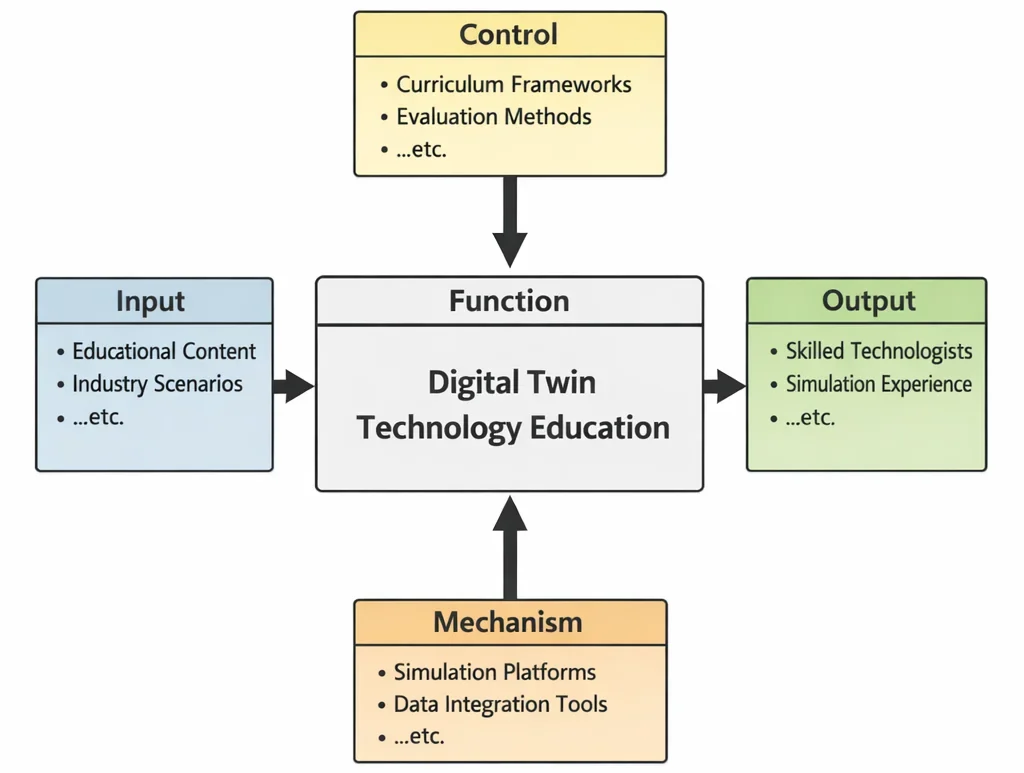
This IDEF0 (Input–Control–Output–Mechanism) diagram presents Digital Twin Technology Education as a structured learning system. Inputs on the left—such as educational content and industry scenarios—provide the substance learners work with. Controls at the top—curriculum frameworks and evaluation methods—shape scope, pacing, and standards for assessing competence. The central function, Digital Twin Technology Education, transforms these elements into capability through sequenced instruction and applied learning. Outputs on the right highlight intended results, including skilled technologists and meaningful simulation experience. Mechanisms at the bottom—simulation platforms and data integration tools—supply the technical environment that makes “twinning” concrete, letting students connect models, data, and behavior in a realistic workflow.
Digital Twin Technology is revolutionizing the future of industrial innovation by enabling real-time digital replicas of physical systems, processes, or products. This convergence of high-resolution simulation, continuous sensor data acquisition, and intelligent analytics platforms is becoming a cornerstone of modern Industrial and Manufacturing Technologies. Digital twins serve not merely as static models, but as dynamic, learning systems that synchronize virtual constructs with real-world behavior in real time. This alignment empowers engineers, managers, and operators to predict performance, identify inefficiencies, simulate scenarios, optimize operations, and prevent costly downtime throughout the product lifecycle—from conceptualization to decommissioning.
At the early stages of product design, advanced tools such as Mechanical Design and Computer-Aided Design (CAD) enable detailed virtual schematics that serve as the foundation for digital twin development. These models incorporate parametric constraints, geometry, motion behavior, and material properties. When coupled with real-time feedback mechanisms from Industrial Automation and Robotics, digital twins evolve into predictive environments capable of testing responses under varying conditions, such as thermal stress, vibrational loads, and mechanical wear. These simulations reduce the need for physical prototyping and allow rapid iteration.
Integration with Computer-Integrated Manufacturing (CIM) systems enables a seamless data thread between design and production, with feedback loops continuously refining product quality and production speed. In these scenarios, the digital twin functions as a bridge across domains—design, materials, logistics, and production control—creating a truly interconnected manufacturing ecosystem.
As industries shift toward customization and agility, coupling digital twins with Additive Manufacturing (3D Printing) and Advanced Materials and Manufacturing Technologies facilitates on-demand production, tailored design changes, and rapid development cycles. Real-time sensor inputs allow virtual models to adapt to changes in material performance, enabling optimization of form, fit, and function before physical realization. As the system learns from operational feedback, it continuously improves Manufacturing Quality Control and Assurance protocols, while refining Manufacturing Process Design and Optimization strategies for efficiency and reliability.
In the context of Smart Manufacturing and Industry 4.0, digital twins are pivotal enablers of intelligent systems. They allow factories to model complex behaviors, simulate production bottlenecks, and self-correct deviations through AI-driven analytics. Real-time dashboards visualize performance trends, while predictive alerts identify failure points before breakdowns occur. Digital twins thus increase agility, scalability, and resilience of manufacturing networks. When applied to Sustainable Manufacturing, they reduce environmental footprints by optimizing energy use, minimizing waste, and reducing dependency on physical trial-and-error methods.
Advanced sectors such as Automotive Engineering and Biomechanical Engineering increasingly rely on digital twins for rigorous stress testing, fluid-structure interaction modeling, fatigue prediction, and virtual crash simulations. These capabilities enable safer designs, faster regulatory compliance, and cost-effective innovation. In Supply Chain Management, digital twins extend beyond products to simulate logistics networks, resource flow, and demand variability, enabling more robust planning, cost reduction, and dynamic responsiveness to global disruptions.
On the factory floor, digital twin systems monitor Energy and Resource Efficiency in Manufacturing to identify areas of excess consumption and suggest energy-saving alterations in real time. In ergonomics-focused environments, models drawing on data from Human Factors and Ergonomics in Manufacturing assess workstation layout, task motion, and interface design to reduce fatigue and injury while improving human-machine interaction.
From an engineering theory perspective, the functionality of digital twins is underpinned by sound mathematical and physical principles. In Control Systems in Mech Engineering, feedback loops and system stability are central to simulating dynamic behaviors accurately. The fields of Fluid Mechanics and Hydraulics, Thermodynamics and Heat Transfer, and Solid Mechanics in Mechanical Engineering provide the laws governing flow, heat exchange, and structural responses—elements that digital twins replicate with increasing precision.
For specialized materials, the interaction of nanoscale properties and macro-performance is modeled within Nanotechnology and Advanced Materials in Mech Eng. Understanding how materials deform, resist wear, or conduct heat at different scales enhances predictive modeling and material selection. Meanwhile, synchronization between physical robots and virtual agents in Robotics and Automation in Mech Eng supports adaptive control, trajectory planning, and collaborative task execution within smart factories.
In conclusion, digital twin systems unify diverse engineering domains by forming a real-time, evolving feedback interface between the physical and digital worlds. They offer an intelligent backbone for diagnostics, optimization, and innovation across every stage of production. Their incorporation into Manufacturing and Production Engineering exemplifies a broader movement toward data-centric, agile, and predictive ecosystems capable of responding to the demands of a rapidly changing technological landscape.
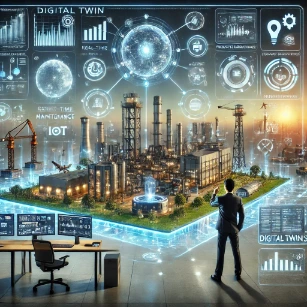
Virtual Replication: Simulation, Prediction, and Real-Time System Insight
Navigate through the core topics of Industrial & Manufacturing Technologies to see how digital twins interface across different manufacturing domains:
Industrial & Manufacturing Overview
Connects digital modelling with physical production systems across industries to establish baseline operational framework.
Digital Twin Technology (Current)
Creates virtual models of physical assets to simulate behaviour, predict outcomes, and optimize performance in real time.
Smart Manufacturing
Embeds digital twins into intelligent production environments for real-time optimization and adaptive control systems.
Process Design
Uses simulation and virtual feedback loops to refine workflows, eliminate bottlenecks, and improve overall line efficiency.
Quality Assurance
Predicts component defects and validates structural performance prior to initiating full-scale physical manufacturing.
Automation
Integrates real-time sensor streams from twin platforms directly into automated robotic controllers for trajectory adjustments.
CIM
Connects digital simulation models seamlessly with enterprise resource planning and plant floor execution software.
Additive Manufacturing
Leverages real-time digital twins to adjust laser sintering parameters and refine complex toolhead deposition paths.
Advanced Materials
Simulates microstructural deformation, thermal expansion, and mechanical wear of exotic alloys under cyclic stress.
Supply Chain
Extends twin models to network-wide logistics, evaluating lead-time variance and material routing resilience.
Sustainable Manufacturing
Evaluates lifecycle carbon footprints and models closed-loop material recycling using predictive virtual balances.
Energy Efficiency
Optimizes thermal and electrical power demand across heavy machinery lines to eliminate unnecessary idle draws.
Human Factors
Simulates physical human interaction with workstation interfaces to minimize fatigue and prevent ergonomic injuries.
Core Concepts of Digital Twin Technology
Definition and Framework
Definition: A digital twin is a dynamic, high-fidelity virtual representation of a physical asset, system, or process, designed to mirror its real-world counterpart in real-time. It continuously evolves through integration with live data streams, sensor inputs, and contextual knowledge, enabling organizations to simulate, monitor, and optimize physical entities digitally.
Key Components:
- Physical Asset or System: The tangible object or environment being mirrored, such as a jet engine, manufacturing plant, or smart building. This serves as the reference model and source of data for the digital twin’s operation.
- Virtual Model: The computerized construct that simulates the asset’s structure, behavior, and performance. It includes geometric representations (CAD models), operational logic, physics-based simulations, and behavioral algorithms that mirror how the physical object functions over time.
- Data Connectivity: Sensors and IoT devices are embedded in the physical asset to collect real-time data on temperature, pressure, vibration, flow rate, and more. This data is transmitted to the digital twin platform via wireless networks, cloud services, or edge computing systems, ensuring continuous synchronization between the physical and virtual counterparts.
- Analytics Engine: Machine learning algorithms, data analytics tools, and AI-driven models interpret and analyze the incoming data. These engines provide deep insights, anomaly detection, predictive maintenance alerts, and prescriptive recommendations, allowing users to make proactive and data-informed decisions about the physical system’s performance and maintenance needs.
Types of Digital Twins
Product Twin: Simulates an individual product through every stage of its lifecycle—from conceptual design, development, and testing to operation, maintenance, and eventual retirement. This type is extensively used in automotive and aerospace industries to improve product quality and ensure lifecycle support through virtual prototyping, usage feedback, and post-market insights.
Process Twin: Focuses on modeling, analyzing, and optimizing business or industrial processes. For example, in a manufacturing environment, a process twin can help simulate different assembly line configurations to reduce waste, increase throughput, and maximize resource utilization. Its ability to capture the dynamic nature of workflows makes it a powerful tool for operations management and continuous improvement.
System Twin: Encompasses a larger network of interconnected products and processes. It provides a holistic view of complex ecosystems such as smart cities, energy grids, or aerospace systems. System twins enable cross-domain integration, interdependency analysis, and system-wide optimization, often serving as the foundation for predictive simulations and digital command centers.
Key Functions
Simulation: Digital twins provide a powerful simulation environment to test multiple “what-if” scenarios under varying conditions. Engineers can simulate wear and tear, failure modes, energy consumption, and load-bearing capacities without disturbing the actual asset. These simulations help accelerate design iteration, risk mitigation, and prototyping.
Monitoring: Real-time tracking of asset performance metrics—such as pressure levels, temperature variations, and operational throughput—is made possible by continuous data feeds. This real-time visibility enables timely interventions, enhanced situational awareness, and proactive maintenance scheduling, reducing downtime and avoiding costly failures.
Prediction: By analyzing patterns in historical and real-time data, digital twins can anticipate future states of a system. For example, they can forecast part failures, structural fatigue, or performance degradation, allowing for preventive action. Predictive modeling also supports demand forecasting, capacity planning, and quality assurance.
Optimization: Digital twins empower users to identify opportunities for operational efficiency, cost reduction, and performance enhancement. By virtually testing process improvements or component upgrades, companies can fine-tune their systems before making physical changes. Optimization scenarios also assist in energy conservation, inventory management, and throughput balancing across the supply chain.
Applications of Digital Twin Technology
About This Interactive Simulator:
This real-time dynamic digital twin simulator models a heat exchanger and pumping loop in an industrial facility. Adjust operational inputs like system load and degradation rates to observe sensor telemetry drift and remaining useful life (RUL) predictions instantly.
- Solid Blue Line: Real-time physical system sensor output (Temperature/Vibration telemetry).
- Dashed Orange Line: Synchronized digital twin baseline prediction model.
- Chart Axes: X-axis tracks runtime hours (Hours 0-24); Y-axis tracks scaled sensor response value.
Real-Time Industrial Digital Twin Telemetry Simulator
100%
1.0x
Manufacturing
Digital twin technology revolutionizes modern manufacturing by enabling real-time monitoring of machinery, assembly lines, and factory environments. It allows manufacturers to simulate the impact of new workflows, optimize the use of floor space, assess inventory flows, and implement lean manufacturing principles. These virtual models provide a sandbox for testing process modifications, reducing the need for physical trials and enabling agile adaptation to shifting demand.
Simulating new layouts, such as reconfiguring production zones or introducing robotics, helps identify inefficiencies and predict outcomes before physical deployment, reducing operational risk.
Example: A digital twin of an automotive assembly line uses real-time data from IoT sensors to detect bottlenecks, identify slow-performing stations, and provide AI-powered recommendations to enhance process efficiency. Companies like Siemens and BMW employ such twins to virtually validate process improvements and streamline production across global plants.
Benefits: Digital twins reduce equipment downtime by predicting maintenance needs and prevent quality defects through early detection of anomalies. They also enable efficient resource utilization and enhance production throughput, ultimately leading to faster time-to-market and lower operational costs.
Aerospace and Defense
Digital twins model complex aerospace systems like jet engines, airframes, and propulsion systems. They facilitate continuous performance monitoring during operations and help anticipate degradation or stress accumulation. Engineers use simulations to study how an aircraft would behave under extreme conditions, reducing reliance on expensive wind tunnel testing.
Digital twins also support the design and verification of flight systems, mission readiness assessments, and safe operation under varying atmospheric scenarios.
Example: Rolls-Royce uses digital twin technology to monitor its Trent jet engines across commercial fleets worldwide. Through continuous telemetry, the twin detects temperature or vibration abnormalities and flags potential issues before they become failures, enhancing flight safety and reducing unscheduled maintenance.
Benefits: By simulating and monitoring critical systems, digital twins in aerospace extend component lifespans, improve flight safety, and streamline maintenance operations. They help engineers meet strict regulatory standards while reducing development cycles and operational costs.
Healthcare
In healthcare, digital twins are used to create personalized simulations of individual patients, allowing doctors to explore treatment plans tailored to a person’s physiology and medical history. These patient-specific twins can model organ behavior, predict disease progression, and optimize medication regimens.
For medical device manufacturers, digital twins support virtual testing of prosthetics, implants, and diagnostic tools under diverse anatomical scenarios, enabling iterative design improvements.
Example: Digital replicas of human hearts have been used in cardiac surgery planning, allowing doctors to test different surgical techniques virtually before operating. Hospitals and medtech firms also employ twins to simulate the interaction of devices with tissue or blood flow in real-time.
Benefits: Digital twins improve diagnostic accuracy, reduce procedural errors, and accelerate drug and device development. They enable precision medicine, enhance surgical planning, and reduce patient recovery time, leading to better health outcomes and lower treatment costs.
Energy and Utilities
Utilities use digital twins to manage infrastructure such as power plants, wind farms, and smart grids. These systems provide real-time visibility into asset performance, allowing predictive maintenance and dynamic load balancing to prevent blackouts. In renewable energy, digital twins optimize turbine orientation, monitor wear patterns, and evaluate energy yield under changing weather conditions.
Digital twins also model grid behavior in response to load fluctuations or the integration of distributed energy sources, enabling smarter grid design and operation.
Example: GE Renewable Energy utilizes digital twins for wind turbines to enhance predictive maintenance and energy optimization across global installations. Their software forecasts potential component failures, schedules repairs proactively, and aligns maintenance with periods of low wind activity to minimize downtime.
Benefits: Digital twins reduce unplanned outages, enhance asset longevity, and maximize energy output. They also support the transition to clean energy by ensuring efficiency in renewable systems and reducing the environmental impact of legacy infrastructure.
Smart Cities
Urban planners and governments leverage digital twins to simulate and manage the physical and functional aspects of cities. These simulations include transportation networks, water systems, waste management, and building energy efficiency. They enable predictive modeling of traffic congestion, pollution levels, and emergency responses.
By integrating real-time sensor data, cities can adaptively control traffic lights, HVAC systems, and lighting to reduce energy use and improve livability.
Example: Singapore’s “Virtual Singapore” is a high-resolution 3D digital twin used to simulate everything from pedestrian flows to climate conditions in new districts. The platform helps decision-makers evaluate infrastructure investments, public safety, and sustainability initiatives with greater precision.
Benefits: Smart city digital twins foster sustainable urban development, improve municipal services, and support citizen engagement. They help optimize energy consumption, enhance public safety, and reduce environmental impact through data-driven governance.
Automotive
Digital twins model entire vehicles, including powertrains, braking systems, and driver-assistance algorithms. They simulate real-world driving conditions to test vehicle durability, crash safety, and emissions under varied terrain and weather. They are also instrumental in training autonomous vehicles by providing virtual test tracks for machine learning models.
Twins enable predictive maintenance, monitor component health, and assist with over-the-air (OTA) updates for modern connected vehicles.
Example: Tesla employs digital twin technology to maintain a virtual copy of each vehicle it sells. These twins receive live telemetry data, allowing Tesla to remotely diagnose problems, push OTA software updates, and even make driving performance adjustments based on real-world usage.
Benefits: Automakers gain faster product development cycles, increased vehicle reliability, and reduced warranty expenses. Consumers benefit from smarter diagnostics, fewer service disruptions, and personalized performance tuning, significantly enhancing the ownership experience.
Key Technologies Enabling Digital Twins
Internet of Things (IoT)
Role: The Internet of Things serves as the sensory and communication infrastructure for digital twin systems. By embedding physical assets with a network of smart sensors and connected devices, IoT allows for the continuous transmission of operational data such as temperature, pressure, vibration, and location. These data streams form the backbone of the digital twin, ensuring it reflects the real-world entity’s condition in real time.
Applications: Real-time monitoring of manufacturing equipment helps detect abnormalities early, preventing costly breakdowns. In agriculture, IoT-enabled digital twins simulate soil health and crop growth, enhancing yield predictions. In smart buildings, IoT devices capture data on occupancy and energy usage to optimize HVAC systems. Environmental monitoring, such as in offshore oil rigs or nuclear plants, also leverages IoT to build safety-enhancing digital twins.
Artificial Intelligence (AI) and Machine Learning
Role: AI and machine learning provide the intelligence that transforms raw sensor data into meaningful insights and proactive decision-making. By training models on historical and real-time data, these technologies can identify hidden patterns, recognize anomalies, and make accurate predictions about system performance and potential failures.
Applications: Machine learning algorithms predict when industrial machines are likely to fail, enabling just-in-time maintenance. AI supports real-time optimization of traffic signals in smart cities based on digital twin simulations. In healthcare, deep learning models interpret patient-specific twin data to recommend personalized treatment strategies. These intelligent systems are key to enabling autonomy and self-correction in digital twin deployments.
Cloud Computing
Role: Cloud computing enables digital twins to process vast volumes of data, perform high-fidelity simulations, and scale across multiple geographies and devices. Cloud platforms offer flexible computing resources, collaborative access, and integration with analytical and AI tools, making it possible to deploy digital twins across enterprise systems and industries.
Applications: Automotive companies host digital twins of fleet vehicles in the cloud, allowing engineers to remotely test design variations and push performance updates. In energy, cloud-based digital twins of wind farms aggregate turbine data across continents to detect global efficiency trends. Moreover, industries can implement disaster recovery, security, and cross-functional analytics thanks to robust cloud infrastructures like Microsoft Azure and AWS.
5G Connectivity
Role: 5G networks provide the speed and ultra-low latency required to maintain seamless, real-time synchronization between physical entities and their digital counterparts. This is particularly important in environments where rapid data exchange is critical, such as in autonomous vehicles or industrial robotics.
Applications: 5G supports responsive digital twin applications in high-speed rail, remote surgery, and augmented reality (AR) manufacturing interfaces. A smart city digital twin can instantly respond to sensor input across a massive urban area, regulating traffic signals, emergency alerts, and public lighting based on actual conditions. 5G also enables uninterrupted video and telemetry streaming for live remote equipment monitoring in construction and mining.
Simulation Software
Role: Simulation software is at the heart of digital twin creation. It transforms real-world data into virtual representations, allowing engineers to explore “what-if” scenarios without interrupting actual operations. These tools can perform structural, thermal, fluid dynamic, and electromagnetic simulations to assess the behavior of physical systems under varied conditions.
Applications: Finite Element Analysis (FEA) evaluates the durability of bridges and mechanical parts. Computational Fluid Dynamics (CFD) simulates airflow through ventilation systems or across airplane wings. Manufacturing firms use discrete-event simulation to optimize plant layouts. Tools like ANSYS, Simulink, and Altair empower industries to test, iterate, and validate designs entirely in the virtual realm.
Blockchain
Role: Blockchain ensures transparency, security, and immutability in digital twin ecosystems, especially when twins span organizational or geographic boundaries. It provides tamper-proof ledgers that verify the authenticity and lifecycle history of assets, critical for industries like aerospace, supply chain, and pharmaceuticals.
Applications: Digital twins of products in global supply chains are linked to blockchain records to trace component provenance and compliance certifications. In pharmaceutical manufacturing, blockchain secures production and distribution data to prevent counterfeiting. Blockchain also validates real-time updates to digital twin data across stakeholders.
Benefits of Digital Twin Technology
-
Predictive Maintenance:
One of the most powerful applications of digital twins is the ability to foresee equipment failures before they occur. By continuously analyzing data from sensors and control systems, digital twins detect subtle signs of wear, imbalance, or drift in system performance. This capability enables maintenance teams to intervene just in time—neither too early nor too late—thereby extending equipment lifespan, minimizing unplanned outages, and reducing the risk of catastrophic failures. In industries like aviation or oil and gas, where downtime can cost millions per hour, predictive maintenance powered by digital twins has become mission-critical. Digital twins also integrate historical failure modes to improve accuracy in future predictions. -
Enhanced Efficiency:
Digital twins optimize resource allocation by identifying process bottlenecks and underperforming assets. In manufacturing, they simulate production flow and suggest adjustments to minimize idle time or rework. In facility management, twins analyze HVAC usage patterns to adjust temperature zones automatically, ensuring energy is not wasted in unoccupied areas. Logistics firms use twins to fine-tune supply chain routing and warehouse layouts. Across domains, these efficiency gains translate into shorter cycle times, reduced energy input, and increased throughput. The visualization aspect of digital twins also aids operators in pinpointing inefficiencies faster than with conventional dashboards. -
Cost Savings:
By improving system reliability, optimizing workflows, and automating diagnostics, digital twins significantly reduce operational costs. They allow industries to cut down on unnecessary maintenance routines, avoid overstocking spare parts, and minimize service disruptions. When simulating new products or processes in the virtual environment, costly trial-and-error is replaced with precise modeling. Energy-intensive systems can be fine-tuned to operate within ideal parameters, reducing utility bills. Even small improvements in uptime and process control, when scaled across global operations, result in substantial savings. -
Improved Decision-Making:
Executives and operational managers alike benefit from the comprehensive, real-time insights that digital twins offer. By consolidating data from multiple sources—sensors, enterprise software, historical logs—into a single virtual platform, decision-makers can observe emerging trends and correlations otherwise invisible. Scenario testing enables organizations to forecast the impact of changes in supply, demand, or regulations. From financial planning to operational control, digital twins enhance situational awareness and reduce reliance on gut-feel judgments. They are especially valuable in industries with complex, interconnected systems such as utilities, transportation, and aerospace. -
Accelerated Innovation:
Digital twins revolutionize R&D by making it possible to iterate designs and test hypotheses rapidly in a simulated environment. Engineers can explore new configurations, materials, and manufacturing techniques with minimal physical prototyping. Medical device companies use patient-specific digital twins to validate designs before conducting physical trials. The aerospace industry develops flight models and control algorithms through simulated tests of digital twins. By dramatically shortening the innovation cycle and lowering the cost of experimentation, digital twins enable startups and large corporations alike to bring products to market faster and with greater confidence. -
Sustainability:
Digital twin technology plays a pivotal role in environmental stewardship by enabling sustainable design and operation. By simulating the carbon footprint of various material choices, transportation routes, or energy sources, companies can select the greenest alternatives without guesswork. In construction, twins model energy usage of buildings under different climatic and occupancy conditions to optimize insulation, lighting, and HVAC systems. In agriculture, digital twins track soil health and water usage to minimize environmental degradation. These insights empower industries to adopt greener practices that conserve resources, reduce emissions, and comply with global sustainability targets.
Challenges in Implementing Digital Twin Technology
-
High Initial Investment:
Implementing digital twin solutions often entails a substantial upfront cost, especially for industries transitioning from traditional systems. Investment is needed not only in high-performance computing infrastructure and simulation software but also in IoT devices, cloud storage, and robust network connectivity. Companies must also factor in expenses for integrating these technologies into existing workflows. Moreover, digital twin adoption typically involves long-term financial planning as returns may be gradual. For small to mid-sized enterprises, securing funding or justifying costs to stakeholders can be a significant barrier, particularly when tangible ROI is not immediate. Strategic partnerships and government grants are sometimes essential to offset these costs. -
Data Integration Complexity:
One of the most difficult hurdles in deploying a digital twin is the need to aggregate data from heterogeneous sources, such as legacy systems, ERP platforms, sensor networks, and third-party APIs. These systems often differ in format, resolution, update frequency, and data protocols. Harmonizing such data into a coherent, real-time model demands middleware solutions, extensive pre-processing, and custom-built pipelines. Furthermore, ensuring data consistency and semantic compatibility is non-trivial. Errors in integration can lead to inaccurate models, poor performance predictions, or misleading analytics. As digital twins evolve in complexity, managing this integration becomes increasingly critical to maintain model fidelity and trustworthiness. -
Cybersecurity Risks:
Digital twins rely heavily on real-time data streams and remote connectivity, making them susceptible to cyber threats. Unauthorized access, data breaches, and ransomware attacks can compromise both the virtual and physical systems being modeled. If a hacker gains control of a twin’s feedback loop, they could potentially manipulate operational parameters, leading to equipment damage or safety violations. The sheer volume and velocity of data traveling through IoT networks amplify vulnerability. To mitigate risks, organizations must implement multi-layered security protocols including data encryption, authentication layers, and regular vulnerability assessments. -
Scalability Issues:
While pilot digital twin projects are often successful at the asset or unit level, scaling them across entire factories, cities, or global supply chains is exponentially more complex. Challenges include the increased computational load, need for ultra-reliable connectivity, and data storage requirements that escalate with scale. Additionally, the modeling and validation of interactions among multiple interconnected systems become significantly more difficult. Enterprise-wide implementation may require cloud-native architectures and advanced orchestration platforms. Without strategic planning, scaling efforts risk fragmenting into siloed implementations that fail to deliver unified insight or optimization benefits across the organization. -
Skill Gaps:
Deploying and maintaining a robust digital twin requires cross-disciplinary expertise in fields like systems engineering, data science, machine learning, cybersecurity, and industrial operations. The current workforce in many industries may lack these integrated skill sets. Hiring or training personnel to manage digital twin ecosystems is not just about technical capability—it also demands an understanding of the business logic and real-world processes being modeled. Universities and vocational institutions are still ramping up specialized programs, creating a lag in talent availability. In-house capability building is therefore essential, often supported by strategic collaborations with academic and research institutions.
Emerging Trends in Digital Twin Technology
-
AI-Driven Twins:
Artificial Intelligence is increasingly being integrated into digital twin ecosystems to enable autonomous decision-making, predictive analytics, and adaptive learning. AI-driven digital twins go beyond passive monitoring; they continuously learn from real-time and historical data to refine operational strategies and anticipate future states. For instance, machine learning algorithms can detect subtle anomalies in turbine vibrations, prompting preemptive maintenance even before human operators notice a pattern. In supply chain environments, AI-enabled twins optimize inventory flow by learning from market signals and consumption trends. This level of autonomy transforms digital twins into proactive systems capable of adjusting parameters and workflows without human input, significantly enhancing responsiveness and resilience. -
Edge Computing Integration:
As digital twins demand ultra-fast data processing for real-time applications, edge computing is gaining traction as a vital enabler. Edge computing refers to processing data at or near the source—such as within smart sensors or local gateways—rather than relying solely on centralized cloud servers. This reduces latency, enhances reliability, and eases bandwidth requirements. In industrial settings, edge-based digital twins allow instant analysis of machine behavior, enabling near-instantaneous adjustments to production processes. They are particularly useful in mission-critical applications like autonomous vehicles, where delays could have catastrophic consequences. Edge integration also facilitates operation in remote or connectivity-constrained environments. -
Digital Twin Networks:
The future of digital twins lies in interconnected networks that span organizational boundaries and system hierarchies. These networks enable collaborative optimization across multiple assets and domains—such as linking the digital twins of a building’s HVAC system, power grid, and water supply into a unified smart infrastructure model. In manufacturing, digital twin networks can synchronize suppliers, production lines, and logistics hubs to achieve systemic efficiency. Standards and interoperability frameworks are essential to unlock this potential. One example is the Digital Twin Consortium, which advocates for best practices and convergence across industries. These networks facilitate predictive collaboration, where insights from one twin inform actions across others. -
Sustainability Applications:
Digital twin technology is emerging as a powerful tool for advancing sustainability goals. By modeling energy consumption, material usage, and emissions in real time, digital twins help organizations identify inefficiencies and implement greener alternatives. Cities can simulate traffic patterns and public transit interactions to reduce emissions, while manufacturers use twins to design low-waste production cycles. Twins also enable lifecycle analysis of products, providing insight into environmental impacts from cradle to grave. In construction, digital twins are employed to optimize insulation and ventilation systems, resulting in more energy-efficient buildings. This data-driven approach supports compliance with environmental regulations and aligns with global climate initiatives. -
Quantum Computing:
Quantum computing promises to unlock levels of computational power that are unattainable with classical systems, offering transformative potential for digital twin technology. Quantum-enhanced digital twins could simulate highly complex phenomena—such as molecular interactions in pharmaceutical development or dynamic behaviors in global logistics networks—with unprecedented precision and speed. These simulations, previously constrained by processing limitations, will be performed in real time, enabling hyper-accurate predictions and accelerated innovation. While practical quantum digital twins are still emerging, foundational work in quantum machine learning and hybrid architectures is paving the way for next-generation implementations. Early adopters in finance, aerospace, and energy are already exploring use cases through quantum simulators.
Future Directions in Digital Twin Technology
-
Universal Adoption in Manufacturing:
As digital twin technology matures, it is poised to become a universal fixture across the global manufacturing landscape. From small-scale fabrication shops to multinational factories, digital twins will be embedded into daily operations to optimize production workflows, track asset performance, and forecast maintenance schedules. With real-time data from smart sensors and seamless integration with AI and ERP systems, manufacturers will achieve predictive and prescriptive maintenance at scale. Digital twins will help identify inefficiencies before they become costly issues, leading to higher equipment uptime and better resource utilization. Additionally, they will support continuous improvement initiatives through detailed analytics, making lean and Six Sigma practices more data-driven and effective. -
Hyper-Personalization:
In consumer-centric sectors such as healthcare, fitness, and personal electronics, digital twins will usher in a new era of hyper-personalization. These personalized digital models—ranging from replicas of individual physiology to customized usage profiles for smart devices—will enable companies to tailor products and services with remarkable accuracy. For example, wearable tech manufacturers can simulate user-specific scenarios, allowing for more effective health monitoring and recommendations. In the automotive sector, individual vehicle twins can track wear-and-tear based on a user’s driving habits, offering predictive maintenance and usage-based insurance. This individualized approach promises greater consumer satisfaction, enhanced loyalty, and long-term engagement between users and their digital ecosystem. -
Interdisciplinary Integration:
Digital twins are increasingly being combined with immersive technologies such as augmented reality (AR) and virtual reality (VR) to offer next-level visualization and interactivity. Engineers and designers can step into a virtual environment that mirrors real-world operations, making it easier to test ideas and troubleshoot problems in a spatially intuitive context. AR overlays can guide technicians through complex repair tasks using real-time feedback from a digital twin. In urban planning, VR-linked twins can simulate pedestrian and traffic flow to test new layouts. This convergence of technologies empowers multidisciplinary teams to collaborate more effectively, translating abstract data into practical insights. -
Global Collaboration:
In the future, digital twin ecosystems will not be confined to individual organizations but will extend across international supply chains and stakeholder networks. This global collaboration will foster transparency, efficiency, and trust among partners by allowing real-time sharing of standardized twin models. Logistics companies, manufacturers, and suppliers will jointly access models that reflect shipping conditions, storage environments, and production bottlenecks. This cross-border interoperability supports just-in-time manufacturing and enhances responsiveness to disruptions. Digital twin collaboration will also be essential in crisis management—such as coordinating pandemic response or disaster relief—by providing an accurate, synchronized view of infrastructure and resource deployment worldwide. -
Smart Infrastructure:
The scope of digital twin applications is expanding beyond individual machines and buildings to encompass entire smart infrastructures. Cities, transportation hubs, and utilities are increasingly deploying digital twins to monitor, simulate, and optimize operations at scale. A digital twin of an airport, for instance, can coordinate baggage systems, air traffic, terminal occupancy, and maintenance, improving safety and passenger experience. In power grids, twins enable predictive load management, reducing the risk of outages and integrating renewable energy sources. Infrastructure twins will also assist in long-term planning, supporting sustainable development through scenario testing and lifecycle analysis. As public and private stakeholders embrace this technology, investments in large-scale infrastructure digitalization are expected to grow rapidly.
Why Study Digital Twin Technology
Creating Virtual Representations of Physical Systems
Digital twin technology enables the creation of digital replicas that simulate physical assets, systems, or processes in real time. These virtual models continuously receive data from sensors, embedded devices, and control systems, allowing students to understand the dynamic behavior of physical components without the need for physical prototypes. Through hands-on projects, students learn to build detailed digital models of engines, production lines, energy systems, or even entire factories. They gain exposure to 3D modeling tools, simulation environments, and data integration techniques that bring these digital twins to life. This understanding is not only foundational for engineering disciplines but also valuable in fields such as logistics, infrastructure management, and aerospace design, where accurate modeling is essential for predictive analytics and operational oversight.
Enhancing Performance and Reliability
One of the key educational benefits of digital twin technology is the ability to improve the performance, reliability, and efficiency of physical systems. Students study how historical and real-time operational data are analyzed to identify performance bottlenecks, fine-tune system parameters, and predict potential points of failure. For example, in a manufacturing environment, they can simulate variations in machine behavior and apply predictive maintenance strategies that avoid costly downtimes. This teaches students how to use tools such as machine learning, sensor diagnostics, and digital feedback loops to create systems that self-monitor and self-correct. Digital twins are now considered a core element of predictive maintenance strategies in next-generation industrial operations, making this knowledge highly marketable.
Applications in Smart Manufacturing and Industry 4.0
Digital twins are central to the evolution of Smart Manufacturing and the broader framework of Industry 4.0. Students explore real-world case studies where digital twins enable full integration of manufacturing execution systems (MES), robotics, logistics, and inventory management into a unified digital environment. This allows predictive scheduling, process optimization, and adaptive decision-making, even in complex production ecosystems. Learners also investigate the role of cyber-physical systems in enabling autonomous manufacturing through digital feedback and simulations. As Industry 4.0 becomes the standard for competitive production globally, acquiring digital twin expertise positions students at the forefront of a digitally enabled workforce.
Integration with IoT and Cloud Platforms
The synergy between digital twins and Internet of Things (IoT) technologies forms the backbone of digital transformation in industries. Students learn how IoT sensors generate continuous data streams, which are transmitted to cloud platforms for storage, processing, and visualization. They study architectures for real-time data synchronization, secure data transmission, and edge computing to ensure reliability and responsiveness. This includes exploring platforms like Microsoft Azure Digital Twins and AWS IoT TwinMaker, which facilitate enterprise-scale deployment. Cloud computing also supports the scalability of simulations and model deployment across global production lines. Knowledge of this integration equips students to manage large, distributed systems with complex feedback loops, a skill in high demand across sectors including automotive, aerospace, healthcare, and infrastructure.
Driving Innovation and Sustainability
Digital twin technology empowers engineers and product developers to innovate rapidly while minimizing material waste and energy usage. Students study how virtual testing environments allow for experimentation with different materials, geometries, and operational settings—reducing the need for repeated physical prototypes. This accelerates product development cycles and facilitates greener engineering decisions. Moreover, students learn how digital twins can be used to simulate energy consumption, carbon emissions, and system efficiencies—enabling more sustainable design strategies. In sectors such as green building, smart cities, and clean energy systems, these skills directly contribute to meeting sustainability goals.
Improving Decision-Making with Real-Time Insights
An advanced benefit of studying digital twin systems is the ability to support data-driven decision-making in real time. Students learn how dashboards and analytics tools can synthesize complex data from a digital twin and present actionable insights for operators, engineers, or executives. Whether optimizing factory output or adjusting city-wide energy flows, digital twins help interpret large datasets in context. Students practice developing visualizations, running what-if scenarios, and applying anomaly detection to uncover trends. These decision support systems improve risk management, forecasting, and responsiveness to dynamic changes in the system’s environment.
Preparing for Careers in Emerging Technologies
The study of digital twin technology provides a versatile skill set applicable across engineering, data science, and systems integration. Students are introduced to cross-disciplinary knowledge spanning mechanical engineering, software development, data analytics, and cyber-physical systems. These competencies align with career paths in digital engineering, systems architecture, smart infrastructure, and operational analytics. Students can also pursue research and innovation roles, contributing to emerging fields such as digital biology, virtual commissioning, and remote asset management. With businesses increasingly adopting digital transformation strategies, job demand for digital twin engineers, modelers, and system architects is forecasted to grow significantly.
Linking Theory to Practice in Engineering Education
Finally, digital twin education helps bridge the gap between abstract theoretical concepts and real-world engineering practices. Students apply principles from mechanics, thermodynamics, control systems, and fluid dynamics within a practical digital environment. By simulating stresses, material deformations, thermal gradients, and feedback controls, learners develop intuition about how systems behave under different conditions. This integrative learning approach enhances engagement, retention, and problem-solving capabilities. It also helps students appreciate the impact of small design changes across a system’s lifecycle, reinforcing systems thinking and design-for-reliability methodologies.
Global Case Studies in Digital Twin Technology
Digital Twin Technology is being adopted worldwide to solve complex industrial, environmental, and social challenges. These real-time virtual replicas of physical systems have enabled innovations in design, monitoring, and decision-making across sectors. To illustrate the global scope and versatility of this technology, we present four case studies from diverse contexts: a high-tech aerospace application in the United States, smart city integration in China, sustainable manufacturing in Brazil, and agricultural modernization in Kenya. Each example showcases how digital twins are not only transforming advanced industries but also enabling emerging economies to leapfrog into the era of intelligent systems.
Case Study 1: NASA and the Pioneering Use of Digital Twin Technology
Project Overview: NASA is widely credited as one of the original developers and adopters of digital twin technology. The concept was born from the agency’s need to monitor and simulate the health of spacecraft during critical missions—most notably during the Apollo 13 crisis in 1970. At its core, a digital twin at NASA refers to a virtual replica of a physical system—whether it’s a rocket engine, space station module, or entire spacecraft—constantly updated with real-time sensor data to provide operational insight, diagnostic feedback, and predictive analytics. Over time, the technology has evolved from conceptual modeling to highly integrated, AI-assisted simulation platforms deployed across NASA’s missions.
Origins and Evolution of Digital Twins at NASA
The Apollo program provided an early precursor of digital twin thinking, as NASA engineers on Earth used simulators and telemetry data to mirror the state of the Apollo 13 spacecraft and devise solutions remotely. Although not termed a “digital twin” at the time, this technique of real-time modeling, adjustment, and verification laid the foundation for modern digital twin methodologies.
By the 2010s, NASA formalized its use of digital twins as part of its Integrated Systems Health Management (ISHM) initiative. The goal was to create dynamic digital models of complex space assets—engines, environmental control systems, navigation subsystems—that could operate in parallel with physical systems during development, testing, and mission execution.
Key Applications Across NASA Missions
- Spacecraft and Satellite Design: NASA uses digital twins to simulate entire spacecraft systems before any physical prototype is built. These simulations evaluate thermal, structural, aerodynamic, and electromagnetic behaviors in varying space conditions. By doing so, NASA can identify potential points of failure, design inefficiencies, or unsafe operations—well before launch.
- Launch and Reentry Simulation: Digital twins model dynamic launch conditions and reentry phases, helping predict how components will respond to thermal loads, mechanical stresses, and vibration forces. In the Space Launch System (SLS) project, real-time data from test firings and launch events are fed into the digital twin to calibrate system performance expectations.
- Health Monitoring and Predictive Maintenance: For assets like the International Space Station (ISS) and Mars rovers, NASA employs digital twins to monitor system health continuously. AI algorithms interpret sensor data, compare it against the twin’s models, and flag deviations that suggest deterioration or failure risk. For instance, a twin of the Environmental Control and Life Support System (ECLSS) on the ISS helps manage life-critical air and water systems proactively.
- Deep Space Missions and Robotics: In missions to Mars and beyond, communication delays make remote manual operation difficult. NASA uses digital twins of robotic systems—like the Perseverance rover or proposed lunar habitats—to simulate autonomous decision-making. These twins allow Earth-based teams to assess rover conditions, test maneuver options, and optimize energy use without waiting for round-trip communication.
Enabling Technologies and Integration Architecture
NASA’s digital twins are built on a layered architecture comprising simulation models, sensor networks, telemetry systems, data analytics platforms, and AI modules. Central components include:
- Physics-Based Modeling: Multiphysics simulation engines (like finite element analysis and computational fluid dynamics) form the foundation for replicating space conditions accurately.
- High-Fidelity Sensor Integration: Sensors embedded in spacecraft continuously transmit data (e.g., temperature, vibration, voltage, chemical composition), updating the twin in real time.
- Digital Thread Infrastructure: NASA implements a “digital thread” that links each phase of the system lifecycle—from design and assembly to testing, launch, operation, and decommissioning—into a unified traceable data stream.
- AI and Machine Learning: NASA uses ML models for anomaly detection, failure prediction, and system optimization. These models continuously learn from both physical performance data and simulated scenarios to improve operational accuracy.
Major Benefits Observed
- Risk Mitigation: Digital twins allow pre-emptive detection of failures in mission-critical systems, reducing the chance of catastrophic events and increasing crew safety.
- Cost Reduction: By catching design issues before physical prototypes are built or launched, NASA significantly cuts down on trial-and-error development costs and mission delays.
- Mission Extension: For long-term assets like the ISS or Mars rovers, digital twins contribute to extending operational life by supporting condition-based maintenance strategies.
- Training and Simulation: Astronauts and mission operators use virtual twins to rehearse emergency procedures and validate mission protocols in safe, controlled environments.
Case Example: Twin of the Orion Spacecraft
One of NASA’s most advanced digital twins is the virtual model of the Orion spacecraft used for the Artemis missions. This twin simulates thermal protection system wear during reentry, internal cabin climate regulation, propulsion stability, and communication link integrity. It draws data from over 2000 onboard sensors and feeds performance insights to mission controllers and ground engineers in real time. In test flights, the Orion twin has already proven instrumental in diagnosing in-flight anomalies that would otherwise have required extensive post-mission data analysis.
Long-Term Vision and Research
NASA envisions future digital twins that go beyond system diagnostics to support autonomous reasoning and adaptive mission control. In research partnerships with academia and industry, it is developing cognitive twins—AI-enhanced versions capable of learning from historical patterns and suggesting optimal actions. These systems are essential for missions where human intervention is not immediately possible, such as asteroid mining, deep space probes, or lunar base management.
NASA is also investigating how digital twins can be synchronized across multiple vehicles and systems in a mission—creating a “mission twin” that represents an entire operational ecosystem, including launch vehicles, habitats, drones, and communication relays.
Collaborations and Cross-Sector Impact
NASA’s pioneering role in digital twin development has influenced many sectors, including aerospace, automotive, healthcare, and energy. Collaborations with NASA Ames Research Center have produced public-domain tools and models for broader use. The agency also partners with defense contractors, universities, and tech firms to refine simulation environments and scale digital twin applications to larger systems.
Lessons Learned and Broader Implications
- Integration is Key: A successful digital twin program depends on seamless data integration, model calibration, and real-time feedback loops. Fragmented data environments weaken the twin’s reliability and usefulness.
- Digital Twins as Living Systems: NASA treats its digital twins as “living” entities that evolve with each update, mission outcome, or anomaly recorded. Maintaining this dynamic quality is essential for long-term mission reliability.
- Scaling and Complexity: As systems grow in complexity—from single engines to entire missions—the scalability and interoperability of digital twin platforms become crucial design considerations.
Conclusion: NASA’s trailblazing work in digital twin technology has transformed the landscape of aerospace engineering and space exploration. By integrating high-fidelity simulations with real-time data and intelligent analytics, NASA has demonstrated the profound potential of digital twins to improve mission safety, reduce costs, and enable autonomous operations in the most extreme environments. The agency’s ongoing research continues to push the boundaries of what digital replicas can do—laying the groundwork not only for future lunar and Martian expeditions, but also for innovations across industry, science, and engineering worldwide.

This digital illustration showcases NASA’s pioneering use of Digital Twin Technology in aerospace engineering. The image depicts a real-world spacecraft mirrored by a virtual replica within a simulation environment, linked through dynamic data feeds. Engineers and AI-powered systems analyze the digital model to predict malfunctions, assess thermal and structural stress, and optimize flight performance. This fusion of physical telemetry and real-time virtual modeling allows for early detection of anomalies, reduced mission risk, and enhanced reliability for both crewed and uncrewed missions. NASA’s approach exemplifies how digital twins can revolutionize asset management in extreme environments.
Case Study 2: China – Integrating Digital Twin Technology into Smart Manufacturing Education and Industrial Strategy
Overview: In the last decade, China has emerged as a frontrunner in the global implementation of Digital Twin Technology, weaving it into the core of its national education and industrial modernization policies. Leveraging public–private partnerships, government funding, and a proactive reform in engineering curricula, China’s strategy goes beyond isolated pilot programs to embrace system-wide integration across universities, research centers, and manufacturing hubs. This case study explores how digital twins are embedded into China’s educational fabric and industrial backbone to cultivate a future-ready, high-tech workforce capable of driving intelligent manufacturing.
Strategic Government Initiatives and National Roadmaps
China’s blueprint for industrial modernization is heavily guided by state-led strategies such as Made in China 2025 and the subsequent Industrial Internet 2030 initiative. These plans emphasize smart manufacturing, digital infrastructure, and cyber-physical systems. Digital twin technology is promoted not only as a productivity tool but as a foundational platform for achieving operational visibility, resource efficiency, and intelligent decision-making in manufacturing.
Under these national plans, the Ministry of Industry and Information Technology (MIIT), the Ministry of Education, and provincial authorities fund demonstration zones where universities collaborate directly with companies to pilot large-scale digital twin applications. These zones focus on integrating simulation, AI, and real-time sensor feedback across sectors such as automotive, aerospace, semiconductors, and medical devices.
University–Industry Collaboration and Innovation Hubs
Central to China’s digital twin ecosystem is the establishment of university-industry collaboration networks. Flagship universities—including Shanghai Jiao Tong University, Tsinghua University, and Zhejiang University—host advanced simulation labs co-developed with industrial giants like Huawei, Siemens China, and China Aerospace Science and Technology Corporation (CASC).
These digital twin labs simulate end-to-end industrial environments, including real-time data visualization of robotic arms, 3D-printed components, conveyor belts, and thermal systems. University students engage in hands-on activities that mimic live production environments, enabling them to test optimization models, predictive algorithms, and process control mechanisms. These “learning factories” use cloud platforms such as Huawei’s FusionPlant or Siemens’ MindSphere to synchronize virtual twins with physical systems.
Curriculum Transformation and Hands-On Learning Models
China’s universities have undergone sweeping reforms in engineering education to integrate digital twin technology directly into the curriculum. These changes are aligned with the national “New Engineering Education” reform initiative, which encourages interdisciplinary learning, practice-oriented training, and digital competency development. Undergraduate and postgraduate students now follow modular curricula that cover:
- Modeling and Simulation: Students are trained to construct high-fidelity digital twins of CNC machines, autonomous vehicles, HVAC systems, and smart grids using CAD/CAM software and Finite Element Analysis (FEA).
- IoT and Sensor Fusion: Real-time data from sensors (e.g., temperature, pressure, vibration) are streamed into simulation environments to calibrate and validate digital models continuously.
- Cloud Platforms and Edge Computing: Courses teach deployment of digital twins using platforms like Huawei’s FusionPlant and Alibaba Cloud, focusing on latency management and cybersecurity.
- AI Integration: Predictive maintenance, root-cause analysis, and real-time optimization are taught using machine learning libraries and neural network architectures.
- Capstone Projects: Multidisciplinary teams collaborate with companies to solve real industrial problems using digital twin pipelines—from system design and simulation to deployment and performance monitoring.
Skills Development and Employment Outcomes
The integration of digital twin technology into education has had a transformative effect on the readiness of Chinese graduates. According to internal studies from the Ministry of Education, over 70% of engineering graduates with digital twin experience secured employment in smart manufacturing firms within three months of graduation. Key skills valued by employers include:
- Design and integration of cyber-physical systems using open-source and proprietary tools.
- Proficiency in real-time control systems and digital thread architecture.
- Use of AI and machine learning to monitor system degradation and optimize processes.
- Project management and interdisciplinary collaboration with software, electronics, and mechanical teams.
Policy Framework and Institutional Support
The success of China’s digital twin education initiative is anchored in its policy coherence and government-led coordination. Under the “Made in China 2025” blueprint and the Ministry of Industry and Information Technology’s (MIIT) digital transformation roadmap, multiple policy levers have been mobilized to support digital twin integration in education and industry:
- Infrastructure Grants: Government funding supports the construction of virtual laboratories, high-performance computing clusters, and 5G-enabled testbeds across key technical institutions.
- Standards and Accreditation: Curriculum modules and digital twin lab capabilities are benchmarked against national education standards, with performance-based incentives for institutions that lead in innovation.
- Private Sector Involvement: Companies such as Huawei, Tencent, and Siemens China have been incentivized to co-develop teaching materials, offer internships, and share proprietary digital platforms with universities.
- National Competitions: China hosts annual “Digital Twin Innovation Challenges” where university teams solve industry-aligned problems—e.g., optimizing robotic path planning or creating twins for complex logistics systems—under the guidance of mentors from MIIT and enterprise partners.
Implications for Global Education and Innovation
China’s holistic deployment of digital twin technology across its higher education and manufacturing sectors presents a replicable model for other countries facing similar challenges in workforce modernization. Its strategy highlights several replicable components:
- Centralized Vision, Decentralized Implementation: National frameworks provide vision, while local institutions retain flexibility in executing programs according to regional strengths and industry links.
- University-Industry Co-Creation: Partnerships go beyond internships to include joint curriculum design, platform co-development, and shared R&D infrastructure.
- Simulation-First Pedagogy: Training begins in digital environments before students interact with physical systems, reducing cost and risk while maximizing exposure to advanced tools.
Conclusion: The Chinese case demonstrates how a digitally transformed education system, backed by robust industrial partnerships and forward-looking policies, can elevate national capabilities in smart manufacturing. By placing digital twin technology at the heart of its curriculum reform, China is not only upskilling its engineers but also accelerating its global competitiveness in intelligent production systems.

This digital artwork depicts China’s deployment of Digital Twin Technology to support its advanced manufacturing systems. The scene features a male engineer interacting with a digital interface, while robotic arms operate beside him. A luminous wireframe factory model floats above the workspace, visually representing the live synchronization of virtual simulations and physical processes. The background features futuristic charts and circuit-like diagrams, reinforcing the high-tech environment where IoT, AI, and real-time data converge to enhance efficiency and innovation.
Case Study 3: Brazil – Advancing Digital Twin Education through Industry–Academia Collaboration
Project Overview: Brazil, the largest economy in Latin America, has embarked on a transformative journey to integrate digital twin technology into its industrial and educational landscapes. The primary goal is to boost national competitiveness, improve vocational and university-level training, and address the growing demand for skilled digital labor. Central to this effort is the involvement of SENAI (Serviço Nacional de Aprendizagem Industrial), alongside federal institutes and global tech companies, to build a digitally capable workforce through advanced simulation-based environments.
Initiatives Led by SENAI and Federal Institutes
SENAI has established numerous “Industry 4.0 Demonstration Centers” across Brazil. These are smart factory simulation labs designed to offer trainees hands-on experience with interconnected systems that mirror real-world industrial scenarios. Learners interact with virtual production lines, energy grids, and robotics platforms, guided by instructors trained in Industry 4.0 pedagogy.
At the same time, federal institutes such as IFRN and IFSP have added modules on real-time monitoring, sensor integration, and virtual machine modeling. These institutions emphasize cross-disciplinary skills—blending mechanical engineering, computer science, and control systems—to prepare students for smart manufacturing roles. Importantly, these programs are aligned with Brazilian national curriculum standards, ensuring scalability and accessibility.
Industrial Partnerships and Technology Transfer
Through collaborations with Siemens, Bosch, and Autodesk, SENAI and partner institutes have acquired sophisticated digital twin software suites including Siemens Tecnomatix, NX, and Autodesk Inventor. These tools allow students to virtually prototype industrial cells and simulate workflow efficiencies, energy usage, and predictive maintenance scenarios. Pilot programs also involve on-site simulations where virtual factories respond to live data from production floors in companies co-located with academic labs.
These partnerships facilitate technology transfer, with corporate engineers co-teaching and mentoring capstone projects. As part of the broader knowledge ecosystem, students work in innovation labs that test sustainable packaging designs, optimize logistics, and reduce waste in digital replicas before implementing changes in actual facilities.
Educational Outcomes and Innovation Culture
- Practical Readiness: Learners emerge with direct experience in digital twin modeling, systems diagnostics, and real-time feedback control, making them job-ready from day one.
- Innovation Support: Student teams regularly participate in national competitions, developing twin-driven solutions to reduce energy consumption or optimize supply chains.
- Career Trajectory: Over 60% of graduates from SENAI’s digital twin programs are hired within three months, particularly in automotive, aerospace, and clean tech sectors.
National Policy Support and Regional Impact
The Ministry of Science, Technology, and Innovation has introduced new frameworks for adopting digital twin technologies within educational reform strategies. Funding is allocated for the purchase of sensors, cloud computing credits, and hardware upgrades in public institutions. In Brazil’s northeast, where economic disparities are greater, these policies help narrow the digital divide through mobile labs and regional hubs that bring Industry 4.0 exposure to underserved communities.
Challenges and Solutions
- Infrastructure Gaps: While leading institutions are equipped with advanced labs, rural areas still face connectivity and hardware limitations. Government programs and mobile innovation labs are beginning to address this gap.
- Faculty Upskilling: A shortage of instructors trained in advanced simulation tools limits the full potential of these programs. SENAI now offers national certification and instructor exchange programs to train faculty.
- Integration Pace: Some industries are slow to adopt digital twins due to cost concerns. However, co-funded pilot projects and demonstrable ROI metrics are gradually overcoming resistance.
Conclusion: Brazil’s case exemplifies a coordinated strategy where government policy, industry collaboration, and institutional commitment converge to build future-ready talent through digital twin technologies. By embedding simulation-driven education within its industrial training system, Brazil is not only improving its global innovation profile but also ensuring inclusive economic development.

Case Study 4: Kenya – Empowering Future Engineers through Digital Twin Innovation
Project Overview: As one of Africa’s fastest-rising digital economies, Kenya is integrating digital twin technology into its education and industrial development strategies to drive inclusive innovation. By aligning engineering curricula with Fourth Industrial Revolution (4IR) competencies and deploying real-time simulation tools in both urban and rural environments, Kenya is nurturing a new generation of problem-solvers equipped with advanced technical skills. The country’s push toward this transformation is anchored in the synergy between public institutions, global development organizations, and homegrown startups.
National Polytechnic and University-Led Initiatives
Kenya’s digital twin movement was initially led by institutions like Kenya Polytechnic (now the Technical University of Kenya) and Dedan Kimathi University of Technology (DeKUT). These universities began integrating simulation tools such as MATLAB/Simulink and Autodesk Fusion 360 into courses on control systems, mechatronics, and smart infrastructure. Students were trained to construct virtual models of energy distribution networks, HVAC systems, and water purification plants — with real-time feedback loops modeled using IoT-based sensor data.
In collaboration with the Technical and Vocational Education and Training Authority (TVETA), Kenya launched curriculum reforms introducing “Digital Twin Literacy” as a formal learning component in over 100 TVET institutions. These reforms prioritize practical experience with physical-digital integration, enabling students to simulate irrigation systems, traffic controls, and power grids.
Industrial Pilots and Community Applications
Digital twin innovation is also being piloted in various Kenyan industries. The Ministry of Energy has partnered with local firms to model rural microgrids through digital twins. These systems allow technicians and students to simulate load management strategies, renewable integration, and remote diagnostics. Projects in Turkana and Kisumu demonstrate how digital models of off-grid solar systems help optimize uptime and reduce system failures. Students from Strathmore University and Egerton University contribute to these simulations as part of their engineering capstones.
In agriculture, Jomo Kenyatta University of Agriculture and Technology (JKUAT) has been a leader in modeling smart irrigation systems using soil sensors, drone mapping, and cloud-based dashboards. Students build digital replicas of farms that forecast water demand, improve crop yield predictions, and reduce environmental impact.
Benefits and Societal Impact
- Bridging the Urban–Rural Divide: Mobile digital twin labs — fitted with laptops, sensors, and simulation software — have been deployed to rural counties such as Kakamega and Baringo.
- Youth Employability: Employers in logistics, telecommunications, and renewable energy report a growing preference for graduates with simulation and IoT integration experience.
- Contextual Innovation: Students are developing solutions tailored to local needs, such as digital twins for informal transport networks to improve scheduling.
Support from Global Technology Networks
Kenya’s progress is bolstered by international allies. Engineering for Change and the African Union have provided funding and mentoring to support pilot labs and faculty development. These collaborations also foster cross-border exchanges, allowing Kenyan students to participate in global hackathons and design challenges.
Challenges and Future Directions
- Infrastructure Limitations: While major cities have internet and power reliability, many rural institutions face bandwidth and equipment shortages.
- Curriculum Consistency: There remains variation in how digital twin topics are taught across institutions, prompting TVETA to draft a unified national framework.
- Faculty Capacity: Upskilling teachers to deliver simulation-heavy content remains an ongoing challenge addressed through blended learning.
Conclusion: Kenya’s journey with digital twin technology showcases how emerging economies can leapfrog traditional development bottlenecks by embracing advanced simulation tools in education and industry. The country’s blend of government support, grassroots innovation, and global partnerships has created a unique model for digital transformation that empowers youth and strengthens community resilience.

Digital Twin Technology: Conclusion
Digital Twin Technology represents a profound transformation in how organizations model, interpret, and optimize the physical world. By enabling the real-time synchronization of physical systems with virtual replicas, digital twins allow engineers, analysts, and decision-makers to gain a deeper understanding of system behavior, test operational scenarios, and implement predictive maintenance—all within a risk-free digital environment. These dynamic simulations serve not only as diagnostic tools but as living mirrors of reality, constantly refined by sensor input and analytics-driven insight.
The technological foundation of digital twins rests on the convergence of Artificial Intelligence (AI), the Internet of Things (IoT), 5G networks, and cloud infrastructure. This synergy enables scalable deployment across diverse sectors—from smart factories and urban infrastructure to healthcare systems and advanced transportation networks. As digital twins evolve, they are increasingly integrated with immersive technologies such as Augmented Reality (AR) and Virtual Reality (VR), empowering users to interact with data-rich environments in intuitive, spatial ways.
Importantly, digital twins are emerging as key enablers of sustainability. They facilitate smarter use of materials, energy, and water by simulating environmental impact before changes are physically implemented. As organizations pursue carbon neutrality and circular economy models, digital twins support waste reduction, life-cycle analysis, and eco-design. This capacity for virtual prototyping reduces dependency on physical testing, cutting down on emissions, cost, and time-to-market—while ensuring regulatory compliance and minimizing resource depletion.
Ultimately, digital twin technology is more than a digital tool—it is a new paradigm for continuous innovation, adaptive learning, and system-wide optimization. As the line between physical and digital environments dissolves, digital twins will underpin the next generation of sustainable, intelligent, and equitable engineering solutions across the globe.
Digital Twin Technology: Frequently Asked Questions
This FAQ highlights how Digital Twin Technology links real factories with their virtual counterparts so that engineers can see, test and improve manufacturing systems in a data-driven way.
1. What is Digital Twin Technology in manufacturing?
In manufacturing, a digital twin is a dynamic virtual replica of a physical asset, process or system, such as a machine, production line or entire factory. The twin receives real-time data from the physical world, allowing teams to monitor performance, simulate behaviour and test improvements without disrupting production.
2. What are the main components of a Digital Twin system?
A typical Digital Twin system includes the physical asset, a detailed digital model, sensors and IoT devices, communication networks, data storage and management platforms, analytics and simulation tools, and user interfaces such as dashboards and visualisation tools that allow engineers and operators to interact with the twin.
3. How do sensors and IoT devices support Digital Twins?
Sensors and IoT devices continuously measure variables like temperature, vibration, pressure and operating status. They send these data streams to the digital model so that it stays synchronised with the physical asset, enabling accurate real-time monitoring, predictive maintenance and process optimisation.
4. What are the key benefits of Digital Twins in manufacturing operations?
Digital Twins can improve operational efficiency, support predictive maintenance, enhance product quality, reduce material and energy waste, speed up product development through virtual prototypes and provide richer data for better strategic and day-to-day decisions.
5. How do Digital Twins enable predictive maintenance?
By analysing live sensor data and historical patterns, a digital twin can detect early signs of wear or abnormal behaviour and estimate remaining useful life. Maintenance can then be scheduled just before failure is likely, reducing unplanned downtime and extending equipment life.
6. How can Digital Twins optimise manufacturing processes?
Digital Twins allow engineers to simulate different process settings, layouts and schedules, and to use real-time data to adjust operations. This helps identify bottlenecks, test improvements, reduce scrap and rework, and keep processes running close to optimal conditions.
7. What challenges arise when implementing Digital Twin Technology?
Common challenges include high initial investment, complex data integration from many sources, cybersecurity risks, the need for specialised skills and difficulties scaling from pilot projects to full production. These issues can be managed through phased deployments, robust security, open standards and targeted training.
8. How do Digital Twins help with new product design and development?
Digital Twins support virtual prototyping and simulation under realistic conditions. Designers can try multiple options, explore “what-if” scenarios, optimise geometry and materials and detect weaknesses early, reducing the number of physical prototypes and shortening time-to-market.
9. In what ways can Digital Twins enhance supply chain management?
Digital Twins extend visibility beyond the factory by linking production data with supply chain information. They support real-time tracking of materials and products, better demand forecasting, inventory optimisation, risk analysis and more coordinated planning with suppliers and logistics partners.
10. How can Digital Twins be used for training and workforce development?
Digital Twins can act as realistic simulators where employees practise operating equipment, troubleshooting faults and responding to abnormal events. Scenario-based training in a virtual environment improves technical skills and safety awareness without risking damage to real assets.
11. How do Digital Twins support lifecycle management of products?
Digital Twins can accompany a product from design and manufacturing through operation, maintenance and end-of-life. Data collected across the lifecycle helps refine future designs, plan upgrades and service, support sustainability goals and improve customer support and warranty management.
12. How can Digital Twins contribute to sustainability in manufacturing?
By simulating and monitoring processes in detail, Digital Twins help reduce material waste, energy use and emissions. They support lifecycle assessments, exploration of greener process options and better supply chain choices, making it easier for manufacturers to meet environmental targets while controlling costs.
Practice Modules & End-of-Page Exercises
Module 1: Fundamental Concept Review Questions
-
What is Digital Twin Technology and how is it defined in manufacturing?
Answer: Digital Twin Technology is the use of a virtual model that continuously mirrors a physical object, system or process. In manufacturing, the digital twin represents a machine, production line or factory and is updated with real-time data from sensors and control systems to bridge physical and digital operations. -
What are the primary components of a Digital Twin system?
Answer: A Digital Twin system combines a physical entity, a virtual digital model, sensors/IoT devices, data communication networks, data storage repositories, simulation software engines, and interactive visual dashboards. -
How do sensors and IoT devices contribute to Digital Twins?
Answer: Sensors act as the sensory infrastructure, capturing real-time temperature, pressure, vibration, and performance metrics. These data streams continuously update the virtual replica to keep it synchronized with real-world operating conditions. -
What are the key benefits of implementing Digital Twins in plant operations?
Answer: Core operational benefits include reduced unplanned downtime through predictive maintenance, increased throughput via bottleneck analysis, lower defect rates, faster product design iterations, and reduced material/energy waste. -
How do Digital Twins facilitate predictive maintenance strategies?
Answer: By continuously analyzing real-time sensor streams alongside historical failure profiles, algorithms detect subtle performance drift or wear patterns, estimating remaining useful life (RUL) and triggering targeted service before physical breakdown occurs. -
In what ways can Digital Twins optimize complex manufacturing processes?
Answer: They allow engineers to virtually simulate process reconfigurations, layout alterations, and parameter tweaks without interrupting live production. This enables risk-free “what-if” testing to refine workflow efficiency. -
What common hurdles arise during Digital Twin implementation?
Answer: Key challenges include high initial investment costs for hardware/software infrastructure, complex data integration across legacy enterprise systems, heightened cybersecurity vulnerabilities, and workforce technical skill gaps. -
How do Digital Twins support new product design and virtual prototyping?
Answer: Designers can simulate physical stresses, thermal gradients, and aerodynamic behaviors on CAD models under realistic operational conditions, minimizing the need for multiple costly physical prototypes and shortening time-to-market. -
How do Digital Twins enhance end-to-end supply chain management?
Answer: By aggregating production status with external logistics telematics, twins provide real-time inventory visibility, improve demand forecasting accuracy, and simulate potential global disruption scenarios for contingency planning. -
How can Digital Twins be utilized for industrial workforce development?
Answer: They serve as safe, high-fidelity virtual simulators where technicians can practice equipment commissioning, fault diagnosis, and hazardous emergency procedures without risking real equipment damage or personal safety. -
What role do Digital Twins play in product lifecycle management (PLM)?
Answer: They track an asset continuously from early CAD design and factory fabrication through operational field maintenance to final decommissioning, feeding field telemetry back to refine future product generations. -
How do Digital Twins advance sustainable manufacturing goals?
Answer: By tracking granular power consumption and material waste, digital twins enable precise thermal and electrical usage tuning, reducing carbon footprints and supporting closed-loop circular economy assessments.
Module 2: Analytical & Scenario-Based Inquiry
-
How can Digital Twin Technology transform traditional manufacturing workflows into real-time feedback loops?
Answer: Traditional manufacturing relies on linear, batch-based workflows with delayed post-production quality checks. Digital twins establish continuous bi-directional connectivity where live sensor data dynamically modifies machine control parameters, transforming static production into an adaptive, self-correcting feedback loop. -
In what ways can Digital Twin Technology drive environmental sustainability, and what barriers exist?
Answer: Digital twins minimize raw material scrap and optimize energy draw by testing green process configurations virtually. However, the high energy consumption of cloud data centers hosting massive twin computations and high upfront instrumentation costs remain key barriers. -
How do Digital Twins shift maintenance paradigms from reactive to prescriptive operational strategies?
Answer: Rather than repairing broken components (reactive) or replacing parts on fixed calendar schedules (preventive), twin-driven predictive models estimate exact degradation timelines and prescribe specific machine speed or load adjustments to extend component operational life until scheduled service windows. -
How does virtual prototyping via Digital Twins alter traditional R&D cost structures?
Answer: It significantly reduces capital expenditure tied to physical tooling, destructive testing, and material scrap. R&D investments shift upfront toward software modeling and computational analytics, drastically shortening testing phases and lowering overall development budgets. -
How can Digital Twins be leveraged to enhance automated quality control systems on the factory floor?
Answer: Integrating vision-based machine learning with process twins enables real-time comparison between fabricated parts and CAD nominal tolerances. Deviations automatically trigger upstream machine compensations before defective parts propagate down the production line. -
What critical ethical and data governance issues arise with widespread enterprise Digital Twin deployment?
Answer: Key issues include worker surveillance via biometric or motion-tracking ergonomics twins, algorithmic bias in automated maintenance decisions, potential labor displacement from autonomous self-correcting systems, and exposure of core proprietary trade secrets through cloud data streams. -
How can Digital Twins foster interdepartmental collaboration across design, engineering, and shop-floor teams?
Answer: Digital twins act as a single source of truth accessible to all stakeholders. Design engineers see how CAD choices affect field maintenance, operational managers track real-time machine bottlenecks, and quality teams trace defects directly back to supplier raw material batches. -
How does integrating Digital Twins with Industry 4.0 networks create a unified smart factory ecosystem?
Answer: By converging IoT sensor telemetry, edge computing nodes, AI predictive models, and cloud-based ERP systems, digital twins unify disconnected physical assets into an integrated cyber-physical network capable of autonomous scheduling and process optimization. -
How can Digital Twins enhance supply chain resilience against unforeseen global market disruptions?
Answer: System-wide logistics twins simulate material flow bottlenecks, supplier plant outages, and transport route delays in real time. They allow planners to run predictive scenario analyses and execute dynamic re-routing or alternative supplier sourcing prior to material shortages hitting the production line. -
How do Digital Twin systems support Lean Manufacturing principles like Kaizen and waste elimination?
Answer: Digital twins make operational waste—such as machine idling, over-processing, excess transport motion, and defect generation—immediately visible through real-time dashboards. This granular data provides objective baselines for continuous, incremental process improvements (Kaizen). -
What future advancements in quantum computing could revolutionize high-fidelity Digital Twin simulations?
Answer: Quantum computing can solve multi-variable physical equations (e.g., molecular material dynamics, turbulent fluid dynamics, complex logistics optimization) in seconds rather than days, enabling hyper-accurate, real-time quantum digital twins for aerospace and chemical synthesis. -
How do interactive toggle mechanisms and collapsible review blocks enhance technical learning retention?
Answer: Interactive self-assessment tools promote active recall by allowing students to formulate analytical hypotheses independently before revealing expert solutions, significantly strengthening cognitive retention of complex engineering frameworks.
Test your conceptual understanding with these collapsible interactive self-assessment questions:
Interactive Review 1: What distinguishes a static 3D CAD model from an operational Digital Twin?
Explanation: While a CAD model represents static geometry and initial physical properties, a Digital Twin maintains continuous, live bi-directional data synchronization with physical sensors. A digital twin evolves over time, reflecting live operational wear, temperature fluctuations, and environmental drift.
Interactive Review 2: Why is edge computing critical for closed-loop robotic digital twins?
Explanation: Edge computing processes data locally right at the machine interface, eliminating cloud latency delays. For high-speed robotic trajectory corrections, sub-millisecond real-time response times are required to prevent collisions and maintain precision toolpaths.
Interactive Review 3: How does a digital thread support full lifecycle digital twin asset tracking?
Explanation: A digital thread provides a continuous, unbroken data trail connecting requirements management, CAD design, supply chain sourcing, factory fabrication, operational maintenance, and final recycling into a unified, accessible data history for the digital twin.
Module 3: Quantitative & Applied Engineering Calculations
Work through these step-by-step mathematical calculations evaluating system reliability, sensor telemetry drift, and thermal performance within digital twin deployments.
1. Sensor Telemetry Calibration & Error Variance Calculation
A digital twin models a high-pressure hydraulic actuator. Over a 5-hour test cycle, physical pressure sensor readings (Pphys) in MPa are compared against baseline model predictions (Ptwin) to determine systemic drift:
Measured Data Set:
Hour 1: Pphys = 12.2, Ptwin = 12.0
Hour 2: Pphys = 12.5, Ptwin = 12.1
Hour 3: Pphys = 12.9, Ptwin = 12.2
Hour 4: Pphys = 13.4, Ptwin = 12.3
Hour 5: Pphys = 14.0, Ptwin = 12.4
Calculate the Mean Absolute Error (MAE) between the physical system and the digital twin.
Solution:
Step 1: Calculate absolute errors |et| = |Pphys – Ptwin| for each hour:
|e1| = |12.2 – 12.0| = 0.2 MPa
|e2| = |12.5 – 12.1| = 0.4 MPa
|e3| = |12.9 – 12.2| = 0.7 MPa
|e4| = |13.4 – 12.3| = 1.1 MPa
|e5| = |14.0 – 12.4| = 1.6 MPa
Step 2: Sum the errors and divide by number of samples N = 5:
Sum = 0.2 + 0.4 + 0.7 + 1.1 + 1.6 = 4.0 MPa
MAE = 4.0 / 5 = 0.80 MPa.
Conclusion: The digital twin exhibits an average deviation of 0.80 MPa, signaling progressive seal degradation in the physical actuator.
2. Remaining Useful Life (RUL) Exponential Wear Modeling
A CNC milling spindle’s vibration amplitude (V) in mm/s grows exponentially according to the wear function V(t) = V0 × ek×t. The baseline vibration is V0 = 0.50 mm/s. Sensor data collected by the digital twin at t = 1,000 operating hours shows V(1000) = 1.20 mm/s. Automatic maintenance triggers when vibration reaches Vcrit = 5.00 mm/s. Calculate the growth constant k and the total RUL hours remaining from t = 1,000 hours.
Solution:
Step 1: Solve for wear constant k using known data at t = 1,000 hours:
1.20 = 0.50 × ek × 1000
2.40 = e1000×k → ln(2.40) = 1000 × k
0.8755 = 1000 × k → k = 0.0008755 hour-1
Step 2: Calculate total operating hours tcrit when V = 5.00 mm/s:
5.00 = 0.50 × e0.0008755 × tcrit
10.0 = e0.0008755 × tcrit → ln(10.0) = 0.0008755 × tcrit
2.3026 = 0.0008755 × tcrit → tcrit = 2,630 hours
Step 3: Calculate RUL remaining from t = 1,000 hours:
RUL = 2,630 – 1,000 = 1,630 Hours.
3. Thermal Conduction Twin Simulation Assessment
A digital twin models steady-state 1D heat transfer across a composite furnace wall consisting of inner refractory brick (thickness d1 = 0.15 m, thermal conductivity k1 = 1.2 W/m·K) and outer steel casing (thickness d2 = 0.01 m, k2 = 45 W/m·K). The inner wall surface temperature is Tin = 850°C, and the outer surface is Tout = 50°C. Calculate the total thermal resistance per unit area (Rtotal) and heat flux (q) in W/m2 predicted by the twin model.
Solution:
Step 1: Calculate individual thermal resistances R = d / k:
R1 = 0.15 / 1.2 = 0.125 m2·K/W
R2 = 0.01 / 45 = 0.000222 m2·K/W
Step 2: Total Thermal Resistance Rtotal = R1 + R2:
Rtotal = 0.125 + 0.000222 = 0.125222 m2·K/W
Step 3: Calculate Heat Flux q = ΔT / Rtotal:
ΔT = 850 – 50 = 800 K
q = 800 / 0.125222 = 6,388.6 W/m2 (or 6.39 kW/m2).
4. Overall Equipment Effectiveness (OEE) Optimization via Twin Analytics
An automated stamping line managed by a digital twin runs a 8-hour shift (480 minutes). Planned downtime is 30 minutes. Unplanned downtime due to die misalignments logged by the twin is 45 minutes. The ideal cycle time per part is 0.5 minutes. Total parts produced = 700 units. Quality inspection reveals 35 defective parts. Calculate the Availability (A), Performance (P), Quality (Q), and total Overall Equipment Effectiveness (OEE).
Solution:
Step 1: Calculate Availability (A):
Planned Operating Time = 480 – 30 = 450 min
Actual Run Time = 450 – 45 = 405 min
A = 405 / 450 = 0.900 (90.0%)
Step 2: Calculate Performance (P):
Ideal Operating Time for produced parts = 700 parts × 0.5 min/part = 350 min
P = 350 / 405 = 0.8642 (86.42%)
Step 3: Calculate Quality (Q):
Good Parts = 700 – 35 = 665 parts
Q = 665 / 700 = 0.950 (95.0%)
Step 4: Calculate Total OEE:
OEE = A × P × Q = 0.900 × 0.8642 × 0.950 = 0.7389 → 73.89%.
5. 5G Wireless Transmission Latency & Buffer Constraint
A digital twin of a fast-moving robotic arm receives telemetry packets containing 512 bytes of sensor data per update. The system samples at a frequency of 1,000 Hz (1 update every 1 ms). If the round-trip latency over a legacy Wi-Fi network is 25 ms versus 2 ms over a dedicated 5G private network, calculate the data accumulation buffer required (in Kilobytes) to store un-synced telemetry during a 500 ms connection drop on both networks.
Solution:
Step 1: Calculate data generation rate:
Rate = 512 bytes/packet × 1,000 packets/sec = 512,000 bytes/sec = 512 KB/sec
Step 2: Calculate buffer accumulation during a 500 ms (0.5 sec) outage:
Buffer = 512 KB/sec × 0.5 sec = 256 KB
Step 3: Evaluate latency lag impact:
On Wi-Fi (25 ms latency), the digital twin trails physical reality by 25 packets (12.8 KB backlog). On 5G (2 ms latency), the twin trails by only 2 packets (1.024 KB backlog), proving 5G maintains near-zero phase lag.
6. Structural Stress Twin – Finite Element Analysis Loading
A digital twin models a cantilever support beam subjected to a point load F = 15 kN at its free end. The beam length L = 2.5 m, rectangular cross-section width b = 0.08 m, and height h = 0.15 m. Calculate the maximum bending moment (Mmax), the area moment of inertia (I), and the maximum tensile bending stress (σmax) at the fixed support in MPa.
Solution:
Step 1: Calculate maximum bending moment at fixed end Mmax = F × L:
Mmax = 15,000 N × 2.5 m = 37,500 N·m
Step 2: Calculate rectangular section moment of inertia I = (b × h3) / 12:
I = (0.08 × 0.153) / 12 = (0.08 × 0.003375) / 12 = 0.00027 / 12 = 0.0000225 m4 (2.25 × 10⁻⁵ m4)
Step 3: Calculate distance to outer fiber y = h / 2 = 0.075 m
Step 4: Calculate maximum bending stress σmax = (Mmax × y) / I:
σmax = (37,500 × 0.075) / 0.0000225 = 2,812.5 / 0.0000225 = 125,000,000 Pa = 125.0 MPa.
7. IoT Cloud Data Throughput & Bandwidth Scaling
A smart manufacturing facility deploys 250 IoT sensors across its turbine assembly line. Each sensor sends 64 bytes of payload every 100 milliseconds to the cloud digital twin. Calculate the total data throughput in Kilobits per second (Kbps) and Megabytes per hour (MB/hr) generated by the entire factory floor.
Solution:
Step 1: Calculate transmission frequency per sensor:
100 ms interval = 10 transmissions/second per sensor
Step 2: Calculate total factory payload per second:
Total Payload/sec = 250 sensors × 10 trans/sec × 64 bytes = 160,000 bytes/sec
Step 3: Convert to Kbps (bits per second / 1000):
160,000 bytes/sec × 8 bits/byte = 1,280,000 bits/sec = 1,280 Kbps (1.28 Mbps)
Step 4: Convert to MB/hr (bytes/sec × 3600 / 1,000,000):
160,000 × 3600 = 576,000,000 bytes/hr = 576 MB/hr.