
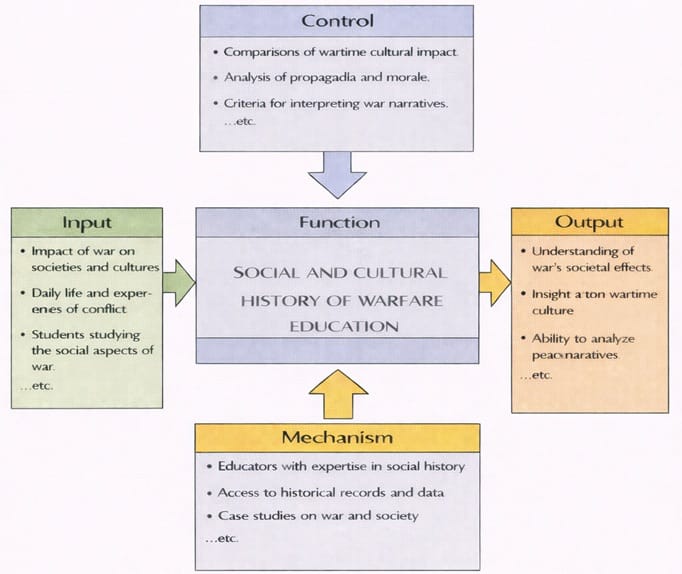

War and Society: Culture, Identity, and Human Experience in Conflict
Social & Cultural History of Warfare (Current Module)
Examines how war fundamentally transforms identities, gender expectations, labor norms, artistic expression, and collective memory within civilian and military communities.
Peace Studies and Conflict Resolution
Explores how post-war societies recover, repair broken social fabrics, execute transitional justice, and establish long-term reconciliation mechanisms.
Guerrilla Warfare and Insurgency Studies
Highlights how local community networks, cultural allegiances, and social dynamics directly shape irregular conflict and counterinsurgency efforts.
Economic History of Warfare
Connects home-front social changes with rationing systems, industrial mobilization, inflation pressures, and labor reallocations during war.
Military Strategic Studies
Examines how societal morale, national identity, public opinion, and cultural values establish constraints on military strategic options.
Naval History
Explores how seafaring culture, blockades, maritime trade disruptions, and naval traditions forge unique social identities in coastal communities.
Air Power History
Investigates how strategic bombing, air raids, and civil defense campaigns fundamentally reshaped civilian urban psychology and shelter culture.
Technological History of Warfare
Shows how industrial inventions and weapons technology alter the human experience of combat while accelerating broader socio-technological evolution.
Military History Overview
Provides the overarching macro-historical framework linking state power, military institutions, and total social transformation over time.
Key Focus Areas in the Social and Cultural History of Warfare
Social Transformations During Wartime
Wars often bring significant changes to social structures and relationships, challenging established norms and roles.
Gender Roles
- Women in Wartime:
- During wars, women often take on roles traditionally occupied by men, such as working in factories, serving in auxiliary military roles, or managing households.
- Examples:
- “Rosie the Riveter” symbolized American women working in defense industries during World War II.
- The Women’s Land Army in Britain contributed to agricultural production during both World Wars.
- Impact: Wartime roles expanded opportunities for women, contributing to post-war movements for gender equality.
Class Dynamics
- Wars often blur class boundaries as individuals from different social strata serve together.
- Examples:
- In World War I, trench warfare brought together soldiers from aristocratic and working-class backgrounds, fostering shared experiences.
- The redistribution of wealth and land after conflicts, such as in post-revolutionary France, altered class hierarchies.
The Role of Propaganda
Propaganda is a powerful tool used during wars to mobilize public opinion, maintain morale, and dehumanize the enemy.
Techniques of Wartime Propaganda
- Posters and Media:
- Visual propaganda has been used to encourage enlistment, promote war bonds, and inspire patriotism.
- Examples:
- The famous “Uncle Sam Wants You” recruitment poster in the United States.
- British and German posters emphasizing national unity and the vilification of the enemy during World War I.
- Films and Radio:
- Governments have used films and radio broadcasts to convey their messages.
- Examples:
- Nazi Germany’s use of films directed by Leni Riefenstahl to glorify the Third Reich.
- U.S. radio programs during World War II aimed at boosting morale and informing the public.
Impact of Propaganda
- Propaganda shapes societal perceptions of war, instills fear or hope, and helps sustain public support for prolonged conflicts.
- It can also perpetuate stereotypes and biases, influencing post-war relations and attitudes.
Cultural Representation of War
Wars leave a lasting imprint on culture, influencing literature, art, music, and collective memory.
War in Literature and Art
- Literature:
- Wars have inspired some of the most poignant works of literature, often reflecting the horrors and heroism of conflict.
- Examples:
- Erich Maria Remarque’s All Quiet on the Western Front (1929) portrays the disillusionment of German soldiers in World War I.
- Wilfred Owen’s war poetry captures the futility and suffering of trench warfare.
- Art:
- Artists have documented and interpreted wars, capturing the emotional and physical toll.
- Examples:
- Pablo Picasso’s Guernica (1937) depicts the horrors of the Spanish Civil War.
- The works of war photographers like Robert Capa brought the realities of World War II to the public.
Music and Film
- Music and film serve as powerful mediums for reflecting and shaping public attitudes toward war.
- Examples:
- Anti-war songs like Bob Dylan’s Blowin’ in the Wind became anthems of the Vietnam War era.
- Films like Saving Private Ryan and The Hurt Locker depict the human cost of war.
Impact on Everyday Life
Wars disrupt the routines of everyday life, reshaping economies, communities, and individual experiences.
Civilian Life During Wartime
- Rationing and Scarcity:
- Civilians often face shortages of food, fuel, and other essentials.
- Examples:
- Rationing in Britain during World War II ensured fair distribution of scarce resources.
- Black markets emerged in many war-torn regions.
- Displacement:
- Wars create millions of refugees and displaced persons.
- Examples: The Syrian Civil War has displaced over 13 million people since 2011.
Economic Contributions
- Civilians contribute to the war effort through labor, taxes, and donations.
- Examples:
- The U.S. war bond campaigns during World War II.
- Civilian-led initiatives like scrap metal drives and victory gardens.
The Role of Veterans in Society
Veterans play a crucial role in shaping the post-war cultural and social landscape.
Cultural Representation of Veterans
- Veterans are often seen as symbols of sacrifice and resilience.
- Examples:
- Memorials like the Vietnam Veterans Memorial in Washington, D.C.
- Literature and films exploring veterans’ experiences, such as The Things They Carried by Tim O’Brien.
Challenges Faced by Veterans
- Many veterans struggle with physical injuries, psychological trauma, and reintegration into civilian life.
- Examples:
- The prevalence of post-traumatic stress disorder (PTSD) among Vietnam War veterans.
- The establishment of organizations like the U.S. Department of Veterans Affairs to address veterans’ needs.
Memory and Commemoration
The way societies remember and commemorate wars shapes their collective identity and historical narratives.
War Memorials and Monuments
- Memorials serve as sites of remembrance and reflection.
- Examples:
- The Tomb of the Unknown Soldier in various countries honors unidentified war dead.
- The Memorial to the Murdered Jews of Europe in Berlin commemorates Holocaust victims.
National Holidays
- Many nations observe holidays to honor veterans and commemorate victories.
- Examples:
- Armistice Day (November 11) in Europe.
- Memorial Day in the United States.
Examples in the Social and Cultural History of Warfare
- World War I and the “Lost Generation”: The devastation of World War I created a sense of disillusionment among survivors, influencing the literature and culture of the 1920s.
- Propaganda in World War II: Both Axis and Allied powers used propaganda to mobilize populations, sustain morale, and demonize the enemy.
- The Vietnam War and Anti-War Movements: The Vietnam War sparked widespread protests and countercultural movements, particularly in the United States, reshaping societal attitudes toward military conflict.
Interactive Home Front & Mobilization Simulator
Use this programmatic model to simulate the trade-offs between military conscription, civilian industrial labor, and agricultural yield during wartime mobilization.
Total War Labor Allocation Simulator
Adjust percentages of the working population allocated to combat service, war factory labor, and agricultural production to calculate industrial output, food stability, and social morale indices.
Click Simulate Home Front Outcomes to run calculation.
Applications of the Social and Cultural History of Warfare
- Understanding Societal Resilience: Examines how societies adapt and endure in the face of war, providing insights into human resilience and resourcefulness.
- Addressing the Needs of Veterans: Highlights the importance of providing psychological, medical, and social support for veterans and their families.
- Preserving Historical Memory: Informs the creation of educational programs, museums, and memorials to ensure future generations understand the impact of war.
Why Study Social and Cultural History of Warfare
Exploring the Human Dimensions of War
Understanding War as a Cultural and Symbolic Practice
Examining Gender, Class, and Race in Wartime Contexts
Investigating Civilian Life and Home Front Experiences
Preparing for Interdisciplinary Study and Critical Engagement
Interactive Key Themes Navigator
Home Front Mobilization & Total War
Politics of Memory & Commemoration
Wartime Trauma & Shell Shock (PTSD)
Social and Cultural History of Warfare: Conclusion
Frequently Asked Questions – Social and Cultural History of Warfare
What is meant by the social and cultural history of warfare?
The social and cultural history of warfare focuses on how wars shape and are shaped by ordinary people, social structures, beliefs, and cultural practices. Instead of looking only at battles and generals, it examines experiences on the home front, soldiers’ lives, emotions, propaganda, memory, and the ways societies make sense of violence.
How is the social and cultural history of warfare different from traditional military history?
Traditional military history often concentrates on strategy, tactics, leaders, and campaigns. The social and cultural history of warfare shifts the lens towards civilians, marginalised groups, everyday routines, and symbolic representations of war. It asks how conflict transforms families, work, identities, and cultural norms, not just front-line outcomes.
Why is it important for students to study the social and cultural dimensions of warfare?
Studying the social and cultural dimensions of warfare helps students see war as a whole-of-society phenomenon rather than a purely military event. It highlights how conflict affects education, labour, gender relations, mental health, and cultural expression, giving a richer, more human understanding of historical change and its long-term legacies.
How does warfare reshape everyday life on the home front?
Warfare can alter work patterns, family structures, consumption, and public space. People may face rationing, evacuation, surveillance, conscription, and new forms of community solidarity or tension. The social and cultural history of warfare analyses diaries, letters, newspapers, and visual sources to understand how ordinary routines adjust under extraordinary pressure.
How do gender roles change in wartime, and why does this matter historically?
In many societies, war has pushed women into new roles in factories, farms, hospitals, and political movements, while reshaping expectations of masculinity for men in uniform and at home. These shifts can open opportunities but also provoke backlash after wars end. Studying gender in wartime shows how conflict can both reinforce and challenge existing inequalities.
What is the role of culture, symbols, and memory in the history of warfare?
Culture and symbols help societies interpret and remember wars. Monuments, ceremonies, novels, films, songs, and museum displays all shape public memory of victory, defeat, sacrifice, and guilt. The social and cultural history of warfare examines how these representations are created, contested, and used to support or criticise political projects.
How do media and propaganda influence public perceptions of war?
Media and propaganda influence how people see distant front lines and understand “friends” and “enemies.” Governments, movements, and commercial media can frame conflicts as heroic, tragic, necessary, or unjust. By analysing posters, newsreels, broadcasts, social media, and censorship, students learn how narratives about war are constructed and challenged.
How do race, class, and empire appear in the social and cultural history of warfare?
Race, class, and empire shape who fights, who benefits, and who suffers most from war. The social and cultural history of warfare explores conscription policies, unequal access to pensions and recognition, racialised labour systems, and how imperial powers mobilise colonial troops. It also looks at how marginalised groups tell their own stories of service and resistance.
What kinds of sources do historians use to study the social and cultural history of warfare?
Historians use a wide range of sources including letters, diaries, photographs, oral histories, government records, newspapers, films, propaganda posters, songs, uniforms, and memorials. These materials reveal emotions, routines, and cultural meanings that may not appear in official military documents alone.
How does the social and cultural history of warfare address trauma and postwar societies?
This field examines how individuals and communities cope with loss, displacement, disability, and psychological trauma during and after war. It looks at veterans’ experiences, commemoration practices, reparations debates, and how societies try to reintegrate former fighters and civilians, showing that war’s social impact continues long after formal peace.
What skills can students gain from studying the social and cultural history of warfare?
Students learn to interpret diverse sources, evaluate competing narratives, and connect individual experiences with broader social and political structures. These analytical and communication skills are valuable in fields such as education, museums and heritage work, journalism, public policy, and cultural and community organisations.
How can this Social and Cultural History of Warfare page be used with other Prep4Uni resources?
Learners can link this Social and Cultural History of Warfare page with resources on military history, gender and cultural history, political history, and peace studies. Moving across these pages helps students see how battlefield events are intertwined with everyday life, ideology, memory, and efforts to build more peaceful societies.
Comprehensive Practice & Assessment Module
Section 1: Foundational Review Questions
- What is meant by the social and cultural history of warfare?
Answer: The social and cultural history of warfare examines how wars and military conflicts influence society and shape cultural identities over time. It explores the impact of warfare on art, literature, traditions, and collective memory. This field investigates how conflicts alter social structures and affect everyday life, influencing gender roles, class dynamics, and national identities. By understanding these impacts, scholars gain insights into how warfare resonates beyond the battlefield to shape cultural narratives and societal values. - How have historical wars influenced cultural identity and collective memory?
Answer: Historical wars have left an indelible mark on cultural identity and collective memory by forging symbols, myths, and narratives that persist across generations. They often serve as turning points that redefine a nation’s self-image and influence cultural expressions such as literature, art, and commemorative practices. Societies remember wars through memorials, national holidays, and public discourse, which help to shape the collective understanding of past sacrifices and victories. These cultural representations reinforce a shared identity, impacting how future conflicts are perceived and remembered. - What role does propaganda play in the cultural aspects of warfare?
Answer: Propaganda plays a central role in shaping the cultural aspects of warfare by influencing public opinion and constructing narratives that support or condemn conflict. It is used by governments and military organizations to mobilize support, justify actions, and dehumanize the enemy. Through various media—posters, films, speeches, and digital content—propaganda molds the cultural perception of war and reinforces ideological beliefs. This strategic use of communication not only affects morale during conflict but also leaves a lasting imprint on the collective cultural memory of a society. - How have wars affected gender roles and social structures historically?
Answer: Wars have historically led to significant shifts in gender roles and social structures by disrupting traditional labor patterns and altering family dynamics. During conflicts, women have often been compelled to take on roles traditionally held by men, leading to lasting changes in societal expectations. These shifts contribute to a redefinition of gender identities and can accelerate social reforms. The transformative impact of war on social structures illustrates how conflict can act as a catalyst for broader societal change, reshaping norms and power relations. - In what ways has art been used to reflect and critique warfare?
Answer: Art has been a powerful medium for reflecting on and critiquing warfare, serving as a means of both documenting historical events and expressing the human cost of conflict. Throughout history, paintings, literature, music, and film have captured the emotions, tragedies, and heroism associated with war. Artists often use their work to question the justification of conflicts and to challenge the official narratives propagated by those in power. This creative expression not only preserves the memory of war but also provokes critical reflection on its impact on society and culture. - How do cultural narratives of war differ between victorious and defeated societies?
Answer: Cultural narratives of war often differ significantly between victorious and defeated societies, reflecting contrasting perspectives on conflict and its aftermath. Victorious societies tend to celebrate heroism, sacrifice, and the glory of battle, embedding these themes into national myths and symbols. In contrast, defeated societies may emphasize loss, suffering, and the need for reconciliation, often fostering narratives that highlight injustice and the need for transformation. These divergent narratives shape collective memory and influence future policies, as they determine how history is remembered and taught. - What impact does the memory of war have on contemporary social and political discourse?
Answer: The memory of war has a lasting impact on contemporary social and political discourse by serving as a reference point for national identity and policy debates. Collective memories of past conflicts often inform current attitudes towards military engagement, defense spending, and international relations. They can also influence debates over patriotism, nationalism, and historical accountability. By drawing on these memories, societies negotiate their present and future, ensuring that the lessons of war continue to resonate in policy-making and cultural expression. - How do rituals and commemorations contribute to the social history of warfare?
Answer: Rituals and commemorations contribute significantly to the social history of warfare by providing structured means to honor, remember, and learn from past conflicts. They serve as collective acts of remembrance that reinforce shared identities and foster community solidarity. Memorial ceremonies, monuments, and national holidays help to preserve the legacy of conflict, ensuring that the sacrifices and lessons of war are not forgotten. These practices also facilitate healing and reconciliation by allowing societies to process collective grief and celebrate resilience. - How has the experience of war influenced national educational systems and historical narratives?
Answer: The experience of war has profoundly influenced national educational systems and historical narratives by shaping the content and perspective through which history is taught. Governments and educators often incorporate wartime experiences into curricula to instill values such as patriotism, resilience, and the importance of peace. The portrayal of wars in textbooks and public discourse reflects national ideologies and can serve to legitimize current policies or historical interpretations. These narratives help to construct a collective memory that not only educates but also shapes the identity and future aspirations of a society. - What are the long-term cultural consequences of protracted military conflicts on societies?
Answer: Protracted military conflicts often result in deep and enduring cultural consequences that can reshape societal norms and collective identity for generations. Extended periods of warfare can lead to a cultural environment marked by trauma, altered social dynamics, and shifts in moral and ethical perspectives. Such conflicts influence literature, art, and public discourse, embedding themes of loss, resilience, and transformation into the national consciousness. Over time, these cultural consequences can drive significant social and political changes, as societies seek to heal and redefine themselves in the aftermath of conflict.
Section 2: Analytical & Scenario-Based Questions
- How might the social and cultural legacies of warfare influence future generations’ perceptions of conflict and peace?
Answer: The social and cultural legacies of warfare deeply influence future generations by shaping the narratives passed down through education, media, and public commemorations. Societies that emphasize reconciliation and restorative justice in post-war narratives tend to foster peace-oriented outlooks. Conversely, unaddressed trauma or militarized commemoration can perpetuate cycles of division. Furthermore, cultural artifacts like films and memorials serve as ongoing educational touchpoints regarding the true costs of conflict. - In what ways can art and literature serve as catalysts for peacebuilding and societal healing after prolonged conflict?
Answer: Creative arts allow individuals and war-torn communities to process unspeakable trauma, express grief, and challenge dominant political mythologies. Literature and visual arts bridge polarized divides by presenting humanized, empathetic perspectives. Public art installations and memorial literature foster collective reflection, turning private pain into shared public healing. - How might the digital age transform the ways in which societies remember and interpret military conflicts?
Answer: The digital age democratizes memory preservation by enabling crowdsourced digital archives, social media testimonies, and interactive virtual reality historical recreations. This decentralization challenges state-sponsored propaganda by allowing alternative, victim-centered, and minority perspectives to emerge. However, digital media also accelerates misinformation and algorithmic polarization regarding war history. - In what ways can interdisciplinary research help us understand the complex relationship between warfare, culture, and identity?
Answer: Interdisciplinary synthesis bridges historical facts with sociological data on class/gender shifts, psychological insights on trauma, and anthropological analysis of war rituals. This produces a holistic understanding of how total war re-engineers human society far beyond troop movements or treaty terms. - How might peace studies evolve to incorporate emerging global challenges such as cybersecurity and environmental conflict?
Answer: Peace studies is expanding to address non-kinetic warfare, including digital disinformation campaigns and climate-driven resource competition. Incorporating cyber-ethics and environmental justice allows scholars to analyze how resource displacement and digital propaganda threaten social cohesion before physical military violence occurs. - How might cultural diplomacy be utilized as an effective tool for conflict resolution in multicultural societies?
Answer: Cultural diplomacy leverages shared artistic heritage, sports, educational exchanges, and joint historical projects to build cross-group trust. By highlighting mutual values and human experiences, cultural diplomacy softens entrenched political positions and creates non-threatening channels for grassroots peacebuilding. - How might virtual reality (VR) and other immersive technologies be harnessed to promote peace education and conflict resolution?
Answer: VR technology provides immersive, perspective-taking simulations that allow users to experience the realities of war-torn civilians or historical refugees firsthand. This creates emotional empathy and cognitive awareness, making VR a powerful pedagogical tool for non-violence training and diplomatic mediation exercises. - How can international collaboration enhance efforts in peace studies and conflict resolution across borders?
Answer: Cross-border academic and civil collaboration enables shared dataset compiling, comparative analysis of peace treaties, and joint truth-telling commissions. International networks ensure that peacebuilding strategies are not restricted by regional biases or nationalist censorship.
Section 3: Numerical Problems & Applied Analysis
1. Female Mobilization Expansion Rate: ΔL = ((WomenWartime – WomenPrewar) / WomenPrewar) × 100%
2. Civilian Casualty Ratio: RCiv = CasualtiesCivilian / CasualtiesTotal
3. Veteran Reintegration Dependency Index: VIndex = VeteransNeeding Support / VeteransTotal
- Workforce Mobilization Expansion Rate: In a wartime nation, female employment in industrial manufacturing increased from 1,200,000 pre-war workers to 3,300,000 workers at peak mobilization. Calculate the percentage increase in female industrial participation.
Solution:
Increase = 3,300,000 – 1,200,000 = 2,100,000
Percentage Rate = (2,100,000 / 1,200,000) × 100% = 1.75 × 100% = 175% increase. - Civilian-to-Military Casualty Ratio: An urban siege resulted in 14,000 civilian casualties and 6,000 military casualties. Calculate the civilian proportion of total casualties.
Solution:
Total Casualties = 14,000 + 6,000 = 20,000
Civilian Ratio = (14,000 / 20,000) × 100% = 0.70 × 100% = 70% civilian casualty rate. - Rationing Caloric Reductions: A wartime home front rationing policy reduces the average daily civilian caloric intake from 2,800 kcal to 1,960 kcal. Calculate the percentage reduction in daily civilian caloric supply.
Solution:
Reduction = 2,800 – 1,960 = 840 kcal
Percentage = (840 / 2,800) × 100% = 0.30 × 100% = 30% caloric reduction. - Veteran PTSD Assistance Index: A cohort of 45,000 returning demobilized veterans includes 11,250 individuals requiring long-term psychological support services. Calculate the veteran trauma dependency percentage.
Solution:
Dependency Rate = (11,250 / 45,000) × 100% = 0.25 × 100% = 25% requiring specialized support. - Refugee Resettlement Rate: A conflict displaces 800,000 civilians. Over 4 years of postwar reconstruction, international relief programs resettle 160,000 refugees per year. Calculate the percentage of refugees remaining displaced after year 3.
Solution:
Resettled in 3 Years = 160,000 × 3 = 480,000 refugees
Remaining Displaced = 800,000 – 480,000 = 320,000 refugees
Percentage Remaining = (320,000 / 800,000) × 100% = 0.40 × 100% = 40% remaining displaced. - War Bond Investment Participation: A nation with 12,000,000 total civilian households records 7,800,000 households purchasing government war bonds during a national drive. Calculate the household participation rate.
Solution:
Participation Rate = (7,800,000 / 12,000,000) × 100% = 0.65 × 100% = 65% household participation rate.