
Interactive Human Capital & Turnover Simulator
Adjust workforce size, training investments, and compensation levels to analyze employee retention, net revenue impact, and training ROI in real time.
Estimated Turnover Cost Impact: $0
Net Productivity Value Gain: $0
Workforce Stability State: Balanced
Human Resource Management (HRM) is the strategic backbone of modern organizations. It focuses on the recruitment, development, retention, and well-being of employees while aligning human capital with organizational goals. Far beyond administrative duties, HRM plays a central role in building inclusive workplaces, fostering innovation, and shaping corporate culture. Integrated with Business Administration, HRM ensures that people remain the greatest asset in a competitive and fast-changing world.
Effective HR practices rely on informed decision-making and data analysis. Topics such as Business Analytics, Data Analysis, and Statistics help HR professionals identify performance gaps, forecast workforce needs, and design impactful training programs. Additionally, knowledge of Artificial Intelligence and Machine Learning and Emerging Technologies enables the automation of repetitive HR tasks, improving efficiency and reducing bias in recruitment.
HRM is inseparable from a working understanding of key business domains, such as Economics, Accounting, and Finance. Managing compensation, benefits, and resource allocation depends on fluency in Financial Reporting, Budgeting and Cost Management, and sometimes even Tax Compliance and Planning. These disciplines empower HR professionals to make sustainable and compliant workforce decisions.
At a policy level, HRM intersects with Corporate Law, Compliance and Regulatory Adherence, and Contract Negotiation. HR leaders must remain vigilant regarding labor laws and rights, global Trade Regulations, and ethical recruitment. Strategic involvement in Strategic Management ensures that HR contributes directly to organizational resilience and growth.
Modern HRM also requires cultural awareness and historical context. A background in Labor History, International Relations, and even Education enriches the perspective of HR professionals, especially when managing diverse teams or implementing equitable policies. Interdisciplinary knowledge from Conflict Resolution and Arbitration is especially valuable when navigating disputes or facilitating negotiations.
Lastly, HRM must understand brand alignment and internal communications. Synergy with Marketing, Advertising, and Digital Communication supports the cultivation of an employer brand that attracts top talent. In today’s global economy, a skilled HR manager is not just a custodian of policy but a visionary who connects organizational goals with human potential.

Workforce Development and Organisational Capability Building
HRM Essentials: Scope, Functions, and Importance
HRM involves the processes and strategies aimed at recruiting, developing, and retaining the right talent for an organization. It ensures that employees are motivated, trained, and equipped to contribute to the organization’s goals while fostering a supportive and inclusive workplace culture.
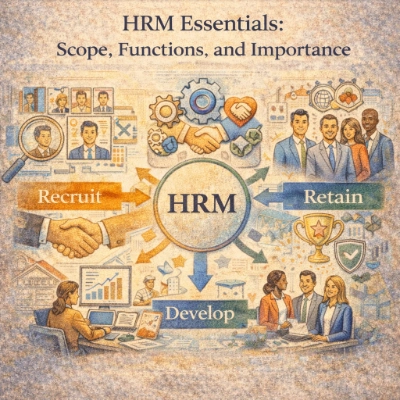
Strategic Objectives Driving Human Resource Management (HRM)
- Talent Management: Attracting and retaining top talent to meet organizational needs.
- Employee Development: Providing training and growth opportunities to enhance skills.
- Workplace Well-Being: Ensuring a safe, healthy, and inclusive work environment.
- Regulatory Compliance: Adhering to labor laws and ethical standards.
HRM serves as the bridge between organizational goals and employee aspirations, creating a harmonious and productive workplace.
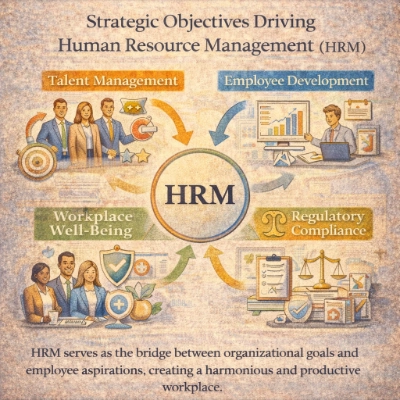
Academic Focus of Human Resource Management
1. Talent Acquisition and Workforce Planning
- Definition: The process of identifying, attracting, and hiring the best candidates to meet organizational needs. Workforce planning ensures that the organization has the right people in the right roles at the right time.
- Key Components:
- Recruitment Strategies: Leveraging job boards, social media, and employer branding to attract talent.
- Selection Process: Using tools like interviews, assessments, and background checks to evaluate candidates.
- Workforce Planning: Forecasting future talent needs based on business goals and market trends.
- Applications:
- Designing internship programs to build a pipeline of future talent.
- Conducting workforce analytics to anticipate staffing shortages.
- Examples:
- A tech company creating a targeted recruitment campaign for software developers.
- A retail chain forecasting seasonal hiring needs for the holiday season.
2. Employee Engagement and Performance Management
- Definition: Employee engagement focuses on creating a motivated and committed workforce, while performance management involves evaluating and improving employee contributions.
- Key Components:
- Engagement Initiatives: Surveys, feedback sessions, and team-building activities.
- Performance Appraisals: Regular evaluations to assess employee achievements and areas for improvement.
- Rewards and Recognition: Incentives and programs to acknowledge outstanding contributions.
- Applications:
- Implementing employee engagement platforms to track satisfaction and engagement levels.
- Establishing key performance indicators (KPIs) to measure individual and team success.
- Examples:
- A multinational company introducing a peer-to-peer recognition program.
- A startup implementing quarterly performance reviews to ensure alignment with business goals.
3. Labor Laws and Workplace Diversity Initiatives
- Definition: Ensuring compliance with employment laws while fostering a diverse and inclusive workplace culture.
- Key Components:
- Labor Law Compliance: Adhering to regulations on wages, working hours, and employee rights.
- Diversity and Inclusion (D&I): Promoting representation, equity, and inclusion across all levels of the organization.
- Conflict Resolution: Addressing grievances and disputes fairly and efficiently.
- Applications:
- Developing anti-discrimination policies to create an inclusive environment.
- Conducting diversity training sessions to promote cultural awareness.
- Examples:
- A financial institution implementing a mentorship program for underrepresented groups.
- A global corporation ensuring compliance with local labor laws in multiple countries.
Human Resource Management in Action
1. Designing Leadership Development Programs
- Overview: HRM identifies and nurtures future leaders by providing training and development opportunities tailored to leadership roles.
- Applications:
- Organizing workshops on strategic decision-making and emotional intelligence.
- Offering executive coaching sessions for high-potential employees.
- Examples:
- A retail company launching a management trainee program for new graduates.
- A healthcare organization providing leadership training for department heads.
2. Implementing Workplace Wellness Initiatives
- Overview: HRM prioritizes employee health and well-being through programs that address physical, mental, and emotional wellness.
- Applications:
- Introducing flexible work arrangements to improve work-life balance.
- Offering wellness programs such as gym memberships, mental health counseling, and stress management workshops.
- Examples:
- A tech company offering mindfulness sessions to reduce employee stress.
- A logistics firm implementing a workplace safety program to minimize on-the-job injuries.
Instances of HR Solutions
1. Talent Retention Through Benefits
- Scenario: A company facing high turnover rates introduces competitive benefits like paid parental leave and career development opportunities.
- Outcome: Improved employee retention and satisfaction.
2. Crisis Management
- Scenario: During a global pandemic, an HR department implements remote work policies and virtual engagement activities to maintain productivity.
- Outcome: Enhanced employee trust and continuity in operations.
3. Diversity and Inclusion Success
- Scenario: A multinational corporation launches a program to recruit and support employees from diverse cultural backgrounds.
- Outcome: Improved workplace innovation and a stronger employer brand.
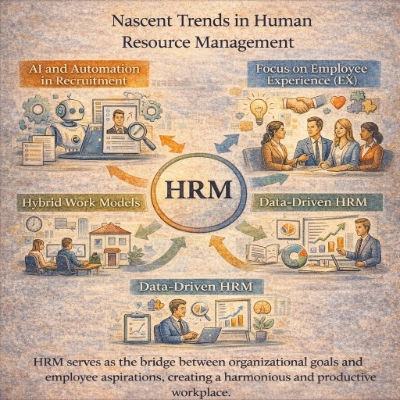
Nascent Trends in Human Resource Management
AI and Automation in Recruitment
Leveraging AI tools to streamline recruitment processes, from resume screening to candidate assessment.
Focus on Employee Experience (EX)
Enhancing every touchpoint of an employee’s journey, from onboarding to career development.
Hybrid Work Models
Balancing in-office and remote work arrangements to meet employee preferences.
Data-Driven HRM
Using analytics to measure engagement, predict turnover, and optimize workforce strategies.
Upskilling and Reskilling
Preparing employees for evolving roles through continuous learning and development programs.
Tackling Today’s Human Resource Management Dilemmas
Adapting to Workforce Diversity
Managing generational, cultural, and gender differences in a global workforce.
Technological Disruption
Keeping up with advancements in HR technology and digital tools.
Employee Burnout
Addressing mental health challenges and work-life imbalance in high-pressure environments.
Retention in Competitive Markets
Attracting and retaining top talent amid intense industry competition.
Study Human Resource Management: A Key to Organizational and Career Success
Understanding People and Organizational Dynamics
Human Resource Management (HRM) focuses on how organizations attract, develop, motivate, and retain their employees. It provides insights into workplace culture, team performance, and the value of effective leadership. For students preparing for university, studying HRM helps build an early understanding of how people and systems interact within organizations—knowledge that is relevant not only for business studies but also for navigating group projects and student leadership roles in academic life.
Building Communication and Interpersonal Skills
HRM emphasizes the importance of clear communication, empathy, and active listening—skills that are crucial for success at university and beyond. Students learn how to conduct interviews, manage conflicts, give feedback, and foster collaboration. These interpersonal skills help students engage more effectively with peers, instructors, and teammates in diverse academic and extracurricular settings.
Exploring Talent Development and Leadership
A core aspect of HRM is helping individuals and teams reach their full potential. Students gain insights into performance evaluation, training design, and career planning—topics that not only support future management roles but also encourage self-reflection and personal growth. By studying HRM, students begin to appreciate what it takes to lead, motivate, and develop others, skills that are essential for group projects, student clubs, and future careers.
Connecting Theory to Real-World Applications
HRM bridges theoretical concepts with practical business challenges, such as hiring decisions, diversity management, workplace safety, and employee engagement. For students entering university, this applied focus builds critical thinking and prepares them to analyze complex situations where human behavior, ethics, and strategy intersect. It also makes HRM a relatable and engaging entry point into business and organizational studies.
Opening Pathways to Meaningful Careers
A background in Human Resource Management prepares students for careers in recruitment, training and development, employee relations, compensation and benefits, and organizational development. As businesses continue to prioritize people-centered strategies, HR professionals are in growing demand across all industries. For university-bound students, studying HRM offers a practical, people-focused academic path with diverse opportunities for leadership and impact.
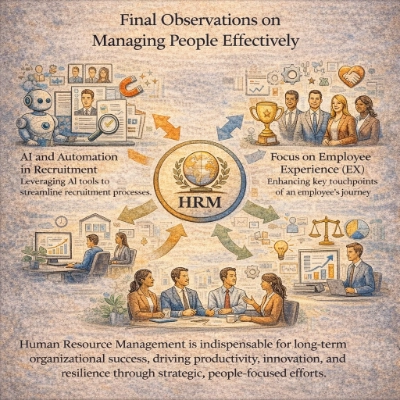
Final Observations on Managing People Effectively
Human Resource Management is at the heart of organizational success, ensuring that businesses attract, develop, and retain the best talent while fostering a positive and inclusive workplace culture. By focusing on areas such as talent acquisition, employee engagement, and diversity initiatives, HRM drives productivity, innovation, and resilience in an ever-changing business environment. As trends like AI, hybrid work, and wellness programs reshape the HR landscape, the role of HRM will continue to expand, making it indispensable for achieving long-term organizational goals and employee satisfaction. Through strategic planning and human-centric approaches, HRM empowers organizations to thrive while supporting the well-being of their workforce.
Is Human Resource Management Right For You?
Explore career pathways, check your fit, and assess your skills — before you commit to a degree.
Interactive Concept Warm-Ups & Case Studies
How does strategic workforce planning prevent organizational operational bottlenecks?
Why is high employee engagement directly correlated with lower customer turnover?
Frequently Asked Questions — Human Resource Management (HRM)
What is human resource management (HRM), and why is it important in organisations?
Human resource management (HRM) is the function within organisations that deals with recruiting, hiring, training, performance management, and employee welfare. It is important because effective HRM ensures organisations attract and retain talent, motivate staff, align employees’ skills with strategic goals, and maintain a healthy work environment that supports productivity and growth.
What are the core tasks typically covered under HRM?
Core tasks include workforce planning and recruitment, onboarding, training and development, performance appraisal, compensation and benefits management, employee relations, compliance with employment laws, and sometimes organisational development, culture, and change management.
How does HRM contribute to building company culture and employee engagement?
HRM contributes to company culture and engagement by designing policies and practices that reflect organisational values, providing fair and transparent treatment, creating opportunities for growth and recognition, and facilitating communication and feedback. Engaged employees tend to be more motivated, productive, and loyal, which benefits both individuals and the company.
What skills and personal qualities are valuable for someone studying HRM or working in HR?
Valuable skills and qualities include good communication, empathy, fairness, organizational skills, understanding of labour laws and ethics, ability to manage conflict, strong interpersonal skills, and a people-oriented mindset. Analytical thinking is also useful for workforce planning, compensation analysis, and making data-driven HR decisions.
How does HRM interact with other business functions like finance, operations, and marketing?
HRM interacts with finance when budgeting staff costs and managing compensation, with operations when aligning workforce capacity and scheduling, and with marketing when employer branding and recruitment communications are involved. Good coordination ensures business strategy, manpower planning, and resource allocation are aligned and the organisation operates smoothly.
Why is understanding employment laws and ethics important in HRM?
Employment laws set rules on hiring practices, workplace safety, discrimination, compensation, termination, and benefits — compliance ensures fairness and legal protection for both employer and employees. Ethical behaviour builds trust, respects employee rights, and supports a positive workplace culture. HR professionals must stay informed and apply laws and ethical standards consistently.
How is training and development managed under HRM, and why does it matter?
Training and development are managed by identifying skill gaps, planning learning programmes, and delivering training or mentoring to help employees grow. It matters because it improves employee performance, supports career growth, helps the organisation adapt to change, and increases job satisfaction and retention.
What challenges do HR managers face in a modern workplace?
Challenges include managing diversity and inclusion, remote or hybrid work arrangements, balancing flexibility with fairness, adapting to changing labour laws, handling employee well-being and mental health issues, and integrating technology such as HR analytics while preserving human connection.
How is technology changing HRM practices?
Technology is transforming HRM through digital recruitment, online onboarding, e-learning, performance tracking tools, HRIS (human resource information systems), and data analytics for workforce planning, talent management, and engagement analytics. While technology improves efficiency, human judgement remains essential for decisions about people, culture, and values.
What career opportunities exist for graduates specialising in HRM?
Graduates in HRM can pursue careers as HR officers or managers, recruitment specialists, talent and learning & development professionals, HR analysts, organisational development consultants, or roles in employee relations and compensation & benefits management. They may also branch into corporate strategy, management consulting, or general management as they gain broader experience.
Is HRM suitable for students who are more interested in people than numbers or technical skills?
Yes. HRM often suits individuals who enjoy working with people, have strong interpersonal and communication skills, and prefer focusing on organisational behaviour, culture, and human dynamics rather than technical or numerical tasks. While some basic data-handling may be involved, the core of HRM is about people, relationships, ethics, and management.
How can learning HRM benefit me even if I do not plan to work in human resources?
Learning about HRM helps you understand how organisations manage people, motivation, performance, and culture. These insights are useful in any role — as a team lead, project manager, entrepreneur, or even member of a non-profit or community organisation — because you’ll better appreciate human dynamics, communication, and fair management practices.
Human Resource Management Mastery & Application Exercises
Section 1: Core Knowledge & Foundational Review
-
What is human resource management (HRM)?
Answer: HRM is the strategic approach to managing people in an organization. It involves recruiting, training, evaluating, and motivating employees to achieve business goals while ensuring compliance with labor laws and promoting a positive work culture. -
How does effective recruitment benefit an organization?
Answer: Effective recruitment attracts qualified candidates, ensuring that the organization has the right talent to drive performance. It reduces turnover, improves productivity, and fosters a competitive edge by matching skills to organizational needs. -
What role does performance management play in HRM?
Answer: Performance management involves evaluating and improving employee performance through regular feedback, appraisals, and goal-setting. It aligns individual objectives with company goals, boosts productivity, and identifies areas for professional development. -
How does employee training and development contribute to organizational success?
Answer: Training and development enhance employees’ skills and knowledge, leading to improved performance and innovation. They also increase job satisfaction and retention, ensuring that the organization remains competitive and adaptable in changing markets. -
What is the importance of compensation and benefits in HRM?
Answer: Compensation and benefits are critical for attracting and retaining talent. They ensure employees feel valued and fairly rewarded, which can enhance motivation, boost morale, and improve overall organizational performance. -
How can HRM strategies influence corporate culture?
Answer: HRM strategies shape corporate culture by defining policies, promoting diversity, and fostering communication and collaboration. A positive culture drives employee engagement, supports innovation, and aligns with the company’s strategic objectives. -
What challenges do HR managers face in today’s globalized work environment?
Answer: Challenges include managing diversity, navigating complex labor laws across different regions, and adapting to rapid technological changes. HR managers must also address remote work dynamics and evolving employee expectations to maintain engagement and productivity. -
How does strategic HR planning support business goals?
Answer: Strategic HR planning aligns human capital with the long-term objectives of the organization. By forecasting talent needs and developing workforce strategies, companies can better manage change, optimize performance, and achieve sustainable growth. -
What is the significance of employee engagement in HRM?
Answer: Employee engagement measures the level of commitment and motivation of staff. High engagement leads to better performance, lower turnover, and a more dynamic and innovative work environment, directly impacting the company’s success. -
How do legal and ethical considerations impact HR practices?
Answer: Legal and ethical considerations ensure that HR practices comply with labor laws, promote fairness, and protect employee rights. They help maintain a trustworthy, inclusive, and respectful work environment, which is essential for long-term organizational success.
Section 2: Strategic Scenarios & Deep Questions
-
How might digital transformation redefine HR practices in the next decade?
Answer: Digital transformation is revolutionizing HR by automating routine tasks such as payroll, recruitment, and performance management. Advanced technologies like AI and machine learning enable HR professionals to analyze vast amounts of data, predict employee turnover, and identify skills gaps. This shift allows for more strategic decision-making, personalized employee experiences, and streamlined administrative processes, ultimately leading to more agile and responsive HR practices. -
In what ways can strategic HR planning drive organizational innovation?
Answer: Strategic HR planning can drive innovation by aligning workforce capabilities with the organization’s long-term vision. By forecasting future talent needs and fostering a culture of continuous learning, HR can prepare employees for emerging challenges and technological advancements. This proactive approach ensures that the organization remains competitive, as employees are better equipped to generate creative solutions and adapt to market changes. -
How does effective employee engagement influence overall business performance?
Answer: Effective employee engagement is a critical driver of business performance because it directly impacts productivity, quality of work, and employee retention. Engaged employees are more motivated, take greater ownership of their tasks, and contribute innovative ideas that can lead to improved processes and products. When employees feel valued and connected to the organization’s mission, they are more likely to go the extra mile, resulting in higher performance and profitability. -
What are the potential benefits and risks of outsourcing HR functions?
Answer: Outsourcing HR functions can offer significant benefits, including cost savings, access to specialized expertise, and the ability to focus on core business activities. By partnering with external HR service providers, companies can streamline processes such as payroll, recruitment, and compliance management, leading to improved efficiency and reduced administrative burdens. Outsourcing also allows businesses to scale their HR operations quickly, adapting to changing market demands without the overhead of in-house resources. However, outsourcing also comes with risks, such as loss of control over HR processes and potential misalignment with the company’s culture and values. -
How can businesses use data analytics to enhance their HR decision-making processes?
Answer: Data analytics can transform HR decision-making by providing actionable insights into employee performance, recruitment trends, and turnover rates. By leveraging advanced analytics tools, HR professionals can identify patterns and trends that inform better hiring decisions, optimize training programs, and predict future workforce needs. This data-driven approach not only enhances the efficiency of HR operations but also supports strategic planning and talent management. -
In what ways does corporate culture impact HR practices and overall employee satisfaction?
Answer: Corporate culture significantly shapes HR practices by influencing recruitment, training, and performance management processes. A positive, inclusive culture that values diversity and open communication encourages employee engagement and retention. When HR policies align with the organization’s core values, employees are more likely to feel connected to the company, leading to higher satisfaction and productivity. -
How might emerging technologies, such as AI-driven recruitment tools, change the future of talent acquisition?
Answer: Emerging technologies like AI-driven recruitment tools have the potential to revolutionize talent acquisition by automating resume screening, matching candidates to job requirements, and predicting candidate success based on data-driven insights. These tools can significantly reduce the time and resources needed for the hiring process while increasing the accuracy of candidate selection. By analyzing vast amounts of data, AI can identify patterns and qualities that are indicative of high-performing employees. -
What are the potential long-term effects of a strong HR strategy on a company’s competitive advantage?
Answer: A strong HR strategy lays the foundation for a skilled, motivated, and engaged workforce, which is a critical competitive advantage in today’s knowledge-driven economy. By investing in comprehensive talent development, effective performance management, and employee engagement initiatives, companies can foster innovation and agility. Over time, these factors lead to improved productivity, higher quality outputs, and sustained growth. -
How can the integration of digital platforms enhance the effectiveness of HR management?
Answer: Digital platforms transform HR management by streamlining processes such as recruitment, performance evaluation, and employee engagement. They provide centralized access to data, enabling real-time tracking of key HR metrics and facilitating more efficient decision-making. These platforms also enhance communication and collaboration among employees, leading to a more connected and productive workforce. -
What impact does employee training and development have on long-term business performance?
Answer: Employee training and development are vital for long-term business performance as they enhance skill sets, improve productivity, and foster innovation. Investing in professional development ensures that employees are up-to-date with industry trends and technological advancements, enabling them to perform their roles more effectively and contribute to strategic goals. -
How might the rise of remote work influence the strategies used in HR management and talent retention?
Answer: The rise of remote work significantly reshapes HR management by requiring new strategies to engage and manage a distributed workforce. Remote work offers flexibility and access to a broader talent pool, but it also presents challenges in maintaining team cohesion, communication, and productivity. HR strategies must adapt by leveraging digital collaboration tools, creating virtual engagement programs, and implementing policies that support work-life balance. -
What are the potential challenges and opportunities of integrating HR analytics into strategic decision-making?
Answer: Integrating HR analytics presents challenges such as data quality, privacy concerns, and the need for specialized analytical skills. Accurate data collection is critical to generate meaningful insights. On the opportunity side, HR analytics provides deep insights into workforce trends, performance metrics, and engagement levels, allowing organizations to optimize recruitment, improve training, and enhance productivity.
Section 3: Quantitative Scenarios in HRM & Business
-
A company has an annual revenue of $4,500,000 and expenses of $3,200,000. Calculate the net profit, profit margin, and determine the effect of a 10% increase in revenue on net profit if expenses increase by 5%.
Solution:
Step 1: Initial Net Profit = $4,500,000 − $3,200,000 = $1,300,000.
Step 2: Profit Margin = ($1,300,000 / $4,500,000) × 100 ≈ 28.89%.
Step 3: New Revenue = $4,500,000 × 1.10 = $4,950,000.
Step 4: New Expenses = $3,200,000 × 1.05 = $3,360,000.
Step 5: New Net Profit = $4,950,000 − $3,360,000 = $1,590,000.
Net Profit increases by $290,000. -
A firm’s budgeting process projects a 15% cost reduction from an operating expense of $2,000,000. Calculate the new operating expense and the dollar savings.
Solution:
Step 1: Savings = 0.15 × $2,000,000 = $300,000.
Step 2: New Operating Expense = $2,000,000 − $300,000 = $1,700,000. -
A capital budgeting project requires an initial investment of $750,000 and is expected to generate annual cash inflows of $200,000 for 5 years. Calculate the payback period and the net present value (NPV) using a discount rate of 8%.
Solution:
Step 1: Payback Period = $750,000 / $200,000 = 3.75 years.
Step 2: Present Value Factor for annuity at 8% for 5 years ≈ 3.9927.
Step 3: Total PV of cash inflows = $200,000 × 3.9927 ≈ $798,542.
Step 4: NPV = $798,542 − $750,000 = $48,542. -
A company has a debt-to-equity ratio of 0.8 and total equity of $3,000,000. Calculate the total debt and then determine the new debt-to-equity ratio if an additional $500,000 in equity is raised without changing the debt level.
Solution:
Step 1: Total Debt = 0.8 × $3,000,000 = $2,400,000.
Step 2: New Equity = $3,000,000 + $500,000 = $3,500,000.
Step 3: New Debt-to-Equity Ratio = $2,400,000 / $3,500,000 ≈ 0.6857. -
A company’s earnings before taxes (EBT) is $1,000,000. With a tax rate of 30%, calculate the net income and then find the net profit margin if total revenue is $4,000,000.
Solution:
Step 1: Tax = 0.30 × $1,000,000 = $300,000.
Step 2: Net Income = $1,000,000 − $300,000 = $700,000.
Step 3: Net Profit Margin = ($700,000 / $4,000,000) × 100 = 17.5%. -
A firm’s working capital is $500,000, and its current liabilities are $250,000. Calculate the current ratio and then determine the effect on the current ratio if current assets increase by 20% while liabilities remain constant.
Solution:
Step 1: Initial Current Ratio = $500,000 / $250,000 = 2.0.
Step 2: Increase in Current Assets = 0.20 × $500,000 = $100,000.
Step 3: New Current Assets = $600,000.
Step 4: New Current Ratio = $600,000 / $250,000 = 2.4. -
A project has an internal rate of return (IRR) target of 12% and an initial investment of $800,000. If the project generates annual cash flows of $180,000 for 6 years, determine whether the project meets the IRR threshold.
Solution:
Step 1: Compute PV of $180,000 annuity for 6 years at 12%:
PV Factor ≈ 4.1114.
Step 2: Total PV = $180,000 × 4.1114 = $740,052.
Step 3: NPV at 12% = $740,052 − $800,000 = −$59,948.
Since NPV is negative at 12%, the project does not meet the 12% IRR threshold. -
A company’s free cash flow is $500,000. If capital expenditures are $150,000 and changes in working capital are $50,000, what is the cash flow from operations?
Solution:
Step 1: Formula: FCF = Cash Flow from Operations − CapEx − Increase in Working Capital.
Step 2: Cash Flow from Operations = $500,000 + $150,000 + $50,000 = $700,000. -
If a company’s cost of capital is 10% and it expects to generate annual cash flows of $120,000 for 7 years, calculate the present value of these cash flows using the annuity formula and then determine the NPV if the initial investment is $700,000.
Solution:
Step 1: Annuity PV Factor at 10% for 7 years = [1 − (1.10)−7] / 0.10 ≈ 4.8684.
Step 2: Present Value of cash flows = $120,000 × 4.8684 = $584,208.
Step 3: NPV = $584,208 − $700,000 = −$115,792. -
A company’s projected revenue increases by 8% annually starting at $2,000,000. Calculate the revenue after 4 years.
Solution:
Step 1: Compound formula = $2,000,000 × (1.08)4.
Step 2: (1.08)4 ≈ 1.36049.
Step 3: New Revenue = $2,000,000 × 1.36049 = $2,720,980 (or ≈ $2,721,000). -
A firm’s return on equity (ROE) is 22% and its net income is $500,000. If the company plans to reinvest 40% of its net income, calculate the reinvestment amount and the retained earnings as a percentage of net income.
Solution:
Step 1: Reinvestment Amount = 0.40 × $500,000 = $200,000.
Step 2: Retained Earnings Percentage = 40%. -
A financial strategy reduces operating costs from $1,500,000 to $1,350,000. If this cost reduction improves net profit by 5% and the original net profit was $300,000, calculate the increase in net profit and the new net profit.
Solution:
Step 1: Cost Reduction = $1,500,000 − $1,350,000 = $150,000.
Step 2: Increase in Net Profit = 0.05 × $300,000 = $15,000.
Step 3: New Net Profit = $300,000 + $15,000 = $315,000.