
Environmental law is the body of legal principles and regulations that govern humanity’s interaction with the natural world. It addresses the prevention of environmental harm, the conservation of ecosystems, and the promotion of sustainable development. As environmental challenges grow in scope and urgency, legal systems must evolve to regulate industries, protect communities, and ensure the equitable use of natural resources. As a key component of business, economics and law, environmental law connects ecological responsibility with legal accountability.
At the national and international levels, environmental law integrates a wide range of legal instruments. These include specific legislative actions such as climate change legislation, conservation laws, and pollution control statutes. It also supports broader initiatives such as advocacy for renewable energy and sustainable development. These regulations are further shaped by international commitments formalized through environmental treaties.
Environmental law increasingly intersects with environmental engineering, where technical insights support legal enforcement. Professionals in this field rely on environmental monitoring and data analysis to track compliance and assess impact. The development of policies also involves environmental policy and management to bridge science, governance, and community engagement.
Beyond the environmental sector, environmental law interacts with corporate law in regulating industries. Topics such as compliance and regulatory adherence, contract negotiation, mergers and acquisitions, and intellectual property protection are all influenced by environmental accountability. Companies must also consider the environmental dimensions of corporate governance when reporting performance or planning long-term sustainability.
Global cooperation is essential in managing transboundary environmental challenges. Legal professionals must be well-versed in international law, including areas such as conflict resolution and arbitration, human rights, and trade regulations. As environmental issues influence global diplomacy, students studying international relations benefit from understanding how legal mechanisms shape cooperation and enforcement.
Environmental law also has a historical dimension. Insights from environmental economic history provide context for how industrialization, resource use, and policy reform have evolved over time. Financially, environmental obligations affect areas like tax compliance and planning and influence government strategies in taxation and fiscal policy. In emerging sectors such as emerging technologies, sustainability regulation plays a central role in guiding innovation and commercialization.
Ultimately, environmental law serves as a legal backbone for global sustainability. By combining scientific evidence, legal rigor, and ethical responsibility, it equips societies to address current challenges and anticipate future ones with resilience and fairness.

Legal Frameworks Governing Environmental Protection and Sustainability Systems
Environmental Law: Guiding the Path to a Living Future
Environmental law is more than a set of rules—it is the voice of the earth in the courtroom, the guardian of rivers and skies, and the architect of a future where humanity and nature can thrive side by side. These laws are born from the recognition that our environment is not just scenery or backdrop, but a living system that supports every breath we take, every seed we sow, and every dream we pursue. At its heart, environmental law seeks to prevent damage before it happens, repair harm when it occurs, and build systems that protect both people and planet for generations to come.
Its purpose unfolds through several deeply interconnected goals—each a thread in the tapestry of sustainable justice:
1. Regulation of Pollution and Waste
Defends air and water systems by establishing strict emission boundaries, hazardous material mandates, and cradle-to-grave waste lifecycle accountability.
2. Conservation of Biodiversity
Safeguards species and fragile ecosystems using statutory shields, habitat preservation plans, protected reserves, and international wildlife accords.
3. Climate Action & Energy Transition
Converts international targets into enforceable legal instruments through carbon markets, renewable mandates, and binding net-zero legislation.
4. Equity & Environmental Justice
Ensures fair distribution of ecological burdens and rights, empowering vulnerable populations through public participation and legal standing.
Imagine a city without clean air, or a community where the local river glows with chemicals instead of fish. Environmental law steps in to prevent such realities. It sets strict limits on emissions from factories, vehicles, and power plants, ensuring that industries cannot poison the atmosphere without consequence. Regulations also cover wastewater discharge, landfill operations, and the management of hazardous substances. The goal is to stop pollutants at their source before they cascade into harm. In doing so, these laws safeguard public health, preserve biodiversity, and allow urban and rural life to flourish side by side.
Waste management policies ensure that trash doesn’t just disappear—it is reduced, reused, recycled, or responsibly contained. Laws often mandate the cleanup of contaminated sites and require businesses to take responsibility for the full life cycle of their products. Whether it’s banning single-use plastics or regulating e-waste disposal, environmental law acts as a moral compass and technical guide, turning pollution into prevention and waste into wisdom.
Every species is a thread in the fabric of life. When one unravels, the entire pattern begins to fray. Environmental law plays a vital role in preserving the balance of ecosystems by protecting endangered species, fragile habitats, and the invisible links between them. Legal tools such as habitat conservation plans, biodiversity offset regulations, and species recovery strategies are used to shield flora and fauna from overexploitation and habitat loss. In some cases, international treaties—like the Convention on Biological Diversity—bind nations to shared goals.
As the climate warms, environmental law becomes a frontline defense. Agreements such as the Paris Agreement create binding frameworks for cooperation, requiring nations to submit and update climate action plans. These laws turn climate ambition into enforceable action while ensuring that progress is built on dignity and equity for all communities.
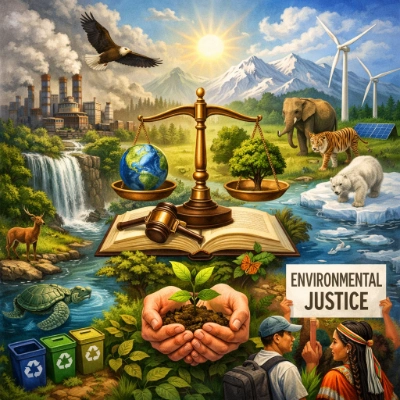
Environmental Law as a Living Force for Planetary Stewardship
Climate Change Legislation
- Breathing Life into Policy: Climate change legislation shapes the way nations commit to cutting greenhouse gas emissions, embracing cleaner energy, and safeguarding the climate for future generations.
- Vital Elements in Climate Law:
- Carbon Pricing: Carbon pricing mechanisms, including carbon taxes and cap-and-trade systems, serve as market-based incentives that reward innovation and emissions restraint.
- Renewable Energy Mandates: Legal mandates for wind, solar, and geothermal energy shift national goals from fossil dependence to sustainable vitality.
- Adaptation Strategies: From flood-resistant infrastructure to urban cooling measures, adaptation strategies ensure communities anticipate climate impacts.
- Transforming Legal Vision into Action:
- Countries build comprehensive climate action plans aligned with international accords like the Paris Agreement.
- Local governments implement zoning reforms, green roofs, and stormwater gardens.
- Examples that Inspire Global Change:
- The European Union’s Emissions Trading System (ETS) remains a pioneering model in carbon markets.
- India’s National Solar Mission and Germany’s feed-in tariff laws turned legal mandates into booming solar industries.
Conservation Laws
- Guardians of the Wild and Rare: Conservation laws bind human legal systems to the planet’s biodiversity, making nature protection a shared ethical mission.
- Pillars of Biodiversity Protection:
- Protected Areas: National parks, marine sanctuaries, and biosphere reserves create havens where nature evolves undisturbed.
- Species Protection: Statutes like the U.S. Endangered Species Act (ESA) mandate recovery plans and critical habitat preservation.
- Sustainable Resource Use: Legal limits on timber harvesting, regulated fishing seasons, and watershed protections preserve nature’s balance.
- Bringing Protection to the Ground:
- Legislation establishes wildlife migration corridors to ease human-animal friction.
- Anti-deforestation laws shield ancient forests, recognizing their value as global carbon sinks.
- Snapshots of Conservation in Action:
- International coalitions work to protect the Amazon rainforest as the world’s primary terrestrial carbon sink.
- Global bans on the ivory trade, enforced through CITES treaties and domestic laws, safeguard endangered wildlife.
Pollution Control
- Reclaiming the Breath of the Earth: Pollution control laws establish clean air, water, and soil as essential rights for human dignity and ecological balance.
- Legal Tools for a Cleaner World:
- Air Quality Standards: Statutory caps on SO2, NOx, and particulate matter compel cleaner industrial combustion and transportation standards.
- Water Pollution Laws: Discharge permits and mandatory municipal/industrial wastewater treatment plants keep aquatic ecosystems safe.
- Waste Management: Rules enforce hazardous waste containment, extended producer responsibility, and circular economic recycling.
- Concrete Illustrations of Legal Impact:
- The Clean Water Act in the U.S. prohibited pollutant discharges into navigable waters without explicit permits.
- Regulatory enforcement following industrial disasters establishes strict civil liabilities and multi-billion-dollar environmental restoration penalties.
Legal Pathways to Renewable Energy and Sustainable Progress
- Constructing the Future with Law and Light: Renewable energy legislation provides scaffolding for green economic expansion, clean grid transitions, and sustainable urban design.
- Legal Catalysts for Green Transformation:
- Energy Incentives: Tax exemptions, investment credits, and feed-in tariffs lower capital barriers for clean power deployment.
- Green Building Codes: Statutory requirements enforce energy efficiency, passive heating/cooling, and low-carbon construction materials.
- Circular Economy Policies: Laws incentivizing closed-loop material cycles, product redesign, and upcycling minimize extraction demands.
- Stories that Shine with Impact:
- Germany’s Energiewende legislative framework reoriented a major industrial economy toward renewable power generation.
- Global adoption of statutory benchmarks matching United Nations SDG 7 accelerates affordable clean energy expansion.
Interactive Environmental Policy & Compliance Simulator
Evaluate how different legal mechanisms (Carbon Taxes, Cap-and-Trade, Mandatory Standards, and Renewable Subsidies) affect greenhouse gas emissions, industrial compliance costs, and public health outcomes across multi-year planning horizons.
Regulatory Policy & Environmental Impact Engine
Real-World Impact Through Environmental Law
Shaping National Blueprints for Carbon Reduction
- Overview: Crafting climate policy translates scientific consensus into statutory frameworks with enforceable domestic targets.
- Applications:
- Designing legally binding net-zero strategies with carbon budgets and sector-specific caps.
- Establishing statutory greenhouse gas reporting mechanisms for industrial facilities.
- Harmonizing domestic energy law with international treaty obligations under the UNFCCC.
- Examples:
- The UK Climate Change Act legally bound the government to carbon reduction budgets monitored by an independent council.
- California’s Advanced Clean Cars rule enforces zero-emission vehicle production quotas for automobile manufacturers.
Standing Up for Communities in Environmental Struggles
- Overview: Environmental law offers procedural and substantive remedies to protect disenfranchised populations facing localized pollution and resource degradation.
- Applications:
- Filing toxic tort and public nuisance lawsuits against corporate polluters.
- Securing preliminary injunctions to halt unpermitted industrial development near residential zones.
- Enforcing constitutional rights to a healthy environment and procedural rights to public consultation.
- Examples:
- Class-action litigation securing clean water provision and soil remediation for communities impacted by industrial chemical contamination (e.g., PFAS).
- Litigation upholding indigenous land claims and customary water rights against unmitigated mining concessions.
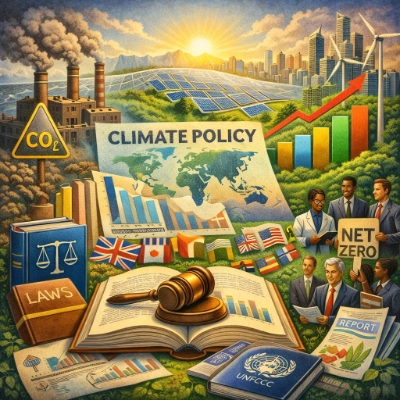
Interactive Review Questions: Legal Foundations & Practice
Test your analytical comprehension of core environmental law principles using the collapsible review toggles below.
What legal mechanism forms the baseline for assessing environmental risks before project approval?
How does the ‘Polluter Pays Principle’ operate in statutory liability frameworks?
What distinguishes command-and-control regulation from market-based legal instruments?
Why is transboundary pollution particularly challenging under traditional legal frameworks?
New Directions Reshaping Environmental Law
- Climate Litigation as a Force for Accountability: Citizens, youth organizations, and subnational governments are using constitutional rights and public trust doctrines in courts to force statutory revisions and deeper emission cuts.
- Bridging Law and Innovation Through Smart Technology: Satellite remote sensing, AI image analysis, and immutable blockchain ledgers are enabling real-time detection of illegal logging, unpermitted emissions, and carbon offset fraud.
- Cross-Border Challenges and Collaborative Legal Responses: Bilateral treaties and multinational river basin agreements synchronize environmental enforcement across shared sovereign borders.
- Uplifting Environmental Justice and Equity: Legal frameworks increasingly require health equity impact reviews, cumulative impact analyses, and explicit protection for frontline communities.
- Protecting Biodiversity in the High Seas (BBNJ): International treaties under the United Nations extend legal stewardship and environmental assessment rules to international waters beyond national jurisdictions.
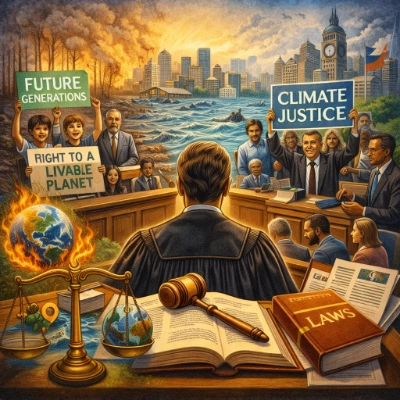
Barriers and Dilemmas in Environmental Law Enforcement
- Enforcement Gaps and Compliance Deficits: Regulatory agencies frequently face political interference, underfunding, and insufficient field personnel, allowing illegal emissions or habitat clearing to go unchecked.
- Harmonizing National Autonomy with Global Mandates: Reconciling sovereign domestic economic priorities with binding international commitments under treaties requires delicate legal diplomacy.
- Balancing Industrial Development with Ecological Integrity: Adjudicating conflicts between short-term infrastructure or resource extraction projects and long-term ecosystem preservation.
Studying Environmental Law to Shape a Just Future
Environmental law bridges scientific discovery, public policy, and moral governance. For students entering university, studying this discipline builds analytical rigor in administrative law, statutory interpretation, and international diplomacy while equipping them to advocate for sustainable system transformations.

Frequently Asked Questions – Environmental Law
What is environmental law in simple terms?
Environmental law is the body of rules, regulations, and legal principles that govern how humans, businesses, and governments interact with the natural environment, balancing resource use with ecosystem protection.
Why is environmental law vital for modern industry?
It provides legal clarity, establishes clear compliance parameters, prevents market failures caused by unpriced pollution externalities, and drives commercial innovation toward sustainable green energy technologies.
How does international environmental law bind individual countries?
International environmental treaties bind sovereign states once ratified, requiring governments to enact domestic implementing legislation, set national enforcement targets, and report progress to treaty secretariats.
What is the function of Environmental Impact Assessments (EIAs)?
EIAs evaluate potential environmental harms of proposed developments before permits are issued, identifying mitigation measures, alternative plans, and mandatory public review periods.
What career opportunities exist within environmental law?
Graduates can work as environmental litigators, corporate compliance officers, regulatory policy analysts, sustainability consultants, NGO advocates, and international treaty advisors.
Is Environmental Law Right For You?
Explore career pathways, check your fit, and assess your skills — before you commit to a degree.
Comprehensive Practice Module & Review Suite
Foundational Concept Review Questions
-
Define environmental law and state its central objective.
Answer: Environmental law is the comprehensive body of statutes, regulations, common law principles, and international treaties governing human interactions with natural ecosystems. Its primary objective is preventing environmental degradation, preserving natural resources, and promoting sustainable development. -
What are the four primary statutory pillars of environmental governance?
Answer: Air quality regulation, water quality and discharge management, hazardous waste handling/remediation, and natural resource/biodiversity conservation statutes. -
Explain the core purpose of an Environmental Impact Assessment (EIA).
Answer: To identify, evaluate, and disclose potential ecological impacts of a major development project before permitting decisions are finalized, ensuring informed public and agency decision-making. -
Describe the ‘Polluter Pays Principle’.
Answer: An economic and legal principle requiring polluting entities to bear the financial costs of managing, cleaning up, and remediating environmental damage resulting from their activities. -
What role do administrative regulatory agencies play in environmental governance?
Answer: Regulatory agencies write specific technical standards, issue permits, conduct compliance inspections, and execute enforcement actions under authority granted by legislative statutes. -
How do international environmental treaties differ from domestic statutes?
Answer: Treaties are consensual agreements between sovereign nations that require domestic ratification and national legislation to become legally enforceable within a state’s borders. -
What is the difference between command-and-control and market-based environmental regulations?
Answer: Command-and-control mandates strict technological standards or emission limits by law; market-based instruments use financial signals like carbon taxes or tradeable allowances to incentivize reductions. -
Define environmental justice.
Answer: The fair treatment and meaningful involvement of all people regardless of race, income, or origin in the development, implementation, and enforcement of environmental laws and policies.
Analytical & Thought-Provoking Questions
-
How does the Precautionary Principle alter traditional legal burdens of proof in environmental regulation?
Answer: Under the Precautionary Principle, where an activity raises threats of serious harm to human health or the environment, lack of full scientific certainty cannot be used as a reason to postpone protective regulation. It shifts the burden of proof onto project proponents to demonstrate safety rather than requiring regulators to prove harm beforehand. -
In what ways can corporate environmental reporting mandates transform financial markets?
Answer: Statutory climate disclosure rules compel public companies to quantify greenhouse gas emissions and physical/transition risks. This transparency enables financial markets to price climate risks accurately, shifting institutional capital toward sustainable business models. -
How do ‘Rights of Nature’ legal movements challenge traditional property law frameworks?
Answer: Rights of Nature laws grant legal personhood and standing to ecosystems (rivers, forests) independent of human ownership, enabling legal guardians to sue on behalf of nature itself rather than requiring human financial injury. -
Analyze the limitations of using traditional GDP to measure sustainable national progress.
Answer: GDP treats environmental destruction and natural resource depletion as economic activity (e.g., cleanup expenditures add to GDP), while failing to account for natural capital depreciation or public health costs. Green GDP metrics correct this by deducting pollution and resource loss costs. -
Evaluate how satellite remote sensing and AI alter international treaty enforcement.
Answer: Automated satellite imagery eliminates information asymmetries by providing independent, objective proof of illegal deforestation, vessel activity in marine reserves, or methane leaks, bypassing state self-reporting reliance. -
Discuss the legal tensions between international trade agreements and domestic environmental protection statutes.
Answer: Trade treaties prohibiting discriminatory barriers can clash with domestic environmental laws (e.g., import bans on unsustainable goods), leading to arbitration disputes under investor-state dispute mechanisms. -
Why are intergenerational equity considerations increasingly incorporated into climate litigation strategy?
Answer: Climate impacts accumulate over decades; invoking youth and future generations’ constitutional rights to health and property challenges present-day legislative inaction that creates long-term damage.
Quantitative & Mathematical Calculations
-
A thermal power facility emits 1,200,000 tonnes of CO2 annually. Under a national carbon tax statute, the rate is set at $45 per tonne. Calculate the total annual tax obligation for the operator.
Answer:Tax Liability = Emissions × Rate
Tax Liability = 1,200,000 tonnes × $45/tonne = $54,000,000 per year. -
Under a cap-and-trade program, Industrial Plant A receives 80,000 emission allowances (each allowing 1 tonne of CO2). Plant A actual emissions are 95,000 tonnes. Allowance market price is $30 per tonne. Statutory fine for non-compliance without allowances is $100 per unpermitted tonne. Calculate the most cost-effective legal compliance strategy.
Answer:Deficit = 95,000 – 80,000 = 15,000 tonnes.
Option 1 (Market Allowances) = 15,000 × $30 = $450,000.
Option 2 (Pay Statutory Fine) = 15,000 × $100 = $1,500,000.
Optimal Legal Strategy: Purchase 15,000 allowances on the open market for a total cost of $450,000 (saving $1,050,000 compared to non-compliance fines). -
A chemical plant discharges wastewater containing a contaminant at a concentration of 45 mg/L. Statutory water quality regulations require a maximum discharge concentration of 5 mg/L. The plant discharges 20,000 m3 of effluent daily. Calculate the required mass of contaminant that must be removed daily by the plant’s treatment system to comply with statutory limits.
Answer:Required Concentration Reduction = 45 mg/L – 5 mg/L = 40 mg/L.
Convert Concentration: 40 mg/L = 40 g/m3 = 0.040 kg/m3.
Total Mass Removal = 20,000 m3/day × 0.040 kg/m3 = 800 kg of contaminant removed per day. -
An environmental remediation court settlement requires a manufacturing firm to restore a 250-hectare wetland. Rehabilitation costs are $12,000 per hectare for initial clearing/planting plus an annual maintenance endowment of $500 per hectare for 10 years. Calculate the total settlement liability.
Answer:Initial Capital Cost = 250 Hectares × $12,000/Hectare = $3,000,000.
10-Year Maintenance Cost = 250 Hectares × $500/Hectare/Year × 10 Years = $1,250,000.
Total Legal Settlement Liability = $3,000,000 + $1,250,000 = $4,250,000. -
A fleet of delivery vehicles emits 500 tonnes of CO2 annually. Installing clean electric drive systems reduces emissions by 80%. If carbon credits sell at $25 per tonne avoided, calculate the annual revenue generated from credit sales under a certified carbon protocol.
Answer:Emissions Avoided = 500 tonnes × 0.80 = 400 tonnes CO2/year.
Credit Revenue = 400 tonnes × $25/tonne = $10,000 per year. -
An offshore oil platform experiences a 12-day leak discharging 400 barrels of crude oil daily into sea waters. Under clean water penalty statutes, the court assesses a mandatory fine of $2,500 per barrel discharged, plus an administrative assessment of $10,000 per day of ongoing discharge. Calculate the total statutory penalty.
Answer:Total Volume = 12 days × 400 barrels/day = 4,800 barrels.
Volumetric Fine = 4,800 barrels × $2,500/barrel = $12,000,000.
Daily Administrative Penalty = 12 days × $10,000/day = $120,000.
Total Statutory Assessment = $12,000,000 + $120,000 = $12,120,000. -
A municipality’s baseline energy demand is 500 gigawatt-hours (GWh) per year, growing at 2% annually. Statutory renewable portfolio standards require 30% of energy to come from clean sources in Year 3. Calculate the required clean energy production (GWh) in Year 3.
Answer:Year 1 Demand = 500 × 1.02 = 510 GWh.
Year 2 Demand = 510 × 1.02 = 520.2 GWh.
Year 3 Demand = 520.2 × 1.02 = 530.604 GWh.
Required Renewable Generation (30%) = 530.604 × 0.30 = 159.18 GWh.