
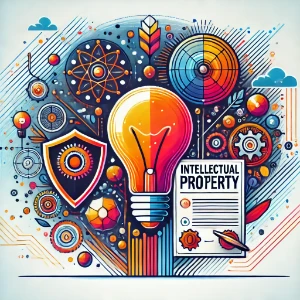
Legal Protection of Innovation and Intangible Corporate Assets
Safeguarding the Seeds of Human Ingenuity
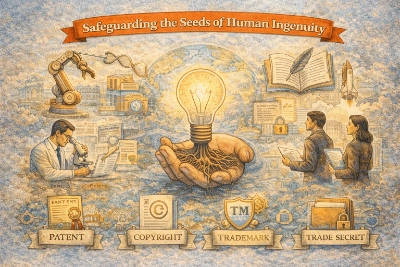
Motivations Behind the Global Framework for IP Protection
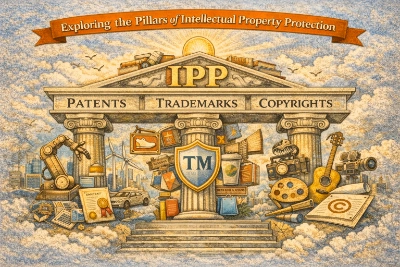
Exploring the Pillars of Intellectual Property Protection
Patents
Exclusive rights for inventions (Utility, Design, Plant). Protects functional technology and industrial designs for up to 20 years.
Trademarks
Guards brand identity, logos, slogans, and trade dress to prevent market confusion and maintain consumer trust.
Copyrights
Protects original expressions in literature, music, software, and art. Grants authors control for life plus 50-70 years.
Patents: Honoring the Craft of Invention
Definition: A patent is a powerful legal tool that gives inventors exclusive control over their creations for a limited time. It allows them to stop others from making, using, selling, or importing the patented invention without their permission. This right doesn’t just protect innovation—it fuels it, encouraging people and companies to dream boldly, take risks, and invest in research and development that may one day change lives.
Key Features:
- Utility Patents: These are the most common type and apply to inventions that have a practical function—like machines, chemical formulas, software processes, or new manufacturing techniques. They are the beating heart of innovation across fields like medicine, robotics, energy, and computing.
- Design Patents: While utility patents focus on how things work, design patents protect how things look. They apply to the shape, surface patterns, and overall visual appearance of a product—often crucial in consumer-driven industries where aesthetics matter just as much as performance.
- Plant Patents: These protect newly invented or discovered varieties of plants that can be reproduced asexually. From disease-resistant crops to ornamental flowers with vibrant new hues, plant patents contribute to food security, sustainability, and biodiversity.
Applications & Examples:
- Pharmaceutical firms patent new compounds and treatments to protect years of medical research and clinical trials, funding future breakthroughs while giving them market exclusivity.
- A biotech startup develops a novel gene-editing technique and secures a utility patent to safeguard their breakthrough, opening doors to medical applications and strategic partnerships.
- An AI firm patents a new method of predictive analysis for autonomous vehicles, attracting major automotive firms interested in collaboration and licensing.
Trademarks: The Language of Brands and Identity
Definition: Trademarks are symbols of trust. They protect the names, logos, colors, and catchphrases that allow consumers to instantly recognize the source of a product or service. By guarding these distinct signs, trademarks preserve reputation, assure quality, and help businesses stand out in a noisy market.
Key Features:
- Trademark Registration: While some rights arise naturally through usage, official registration grants stronger legal standing, provides public notice of ownership, and simplifies enforcement across borders.
- Service Marks: These are like trademarks but apply to services rather than physical products—such as consulting, education, or delivery services.
- Trade Dress: Refers to the distinctive look and feel of a product or its packaging, such as the iconic shape of a bottle or boutique interior layout.
Applications & Examples:
- Fashion companies use trademarks to ensure logos and patterns are not misused by counterfeiters.
- A sneaker brand trademarks a distinctive logo and flagship product line, turning them into powerful global assets.
- A streaming service secures trademarks for platform names and original series titles, building a consistent commercial identity.
Copyrights: Celebrating Originality and Creative Voice
Definition: Copyright is a guardian of originality. It grants creators the right to control and benefit from their unique expressions—be it music, art, literature, photography, choreography, film, or software. This protection arises automatically upon creation.
Key Features:
- Exclusive Rights: Copyright holders decide who can reproduce, adapt, distribute, or publicly display their work.
- Duration: In most jurisdictions, copyright lasts for the life of the author plus 50 to 70 years.
- Fair Use Provisions: Allows limited use of copyrighted works for commentary, parody, education, research, or criticism without permission.
Applications & Examples:
- A game studio copyrights its artwork, storylines, and codebase to prevent cloning and piracy on global platforms.
- A documentary filmmaker licenses historical footage under fair use but copyrights her final production to retain full distribution control.
Expanding the Role of IP Protection in Business and Innovation
Licensing Intellectual Property to Unlock Growth Opportunities
- Patents, trademarks, and copyrighted works can be monetized through strategic licensing while maintaining ownership.
- Licensing opens doors to new regions without the heavy capital cost of direct market entry.
- Technology transfer becomes seamless between universities, research labs, and private industries.
- Examples include a tech startup licensing its encryption algorithm to a multinational firm for royalties, or a fashion designer licensing their trademark to European luxury manufacturers.
Enforcing IP Rights to Defend Creativity and Market Integrity
- Litigation provides immediate remedies through court injunctions and DMCA takedowns.
- Financial damages awarded in infringement cases deter potential violators and compensate commercial losses.
- Examples include a pharmaceutical giant securing cross-border cease-and-desist orders against illegal generic producers, or a skincare brand winning trademark protection against deceptive packaging.
Real-World Cases That Bring Intellectual Property to Life
Shielding Software with Global Patents During Market Expansion
Resolving Brand Conflicts in Cross-Border Trade
Supporting Social Equity Through Responsible Licensing
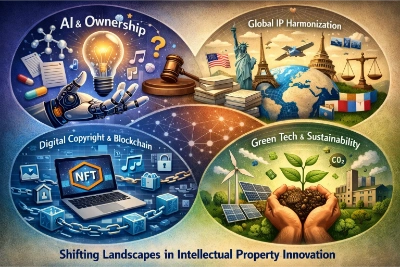
Shifting Landscapes in Intellectual Property Innovation
- Artificial Intelligence and the Question of Ownership: Generative AI models and autonomous systems stretch traditional definitions of authorship. Legal frameworks are debating whether AI-generated pharmaceuticals, artwork, or software code can be patented or copyrighted without a human creator.
- Toward a Global Language of IP Law: Cross-border digital commerce demands international harmonization through organizations like WIPO, reducing friction, filing costs, and administrative confusion for global entrepreneurs.
- New Frontiers in Digital Copyright Control: Blockchain ledger technology, smart contracts, and NFTs provide immutable digital timestamps and provenance tracking, enabling artists to manage royalties and enforce rights directly.
- Sustainability as a Catalyst for IP Innovation: Green patents in renewable energy, carbon capture, and clean agriculture receive expedited examination in many jurisdictions, accelerating net-zero technological deployment.
- Guarding Innovation in the Age of Cyber Threats: With trade secrets stored in cloud environments, cybersecurity protocols, encryption, and strict access controls have become foundational to IP defense strategies.
Persistent Hurdles in Safeguarding Creative and Technological Invention
- Varying Enforcement Across Jurisdictions: Patent and trademark enforcement strength varies widely across international courts, requiring localized legal strategies.
- High Financial Barriers to Entry: Securing global patent portfolios and conducting legal defense can be cost-prohibitive for startups and independent creators.
- Keeping Pace with Fast-Moving Technologies: Rapid advancements in synthetic biology, quantum computing, and AI outpace legislative adaptation.
- Widespread Counterfeiting: Digital piracy and counterfeit physical markets require continuous AI-driven surveillance, customs intervention, and enforcement.
- Striking a Balance Between Access and Control: Policymakers must continually adjust fair use, open-access, and compulsory licensing rules to maintain public benefit without discouraging private research investment.
Interactive Tool: IP Asset Valuation & Royalty Calculator
Estimate the present value of an intellectual property asset (Patent, Trademark, or Software Copyright) and calculate projected annual royalty revenues based on licensing parameters.
Discovering the Power of Intellectual Property
Looking Ahead: The Enduring Importance of Protecting Creativity
Frequently Asked Questions – Intellectual Property Protection
What is intellectual property protection in simple terms?
Intellectual property protection is the system of laws and rules that protect creations of the mind, such as inventions, literary and artistic works, designs, brand names, and logos. It gives creators and owners certain exclusive rights for a period of time so they can control how others use their ideas and receive recognition or economic reward.
Why does intellectual property protection matter in business and the creative industries?
Intellectual property protection matters because much of today’s value is in ideas, software, brands, and creative content. Without protection, it would be easy for others to copy and profit from someone else’s work, reducing incentives to innovate. IP rights help businesses build brands, recover research and development costs, and license technology or content safely.
What are the main types of intellectual property rights?
The main types of intellectual property rights include patents for inventions, copyrights for literary and artistic works, trade marks for brand names and logos, design rights for the appearance of products, and trade secrets for confidential business information. Each type has its own rules on what can be protected, how to obtain protection, and how long it lasts.
How is intellectual property protection different from physical property rights?
Physical property rights cover tangible objects like land, buildings, and equipment. Intellectual property rights cover intangible creations such as software, music, or inventions. Unlike physical property, ideas can be copied easily, so IP law gives time-limited exclusive rights rather than permanent control, and the same idea can often be used in different ways by different people.
Which school subjects provide a good foundation for studying intellectual property law and policy?
Useful foundations include literature, art, music, computer science, business studies, economics, and any introductory law-related subjects. These fields help you understand creative processes, innovation, markets, and basic legal thinking. Mathematics and science are also helpful if you are interested in patents and technology-intensive industries.
How do patents work and what do they protect?
Patents protect new, useful, and non-obvious inventions such as machines, chemical processes, or technical solutions. If granted, a patent gives its owner the right to stop others from making, using, or selling the invention without permission for a limited period, usually 20 years from filing. In exchange, the inventor must publicly disclose how the invention works.
What does copyright cover and when does it arise?
Copyright protects original literary, artistic, musical, and certain other creative works, including books, films, software code, and online content. In many legal systems, copyright arises automatically when a qualifying work is created and fixed in a tangible or digital form; registration is not required, although it can help prove ownership in disputes.
How do trade marks help protect brands?
Trade marks protect distinctive signs that identify the origin of goods or services, such as names, logos, slogans, or even colours and shapes in some cases. Registration gives the owner the right to stop others using confusingly similar marks for related goods or services, helping consumers distinguish between brands and allowing companies to build reputation over time.
What are trade secrets and how are they protected?
Trade secrets are confidential business information that gives a company a competitive advantage, such as formulas, manufacturing processes, or customer lists. They are protected not by registration but by secrecy: companies use contracts, access controls, and internal policies to prevent unauthorised disclosure. Legal remedies are available if secrets are misused or stolen through improper means.
What ethical and policy debates surround intellectual property protection?
Key debates focus on how to balance incentives for creators with access for society. Questions include how long protection should last, how IP affects access to medicines and educational materials, how to treat traditional knowledge, and how strict enforcement should be in the digital environment. Students encounter these debates in law, economics, public policy, and cultural studies.
How does the Intellectual Property Protection page on Prep4Uni.online support my learning and university choices?
The Intellectual Property Protection page on Prep4Uni.online introduces core ideas about patents, copyrights, trade marks, design rights, and trade secrets in a student-friendly way. You can use it to build vocabulary, explore case examples, and connect IP with related university subjects such as corporate law, economics, international business, and information technology.
Interactive Review Questions
Toggle each box below to reveal detailed explanations for core IP concepts.
What is the fundamental legal difference between a patent and a trade secret?
How does copyright protection apply differently to functional code versus user interface artwork in software?
Why are international treaties like TRIPS and the Berne Convention critical for modern M&A transactions?
Comprehensive Practice & Mastery Module
Section 1: Foundational Concept Review Questions
-
What are the four primary types of intellectual property rights recognized in corporate law?
Answer: The four primary types are Patents (inventions/technical processes), Trademarks (brand names, logos, signs), Copyrights (original artistic/literary expressions and software code), and Trade Secrets (confidential commercial information). -
What is the typical standard statutory duration of a utility patent from its filing date?
Answer: Utility patents generally provide exclusive rights for 20 years from the official filing date, subject to payment of periodic maintenance fees. -
How does copyright protection arise, and is formal government registration mandatory for basic ownership?
Answer: Copyright arises automatically upon the creation and fixation of an original work in a tangible or digital medium. Government registration is not mandatory for protection, though it provides enhanced legal standing and statutory damages during litigation. -
What key function does a trademark serve for consumers in a market environment?
Answer: A trademark identifies the unique commercial origin of goods or services, preventing market confusion and ensuring product quality assurance. -
What is "trade dress" and how does it differ from a standard word trademark?
Answer: Trade dress protects the visual appearance, shape, packaging, or overall design configuration of a product or storefront, whereas a word trademark protects text names or slogans. -
What legal mechanism allows a corporate IP holder to permit another entity to use its technology while maintaining sole ownership?
Answer: An Intellectual Property Licensing Agreement, which grants defined operational permissions in exchange for financial compensation (royalties) or cross-licensing rights. -
What international treaty sets minimum standards for IP protection among member countries of the World Trade Organization (WTO)?
Answer: The TRIPS Agreement (Trade-Related Aspects of Intellectual Property Rights). -
Why are trade secrets not disclosed to patent offices?
Answer: Because patenting requires complete public disclosure of how the invention works, whereas trade secret value depends entirely on maintaining absolute commercial secrecy.
Section 2: Analytical & Scenario-Based Thought Questions
-
A software company develops an autonomous AI code generator. Evaluate the challenges in assigning legal authorship and patent rights for inventions created entirely by this AI model.
Answer: Most global IP laws mandate human inventorship/authorship. Without human intervention in the creative process, the AI output risks falling directly into the public domain unless legislation evolves to recognize machine-generated works or corporate AI ownership models. -
Compare the strategic advantage of keeping a proprietary manufacturing formula a trade secret versus obtaining a utility patent.
Answer: A patent grants a 20-year legal monopoly but expires and discloses the formula to competitors. A trade secret can last forever (e.g., Coca-Cola formula) but offers zero protection if a competitor independently invents or reverse-engineers the formula. -
During an M&A transaction, Company X acquires Company Y primarily for its proprietary brand goodwill. What due diligence steps must legal counsel perform on Company Y's trademark portfolio?
Answer: Counsel must verify valid registrations across all operating countries, ensure maintenance fees are fully paid, check for ongoing opposition proceedings, review licensing liabilities, and confirm chain-of-title ownership. -
How do fair use doctrines balance the exclusive rights of copyright holders with public interest and free expression?
Answer: Fair use provides statutory exemptions allowing limited, non-commercial, transformative use of copyrighted material for education, news reporting, parody, or scholarship without requiring permission or payment. -
Analyze how compulsory licensing in pharmaceutical patents resolves the tension between corporate legal rights and international public health crises.
Answer: Compulsory licensing permits governments to allow generic production of patented medicines without the consent of the patent holder during national health emergencies, compensating the owner with statutory royalties while ensuring affordable public health access. -
Why might a tech startup choose to open-source its non-core software architecture while heavily patenting its core underlying hardware designs?
Answer: Open-sourcing software fosters developer adoption, ecosystem expansion, and rapid standard setting, while patenting hardware secures defensible moat protection and monetization against hardware manufacturing rivals. -
Evaluate how digital rights management (DRM) and blockchain NFTs alter traditional copyright enforcement in digital media distribution.
Answer: DRM uses technological protection measures to physically restrict copying, while blockchain provides verifiable digital scarcity and automated smart-contract royalty distribution, shifting enforcement from judicial litigation to technical design.
Section 3: Mathematical Calculations & Numerical Problems
-
Patent Valuation Calculation: A corporation licenses a utility patent to a partner company. The licensee projects gross sales of $10,000,000 in Year 1 with an agreed royalty rate of 6%. Calculate the gross annual royalty payment due to the patent owner.
Answer: Gross Royalty Payment = Gross Sales × Royalty Rate
Gross Royalty Payment = $10,000,000 × 0.06 = $600,000. -
Net Present Value (NPV) of IP License: An IP holder will receive a single royalty payment of $121,000 exactly 2 years from today. If the annual risk-adjusted discount rate is 10%, calculate the present value (PV) of this cash flow.
Answer:PV = C / (1 + r)tThe present value of the future royalty is $100,000.
PV = $121,000 / (1 + 0.10)2
PV = $121,000 / (1.10)2 = $121,000 / 1.21 = $100,000. -
Patent Remaining Life Determination: A utility patent was filed on March 15, 2012, and granted on June 20, 2015. Calculate its statutory expiration date and remaining patent life as of March 15, 2026.
Answer: Statutory life = 20 years from filing date.
Expiration Date = March 15, 2012 + 20 years = March 15, 2032.
Remaining Life as of March 15, 2026 = 2032 - 2026 = 6 years remaining. -
Copyright Term Calculation: An author published an original book on January 1, 1990, and passed away on July 10, 2010. If national law mandates copyright protection for the life of the author plus 70 years following the year of death, determine the exact year the work enters the public domain.
Answer: Protection extends 70 years after the year of the author's death (2010).
Expiration Year = 2010 + 70 = 2080 (specifically December 31, 2080).
The work enters the public domain on January 1, 2081. -
Infringement Damages Assessment: Company A infringed on Company B's patent by selling 50,000 unauthorized units at $200 per unit. Company B's lost profit margin was $40 per unit. Alternatively, a reasonable established royalty rate is $15 per unit. Calculate (a) Total Lost Profits damages and (b) Total Reasonable Royalty damages.
Answer: (a) Lost Profits = Units Sold × Profit Margin per Unit = 50,000 × $40 = $2,000,000.
(b) Reasonable Royalty = Units Sold × Royalty Rate per Unit = 50,000 × $15 = $750,000. -
Amortization of Intangible IP Asset: A corporation acquires a pharmaceutical patent portfolio for $15,000,000 with a remaining legal life of 10 years and zero residual value. Calculate the annual straight-line amortization expense for financial reporting.
Answer: Annual Amortization = Initial Cost / Useful Life
Annual Amortization = $15,000,000 / 10 years = $1,500,000 per year. -
Royalty Sharing Split: A university technology transfer office licenses a research patent to a commercial firm, generating $2,000,000 in net royalties. According to policy, royalties are split: 40% to inventors, 30% to the university department, and 30% to the general research fund. Calculate the dollar amount allocated to each recipient.
Answer: Inventors Share (40%) = $2,000,000 × 0.40 = $800,000.
Department Share (30%) = $2,000,000 × 0.30 = $600,000.
General Research Fund (30%) = $2,000,000 × 0.30 = $600,000.