

The history of education offers a profound lens into how societies have transmitted knowledge, reinforced values, and shaped citizens over centuries. From early religious instruction and elite tutelage to modern systems of mass education, this field highlights the shifting purposes, methods, and access to learning. The development of education is closely tied to the evolution of political systems and political ideologies, which have influenced curricula, literacy policies, and control over knowledge production.
Throughout history, education has often been a site of political contestation. Movements advocating for inclusion, such as the suffrage and civil rights movements, pushed for broader access to education as a foundation for equality. Similarly, political campaigns and reforms have leveraged educational agendas to garner public support and shape national identity. The increasing role of technology in elections reflects broader societal changes that also influence educational technology and digital learning.
The expansion of formal schooling is often paralleled by developments in social history, which tracks how education affected and was affected by class, gender, and community structures. These patterns differ markedly across geographies, as reflected in urban and rural history and in the mobility explored through migration and diaspora studies. /p>
Education has played a pivotal role in shaping military and political leadership. Historical figures examined in political biography often reflect the influence of their early schooling and intellectual mentors. Military academies, training doctrines, and command philosophies, embedded in the evolution of military history, military strategic studies, and naval history, also mirror changing educational priorities and societal values. /p>
Education is deeply embedded in global ideological and economic transformations. The rise of state-run schooling and national curriculums aligns with the emergence of political history and centralized governance. Theoretical frameworks in the history of political economy and economic thought have shaped educational investments, often in response to economic crises and reform pressures. Schools have also been key agents in reproducing or contesting military and political power. /p>
Education is both a mirror of society and a force of change. During times of war and peace, educational content and institutional forms have adapted to serve different aims—from propaganda to reconciliation. Fields such as social and cultural history of warfare, peace studies and conflict resolution, and treaty analysis provide context for these shifts, illustrating how education is implicated in both conflict and diplomacy.The intellectual traditions underpinning education systems are explored in the history of ideas. Debates around the nature of knowledge, authority, and pedagogy often play out in public spheres shaped by media and communication history. As technology transforms the way information is delivered and assessed, the relevance of these intellectual foundations continues to grow.
Ultimately, the history of education reveals more than teaching methods—it uncovers the social, cultural, and political ambitions of societies across time. Whether through ancient academies or contemporary reforms, education remains one of the most powerful instruments for shaping both individual lives and collective destinies.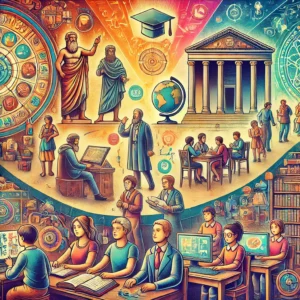
Learning Across Time: Education, Knowledge, and Social Transformation
Education history explores how societies transmit knowledge, shape values, and prepare individuals for participation in social life. From informal learning traditions to formal schooling systems, education reflects broader social priorities and inequalities. Studying its evolution reveals how knowledge, power, and opportunity are distributed across time.Social History – Overview
Foundational hub examining how everyday life, communities, labor networks, and social structures evolve across time and influence historical developments.
Demographic History
Detailed examination of population trends, mortality shifts, birth rates, and age profiles, illuminating their direct impact on educational demand and public policy.
Education History
In-depth study of how institutional schooling systems, universal literacy initiatives, and higher education evolved to drive social mobility and knowledge transmission.
History of Social Movements
Investigation into how educational access and student activism contributed to political awareness, civil rights campaigns, and systemic social reforms.
Migration and Diaspora Studies
Exploration of how educational institutions adapt across diverse cultures, supporting migrant integration, bilingualism, and diaspora identity preservation.
Urban and Rural History
Comparative research analyzing differences in educational funding, school distribution, and literacy access between industrial urban centers and agricultural regions.
Women’s History
Focus on female literacy struggles, the establishment of women's colleges, and how expanded educational access transformed gender roles and workplace participation.
Key Focus Areas in Education History
Early Education Systems
Education in early societies was informal and primarily focused on survival skills, cultural traditions, and religious teachings.
Prehistoric and Ancient Education
- Prehistoric Societies: Education was informal and oral, with knowledge passed down through storytelling, rituals, and practical instruction focused on skills like hunting, gathering, tool-making, and understanding natural cycles.
- Ancient Civilizations:
- Mesopotamia: Developed the earliest formal schools, where scribes were trained in cuneiform writing to manage administrative tasks.
- Egypt: Education was tied to religious and bureaucratic functions, training priests and government officials.
- China: Confucian teachings emphasized moral education and civil service training, forming the basis for one of the earliest meritocratic systems.
- Greece and Rome: In Greece, education was divided between Sparta (military-focused) and Athens (philosophy, arts, and democracy). Rome adopted Greek educational practices but emphasized rhetoric and law for governance.
Medieval and Renaissance Education
The medieval period saw education shaped by religion, while the Renaissance ushered in humanistic and scientific approaches.
Medieval Education
- Monastic Schools: Monasteries preserved knowledge and trained clergy in subjects like theology, Latin, and mathematics.
- Cathedral Schools: Evolved into universities, such as the University of Paris and Oxford, focusing on liberal arts and theology.
- Islamic Education: The Islamic Golden Age (8th–13th centuries) emphasized knowledge, with madrasas teaching science, medicine, and philosophy. The House of Wisdom in Baghdad became a hub for translating and advancing ancient Greek and Indian knowledge.
Renaissance Education
- Humanism: The Renaissance revived interest in classical learning, emphasizing literature, history, and ethics.
- Scientific Inquiry: Education began incorporating scientific methods and critical thinking, influencing figures like Galileo and Copernicus.
The Rise of Public Schooling
The 18th and 19th centuries marked significant strides toward universal education, driven by industrialization and political reform.
Compulsory Education
- Prussia (18th Century): Introduced one of the first compulsory education systems, emphasizing discipline, literacy, and national unity.
- United States and Europe: Public schooling expanded in the 19th century, with governments recognizing education as essential for economic and democratic development. The Elementary Education Act (1870) in England established the framework for universal elementary education.
Industrialization and Education
- The Industrial Revolution created demand for an educated workforce, leading to the establishment of schools focused on literacy, numeracy, and technical skills. Horace Mann in the U.S. championed free public education as a means to prepare citizens for industrial society and democracy.
Vocational Training and Technical Education
Vocational training emerged as a response to industrialization and the need for specialized skills.
Early Examples
- Apprenticeship Systems: Longstanding systems in Europe where young people learned trades under the guidance of master craftsmen.
- Technical Schools: Institutions like the École Polytechnique in France (established in 1794) focused on engineering and applied sciences.
20th Century Expansion
- Governments worldwide expanded vocational training to address the needs of modern industries. In the U.S., the Smith-Hughes Act (1917) provided federal funding for vocational education in agriculture, trade, and home economics.
Higher Education Reforms
Higher education has evolved from elite institutions to a cornerstone of modern knowledge economies.
Historical Foundations
- Medieval Universities: Institutions like the University of Bologna (1088) and the University of Paris (1150) focused on theology, law, and medicine.
- Colonial Period: Early universities in the Americas, such as Harvard (1636), mirrored European models.
Modern Reforms
- Expansion of Access: The 20th century saw significant increases in higher education enrollment due to government investments and the growth of public universities. The GI Bill in the U.S. (1944) enabled millions of World War II veterans to attend college.
- Specialization and Research: Universities became centers for research and innovation, fostering breakthroughs in science, technology, and the humanities.
Education and Social Impact
Education has profoundly influenced societal structures, including class mobility, gender equality, and cultural development.
Social Mobility
- Access to education has historically been a pathway out of poverty, enabling individuals to improve their economic status. Land-grant universities in the U.S. expanded access to higher education for rural and working-class populations.
Gender Equality
- Historical Barriers: Women’s access to education was limited in many societies until the 19th and 20th centuries.
- Progress: Institutions like Mount Holyoke College (1837) in the U.S. and the University of Zurich (1864) were among the first to admit women.
Cultural Development
- Education has played a critical role in preserving cultural heritage and promoting national identity. Post-independence education reforms in countries like India and Kenya emphasized indigenous languages and histories.
Examples in Education History
The Prussian Model of Education
- Impact: Established a standardized system of public education, influencing modern schooling systems worldwide.
The Montessori Method
- Impact: Developed by Maria Montessori, this child-centered approach revolutionized early childhood education globally.
The Civil Rights Movement and Education
- Impact: Efforts to desegregate schools in the U.S., highlighted by Brown v. Board of Education (1954), marked a significant step toward educational equality.
Digital Transformation in Education
- Impact: The rise of online learning platforms, such as Khan Academy and Coursera, has democratized access to education in the 21st century.
Applications of Education History
Policy Development
- Insights from education history inform policies on access, curriculum design, and equity.
Addressing Inequality
- Highlights historical barriers to education and strategies for creating inclusive systems.
Innovation in Pedagogy
- Understanding past educational practices inspires innovative teaching methods for modern classrooms.
Why Study Education History
Understanding the Evolution of Learning and Knowledge Transmission
The history of education traces how societies have organized, valued, and transformed systems of learning over time. For students preparing for university, studying education history reveals how educational practices, institutions, and philosophies have developed in response to changing social, political, economic, and cultural contexts. It helps explain how the pursuit of knowledge has shaped and been shaped by the broader forces of historical change.
Exploring Shifts in Access, Equity, and Curriculum
Students examine how education systems have evolved from exclusive, elite-driven models to more inclusive and compulsory frameworks. This includes the expansion of literacy, the emergence of public schooling, the struggles for equal access across gender, race, and class, and the changing content of what is taught. These developments provide insight into ongoing debates about equity, standardized testing, education reform, and lifelong learning.
Analyzing the Relationship Between Education and Power
Education is not only a tool for empowerment but also a site of ideological influence and control. Students investigate how curricula, discipline, language policies, and institutional hierarchies have been used to promote nationalism, colonialism, religious orthodoxy, or resistance. Understanding these dynamics fosters critical thinking about the purpose and impact of education in shaping identity, citizenship, and authority.
Recognizing the Role of Key Thinkers, Institutions, and Movements
From Plato’s Academy and Confucian scholarship to the rise of modern universities and the global push for universal education, students study how intellectual leaders and educational movements have shaped pedagogical ideals and structures. They also explore the roles of teachers, students, reformers, and policymakers in transforming educational experiences over time.
Preparing for Informed Educational Practice and Policy Engagement
A foundation in education history supports further study in education, sociology, history, philosophy, and public policy. It equips students with the context needed to understand today’s educational challenges and to engage thoughtfully with questions of reform, inclusion, and innovation. For university-bound learners, this field encourages reflection on their own educational journeys and inspires them to think critically about the role of education in building a just and informed society.
Education History: Conclusion
Education history reveals the transformative power of learning systems in shaping societies and fostering progress. From the early schools of ancient civilizations to the rise of public schooling, vocational training, and higher education reforms, this field underscores the critical role of education in driving economic growth, promoting equality, and advancing knowledge. By studying this history, we gain valuable insights into the challenges and opportunities of modern education, ensuring its continued impact on future generations.Interactive Literacy & Schooling Historical Growth Simulator
Simulate how public funding allocations and compulsory schooling age policies alter national adult literacy rates and secondary education enrollment over a multi-decade timeline.Interactive Concept Checkpoints
Click on any question below to reveal detailed analytical explanations and test your understanding of education history.What was the primary structural goal of the 18th-century Prussian public schooling model?
How did the U.S. Morrill Land-Grant Acts (1862) transform higher education?
What is the historical significance of the U.S. Supreme Court decision Brown v. Board of Education (1954)?
Frequently Asked Questions
What is education history?
Education history is the study of how learning, teaching, and schooling have developed over time. It explores institutions such as schools and universities, informal education in families and communities, and the changing ideas, policies, and power relations that have shaped who gets to learn, what they learn, and under what conditions.
How does education history fit within social history?
Within social history, education history looks at education as part of everyday life and social structure. It examines how schooling reflects and reshapes class, gender, race, religion, and regional differences, and how educational experiences influence work, citizenship, family life, and cultural identity across different periods.
What topics are commonly studied in the history of education?
Common topics include the rise of mass schooling, the development of universities and technical institutes, religious and missionary education, colonial and post-colonial school systems, teacher training, curriculum reforms, language policies, examinations, educational segregation and integration, and the history of adult and vocational education.
What kinds of sources do historians of education use?
Historians of education use government legislation, policy reports, school registers, inspection reports, textbooks, syllabi, exam papers, teachers’ diaries, student memoirs, photographs, oral histories, newspapers, and records from religious and community organisations. They combine official perspectives with the testimonies of teachers, students, and families.
How have access and inequality shaped the history of education?
Access to education has historically been unequal, shaped by class, gender, race, ethnicity, disability, and location. Education history traces how some groups were excluded, segregated, or tracked into different kinds of schooling, and how social movements, legal challenges, and policy reforms attempted to widen participation and reduce educational gaps.
What is the role of the state in the history of education?
States have played a major role in creating compulsory schooling, funding systems, defining curricula, regulating teacher training, and using education to build national identity. Education history examines how governments balanced goals such as literacy, economic development, social control, and citizenship, and how these priorities shifted over time.
How do cultural and religious traditions influence education history?
Cultural and religious traditions shape what is considered valuable knowledge, how authority in the classroom is understood, and which languages and texts are used. Historians study how religious schools, mission education, secularisation, and cultural revival movements have influenced the purposes and content of schooling in different societies.
How has the curriculum changed over time in the history of education?
Curricula have shifted in response to changes in knowledge, labour markets, politics, and social values. Education history traces debates over classical versus practical subjects, moral and civic education, science and technology, arts and humanities, vocational training, and the inclusion of diverse histories, cultures, and languages in what students learn.
What is the historical significance of teachers and pedagogy?
Teachers and pedagogical ideas are central to education history. Historians explore how teachers were recruited and trained, how their status and working conditions evolved, and how teaching methods changed—from rote learning to child-centred approaches, collaborative work, and new uses of technology. They also examine how teachers acted as local community leaders or agents of state policy.
How have examinations and credentials shaped education history?
Examinations and credentials have helped to standardise knowledge, create merit-based pathways, and allocate access to higher education and jobs. At the same time, they have often reproduced social inequalities. Education history studies how exam systems were designed, how students prepared for them, and how certificates came to carry social and economic value.
How do historians study students’ experiences in the past?
Historians use letters, diaries, school essays, oral histories, disciplinary records, and visual sources to reconstruct students’ experiences. They ask how students navigated rules and expectations, formed friendships and identities, resisted or embraced schooling, and carried educational experiences into work, family life, and political engagement.
Why is the history of education important for students and educators today?
Studying the history of education helps students and educators understand why current systems look the way they do, which assumptions are inherited rather than inevitable, and how past reforms succeeded or failed. This historical perspective supports more informed debates about educational purpose, fairness, curriculum design, and the future of teaching and learning.
Comprehensive Practice Module
Section 1: Foundational Review Exercises
- What is education history and why is it important to study?Answer: Education history is the study of the development and evolution of educational systems, practices, and institutions throughout time. It examines how societies have approached the transmission of knowledge and values, and how these approaches have changed with cultural, social, and technological shifts. Studying education history is important because it provides insights into the forces that have shaped modern educational practices and policies. It also helps us understand how education has contributed to social progress and the formation of collective identities.
- How have teaching methods evolved over the centuries?Answer: Teaching methods have evolved significantly from informal oral traditions to highly structured, standardized systems found in modern schools. Early education was often based on apprenticeships and communal learning, while later developments saw the establishment of formal institutions and curriculum-driven instruction. Over time, innovative pedagogical approaches emerged, influenced by cultural, scientific, and technological advancements. This evolution reflects the ongoing effort to improve the quality and accessibility of education and to adapt teaching practices to meet the needs of changing societies.
- What role did cultural values play in shaping historical education systems?Answer: Cultural values have played a crucial role in shaping historical education systems by determining what knowledge was considered important and how it was transmitted. In many societies, education was closely linked to religious and moral teachings, which influenced curriculum and teaching styles. Over time, cultural shifts led to changes in educational priorities, such as the move toward secular, liberal education during the Enlightenment. These cultural influences continue to affect educational philosophies and practices, reflecting the interplay between tradition and modernity in the development of learning institutions.
- How have social and economic changes influenced educational reforms?Answer: Social and economic changes have been major drivers of educational reforms throughout history, as shifts in societal needs often necessitate adjustments in how education is delivered. For instance, the Industrial Revolution prompted a move toward mass education to meet the demands of a growing workforce. Changes in social structure, such as urbanization and increased literacy, have also led to the expansion of public schooling and the development of standardized curricula. These reforms illustrate how education systems adapt to support broader economic development and social progress.
- What is the significance of formal educational institutions in historical contexts?Answer: Formal educational institutions, such as schools and universities, have played a significant role in shaping the intellectual and cultural life of societies. They have served as centers for the transmission of knowledge, the development of critical thinking, and the promotion of civic values. In historical contexts, the establishment of these institutions often marked a shift toward organized, systematic approaches to education. Their development has had a lasting impact on social mobility, economic growth, and the overall progress of civilizations.
- How did colonialism affect the education systems of colonized regions?Answer: Colonialism significantly impacted the education systems of colonized regions by imposing new curricula, languages, and administrative structures that often undermined indigenous knowledge and cultural practices. Colonial powers frequently introduced Western educational models designed to assimilate local populations and serve the administrative needs of the empire. This imposition disrupted traditional forms of learning and led to a complex legacy of both educational advancement and cultural erosion. The effects of these changes are still evident today in the ongoing debates over the decolonization of education and the preservation of indigenous knowledge.
- What methodologies are commonly used in the study of education history?Answer: The study of education history utilizes a range of methodologies, including archival research, quantitative analysis of historical data, and qualitative methods such as oral histories and ethnographic studies. Historians examine documents, textbooks, policy records, and personal narratives to reconstruct the evolution of educational practices and institutions. Interdisciplinary approaches that incorporate insights from sociology, anthropology, and economics also enrich the analysis. These methodologies help provide a comprehensive understanding of how education systems have developed and how they have influenced societal change.
- How have educational reforms contributed to social mobility throughout history?Answer: Educational reforms have been instrumental in promoting social mobility by expanding access to learning and providing individuals with the skills needed to improve their socioeconomic status. Over time, reforms such as public schooling, scholarship programs, and standardized examinations have democratized access to education. This has enabled people from diverse backgrounds to acquire knowledge and skills that open up opportunities for upward mobility and economic advancement. The expansion of education has also helped to break down traditional class barriers, fostering a more meritocratic society and driving long-term social progress.
- What challenges have historians faced when reconstructing the history of education?Answer: Historians reconstructing the history of education often face challenges such as incomplete archival records, biases in historical documentation, and the difficulty of interpreting qualitative data from diverse cultural contexts. Many sources may only represent the experiences of dominant groups, leaving out the perspectives of marginalized communities. Additionally, changes in record-keeping practices over time can complicate the analysis of educational trends. Despite these challenges, historians employ interdisciplinary approaches and innovative research methods to piece together a comprehensive picture of educational evolution and its impact on society.
- How can understanding education history inform contemporary educational policy?Answer: Understanding education history can inform contemporary educational policy by revealing how past reforms have shaped current systems and highlighting successful strategies for improving learning outcomes. Historical analysis provides insights into the factors that led to the expansion of public education, the evolution of teaching methods, and the challenges of integrating diverse cultural perspectives into curricula. These lessons can guide policymakers in designing reforms that address persistent issues such as inequality, access, and quality of education. By drawing on historical experiences, modern educational policies can be more effectively tailored to promote inclusive, innovative, and sustainable learning environments.
Section 2: Analytical & Scenario-Based Exploration
- How has the evolution of education influenced the overall development of societies throughout history?Answer: The evolution of education has played a critical role in the overall development of societies by fostering intellectual growth, cultural transmission, and economic advancement. As educational systems evolved, they enabled the spread of knowledge and skills, which in turn spurred technological innovation and social progress. Education has historically been a key driver in breaking down social hierarchies and promoting democratic values, contributing to more equitable and resilient communities. By empowering individuals through learning, societies have been able to adapt to changing circumstances and overcome challenges, ultimately shaping the course of human civilization. This evolution is evident not only in scientific and technological fields but also in the transformation of cultural and social norms.
- What are the long-term effects of educational reforms on social mobility and economic development?Answer: Educational reforms have long-term effects on social mobility and economic development by increasing access to learning opportunities and equipping individuals with the skills necessary for economic advancement. Historically, reforms that expanded public education have enabled more people to rise above their socioeconomic origins, contributing to a more meritocratic society. These reforms not only enhance individual capabilities but also drive broader economic growth by creating a more skilled and adaptable workforce. Over time, the cumulative impact of improved education can lead to significant reductions in poverty and greater overall prosperity, as well as fostering innovation and competitiveness on a national scale.
- How does the historical development of education reflect broader cultural and political shifts?Answer: The historical development of education is deeply intertwined with broader cultural and political shifts, as changes in educational practices often mirror transformations in societal values and governance structures. For example, periods of political revolution or social reform frequently coincide with significant advancements in education, reflecting a collective desire for greater access to knowledge and more egalitarian opportunities. Education has been used as a tool to disseminate new ideologies, promote national identity, and foster social cohesion, all of which contribute to wider cultural and political changes. The evolution of curriculum, pedagogy, and institutional organization provides insights into how societies adapt to new challenges and redefine their priorities over time.
- In what ways can modern educational policies benefit from lessons learned in education history?Answer: Modern educational policies can benefit greatly from lessons learned in education history by adopting strategies that have proven effective in promoting access, equity, and quality in the past. Historical analyses reveal how reforms such as compulsory education, curriculum standardization, and teacher training initiatives have led to improved literacy rates and economic development. These insights provide a roadmap for addressing contemporary challenges such as educational inequality, rapidly changing job markets, and the need for digital literacy. By understanding the successes and failures of previous educational reforms, policymakers can craft innovative solutions that are responsive to current societal needs.
- How do historical shifts in education reflect changing societal values and priorities?Answer: Historical shifts in education often mirror changes in societal values and priorities, as education systems evolve to meet the needs of a transforming population. For instance, the transition from classical education focused on rhetoric and philosophy to modern curricula that emphasize science, technology, and critical thinking reflects broader societal changes such as industrialization and globalization. As social norms evolve and new challenges emerge, educational institutions adapt by revising curricula, teaching methods, and administrative structures to better prepare individuals for contemporary life. These shifts indicate that education is continually reshaped by cultural, economic, and political forces.
- How can the integration of technology into education be informed by historical trends in educational reform?Answer: The integration of technology into education can be informed by historical trends in educational reform by analyzing how past innovations have been successfully incorporated into learning systems. Historical reforms often reflect the adoption of new technologies—such as the printing press, radio, and television—which transformed access to information and learning methods. By studying these past transitions, educators and policymakers can identify best practices for integrating digital tools in a way that enhances learning while preserving core educational values. This historical perspective provides a framework for leveraging technological advancements to improve educational outcomes.
- What role did social movements play in shaping the development of education systems throughout history?Answer: Social movements have played a pivotal role in shaping the development of education systems by advocating for increased access, equity, and reform. Movements focused on civil rights, gender equality, and labor rights have historically pushed for educational policies that address systemic disparities and provide opportunities for all citizens. These movements have often been at the forefront of initiatives such as desegregation, universal primary education, and affirmative action. Their activism has led to significant legislative and institutional changes, ensuring that education becomes a tool for social empowerment and upward mobility.
- How does demographic change influence the evolution of education systems?Answer: Demographic change influences the evolution of education systems by altering the composition and needs of the student population over time. Factors such as population growth, urbanization, and shifts in family structure drive changes in school enrollment patterns, curriculum design, and educational resource allocation. As societies experience demographic transitions, educational institutions must adapt to address new challenges, such as accommodating diverse cultural backgrounds and providing quality education in increasingly urbanized settings. These changes are critical for ensuring that education remains accessible and relevant to a dynamic population.
- How can historical studies of education inform debates on public education funding today?Answer: Historical studies of education provide valuable context for contemporary debates on public education funding by revealing how previous investments in education have shaped societal progress and economic development. By examining the long-term impacts of educational reforms and funding policies, historians can offer insights into the relationship between education spending and social mobility. These studies demonstrate that sustained investment in education often leads to improved literacy rates, higher employment, and greater civic engagement, which benefit society as a whole.
- How has the role of educators evolved over the course of education history?Answer: The role of educators has evolved significantly throughout education history, transitioning from traditional instructors focused on rote learning to dynamic facilitators of critical thinking and lifelong learning. Early education was often centered on preserving cultural and religious traditions, with educators serving as custodians of knowledge. Over time, as societies modernized and scientific advancements emerged, the role of educators expanded to include fostering innovation, creativity, and analytical skills. Today, educators are key agents of social change, responsible for imparting knowledge and inspiring civic engagement.
- How do changes in educational practices reflect broader societal transformations?Answer: Changes in educational practices reflect broader societal transformations by mirroring shifts in cultural values, technological advancements, and economic priorities. As societies evolve, so too do the methods and goals of education, adapting to new challenges and opportunities. For instance, the integration of digital technology into classrooms and the emphasis on critical thinking skills highlight the demand for innovation in a modern economy. These changes are indicative of a society that values continuous learning, adaptability, and the democratization of knowledge.
- How might emerging trends in education history influence future research in social sciences?Answer: Emerging trends in education history, such as the integration of digital learning and the globalization of education, are likely to influence future research in social sciences by providing new frameworks and methodologies for analyzing human development. These trends offer fresh perspectives on how technological, cultural, and economic forces interact to shape educational systems and broader social dynamics. Future research may increasingly focus on interdisciplinary approaches that combine historical data with modern analytical tools to examine the long-term impact of education on societal evolution.
Section 3: Quantitative & Economic Calculations in Education History
- Following the implementation of England's Elementary Education Act of 1870, primary school enrollment in a major district rose from 18,000 children in 1870 to 45,000 children in 1880. Calculate the total percentage increase in enrollment and the compound annual growth rate (CAGR) over the decade.Solution:1. Total Percentage Increase = [(45,000 - 18,000) / 18,000] × 100 = (27,000 / 18,000) × 100 = 150.0%.2. CAGR Formula = [(P1880 / P1870)(1/10) - 1] × 1003. CAGR = [(45,000 / 18,000)0.10 - 1] × 100 = [(2.5)0.10 - 1] × 100 ≈ (1.09596 - 1) × 100 = 9.60% per year.
- A late 19th-century municipal school board had a total operating budget of $120,000. Of this budget, $72,000 was allocated for teacher salaries, $24,000 for facility construction and repairs, $14,400 for textbooks and materials, and the remainder for administrative overhead. Calculate the percentage of the budget spent on each category.Solution:1. Teacher Salaries (%) = ($72,000 / $120,000) × 100 = 60.0%.2. Facility Construction/Repairs (%) = ($24,000 / $120,000) × 100 = 20.0%.3. Textbooks/Materials (%) = ($14,400 / $120,000) × 100 = 12.0%.4. Administrative Overhead = $120,000 - ($72,000 + $24,000 + $14,400) = $9,600.5. Overhead (%) = ($9,600 / $120,000) × 100 = 8.0%.
- An archival study of higher education enrollment following the passage of the U.S. GI Bill in 1944 shows that veteran university enrollment increased from 80,000 in 1944 to 1,150,000 in 1947. Calculate the absolute growth in veteran students and the percentage increase over this 3-year post-war period.Solution:1. Absolute Growth = 1,150,000 - 80,000 = 1,070,000 veteran students.2. Percentage Increase = (1,070,000 / 80,000) × 100 = 13.375 × 100 = 1,337.5%.
- To analyze student-teacher ratios during 19th-century urban expansion, a district recorded 14,400 elementary students and 240 employed teachers in 1860. By 1890, through reform efforts, the district employed 600 teachers for 21,000 students. Calculate the student-teacher ratio in 1860 and 1890, and determine the percentage change in the ratio.Solution:1. 1860 Student-Teacher Ratio = 14,400 / 240 = 60.0 students per teacher.2. 1890 Student-Teacher Ratio = 21,000 / 600 = 35.0 students per teacher.3. Absolute Change in Ratio = 35.0 - 60.0 = -25.0 students per teacher.4. Percentage Change = (-25.0 / 60.0) × 100 = -41.67% (a 41.67% reduction in class density).
- A historical econometric study estimates the economic rate of return on primary schooling in an early 20th-century agrarian economy. An uneducated farm laborer earned an average annual income of $300, whereas an individual who completed 6 years of primary education earned $480 annually. If the direct cost of 6 years of schooling was $150 and lost labor opportunity cost during schooling totaled $450, calculate the simple annual return on investment (ROI) based on total educational costs.Solution:1. Total Investment Cost = Direct Costs + Opportunity Costs = $150 + $450 = $600.2. Annual Income Differential = $480 - $300 = $180 per year.3. Simple Annual ROI (%) = (Annual Income Differential / Total Investment Cost) × 100 = ($180 / $600) × 100 = 30.0% annual return.
- In an early 20th-century region, the adult literacy rate grew from 35% in 1900 to 77% in 1930. Calculate the absolute percentage point increase and the relative percentage increase in adult literacy over these 30 years.Solution:1. Absolute Percentage Point Increase = 77% - 35% = 42 percentage points.2. Relative Percentage Increase = (42 / 35) × 100 = 120.0% relative growth.
- During a post-independence university expansion campaign, a government built 12 new technical colleges in Decade 1, 18 in Decade 2, and 27 in Decade 3. Calculate the total number of institutions established over the 30-year period and the average decade-over-decade percentage growth rate.Solution:1. Total Institutions Built = 12 + 18 + 27 = 57 new technical colleges.2. Growth Rate (Decade 1 to Decade 2) = [(18 - 12) / 12] × 100 = (6 / 12) × 100 = 50.0%.3. Growth Rate (Decade 2 to Decade 3) = [(27 - 18) / 18] × 100 = (9 / 18) × 100 = 50.0%.4. Average Decade-over-Decade Growth Rate = 50.0%.
- An educational historian measures female university admissions between 1920 and 1950 at a state college. Female enrollment was 150 out of 1,500 total students in 1920, and reached 1,200 out of 4,000 total students in 1950. Calculate the female proportion of the student body in 1920 and 1950, and calculate the percentage point change.Solution:1. 1920 Female Proportion = (150 / 1,500) × 100 = 10.0%.2. 1950 Female Proportion = (1,200 / 4,000) × 100 = 30.0%.3. Absolute Percentage Point Change = 30.0% - 10.0% = +20.0 percentage points.