

Journeys and Identities: Migration, Diaspora, and Cultural Exchange
Social History – Overview
Serves as the foundational umbrella examining how everyday life, labor relations, family structures, and community norms evolve across eras, providing the structural backdrop for human mobility.
Demographic History
Analyzes population pressures, fertility rates, mortality, and age structures that act as primary push-pull forces driving regional and international migration flows.
Education History
Examines how educational systems, language acquisition programs, and schooling policy facilitate migrant integration, professional mobility, and cultural adaptation.
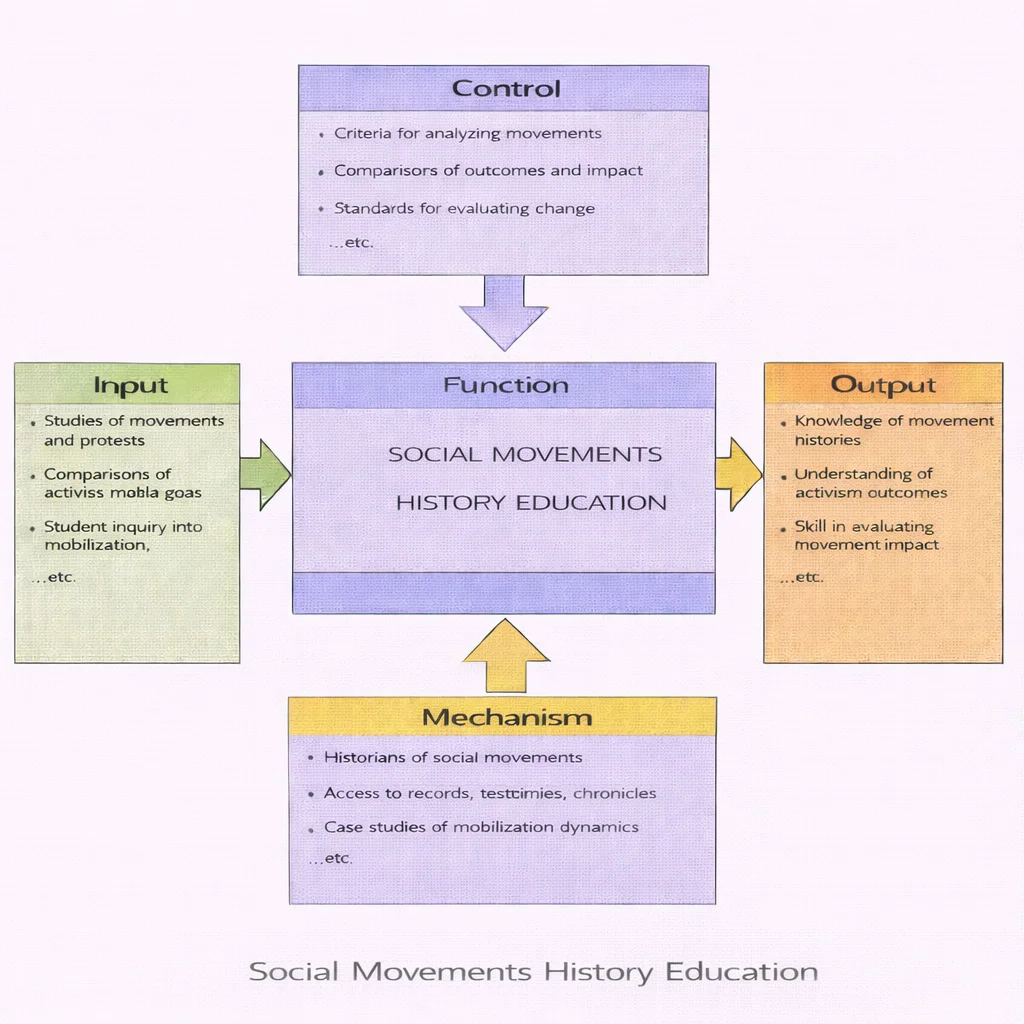
History of Social Movements
Investigates how migrant and diasporic communities organize grassroots political activism, advocate for civil rights, and fight anti-immigrant legislation.
Migration and Diaspora Studies (Current Focus)
Focuses directly on transnational human movement, forced displacement, cultural continuity, and the formation of global diaspora networks across generations.
Urban and Rural History
Explores how internal and international migrations reshape physical landscapes, driving rural depopulation, urban sprawl, ethnic enclaves, and metropolitan growth.
Women’s History
Highlights gendered dimensions of migration, focusing on female labor migration, domestic work, family reunification dynamics, and trans-generational identity work.
Key Focus Areas in Migration and Diaspora Studies
Causes of Migration
Migration occurs for diverse reasons, categorized broadly into push and pull factors.
Push Factors
- Economic Hardship: Poverty, unemployment, and lack of opportunities drive individuals to seek better living conditions elsewhere (e.g., Irish migration during the Great Famine from 1845–1852).
- Political Instability: Wars, persecution, and oppressive regimes force individuals to flee their home countries (e.g., Syrian civil war driving millions of refugees).
- Environmental Factors: Natural disasters, climate change, and resource depletion drive displacement (e.g., Rising sea levels prompting migration from Pacific island nations).
Pull Factors
- Economic Opportunities: Migrants are drawn to regions offering better job prospects, higher wages, and improved living standards (e.g., South Asian migration to Gulf states).
- Political and Social Stability: Democratic governance, personal freedoms, and social stability attract migrants seeking a secure environment.
- Family Reunification: Family ties in host countries motivate individuals to migrate, supported by immigration policy frameworks.
Diaspora Formation
Diasporas are communities of people who live outside their ancestral homelands but maintain active connections to their heritage.
Historical Diasporas
- Jewish Diaspora: Forced dispersal following the Babylonian exile (6th century BCE) and Roman destruction of Jerusalem (70 CE) created a resilient global network contributing significantly to trade, finance, and scholarship.
- African Diaspora: The transatlantic slave trade (16th–19th centuries) forcibly relocated millions of Africans to the Americas, profoundly shaping global culture, labor systems, and political resistance.
Modern Diasporas
- Indian Diaspora: Colonial labor migration created early communities in the Caribbean, Southeast Asia, and Africa. Today, it forms one of the largest global diasporas across North America, Europe, and the Gulf.
- Chinese Diaspora: 19th-century economic and political instability sparked global migration, establishing vibrant commercial and cultural enclaves worldwide.
Consequences of Migration
Migration impacts host nations, origin societies, and individual migrants in profound ways.
Impact on Host Countries
- Economic Contributions: Migrants fill critical labor shortages, drive innovation, and expand tax bases.
- Cultural Diversity: Introduces culinary, artistic, and social traditions that enrich metropolitan life.
- Challenges: Integration hurdles, social friction, and policy debates surrounding public services and border control.
Impact on Countries of Origin
- Remittances: Substantial financial transfers boost local household incomes and stabilize foreign exchange reserves (e.g., Overseas Filipino Workers).
- Brain Drain: Emigration of skilled medical, scientific, and technical professionals can create human capital shortages.
Personal Impact on Migrants
- Opportunities and Challenges: High economic upward mobility often coexists with language barriers, discrimination, and identity renegotiation.
Refugee Crises and Forced Migration
Forced displacement caused by war, ethnic cleansing, or environmental catastrophe presents distinct humanitarian challenges.
Historical Examples
- Partition of India (1947): Displacement of 15 million people amidst communal violence following British withdrawal.
- Holocaust and Jewish Refugees: Mass displacement under Nazi persecution resulting in global refugee flows.
Contemporary Refugee Crises
- Syrian Refugee Crisis: Conflict displacing over 13 million people internally and internationally.
- Rohingya Crisis: Mass persecution in Myanmar forcing hundreds of thousands to flee to Bangladesh and neighboring states.
Cultural Identity and Integration
Diasporas navigate dynamic processes of heritage preservation and societal integration.
Preservation of Heritage
- Language and Religion: Active maintenance of native languages, religious observances, and cultural festivals (e.g., Diwali, Lunar New Year).
- Cultural Institutions: Establishing ethnic media, community centers, places of worship, and language schools.
Challenges of Integration
- Navigating institutional barriers, xenophobia, and discriminatory legal frameworks (e.g., The U.S. Chinese Exclusion Act of 1882).
Examples in Migration and Diaspora Studies
Irish Migration During the Great Famine
- Context: The Irish Potato Famine (1845–1852) caused mass starvation, prompting over 1.5 million people to emigrate to the U.S., Canada, and Australia.
- Impact: Transformed host labor markets, urban infrastructure, and political machine dynamics in 19th-century cities.
Jewish Diaspora
- Context: Century-long global dispersion maintaining distinct religious and cultural continuity despite severe persecution.
- Impact: Major contributions to global finance, scientific inquiry, philosophy, and international law.
Syrian Refugee Crisis
- Context: Civil conflict creating severe displacement across the Middle East and Mediterranean basin.
- Impact: Strained international refugee frameworks and reshaped European political landscapes and asylum debates.
Interactive Simulation: Demographic Migration Flow & Remittance Model
Migration Dynamics & Remittance Calculator
Simulate net migration volume (M in thousands) and accumulated country-of-origin remittances (R in millions USD) over a 15-year period.
Applications of Migration and Diaspora Studies
Policy Development
- Informs immigration reform, bilateral labor agreements, refugee status determinations, and integration infrastructure.
Cultural Understanding
- Enhances societal appreciation for pluralism, transnational artistic contributions, and cross-cultural dialogue.
Addressing Global Inequality
- Highlights the role of international remittances, skill transfers, and diaspora investments in mitigating global economic poverty.
Why Study Migration and Diaspora Studies
Understanding the Movement of People Across Time and Space
Exploring Causes, Patterns, and Consequences of Migration
Analyzing Diasporic Communities and Cultural Continuity
Recognizing Issues of Citizenship, Identity, and Social Justice
Preparing for Global Awareness and Interdisciplinary Inquiry
Migration and Diaspora Studies: Conclusion
Interactive Review: Core Concepts & Analytical Frameworks
How does Lee’s Push-Pull Model structure the analysis of human migration?
What defines Transnationalism in modern diaspora studies?
Differentiate between Brain Drain and Brain Gain/Brain Circulation.
Frequently Asked Questions
What are migration and diaspora studies in social history?
Migration and diaspora studies in social history examine how and why people move across regions and borders, how migrant and diaspora communities form, and how these movements reshape societies in both origin and destination areas. They explore patterns of mobility, belonging, identity, and inequality over time.
What is the difference between migration and diaspora?
Migration refers broadly to the movement of people from one place to another, whether temporarily or permanently. Diaspora usually describes communities that have dispersed from a homeland and maintain real or imagined connections to it over generations, developing distinctive identities that link multiple locations.
Which types of migration do historians study?
Historians study many types of migration, including rural-to-urban moves, overseas labour migration, forced migration such as enslavement and trafficking, refugee movements, colonial and post-colonial migration, student and professional mobility, seasonal and circular migration, and internal resettlement driven by conflict, development projects, or environmental change.
What sources are used in migration and diaspora history?
Migration and diaspora history draws on passenger lists, passports and visas, census and registration records, labour contracts, letters and remittances, oral histories, community newspapers, photographs, legal cases, church and mosque registers, digital communication archives, and cultural sources such as literature, film, and music.
How do migration and diaspora studies address causes of movement?
These studies analyse how economic opportunities, family networks, war and persecution, colonial rule, environmental pressures, education, and state policies create both push and pull factors. Historians look at how structural forces and individual decisions interact, rather than assuming that migration is solely voluntary or purely forced.
What is meant by transnationalism in diaspora studies?
Transnationalism refers to the ways migrants and diaspora communities maintain social, economic, political, and cultural ties that connect more than one country. This can include remittances, dual citizenship, long-distance family relationships, cross-border activism, transnational businesses, and shared media spaces.
How do migration and diaspora affect identities and belonging?
Migration and diaspora can produce layered identities in which individuals feel connected to multiple places, languages, and cultures. Historians explore how people negotiate labels such as “migrant”, “minority”, “expatriate”, or “citizen”, and how belonging is shaped by race, ethnicity, religion, gender, class, and legal status.
How do states and societies respond to migrant and diaspora communities?
States and societies respond in varied ways, ranging from inclusion and multicultural policies to exclusion, discrimination, and restrictive immigration regimes. Migration and diaspora history studies laws, border controls, citizenship rules, integration programmes, and public debates about migrants, as well as everyday experiences of acceptance and prejudice.
What is the role of labour and economy in migration and diaspora history?
Labour demand is a major driver of migration. Historians examine how migrants have supplied workers for plantations, factories, domestic service, construction, care work, and high-skilled sectors, and how their employment conditions, wages, and rights compare with those of non-migrant workers. They also study how remittances support families and reshape local economies.
How do culture and memory feature in diaspora history?
Diaspora history pays close attention to cultural practices, such as language use, religious rituals, festivals, food, music, and storytelling, that sustain connections across distance. It also explores how memories of homeland, displacement, and return are transmitted across generations and represented in art, literature, and community institutions.
Why are migration and diaspora studies important for understanding contemporary societies?
Migration and diaspora studies show that multi-ethnic, multi-lingual societies are not new, and that current debates about borders, citizenship, diversity, and integration have long histories. This historical perspective helps students evaluate present-day policies and narratives about migrants with greater nuance and awareness.
What skills can students develop by studying migration and diaspora history?
Students develop skills in analysing complex evidence, comparing experiences across regions, and understanding how global processes shape local lives. They learn to engage critically with concepts of identity, belonging, and citizenship, and to connect historical case studies to contemporary discussions about mobility, rights, and global interdependence.
Comprehensive Practice Module
Section 1: Foundational Review Questions
- What is migration and diaspora studies in social history?
Answer: Migration and diaspora studies examine the movement of people across regions and the formation of dispersed communities, focusing on both voluntary and forced migration. These studies analyze how migration shapes cultural identities, social structures, and economic conditions over time. They also explore the experiences of diaspora communities and how these groups maintain connections to their homelands while adapting to new environments. This field provides insights into the transformative power of human mobility and the complex interplay between local and global influences. - How have historical migration patterns influenced cultural exchange?
Answer: Historical migration patterns have facilitated extensive cultural exchange by enabling the transfer of ideas, traditions, and languages between diverse populations. As people move, they bring with them unique cultural practices that blend with those of their new communities, creating hybrid identities and enriching local customs. These interactions have often led to innovations in art, cuisine, religion, and social practices that define regions. The study of these patterns highlights the mutual influence of migrating communities and host societies, contributing to a richer understanding of cultural evolution. - What factors drive migration and the formation of diasporas?
Answer: Migration and the formation of diasporas are driven by a variety of factors, including economic opportunities, political instability, environmental changes, and social conflicts. These push and pull factors compel individuals and communities to leave their homelands in search of safety, prosperity, or a better quality of life. The resulting diaspora communities are shaped by the interplay of these factors, which influence their social integration and cultural retention. Understanding these drivers is essential for comprehending the broader impacts of migration on both origin and destination regions. - How do diasporic communities maintain their cultural identity?
Answer: Diasporic communities maintain their cultural identity through practices such as language preservation, religious observances, and the celebration of traditional festivals. These practices create a sense of continuity and belonging despite geographical dispersion. Social networks, community organizations, and cultural institutions also play a crucial role in preserving heritage and fostering solidarity among diaspora members. By actively engaging with their cultural roots, diasporas ensure that their unique traditions continue to thrive in a new context. - How has the study of migration and diaspora influenced modern social policies?
Answer: The study of migration and diaspora has significantly influenced modern social policies by providing data and insights into population dynamics, integration challenges, and multiculturalism. Policymakers use this research to design immigration policies, social welfare programs, and cultural integration initiatives that better address the needs of diverse communities. It has also informed debates on citizenship, labor markets, and human rights, leading to more inclusive and equitable policy frameworks. This field helps bridge the gap between academic research and practical governance, ensuring that policies are responsive to global demographic changes. - What are the social and economic impacts of large-scale migration?
Answer: Large-scale migration can have profound social and economic impacts, reshaping labor markets, influencing urban development, and altering demographic profiles. Migrants contribute to economic growth by filling labor shortages and fostering innovation, while also presenting challenges related to resource allocation and social integration. On a social level, migration can lead to increased cultural diversity, but it may also result in tensions if integration policies are inadequate. Analyzing these impacts provides a comprehensive understanding of how migration drives both opportunity and conflict in modern societies. - How does migration affect urbanization and the development of cities?
Answer: Migration plays a key role in urbanization, as large influxes of people into cities drive rapid population growth and economic expansion. Urban areas become hubs of cultural exchange, innovation, and social change as diverse communities converge. This process often results in the development of vibrant, multicultural cities that are centers of economic activity, yet it can also lead to challenges such as overcrowding, strain on infrastructure, and socio-economic disparities. Studying this dynamic helps urban planners design better policies to accommodate growth and enhance the quality of urban life. - What role do historical migration trends play in shaping national identities?
Answer: Historical migration trends contribute to shaping national identities by influencing the cultural, linguistic, and social makeup of a country. As diverse groups settle in a region, they bring unique customs and perspectives that enrich the national culture. Over time, the integration of these varied influences creates a multifaceted national identity that reflects a shared history of movement and adaptation. This process highlights the dynamic nature of national identity as a product of continuous cultural interaction and transformation. - How have forced migrations and refugee movements altered societal structures?
Answer: Forced migrations and refugee movements have dramatically altered societal structures by displacing large groups of people and prompting significant demographic shifts. These movements often result from conflicts, persecution, or environmental disasters, and they force societies to adapt to sudden changes in population composition. The influx of refugees can lead to challenges in social integration and resource allocation but also creates opportunities for cultural exchange and economic revitalization. The study of forced migration provides crucial insights into the resilience and adaptability of societies in the face of crisis. - What methodological approaches are used to study migration and diaspora in social history?
Answer: Researchers studying migration and diaspora use a variety of methodological approaches, including quantitative analyses of census data, qualitative interviews, and the examination of historical documents. These methods allow historians to reconstruct migration patterns, demographic changes, and the cultural evolution of diaspora communities over time. Interdisciplinary approaches, combining insights from sociology, anthropology, and economics, enrich the analysis and provide a comprehensive understanding of the subject. Such methodologies enable scholars to capture the complexity of human mobility and its profound impact on social development.
Section 2: Analytical & Scenario-Based Questions
- How does the historical evolution of migration influence contemporary debates on immigration policy?
Answer: Historical migration patterns reveal long-term trends showing that human mobility is a persistent response to structural economic and political factors. By understanding past integration successes and failures, contemporary policymakers can design humane, evidence-based immigration and asylum frameworks rather than reacting to short-term political rhetoric. - In what ways do diaspora communities contribute to the economic development of their host countries?
Answer: Diasporas contribute through entrepreneurship, expanding tax bases, filling critical labor market gaps, and building international trade and investment networks between host nations and origin countries. Their transnational ties spur cross-border commerce, innovation, and cultural capital. - How do cultural preservation and assimilation interact within diaspora communities?
Answer: Preservation and assimilation operate in a dynamic tension. Migrants establish community organizations, heritage schools, and religious spaces to maintain identity, while simultaneously adopting host language and civic norms for social mobility. This dual engagement forms dynamic, hybrid cultural identities. - How might future technological advancements reshape the study of migration and diaspora?
Answer: Big data analytics, social media network mapping, and satellite spatial modeling allow scholars to track real-time migration vectors, communication networks, and financial remittance transfers. Digital archives also democratize access to oral histories and passenger records. - What impact does migration have on the transformation of social identities over time?
Answer: Migration destabilizes static notions of nationality and ethnicity, fostering syncretic identities. Across generations, diasporic populations renegotiate concepts of “home” and belonging, influencing host culture expressions in music, language, food, and politics. - How can historical patterns of migration inform current immigration policies?
Answer: Historical analyses show that overly restrictive border controls often convert temporary circular labor flows into permanent, undocumented settlements. Insights into labor market absorptive capacity help craft sustainable guest-worker and family-reunification programs. - How does the experience of forced migration differ from voluntary migration in shaping diaspora communities?
Answer: Forced migration involves sudden displacement, loss of assets, and psychological trauma, instilling a poignant “myth of return” and tight-knit political advocacy. Voluntary migration usually involves planned economic mobility, allowing more gradual cultural integration. - What are the key challenges in studying migration and diaspora histories?
Answer: Key challenges include incomplete or biased archival records (such as state-centric police registers), tracing undocumented border crossings, overcoming language barriers, and accounting for transient, non-permanent populations. - How do migration patterns affect the demographic composition of societies?
Answer: Influxes of younger migrant cohorts offset aging domestic demographics in industrial host countries, altering dependency ratios, urban population density, ethnic diversity, and school enrollment demographics. - How do diaspora networks facilitate transnational economic and cultural exchanges?
Answer: Diasporas build “diaspora finance” infrastructure, transfer technology and managerial skills, send bilateral financial remittances, and promote cross-cultural artistic exchanges that bridge geographically distant nations. - How might future demographic shifts influence migration and diaspora studies?
Answer: Aging populations in northern economies combined with youth bulges in the global South, alongside climate-induced displacement, will shift global migration routes, forcing studies to focus on environmental refugees and multi-directional flows. - How can comparative studies in migration enrich our understanding of global cultural transformation?
Answer: Comparing different migration waves (e.g., 19th-century transatlantic vs. 21st-century Mediterranean) highlights universal mechanisms of human adaptation versus region-specific legal and racial integration barriers.
Section 3: Mathematical & Quantitative Analysis Problems
Apply quantitative models of demographic migration, remittance transfers, and population concentration using the standard HTML mathematical formats below.
- Gravity Model of Migration Volume:
The gravity model predicts migration flow M12 between City 1 and City 2 as M12 = K · (P1 · P2) / D2, where population P1 = 2,000,000, P2 = 5,000,000, distance D = 500 km, and empirical constant K = 0.0003. Calculate the predicted annual migrant flow M12.
Solution:P1 · P2 = 2,000,000 × 5,000,000 = 10,000,000,000,000 (1012)The predicted annual migration volume is 12,000 migrants.
D2 = 5002 = 250,000
M12 = 0.0003 × (1012 / 250,000)
M12 = 0.0003 × 40,000,000 = 12,000 - Net Remittance Impact Calculation:
A diaspora community of 85,000 workers sends an average monthly remittance of $320 per person back to their home country. If the wire transfer platform charges a 4.5% processing fee on all transfers, calculate the net annual financial remittance Rnet received directly by households in the origin country.
Solution:Gross Monthly Transfers = 85,000 × $320 = $27,200,000The net annual remittance reaching origin households is $311,712,000.
Gross Annual Transfers = $27,200,000 × 12 = $326,400,000
Net Retention Rate = 1.00 – 0.045 = 0.955
Rnet = $326,400,000 × 0.955 = $311,712,000 - Location Quotient (LQ) of Migrant Population Concentration:
Calculate the Location Quotient (LQ) for an ethnic enclave in a metropolitan district. The migrant group comprises 18,000 residents out of a district population of 120,000. Nationally, the same migrant group makes up 4.0% of the total population.
Solution:Local Concentration = 18,000 / 120,000 = 0.150 (15.0%)An LQ of 3.75 indicates a high spatial concentration of the diaspora group in this district (3.75 times the national rate).
National Concentration = 0.040 (4.0%)
LQ = Local Concentration / National Concentration
LQ = 0.150 / 0.040 = 3.75 - Refugee Population Half-Life & Resettlement Model:
A refugee camp population of 120,000 decreases due to third-country resettlement and voluntary repatriation according to N(t) = N0 · e–k · t, where decay constant k = 0.12 per year and t is years. Calculate the remaining refugee camp population after t = 5 years.
Solution:N(5) = 120,000 · e(-0.12 × 5)After 5 years, the remaining refugee camp population is approximately 65,857 individuals.
N(5) = 120,000 · e-0.60
Since e-0.60 ≈ 0.54881:
N(5) = 120,000 × 0.54881 = 65,857.2 - Net Migration Rate (NMR) Index:
Over a 5-year period, a mid-sized nation experiences 450,000 total immigration arrivals and 180,000 emigration departures. If the country’s average baseline population over this period is 12,000,000, calculate the Net Migration Rate (NMR) expressed per 1,000 population.
Solution:Net Migration = Immigrants – EmigrantsThe Net Migration Rate is +22.5 per 1,000 inhabitants.
Net Migration = 450,000 – 180,000 = 270,000
NMR = (Net Migration / Total Baseline Population) × 1,000
NMR = (270,000 / 12,000,000) × 1,000
NMR = 0.0225 × 1,000 = 22.5 - Diaspora Voter Turnout Expansion Probability:
An overseas voting initiative targets 60,000 registered diaspora voters. Initial registration drives yield a 40% participation rate. A digital outreach program increases voter turnout by an additional ΔP = 15 percentage points among the total eligible pool. Calculate the total number of votes cast Vtotal.
Solution:Final Participation Rate = 40% + 15% = 55% = 0.55A total of 33,000 diaspora votes were cast.
Vtotal = 60,000 × 0.55 = 33,000 - Brain Drain Dependency Ratio:
A country graduates 4,500 medical doctors per year. Due to high wage differentials abroad, 35% of each graduating cohort emigrates within two years. Calculate the net domestic doctor retention Dretained from a cohort over a 4-year cumulative period.
Solution:Retention Rate per Cohort = 1.00 – 0.35 = 0.65The country retains 11,700 doctors over the 4-year period (losing 6,300 to emigration).
Retained Doctors per Annual Cohort = 4,500 × 0.65 = 2,925
Cumulative Retained Doctors (4 Years) = 2,925 × 4 = 11,700