
The study of colonial and post-colonial systems is more than a timeline of events—it is a disciplined way of turning evidence into interpretation. Students begin with sources, narratives, and comparative examples that reveal how empires governed, extracted resources, and reshaped institutions. Analytical controls remind learners to use explicit criteria—asking what counted as “rule,” how policies differed across regions, and what consequences followed for law, education, labor, language, and identity. With the support of historians, archives, and carefully framed case studies, learners move toward crucial analytical outputs: not only factual knowledge, but the ability to explain enduring legacies—why borders, institutions, inequalities, and cultural debates often carry the imprint of colonial decisions long after formal independence.

Colonial and post-colonial systems have profoundly shaped the modern world, leaving legacies that extend across political institutions, economic development, cultural identities, and international relations. Understanding this complex historical process requires tracing how imperial powers exerted control and how colonized societies responded, resisted, and reimagined their futures. Topics such as guerrilla warfare and insurgency studies help illuminate the strategies used by resistance movements to oppose imperial dominance, while the analysis of social and cultural history of warfare offers insight into how military conflicts reshaped identities and alliances.
Colonial rule often relied on intricate global networks, reinforced through diplomatic alliances and unequal treaties, as studied in treaty analysis. The imposition of foreign legal, economic, and educational systems often led to deep disruptions in local traditions, explored in works on education history and trade and commerce history. Meanwhile, the economic rationales of empire, grounded in economic thought and capitalist expansion, are central themes in understanding how empires justified and maintained colonial extraction.
Labor structures were often radically transformed under imperial systems. The legacies of forced labor, indentured servitude, and racial hierarchies are critically examined in labor history and labor and social policy. The evolution of social history in post-colonial contexts also sheds light on how new nations redefined identity and citizenship. Urban planning and rural transformation, as explored in urban and rural history, further demonstrate how colonial spatial legacies influence present-day development challenges.
The ideologies underpinning colonial rule and the visions for post-colonial governance are illuminated in political ideologies and intellectual political history. Political biographies of anti-colonial leaders, available through political biography, highlight how individuals challenged imperial narratives and constructed national identities. Movements for emancipation and justice—such as those featured in history of social movements and suffrage and civil rights movements—are essential to understanding the post-colonial political landscape.
As many post-colonial states emerged from violent struggle, peace-building became a central theme in governance and international engagement. This is addressed in studies of peace studies and conflict resolution, complemented by the analysis of military strategic studies and naval history, which chart the military dimensions of post-colonial power consolidation. The technologies that influence modern democracies—highlighted in role of technology in elections—are also increasingly relevant in formerly colonized societies navigating digital governance.
Colonial and post-colonial dynamics are not only geopolitical but deeply gendered. The field of women’s history emphasizes the gendered hierarchies of empire and the roles women played in both colonial administration and anti-colonial resistance. Political mobilization is also central to these studies, reflected in political campaigns that challenge post-colonial elites and call for systemic reform.
Through comparative analysis and interdisciplinary perspectives, the study of colonial and post-colonial systems deepens our understanding of global inequalities, national identities, and the unfinished struggles for justice and sovereignty that continue to shape our world today.
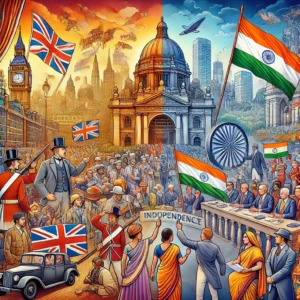
Power Across Empires: Colonial Rule and Post-Colonial Transformation
Political systems are often shaped not only from within, but imposed from outside. Colonial rule introduced new structures of governance, administration, and control, while post-colonial societies adapted, resisted, and transformed these systems. Studying this transition reveals how power, identity, and institutions evolve across time.
History of Political Systems – Overview
Trace how systems of governance emerge, consolidate, and transform across diverse global and historical contexts.
Political Ideologies
Explore how imperial doctrines and anti-colonial nationalist ideologies shaped both colonial dominance and liberation struggles.
Military & Political Power
Examine how state force, armed coercion, and strategic control were deployed to establish and enforce imperial authority.
Electoral Systems & Political Parties
Study the institutional mechanics of political participation as they evolved from colonial franchise restrictions to post-independence elections.
Constitutional History
Understand how colonial charters and legal codes directly informed the drafting of post-colonial sovereign constitutions.
Comparative Politics
Compare cross-regional trajectories of state-building as societies transitioned from imperial subjugation to self-governance.
Colonial & Post-Colonial Systems
Investigate how external imperial rule reshaped global institutions and how newly sovereign states continue to navigate historical legacies.
Bureaucratic & Administrative History
Examine how inherited civil service structures and administrative mechanisms were adapted or reformed following independence.
Core Building Blocks of Colonial and Post-Colonial Systems
Colonial Governance Structures
Colonial powers implemented governance systems that centralized authority, maintained administrative control, and facilitated resource extraction.
Types of Colonial Rule
- Direct Rule: Colonial powers directly administered territories using European officials, dismantling or sidelining indigenous governance systems.
- Case Study (French West Africa): France employed a highly centralized administrative structure (assimilation and later association) coordinated from Dakar. Local chiefs were reduced to subordinate administrative agents enforcing French tax collection and conscription.
- Indirect Rule: Imperial powers governed through co-opted local rulers, traditional chiefs, and existing indigenous political structures.
- Case Study (British Nigeria & India): Conceptualized by Lord Lugard in Northern Nigeria, the British utilized traditional Islamic Emirates to maintain law, order, and tax collection at minimal cost. In India, over 500 Princely States maintained nominal internal autonomy under British paramountcy.
- Settler Colonialism: European immigrants established permanent agricultural, industrial, or urban communities, systematically expropriating indigenous lands and codifying racialized legal hierarchies.
- Case Study (South Africa, Kenya, Algeria): In Kenya’s “White Highlands,” native populations were dispossessed of fertile lands through the Crown Lands Ordinances and forced into native reserves, creating a disenfranchised wage-labor force.
Objectives of Colonial Governance
- Resource Extraction & Economic Subjugation: Restructuring domestic economies around cash-crop monoculture (e.g., rubber in the Belgian Congo, tea in Ceylon) and mineral extraction for the metropolitan economy.
- Strategic & Geopolitical Control: Securing key maritime passages, coaling stations, and military buffer zones (e.g., British control of the Suez Canal and Singapore).
- Ideological & Cultural Hegemony: Imposing Western legal codes, European languages, and religious institutions under the guise of a “civilizing mission” (mission civilisatrice).
Enduring Colonial Legacies
The administrative, spatial, and economic structures established during imperial rule left deep, persistent impacts on post-colonial nation-states.
Economic Dependency & Extractivism
- Structural Vulnerability: Post-colonial states often inherited primary-commodity export economies highly vulnerable to global price shocks.
Historical Example: Post-independence Ghana remained heavily dependent on global cocoa prices, limiting early industrialization efforts.
Enclave Infrastructure
- Distorted Development: Transport networks were engineered almost exclusively to connect inland resource mines or plantations directly to coastal export ports, rather than fostering internal trade or regional market integration.
Social Stratification & “Divide and Rule”
- Institutionalized Fractures: Imperial powers routinely favored specific ethnic or religious minorities for civil service or military recruitment, heightening inter-group friction.
Historical Example: The rigid classification of Hutu and Tutsi identities in German and Belgian Rwanda, alongside the 1947 Partition of British India into India and Pakistan, created long-term geopolitical instability.
Post-Colonial Governance & State Formation
Following national independence, newly sovereign nations confronted the dual challenge of rebuilding governance institutions and asserting genuine economic self-determination.
Nation-Building & Constitutional Choice
- Constitutional Foundations: Drafting foundational documents to forge unified national identities out of diverse multi-ethnic populations.
Case Study: India’s 1950 Constitution, spearheaded by Dr. B.R. Ambedkar, established a democratic, secular republic with affirmative action (scheduled castes reservation) built directly into the legal framework. - Linguistic Unification: Selecting national languages to foster civic cohesion.
Case Study: Julius Nyerere promoted Swahili across Tanzania to transcend regional ethnic divisions under the socio-economic framework of Ujamaa (African Socialism).
Economic Reconstruction & Land Reform
- Import Substitution Industrialization (ISI): State-led strategies aimed at breaking dependency on foreign manufactured goods through domestic industrial protectionism (e.g., post-war Latin America and Nehru’s Five-Year Plans in India).
- Agrarian Reform: Redistributing land from colonial estates to indigenous peasants to address historical dispossession (e.g., Kenya’s Million-Acre Scheme).
Political Challenges & Institutional Fragility
- Authoritarianism & Military Coups: Inherited coercive state apparatuses (e.g., paramilitary police forces designed for population control) were frequently co-opted by post-colonial elites, leading to military interventions (e.g., Nigeria’s 1966 coup, Ghana’s 1966 coup).
Reasons to Explore Colonial and Post-Colonial Systems
Understanding the Historical Foundations of Global Inequality
Exploring the Mechanisms and Impacts of Colonial Rule
Analyzing the Challenges of Post-Colonial State Formation
Recognizing the Continuing Influence of Colonial Structures
Preparing for Interdisciplinary Study and Global Citizenship
Closing Insights into Colonial and Post-Colonial Studies
The study of colonial and post-colonial systems reveals the profound and enduring impact of colonialism on political, economic, and social structures. From the centralized administration of British India to the democratic aspirations of post-independence nations, this field underscores the challenges and opportunities in rebuilding governance systems after colonial rule. By examining these transitions, we gain valuable insights into addressing contemporary issues such as inequality, dependency, and identity in a globalized world.
Interactive Model: Post-Colonial Economic Divergence Simulator
Adjust the trade diversification index, domestic infrastructure reinvestment rate, and institutional strength to simulate economic growth trajectories (GDP per capita in USD) over a 20-year post-independence horizon.
Interactive Review Questions
What is the primary structural difference between Direct Rule and Indirect Rule?
Why did colonial transportation networks fail to support internal post-colonial development?
How did the 1884–1885 Berlin Conference impact post-independence territorial conflicts?
What is meant by the term "Neo-Colonialism" in post-colonial studies?
Frequently Asked Questions
What is meant by colonial and post-colonial political systems?
Colonial political systems are the structures of rule imposed by imperial powers over conquered or subordinated territories, often combining military control, administrative hierarchies and racialised legal orders. Post-colonial political systems are the forms of governance that emerged after formal independence, which both inherit and transform the institutions, borders and power relations created under colonial rule.
How did colonial rule reshape indigenous political structures?
Colonial rule frequently weakened or co-opted indigenous authorities, replacing or subordinating existing councils, monarchies or kin-based systems with new administrative hierarchies. Traditional leaders were sometimes turned into local agents of the colonial state, while legal and land-tenure systems were recast to favour extraction, taxation and external control.
What administrative features were common to many colonial political systems?
Many colonial political systems featured centralised governors or viceroys, segmented legal codes for colonisers and colonised, systems of indirect rule through local elites, and bureaucracies focused on tax collection, resource extraction and public order rather than broad-based welfare or political participation.
How did ideas of race and civilisation influence colonial governance?
Colonial governance was often justified through ideologies that ranked peoples and cultures in racial or civilisational hierarchies. These ideas were used to restrict citizenship, limit political rights, define who could hold office, and frame paternalistic policies that claimed to 'civilise' colonised populations while preserving unequal power relations.
What is the difference between direct rule and indirect rule in colonial systems?
Under direct rule, colonial powers governed territories through their own officials, laws and institutions, often sidelining local authorities. Under indirect rule, colonial states governed through existing chiefs, kings or councils, who were integrated into the colonial hierarchy and expected to enforce colonial policies while retaining some local legitimacy.
How did anti-colonial movements challenge colonial political systems?
Anti-colonial movements challenged colonial political systems by organising protests, strikes, intellectual critiques and sometimes armed struggles. They built new political parties, unions and networks that demanded self-determination, exposed injustices in colonial law and administration, and pressured imperial powers to negotiate independence or withdraw.
What were key challenges for post-colonial states after independence?
Post-colonial states faced the challenge of building legitimate governments within borders drawn by colonial powers, managing diverse populations, creating new constitutions, and transforming administrative systems designed for control and extraction into institutions that could deliver development, rights and participation.
How did colonial borders and institutions shape post-colonial politics?
Colonial borders often cut across ethnic, linguistic or religious communities, forcing different groups into a single state, while institutions such as centralised bureaucracies, security forces and legal frameworks were inherited at independence. These legacies influenced patterns of conflict, state-building, party systems and debates about federalism or decentralisation in many post-colonial societies.
How have post-colonial governments tried to reform inherited bureaucracies and legal systems?
Post-colonial governments have pursued reforms such as indigenising the civil service, revising colonial-era legal codes, expanding education and welfare, and decentralising administration. At the same time, they have sometimes reproduced hierarchical and security-focused practices from the colonial period, leading to ongoing debates about accountability, corruption and democratic control.
What is meant by neo-colonialism in discussions of post-colonial political systems?
Neo-colonialism refers to forms of unequal influence and control that persist after formal independence, through mechanisms such as foreign investment, debt, military alliances, trade rules and cultural power. Scholars use the term to argue that post-colonial political systems can remain constrained by external actors and global structures shaped in the colonial era.
Why is it useful to compare colonial and post-colonial systems across regions?
Comparing colonial and post-colonial systems across regions helps students see patterns and differences in how empires ruled, how societies resisted, and how new states emerged. It also highlights that there is no single post-colonial path: countries in Africa, Asia, the Americas and the Pacific have experienced distinctive combinations of continuity, rupture and innovation.
How can studying colonial and post-colonial political systems help students think about contemporary global politics?
Studying colonial and post-colonial political systems helps students recognise how historical power imbalances, borders, institutions and ideologies continue to shape debates on development, human rights, migration, security and global governance. It encourages more critical and historically informed engagement with current international relations and domestic politics.
Comprehensive Mastery & Practice Module
Section 1: Foundational Knowledge Check
- What defines a colonial political system and what were its primary characteristics?
Answer: A colonial political system is defined by the imposition of governance structures by a foreign power over a colonized territory. Such systems were characterized by centralized control, the extraction of resources, and the subjugation of indigenous populations through imposed legal and administrative frameworks. They typically involved a hierarchy that placed colonizers at the top and marginalized native institutions. This framework served the economic and strategic interests of the colonial power while disrupting local political traditions. - How did colonial political systems impact indigenous governance structures?
Answer: Colonial political systems often undermined and replaced indigenous governance structures by imposing new administrative frameworks that centralized authority. Traditional power structures, which were usually based on local customs and community consensus, were frequently disregarded or co-opted to serve colonial interests. This replacement led to the erosion of indigenous autonomy and disrupted longstanding social and political practices. Over time, these changes not only altered local power dynamics but also left a legacy of institutional challenges that continue to affect post-colonial states. - What role did economic exploitation play in colonial political systems?
Answer: Economic exploitation was central to colonial political systems, as the primary goal of colonial rule was to extract wealth and resources from the colonized territories. Colonizers established systems of taxation, forced labor, and resource extraction that benefited the imperial center at the expense of local development. These economic policies were designed to maximize profit and secure the wealth of the colonial power while minimizing investment in local infrastructure. Consequently, the focus on exploitation often left colonies with underdeveloped economies and long-lasting structural challenges. - How did colonial powers justify their rule ideologically?
Answer: Colonial powers often justified their rule through ideologies that portrayed themselves as bearers of civilization and progress. They propagated ideas such as the "civilizing mission" and racial superiority to legitimize the subjugation and exploitation of indigenous peoples. These ideologies were used to rationalize the imposition of foreign governance structures and cultural assimilation policies. By framing colonization as a benevolent enterprise aimed at modernizing and uplifting the colonized, imperial powers secured both domestic support and international legitimacy for their actions. - What are some key administrative practices introduced during colonial rule?
Answer: During colonial rule, several administrative practices were introduced that restructured local governance, including the establishment of bureaucratic institutions, codified legal systems, and standardized taxation methods. Colonizers implemented centralized record-keeping, infrastructure projects, and educational systems to manage and control their territories more effectively. These practices not only streamlined resource extraction and law enforcement but also aimed to integrate diverse communities under a uniform administrative framework. The legacy of these reforms is evident in many post-colonial states that continue to use similar institutional models. - How did the transition from colonial to post-colonial systems affect newly independent states?
Answer: The transition from colonial to post-colonial systems often presented newly independent states with the challenge of dismantling imposed structures while attempting to build national institutions. Many post-colonial governments inherited administrative frameworks that were not designed for local needs, leading to conflicts over legitimacy and governance. The struggle to redefine national identity and establish effective governance was compounded by economic underdevelopment and social fragmentation left by colonial rule. As a result, the process of decolonization has frequently been marked by both political turmoil and gradual institutional reform. - What are the main challenges faced by post-colonial states in reforming inherited colonial institutions?
Answer: Post-colonial states face significant challenges in reforming inherited colonial institutions due to the deep-rooted nature of these systems and their misalignment with indigenous social and cultural contexts. Challenges include overcoming bureaucratic rigidity, addressing corruption, and reconciling traditional governance practices with modern administrative needs. Many states struggle with creating policies that foster genuine national identity while dealing with the lingering influence of colonial legal and educational frameworks. These issues often result in protracted efforts to restructure government operations, promote transparency, and build institutions that truly serve the local populace. - How do colonial legacies continue to influence contemporary political systems in former colonies?
Answer: Colonial legacies continue to shape contemporary political systems by influencing institutional structures, legal frameworks, and governance practices in former colonies. The boundaries, administrative divisions, and educational systems established during colonial times often persist, affecting national identity and political organization. These legacies can contribute to ongoing challenges such as ethnic conflicts, bureaucratic inefficiencies, and political instability. Moreover, the remnants of colonial rule frequently impact policy decisions and the relationship between the state and its citizens, making the process of modernization more complex and nuanced. - In what ways have post-colonial states attempted to reinterpret or dismantle colonial political structures?
Answer: Post-colonial states have employed various strategies to reinterpret or dismantle colonial political structures, including constitutional reforms, nationalization of key sectors, and the promotion of indigenous languages and cultural practices. Many governments have sought to replace outdated legal codes with systems that reflect local traditions and social values. Additionally, there have been efforts to decentralize power and foster greater participation from marginalized groups to build more inclusive political systems. These initiatives represent ongoing attempts to reclaim sovereignty and create governance models that are more attuned to the needs and aspirations of their populations. - What lessons can modern policymakers learn from the evolution of colonial and post-colonial political systems?
Answer: Modern policymakers can learn valuable lessons from the evolution of colonial and post-colonial political systems by understanding the long-term impacts of externally imposed governance and the importance of tailoring institutions to local contexts. The historical experience underscores the need for flexible, inclusive, and adaptive governance structures that promote social cohesion and economic development. It also highlights the dangers of neglecting indigenous traditions and the value of engaging with local communities during institutional reform. These lessons are critical for designing policies that avoid past mistakes and foster resilient, accountable, and sustainable governance.
Section 2: Advanced Analytical & Scenario-Based Inquiry
- How does the legacy of colonial political systems continue to shape global power dynamics and international relations?
Answer: The legacy of colonial political systems continues to shape global power dynamics by influencing the distribution of resources, strategic alliances, and regional conflicts. Former colonial powers often retain significant economic and political influence over their former colonies through trade agreements, military alliances, and diplomatic channels. This historical relationship can perpetuate unequal power structures and foster tensions between developed and developing nations. Moreover, the persistence of colonial-era borders and administrative practices has implications for regional integration and conflict resolution. Many contemporary disputes over territorial boundaries and resource rights have their roots in colonial demarcations that disregarded ethnic and cultural realities. - In what ways do colonial borders impact ethnic and political conflicts in post-colonial states?
Answer: Colonial borders, often drawn without regard to ethnic, cultural, or linguistic divisions, have had a lasting impact on post-colonial states. These arbitrary boundaries frequently resulted in the division of cohesive ethnic groups and the forced unification of diverse communities under a single political entity. Such impositions have led to ongoing conflicts, as marginalized groups struggle for recognition, autonomy, or independence. Furthermore, the challenges posed by colonial borders are compounded by economic disparities and historical grievances that fuel animosity between different groups, necessitating inclusive governance structures to achieve lasting peace. - How do post-colonial states balance traditional indigenous practices with inherited colonial institutions in their governance models?
Answer: Post-colonial states face the complex challenge of balancing traditional indigenous practices with inherited colonial institutions. This balancing act involves integrating customary laws, local governance structures, and cultural traditions into modern administrative frameworks. Many governments attempt this by decentralizing power and recognizing the legitimacy of local institutions alongside national bureaucracies to create hybrid systems. However, successful integration requires comprehensive reforms, inclusive dialogue, and education that emphasizes both modern administrative needs and traditional values. - What are the implications of cultural hybridization in post-colonial political identity formation?
Answer: Cultural hybridization in post-colonial contexts results in the blending of indigenous traditions with colonial influences, leading to the emergence of unique national identities. This synthesis offers a way for post-colonial societies to forge distinct, inclusive identities that draw on diverse influences. However, the coexistence of multiple cultural elements can also lead to identity conflicts, particularly when there is a perceived imbalance between indigenous practices and imported norms. Navigating this requires deliberate efforts to foster dialogue, mutual respect, and equitable representation of all cultural voices. - How has the experience of colonial exploitation influenced contemporary debates on reparations and historical justice?
Answer: The legacy of colonial exploitation is a central theme in contemporary debates on reparations and historical justice. Extraction of resources, forced labor, and cultural suppression left deep economic and social scars. Demands for reparations encompass financial compensation, decolonizing education, restoring cultural artifacts, and reforming legal systems that perpetuate colonial legacies. This discourse reflects a broader quest for historical justice and a reexamination of dominant geopolitical narratives. - To what extent can post-colonial political reforms truly break free from the shadow of colonialism?
Answer: Complete separation from colonial legacies is exceptionally difficult because inherited administrative institutions, legal frameworks, and commercial relationships remain deeply embedded. However, meaningful progress is achieved when states implement persistent reforms such as constitutional redrafting, civil service indigenization, and legal pluralism that align state institutions with indigenous needs and democratic self-determination. - How do education and language policies in post-colonial states reflect the ongoing influence of colonial legacies?
Answer: Education and language policies reflect a duality between global connectivity and national identity. Continuing to use colonial European languages as official administrative mediums can reinforce socioeconomic stratification. In response, many post-colonial states adopt bilingual or mother-tongue education reforms alongside curricula that prioritize local history and indigenous knowledge. - What role do international organizations play in supporting or undermining the sovereignty of post-colonial states?
Answer: International organizations provide critical financial aid, development assistance, and technical expertise that build state capacity. However, structural adjustment programs or conditional loans can echo colonial power dynamics by constraining domestic policy choices and impinging on sovereign economic planning.
Section 3: Quantitative & Economic Legacy Calculations
- Colonial Export Concentration Index (Herfindahl-Hirschman Index - HHI): At independence, a post-colonial nation exports three primary commodities: Cocoa ($120 million), Timber ($50 million), and Bauxite ($30 million). Calculate the share si of each commodity in total exports ($200 million) and compute the HHI score given by HHI = ∑ (si × 100)2.
Solution:
Step 1: Compute shares:
sCocoa = 120 / 200 = 0.60 (60%)
sTimber = 50 / 200 = 0.25 (25%)
sBauxite = 30 / 200 = 0.15 (15%)
Step 2: Calculate HHI:
HHI = 602 + 252 + 152 = 3,600 + 625 + 225 = 4,450.
(An HHI above 2,500 indicates an extremely concentrated, highly vulnerable colonial export structure). - Territorial Partition Ethnic Fragmentation Probability: A colonial border groups 3 distinct ethnic populations into a single new state: Ethnic Group A makes up 50% of the population (p1 = 0.50), Group B makes up 30% (p2 = 0.30), and Group C makes up 20% (p3 = 0.20). Calculate the Ethno-Linguistic Fractionalization (ELF) index using ELF = 1 - ∑ pi2.
Solution:
Step 1: Compute sum of squared proportions:
∑ pi2 = (0.50)2 + (0.30)2 + (0.20)2 = 0.25 + 0.09 + 0.04 = 0.38.
Step 2: Calculate ELF index:
ELF = 1 - 0.38 = 0.62 (or a 62% probability that two randomly selected citizens belong to different ethnic groups). - Unequal Terms of Trade Adjustment: A post-colonial nation exports raw cotton and imports manufactured machinery. Over a 10-year period, the export price index for raw cotton falls from 100 to 80 (a 20% decline), while the import price index for machinery rises from 100 to 125 (a 25% increase). Calculate the net barter Terms of Trade (TOT) index defined as TOT = (Export Price Index / Import Price Index) × 100.
Solution:
TOT = (80 / 125) × 100 = 0.64 × 100 = 64.
(The nation's terms of trade deteriorated by 36%, requiring 56.25% more cotton exports to purchase the same volume of machinery imports). - Colonial Land Dispossession Ratio: In a former settler colony, 4,000 settler families control 12.0 million hectares of fertile highland agricultural land, while 800,000 native peasant families are confined to 3.0 million hectares of marginal land reserves. Calculate the average hectares per family for both settlers and natives, and find the dispossession disparity ratio.
Solution:
Step 1: Settler land per family = 12,000,000 / 4,000 = 3,000 hectares/family.
Step 2: Native land per family = 3,000,000 / 800,000 = 3.75 hectares/family.
Step 3: Disparity Ratio = 3,000 / 3.75 = 800:1 (Each settler family holds 800 times more land than a native family). - Debt Service Burden in Neo-Colonial Finance: A post-colonial state generates $1.8 billion in annual government revenue. Due to inherited debt and foreign development loans, its annual debt service obligation is $450 million. Calculate the Debt Service-to-Revenue Ratio as a percentage.
Solution:
Debt Service Ratio = (Debt Service Obligation / Annual Revenue) × 100
Ratio = ($450 million / $1,800 million) × 100 = 0.25 × 100 = 25.0%.
(25% of all national tax revenue is diverted to foreign debt servicing rather than domestic public services). - Linguistic Franchise Disenfranchisement Rate: A post-colonial state retains the former colonial language as the sole medium for civil service exams and court proceedings. If only 14% of the 45 million citizens are fluent in the colonial language, how many citizens are structurally excluded from public service employment and legal self-representation?
Solution:
Step 1: Calculate exclusion percentage: 100% - 14% = 86%.
Step 2: Calculate total excluded citizens: 45,000,000 × 0.86 = 38,700,000 citizens. - Infrastructure Extraction Gap: A colonial rail network has 1,200 kilometers of track connecting inland mines directly to the coast. Only 150 kilometers of branch lines connect agricultural towns to each other. What percentage of the total rail network (1,350 km) was dedicated purely to export extraction?
Solution:
Extraction Rail Percentage = (1,200 km / 1,350 km) × 100 = 0.8888 × 100 = 88.89%.