
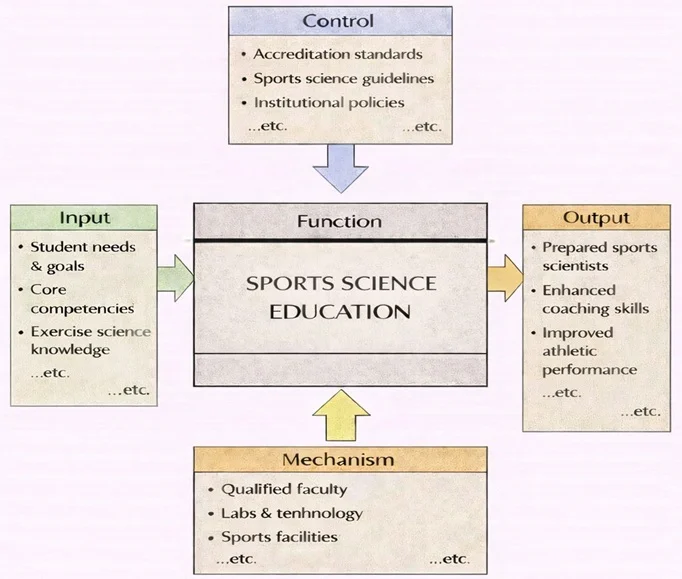
Sports Science Education can be understood as a structured “system” that turns learning needs into real-world capability. As the diagram suggests, it begins with clear inputs—student goals, required competencies, and the scientific foundations of human movement and performance. These inputs are shaped by controls such as accreditation requirements, professional guidelines, and institutional policies, which ensure the program remains credible, ethical, and fit for purpose.
The work is made possible through key mechanisms: qualified faculty, laboratories and technology for testing and analysis, and practical facilities where students can apply theory in training, coaching, and assessment settings. When these elements come together, the outputs are not just graduates with knowledge, but graduates with usable skills—prepared sports science professionals who can support athletes and teams through better coaching practice, evidence-based training decisions, and measurable improvements in performance and well-being.
Sports science is an interdisciplinary field that focuses on understanding and enhancing human physical performance, studying the physiological, psychological, and biomechanical aspects of exercise and sports activities. By combining knowledge from anatomy, physiology, psychology, biomechanics, and nutrition, kinesiology, sports science aims to improve athletic performance, prevent injuries, and promote overall physical health.
Rooted in rigorous scientific inquiry, sports science integrates research methodologies from medical sciences, engineering, and behavioral sciences to gain deeper insights into how the human body responds to various forms of physical activity. It explores variables such as muscle strength, cardiovascular efficiency, reaction time, metabolic function, and neural coordination to create data-driven training protocols tailored for different levels of performance. The field also investigates the biomechanics of movement—analyzing joint angles, stride patterns, and force output to fine-tune athletic techniques for maximum efficiency and safety.
In recent decades, sports science has gained prominence not only in elite sports but also in public health initiatives, workplace fitness programs, and rehabilitation strategies. Applied across professional leagues, Olympic teams, schools, and corporate environments, sports science promotes healthy lifestyles, reduces sedentary behavior, and supports injury prevention through structured physical activity. From cardiovascular health and obesity prevention to stress reduction and cognitive enhancement, its principles contribute to overall societal well-being.
Advancements in wearable technology, motion capture systems, and digital performance analytics have further revolutionized the way sports science is practiced. Today’s athletes and coaches can access real-time feedback on workload, hydration, sleep patterns, and muscle recovery—transforming training sessions into scientifically optimized experiences. Personalized performance dashboards, algorithmic injury predictors, and biomechanical modeling now play a central role in preparing athletes to meet ever-growing competitive demands.
Equally important is the psychological component of performance. Sports science delves into motivation, focus, goal setting, and mental resilience, equipping athletes with strategies to overcome pressure, manage anxiety, and maintain consistency in high-stakes environments. Incorporating principles from psychology, it fosters a holistic understanding of mind-body interactions crucial to peak performance and sustainable athletic development.
With continued cross-disciplinary research and integration of AI, genetics, and smart diagnostics, sports science stands at the forefront of the next generation of fitness and performance solutions. Whether in the context of elite competition or everyday wellness, its impact is transformative—offering people the tools, knowledge, and inspiration to reach their physical potential safely and effectively. As innovation accelerates, sports science will continue to play a critical role in shaping the future of training, rehabilitation, and health promotion across all ages and abilities.
Ultimately, sports science embodies the union of empirical evidence and practical application—where theory meets movement and technology empowers human achievement. It continues to evolve as a vital field supporting not just champions on the field, but also the broader goals of health, longevity, and quality of life for everyone.
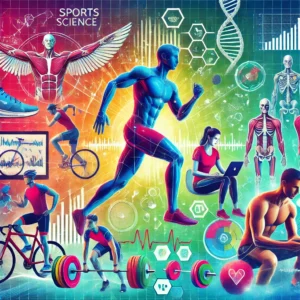
This colorful digital illustration showcases the diverse fields within sports science. Central to the image is a dynamic human figure in motion, symbolizing athletic performance and biomechanical analysis. Surrounding elements depict cyclists, weightlifters, and athletes using wearable technology, alongside charts and digital metrics that emphasize performance tracking. Anatomical diagrams of muscles, skeletons, and internal systems reflect the physiological foundation of sports science. DNA strands, heart rate graphs, and icons representing data and health metrics highlight the integration of biology, technology, and physical training to optimize well-being and human potential.
MERLOT Peer-Reviewed Resource. See the review by the Health Sciences Editorial Board: view review.
We thank MERLOT for the rigorous review and will continue to update learning outcomes, activities, and references.
Published: 2025-09-30 • Last updated: 2025-10-01 • License: CC BY 4.0
Change log: Added outcomes & prerequisites; AI ethics box; activities & rubric; governing-bodies list.
Focus of Sports Science
The core focus of sports science is to explore the complex interactions between the human body and physical activity. At its foundation, sports science examines how different types of movement—whether aerobic, anaerobic, static, or dynamic—affect the body’s structure and function at molecular, cellular, systemic, and behavioral levels.
This includes analyzing muscular contractions, joint mechanics, oxygen utilization, heart rate variability, and neuromuscular coordination in both acute and chronic scenarios. Researchers study how the body responds during physical exertion, how it adapts to training loads over time, and how it recovers from stress or trauma.
Integral to this is an in-depth understanding of biomechanics and kinesiology, which focuses on movement efficiency, joint loading, and mechanical stress on bones, muscles, and connective tissues. Sports scientists use tools like motion capture, force platforms, and EMG (electromyography) to study movement patterns and muscle activation. These data help optimize training programs, prevent injury, and even redesign sports equipment or footwear to enhance safety and performance. In elite athletics, this translates into fine-tuned movement strategies that reduce unnecessary energy expenditure and minimize risk of overuse or impact-related injuries.
The field also investigates how physiological systems—cardiovascular, respiratory, endocrine, and neuromuscular—respond to different forms of training. For instance, endurance training enhances oxygen delivery and mitochondrial density, while strength training improves muscle fiber recruitment and hormonal adaptations. Through longitudinal monitoring, sports scientists can detect overtraining, assess fitness improvements, and personalize regimens to suit the individual profiles of athletes or general participants.
Moreover, sports science explores how cognitive and emotional factors contribute to athletic outcomes. Stress, focus, motivation, fatigue, and anxiety can all influence reaction time, coordination, and decision-making. Integrating principles from psychology and neuroscience, sports scientists work to improve mental resilience, develop goal-setting techniques, and implement cognitive-behavioral strategies that bolster performance under pressure. Pre-competition routines, visualization, and mindfulness are some of the tools commonly recommended.
Another crucial area is the study of motor learning and skill acquisition, particularly relevant for coaching and talent development. Researchers investigate how individuals learn new movements, retain skills over time, and transfer those skills across contexts. Insights from these studies guide the design of drills, feedback strategies, and practice conditions that maximize learning and adaptation, not only in sports but also in rehabilitation and physical education settings.
Sports science also emphasizes the prevention and rehabilitation of sports-related injuries, ensuring athletes can maintain peak performance over time. This includes developing screening tools to identify risk factors, implementing corrective exercise programs, and using rehabilitation protocols that promote tissue healing without compromising long-term mobility or strength. From ACL tears and rotator cuff injuries to chronic overuse conditions like tendinopathy, a scientific approach enables more accurate diagnoses, treatment planning, and return-to-play decisions.
Importantly, the application of sports science extends far beyond the realm of competitive athletics. It is increasingly relevant in addressing health challenges among the general population. Sedentary lifestyles, poor posture, and limited mobility are widespread concerns that sports science helps address through education, intervention, and the design of inclusive fitness programs. These programs are tailored for people across the lifespan—from children developing motor coordination to elderly individuals striving to maintain balance and muscle mass.
In the context of lifestyle-related diseases, sports science contributes valuable evidence for prevention and management. Targeted exercise regimens have been shown to reduce risk factors for metabolic syndrome, insulin resistance, and systemic inflammation. Practitioners apply sports science insights to help individuals lower their body fat, increase lean muscle mass, and regulate their blood pressure. These strategies are particularly relevant in addressing global epidemics like obesity and cardiovascular diseases, offering non-pharmaceutical interventions that empower individuals to take control of their health.
Additionally, sports science informs ergonomic interventions in the workplace, helping to design environments that reduce musculoskeletal strain and promote daily physical activity. Employers are adopting workplace wellness programs that integrate sports science principles to improve employee health, reduce absenteeism, and increase productivity. Whether through standing desks, movement breaks, or guided stretching routines, these innovations contribute to healthier working populations.
Emerging trends within the field include the integration of artificial intelligence, wearables, and big data analytics to gain deeper insights into training response and injury prediction. Real-time monitoring of movement, heart rate, hydration levels, and sleep cycles allows for highly individualized recommendations. Machine learning algorithms are beginning to predict injury risk or performance outcomes with increasing accuracy, enabling proactive interventions that were previously impossible.
In educational contexts, sports science contributes to curriculum development for physical education, kinesiology, and coaching programs. Students are introduced to foundational knowledge and applied skills that prepare them for careers in athletic training, physiotherapy, exercise physiology, and more. Many institutions now offer specialized tracks within sports science that focus on clinical applications, strength and conditioning, or human performance technology.
Ultimately, the focus of sports science is both performance-driven and person-centered. It seeks not only to produce faster, stronger, more agile athletes, but also to enhance the quality of life for individuals at all levels of physical ability. As public awareness grows about the importance of exercise for lifelong health, sports science is poised to play an even more pivotal role in shaping a fitter, more resilient society. Its scope is continuously expanding as new research, technologies, and cross-disciplinary collaborations drive innovation in how we train, recover, and live actively.
Learning Outcomes & Prerequisites
- Describe the scope of sports science across biomechanics, physiology, motor learning, psychology, and injury prevention.
- Explain how training load, recovery, and adaptation influence performance and injury risk.
- Analyze a case to select evidence-based interventions (technique, workload, nutrition, recovery).
- Evaluate ethical issues in technology-enhanced sport (e.g., AI analytics, wearables, augmentation).
- Communicate findings with correct terminology and cited sources.
- College-level Anatomy & Physiology (refresher links provided inside page).
- Basic statistics: mean, SD, correlation; spreadsheet fluency.
- Comfort reading scientific figures and translating to practice.
Key Areas in Sports Science
Biomechanics
- Definition: Biomechanics is the scientific study of the mechanics of movement in biological systems, especially the human body. It involves the application of principles from physics and engineering to understand how forces interact with muscles, bones, tendons, and ligaments during various forms of motion. In the context of sports, biomechanics analyzes the efficiency, effectiveness, and safety of movement patterns, with the goal of optimizing athletic performance while minimizing the risk of injury. The field bridges anatomy, physiology, and mechanical dynamics to provide a detailed quantitative understanding of posture, gait, balance, and technique.
- Key Topics:
- Gait analysis: This involves the detailed examination of how people walk or run, including foot placement, stride length, cadence, and joint angles. Gait analysis is crucial in diagnosing abnormalities, tailoring footwear, or adjusting running techniques. In sports science, it is often performed using motion capture systems, pressure-sensitive mats, and force plates to produce a full kinematic and kinetic profile of an athlete’s movement.

This artist’s impression presents a scientific examination of gait analysis in action. A runner is depicted mid-stride with motion capture markers at key joints—shoulders, elbows, hips, knees, and ankles—being tracked by a mounted camera system. A nearby monitor displays waveform data, representing kinematic outputs like joint angles and force distribution. To the right, smaller panels show anatomical details of the foot, stride trajectory diagrams, and force plate readings. The drawing highlights how sports science employs biomechanical modeling and kinetic feedback to optimize running technique, diagnose abnormalities, and inform customized footwear design.
- Kinematics and kinetics: Kinematics describes motion without regard to the forces that cause it, such as velocity, acceleration, and displacement of joints or body segments. Kinetics, on the other hand, deals with the forces that produce or change motion—such as torque, momentum, and ground reaction forces. Both are foundational to improving technique, diagnosing movement disorders, and enhancing efficiency in sports.

This artist’s impression depicts a male athlete in mid-run, annotated with joint markers to indicate biomechanical analysis. On the left, the kinematics section displays visualizations of velocity curves, displacement, and equations for momentum and angular torque. On the right, the kinetics section includes force vectors and ground reaction diagrams illustrating the physical forces driving motion. The runner’s muscles and posture are rendered with anatomical precision, highlighting how motion and mechanics are interconnected. This visual representation underscores the foundational role of kinematics and kinetics in optimizing movement efficiency and diagnosing movement disorders in sports science.
- Equipment design: A major application of biomechanics is in the creation and refinement of sports equipment. Whether it’s optimizing the curvature of a tennis racquet, the weight distribution in a golf club, or the shock absorption properties of a running shoe, biomechanics plays a vital role in tailoring equipment to an athlete’s body mechanics. Biomechanical modeling is also used in the design of orthotics and prosthetics to restore or enhance function.
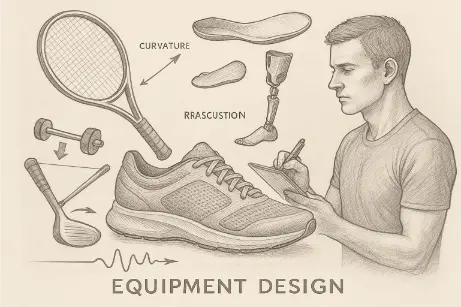
This charcoal-style illustration visualizes the interdisciplinary application of biomechanics in sports equipment design. At the center, a designer is seen sketching a running shoe, symbolizing precision and innovation. Surrounding him are labeled illustrations of a tennis racquet with optimized curvature, a golf club with redistributed mass, an orthotic insole, and a modern prosthetic limb. A shock absorption waveform and directional arrows indicate mechanical testing and refinement. The drawing emphasizes how biomechanics integrates anatomy, motion analysis, and material science to develop athletic gear that enhances performance while reducing injury risks.
- Applications:
- Optimizing technique in sports like swimming or sprinting: Biomechanics provides detailed insight into body positioning, joint motion, and muscle sequencing. In swimming, it can reveal how hand entry angles or kick timing affect propulsion. In sprinting, it assists in refining stride frequency, limb coordination, and ground contact time.

This graphite-style drawing captures the high-performance motion of two athletes: a sprinter at maximum acceleration and a swimmer executing a freestyle stroke. The sprinter’s posture, stride length, limb angles, and foot contact are annotated to emphasize biomechanical parameters such as ground contact time and limb coordination. The swimmer is depicted just below the water surface, with flow lines illustrating hydrodynamic resistance and hand entry trajectory. Key muscle groups are subtly shaded to indicate muscle engagement during propulsion. This visualization highlights how biomechanical analysis enhances performance by refining technique and maximizing movement efficiency in elite-level sprinting and swimming.
- Designing protective gear to reduce injury risks, such as helmets for cyclists: Biomechanical studies help identify the most common points of impact or load in various sports. Using crash simulation data and tissue stress models, designers can produce helmets, pads, and guards that absorb force efficiently, reducing concussion risks and skeletal injuries.
- Examples:
- Analyzing a golfer’s swing to improve accuracy and power: High-speed cameras and biomechanical sensors are used to capture and analyze every phase of a golf swing—from backswing to follow-through. Subtle adjustments to stance, hip rotation, and wrist mechanics can yield significant gains in shot control and distance.

- Developing running shoes tailored to individual gait patterns: Modern gait labs use force plates, 3D motion analysis, and plantar pressure mapping to create biomechanical profiles of runners. These profiles inform shoe design choices such as heel drop, midsole firmness, and arch support to maximize efficiency and reduce repetitive strain injuries.
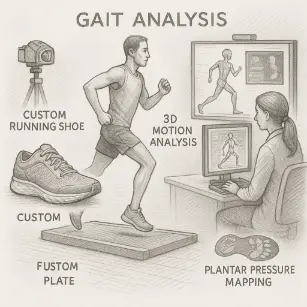
This detailed pencil illustration presents a sports science laboratory focused on gait analysis. A male runner is shown mid-stride on a force plate while a nearby technician reviews real-time 3D motion capture and plantar pressure data on a dual-monitor setup. To the left, a custom running shoe is prominently displayed, indicating how biomechanical insights from gait profiles influence shoe features such as heel drop, midsole firmness, and arch support. The annotated elements highlight each component of the analysis workflow—from force plate to data visualization—emphasizing the scientific precision behind personalized athletic footwear.
Exercise Physiology
- Definition: Exercise physiology is the branch of sports science concerned with how the body’s systems respond to physical activity, both acutely and chronically. It encompasses the study of muscular, cardiovascular, respiratory, endocrine, and metabolic responses during exercise and over periods of training or inactivity. Exercise physiologists examine how exercise improves fitness, impacts health, aids rehabilitation, and alters the physiological baseline of individuals ranging from elite athletes to sedentary individuals or patients with chronic disease. The field provides crucial insights into workload tolerance, fatigue mechanisms, cellular adaptation, and recovery processes.
- Key Topics:
- Cardiovascular response: This area involves studying how the heart, blood vessels, and blood respond to physical exertion. Topics include stroke volume, cardiac output, oxygen pulse, blood pressure regulation, and vascular remodeling. Cardiovascular physiology helps determine training zones, monitor athletic readiness, and prevent overexertion-related complications. It also includes adaptation studies such as bradycardia in endurance athletes or changes in capillary density from chronic aerobic training.
- Muscle physiology: This involves analyzing the contraction mechanics of different muscle fiber types (Type I slow-twitch and Type II fast-twitch), patterns of recruitment, force generation, and biochemical pathways governing fatigue and repair. Sports scientists assess hypertrophy, muscular endurance, and neuromuscular activation using tools like EMG and isokinetic dynamometers.
- Energy systems: The body uses different metabolic pathways to meet energy demands depending on exercise intensity and duration. These include the ATP-PCr system (immediate energy), anaerobic glycolysis (short-term high-intensity), and aerobic metabolism (sustained efforts). Understanding the interaction between these systems is key for designing training that targets endurance, speed, power, or recovery.
- Applications:
- Designing endurance training programs for marathon runners: These programs typically involve manipulating training volume, intensity, frequency, and periodization to induce cardiovascular and metabolic adaptations. Physiologists monitor VO2 max, lactate threshold, and heart rate variability to ensure that athletes improve oxygen delivery and energy utilization while minimizing injury and burnout.
- Developing interval training protocols for weight loss or fitness improvement: High-intensity interval training (HIIT) has become a widely researched method for improving aerobic and anaerobic capacity while stimulating fat metabolism. Protocols are tailored based on physiological measurements like EPOC (excess post-exercise oxygen consumption), hormonal responses, and perceived exertion levels.
- Examples:
- Studying the effects of altitude training on aerobic performance: Athletes who train at high altitude expose their bodies to hypoxic conditions, stimulating red blood cell production and improving oxygen-carrying capacity. Exercise physiology helps determine optimal altitude duration, rest intervals, and post-altitude performance windows.
- Monitoring lactate thresholds in athletes to fine-tune training intensity: By measuring the point at which lactate begins to accumulate in the blood, physiotherapists help athletes train at intensities that optimize endurance without exceeding the body’s ability to buffer acid. This is critical in disciplines like cycling, rowing, and long-distance running.
Sports Psychology
- Definition: Sports psychology is the scientific study of the mental, emotional, and behavioral processes that influence and are influenced by participation in sport, exercise, and physical activity. It investigates how psychological factors affect performance and how involvement in physical activity affects psychological and emotional well-being. The field draws on cognitive-behavioral theory, motivation science, social psychology, and neuropsychology to understand how athletes think, feel, and behave before, during, and after competition. Sports psychology plays a critical role not only in enhancing elite performance but also in supporting mental wellness, rehabilitation, and positive youth development through sport.
- Key Topics:
- Motivation: This includes intrinsic and extrinsic motivators, goal-setting strategies, and the influence of self-determination theory on sustained engagement in sport. Psychologists explore what drives athletes to persist through fatigue, setbacks, and monotony—factors crucial for long-term success and resilience. Tools such as SMART goals, motivational interviewing, and visualization techniques are employed to strengthen internal motivation.
- Focus and concentration: Athletes often perform in distracting, high-pressure environments where mental clarity is essential. Sports psychology trains individuals in attentional control, pre-performance routines, and techniques like cue words, anchoring, and selective focus to manage distractions and stay present. This is especially relevant in precision sports like archery, gymnastics, and golf where split-second lapses can be costly.
- Coping with pressure: Competitive sport often involves high expectations from coaches, fans, and self. Sports psychologists provide techniques to manage stress, regulate arousal levels, and reinterpret anxiety as excitement. Methods such as progressive muscle relaxation, controlled breathing, cognitive restructuring, and mindfulness help athletes stay composed during crucial moments.
- Applications:
- Helping athletes overcome performance anxiety: Sports psychologists identify the cognitive distortions and physical symptoms associated with anxiety, such as negative self-talk, hypervigilance, and elevated heart rate. They then develop tailored coping plans using desensitization, exposure, and psychological rehearsal, ensuring athletes can maintain control and perform at their best under pressure.
- Building team cohesion and effective communication in team sports: Teams succeed not only through physical coordination but also through mutual trust, clear communication, and shared goals. Sports psychology uses team-building exercises, role clarification, group goal setting, and conflict resolution techniques to enhance group dynamics, especially in complex team environments like soccer, basketball, or rowing crews.
- Examples:
- Training a sprinter to visualize success before races: Visualization, also called mental imagery, helps athletes rehearse events cognitively. A sprinter may mentally run through each phase of a race—from block start to finish line—while engaging sensory detail (e.g., crowd noise, muscle tension, surface feel). This prepares the neural pathways for execution, increases confidence, and sharpens mental rehearsal.
- Teaching mindfulness techniques to improve decision-making under pressure: Mindfulness-based sports performance programs teach athletes to observe their thoughts and sensations without judgment. This reduces reactivity and promotes self-awareness, helping players make better in-game decisions and recover quickly from errors. It is widely applied in high-speed decision-making sports such as tennis, football, and combat sports.
How to Use This Module
- Skim the Key Areas (Biomechanics, Physiology, Psychology) for the conceptual frame.
- Work an Application (e.g., Training Optimization) then read the paired Case Study to see it in practice.
- Complete one Activity from the assessment box below and check your work against the rubric.
- Use references at the end to trace claims to peer-reviewed sources and guidelines.
Applications of Sports Science
Optimizing Training Programs for Athletes
- Overview: Sports science informs the design of personalized training regimens that maximize performance and minimize injury risks. It considers individual variables such as fitness level, injury history, body composition, sport-specific demands, and psychological readiness to build programs that align with both short-term goals and long-term athletic development. By integrating data from physiological testing, biomechanical assessments, and psychological profiling, training programs become evidence-based, adaptive, and highly efficient.
- Examples:
- Periodization strategies for balancing intensity and recovery phases in training. This includes macro-, meso-, and micro-cycles that are designed to alternate periods of high load with recovery phases, ensuring athletes reach peak performance at competition time without overtraining.
- Strength and conditioning programs tailored to the demands of specific sports. These might focus on explosive power for sprinters, rotational strength for golfers, or muscular endurance for triathletes, with detailed load progression based on periodic performance evaluations.
- Monitoring athlete readiness using heart rate variability (HRV), sleep quality, hydration levels, and mood scores to adjust daily training loads and prevent overtraining syndromes.
- Applying sports psychology techniques such as visualization and goal setting within training sessions to enhance focus and motivation during high-performance phases.
- Utilizing motion capture and force plate technology to refine movement mechanics and reduce biomechanical inefficiencies in sprinting, jumping, and change-of-direction drills.
Rehabilitation Strategies for Sports Injuries
- Overview: Sports science provides evidence-based approaches for treating and rehabilitating injuries, ensuring athletes return to peak performance. Rehabilitation is guided by an understanding of tissue healing timelines, neuromuscular re-education, and kinetic chain integration. It focuses not only on symptom resolution but on functional restoration, performance readiness, and re-injury prevention, using objective data and interdisciplinary collaboration between physiotherapists, trainers, and medical staff.
- Examples:
- Using physiotherapy to recover from ACL (anterior cruciate ligament) injuries, including joint mobilization, quadriceps strengthening, proprioception training, and functional movement drills like agility ladders or mini hurdles.
- Designing progressive exercise routines to rebuild strength and flexibility after fractures. This involves isometric, isotonic, and plyometric phases of recovery, along with assessments of joint range of motion, muscle imbalance, and compensatory movement patterns.
- Applying cryotherapy, electrical stimulation, and hydrotherapy in early stages of rehabilitation to manage inflammation and promote tissue repair.
- Using gait retraining, biofeedback systems, and return-to-play testing (e.g., hop tests, Y-balance) to assess rehabilitation milestones.
- Psychological readiness assessments and support strategies for athletes recovering from long-term injuries or surgeries to overcome fear of re-injury and rebuild competitive confidence.
Enhancing Public Health
- Overview: Insights from sports science are applied to promote physical activity in the general population, addressing health concerns like obesity and sedentary lifestyles. Public health professionals use sports science data to guide population-wide interventions, emphasizing inclusive physical literacy, behavior change models, injury prevention, and sustainable exercise habits. This integration is vital for reducing the economic burden of lifestyle diseases and enhancing quality of life across demographics.
- Examples:
- Community fitness programs to improve cardiovascular health by offering group-based walking clubs, HIIT boot camps in parks, or culturally tailored physical activity classes with health screenings and goal tracking.
- Workplace wellness initiatives encouraging regular movement and exercise through incentives, standing desks, on-site gyms, step-count competitions, or integrated wellness platforms that monitor sleep, diet, and physical activity.
- Educational outreach in schools to teach children foundational motor skills, reduce screen time, and promote lifelong engagement in physical activity through school sports programs and recess redesigns.
- Use of behavior change models such as the Transtheoretical Model and Social Cognitive Theory to structure personalized interventions for sedentary adults.
- Targeted campaigns to reach older adults, promoting fall prevention, balance training, and low-impact cardiovascular exercise through community centers and eldercare networks.
Advancing Technology and Equipment Design
- Overview: Biomechanical research contributes to the development of sports technology and equipment that enhance safety and performance. The iterative design process incorporates biomechanical data, material science, and user feedback to create more efficient, safer, and sport-specific tools and devices. Innovation in this area is not only critical for elite competition but also for recreational safety and physical rehabilitation technology.
- Examples:
- Smart wearable devices that monitor heart rate, calories burned, and fatigue levels using sensors embedded in clothing or accessories. These devices collect real-time physiological and biomechanical data, enabling dynamic feedback and adaptive coaching solutions for both amateur and professional users.
- Lightweight and aerodynamic bicycles for competitive cycling designed using wind tunnel testing, CFD simulations, and pressure sensor arrays to minimize drag, optimize rider posture, and ensure energy efficiency over long distances.
- 3D-printed orthotics and prosthetics engineered with precise biomechanical inputs for athletes with mobility impairments, enabling personalized gait correction and performance enhancement.
- Shock-absorbing helmet liners, pressure-distribution insoles, and motion-sensing resistance bands—all born from interdisciplinary research combining biomechanics, neuroscience, and wearable computing.
- Integration of virtual reality (VR) and augmented reality (AR) in sports training environments to replicate competition scenarios, conduct cognitive drills, and provide real-time visual feedback on technique and form.
Emerging Trends in Sports Science
Wearable Technology and Data Analytics
- Devices like smartwatches and GPS trackers provide real-time data on performance metrics, enabling precise training adjustments. These technologies allow coaches and athletes to monitor heart rate, step count, stride length, running pace, and energy expenditure during practice or competition. Collected data are fed into dashboards or cloud platforms where trends can be visualized and compared across time. Sports scientists use this information to tailor warm-ups, optimize workloads, and prevent overtraining. Furthermore, integrating biometrics with GPS location data provides insights into terrain impact, acceleration bursts, and recovery efficiency.

This graphite pencil-style illustration demonstrates how wearable devices like smartwatches and GPS trackers collect real-time performance data such as heart rate, pace, and step count. The image features a runner mid-stride, connected to visualized data streams on a laptop and desktop dashboard. A coach is shown analyzing this data to make informed training decisions. The drawing emphasizes how modern sports science leverages biometric data and location-based metrics to optimize athletic performance and prevent overtraining.
Personalized Training Through AI
- Artificial intelligence helps design individualized training plans by analyzing an athlete’s performance, recovery, and injury history. AI systems learn from vast datasets including heart rate variability, reaction times, sleep quality, and perceived exertion to optimize both micro (daily) and macro (seasonal) training cycles. Machine learning models predict when an athlete is likely to peak or when fatigue or injury risk is elevated. These platforms may also generate recommendations for nutritional intake, stretching routines, or mental focus exercises based on AI-detected patterns. Some tools incorporate real-time feedback to auto-adjust training load on the fly.

This digital illustration shows a male athlete running on a treadmill while an AI-powered virtual assistant visualized as a humanoid figure made of circuitry observes and analyzes various real-time metrics. Around them are graphical elements representing heart rate variability, training plans, nutrition, and sleep data. The image highlights how AI integrates physiological, psychological, and behavioral inputs to create personalized, adaptive training regimens for injury prevention and performance optimization.
Nutrigenomics in Sports Nutrition
- Studying the interaction between genetics and nutrition to optimize dietary plans for athletes. Nutrigenomics identifies genetic variants related to metabolism, nutrient absorption, caffeine sensitivity, or predisposition to inflammation. Sports scientists and nutritionists use this genetic insight to recommend macronutrient ratios, timing of meals, or micronutrient supplementation tailored to an athlete’s genotype. For example, athletes with a predisposition to vitamin D deficiency may benefit from monitored sun exposure and specific supplementation. Likewise, those with slow caffeine metabolizer genes may avoid caffeine prior to evening competitions. The goal is precision fueling for performance and recovery.
Mental Health in Sports
- Increased focus on the psychological well-being of athletes, addressing issues like burnout and depression. Sports psychology interventions now go beyond performance enhancement to include emotional resilience, identity development, and stress management. Programs offer mindfulness training, counseling, and peer support networks to prevent mental health crises in high-stakes environments. Elite sports organizations are hiring in-house mental health professionals to deliver workshops, conduct screening assessments, and ensure confidentiality. There is also growing acceptance that addressing mental health is integral to long-term athletic sustainability, not a sign of weakness.
Virtual Reality (VR) Training
- Using VR simulations to practice skills and strategies in controlled environments. VR headsets and motion sensors immerse athletes in hyper-realistic scenarios—such as penalty shootouts, pitch navigation, or opponent tactics—without physical wear and tear. These simulations enhance decision-making, reaction speed, and mental preparation. For team sports, VR recreates match conditions with programmable opposition strategies, allowing repeated cognitive training of plays or formations. In injury rehab, VR can be used to reintroduce sport-specific movements progressively. Research shows that mental imagery enhanced through VR can activate the same neural pathways as physical movement.

This artist impression illustrates the use of virtual reality in sports science to simulate training environments. A male athlete, equipped with a VR headset, smartwatch, and handheld motion sensor, is engaged in a dynamic soccer drill within a digitally projected field. A virtual goalkeeper stands in a translucent simulation box ahead of him. Nearby, a coach wearing a headset observes the session from a desk, analyzing real-time movement data on a laptop. The drawing emphasizes the fusion of immersive technology and biomechanical feedback in modern athletic development.
AI in Sports Science: Current Practice & Ethics
Use cases: injury-risk modeling from workload, movement classification from video, sleep/recovery scoring, individualized training responses, and scouting analytics.
Good practice: validate models on your population; use transparent features (e.g., ACWR, monotony/strain, acute vs. chronic load); document thresholds; monitor false positives; obtain athlete consent.
Ethics checklist: data minimization; bias testing (sex/age/sport); explainability for coaching decisions; opt-out pathway; separation of health vs selection decisions.
Governing Bodies & Standards in Sport
- World Anti-Doping Agency (WADA): Prohibited list, TUEs, testing standards.
- International Olympic Committee (IOC): eligibility, medical consensus statements.
- World Athletics / FIFA / World Rugby (sport federations): equipment rules, competition regs, health & safety policies.
- ACSM / BASES / NSCA / NATA: professional practice guidelines for exercise testing, S&C, athletic training.
- WHO / CDC: physical activity guidelines and public-health frameworks affecting youth and community sport.
Where the page cites “governing bodies,” it refers to organizations like the above; specific policy links are listed in the References.
Challenges in Sports Science
Injury Prevention and Recovery
- Despite advancements, preventing overuse injuries and ensuring complete recovery remains a significant challenge. Many injuries, especially in repetitive motion sports such as running or swimming, stem from small mechanical imbalances or training errors that accumulate over time. Even with motion analysis, wearable sensors, and performance diagnostics, early detection and intervention are not always guaranteed. Recovery protocols must navigate a balance between tissue healing, strength rebuilding, and psychological readiness. Moreover, return-to-play decisions are often complicated by pressures from coaches, sponsors, or athletes themselves. Variability in access to rehab technologies, adherence to protocols, and genetic differences in recovery rate further complicate universal prevention solutions.
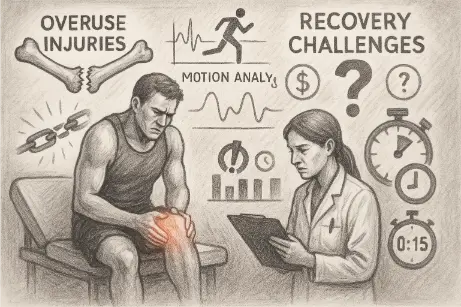
This artist impression highlights the complexity of injury prevention and recovery in sports science. A male athlete in visible pain clutches his knee while a medical professional reviews diagnostic data. Around them are symbols representing overuse injuries, motion analysis tools, time pressure, and recovery uncertainties. The illustration captures the multifaceted challenges of early detection, treatment planning, and return-to-play decision-making in repetitive motion sports.
Access to Sports Science Resources
- Many amateur and grassroots athletes lack access to advanced sports science facilities and expertise. While elite training centers are equipped with force plates, metabolic carts, AI-driven diagnostics, and multidisciplinary support teams, most local clubs or schools operate without such infrastructure. This inequity results in unequal development opportunities, with talented individuals potentially missing out on optimal training or early injury prevention. Sports science education and outreach efforts have begun to bridge this gap through mobile testing units, online coaching platforms, and partnerships between universities and community organizations. However, challenges related to funding, awareness, and resource distribution persist, particularly in rural or underserved regions.
Balancing Performance and Health
- Intense focus on peak performance can sometimes compromise long-term health and well-being. Athletes often push their physical and psychological limits, driven by competition, financial incentives, or cultural expectations. Prolonged exposure to high training volumes, strict diets, and mental stress can lead to burnout, hormonal imbalances, and chronic injuries. Coaches and scientists must collaborate to design programs that foster sustainability, incorporate rest and mental recovery, and prioritize athlete-centered care. Ethical dilemmas may arise when performance enhancement goals conflict with health priorities, particularly in youth sports or professional environments with intense pressure to win.
Ethical Concerns
- The use of performance-enhancing technologies or substances raises questions about fairness and safety. Advances such as gene editing, neurostimulation, or biomechanical augmentation blur the lines between legitimate training tools and unethical enhancement. Governing bodies and scientific communities face ongoing debates about what constitutes fair play in an age of rapid technological innovation. Additionally, the risk of coercion—where athletes feel pressured to adopt enhancements to remain competitive—poses ethical and psychological risks. Safeguarding the integrity of competition while promoting innovation requires transparent policies, rigorous oversight, and athlete advocacy. Moreover, equitable access to safe technologies remains a concern, as wealthier teams or nations may gain unfair advantages through exclusive tools.
Future Directions in Sports Science
- Integration with Genomics
- Identifying genetic markers for athletic potential and tailoring training accordingly. The future of sports science lies in decoding the human genome to uncover how genes influence an individual’s predisposition for speed, endurance, recovery, flexibility, or even motivation. With high-throughput sequencing and polygenic risk scoring, researchers can identify combinations of alleles linked to elite performance traits. This enables the development of genetically-informed training plans that consider muscular response to resistance, aerobic capacity enhancement, or injury resilience. Ethical frameworks are evolving to govern the responsible use of genetic data while safeguarding athletes’ privacy and mental well-being. Institutions may use genomic screening not just for competitive advantage, but also to prevent conditions such as exertional heat illness or inherited cardiac anomalies.
- Focus on Female Athletes
- Expanding research to address gender-specific needs in training, recovery, and injury prevention. Historically, sports science has generalized male-derived data to female athletes, overlooking critical physiological and hormonal differences. Future directions involve integrating menstrual cycle tracking, hormonal fluctuations, and gender-specific biomechanics into training and injury prevention programs. Advances in imaging, hormone profiling, and wearable tech enable real-time feedback on ovulation, sleep disruption, and recovery readiness. Researchers are also delving into female-specific injury patterns, such as a higher prevalence of ACL tears and stress fractures, and how equipment or coaching techniques can adapt. This inclusive approach is reshaping the culture of sports science to recognize equity, representation, and safety for female competitors at all levels—from youth to elite.
- Global Collaboration
- Sharing sports science research and practices across nations to improve access and innovation. Future progress in sports science will be driven by international networks that transcend geographic, economic, and cultural boundaries. These collaborations include multinational research consortia, athlete data exchanges, and global conferences that promote standardization of testing, injury surveillance, and training analytics. Developing nations can benefit from shared open-access resources and mobile tech to access diagnostics, coaching, and rehab support. Projects led by the World Health Organization, International Olympic Committee, and academic networks are encouraging inclusive innovation in community health, adaptive sports, and physical education. These efforts aim not only to elevate elite performance globally, but also to democratize access to science-based movement interventions for all populations.
- Sustainable Sports Practices
- Developing eco-friendly sports facilities and equipment to reduce environmental impact. With increasing awareness of climate change and ecological degradation, sports science is aligning with green technology to promote sustainability. Future stadiums and training centers will emphasize carbon-neutral construction, renewable energy use, and water conservation. Wearables, shoes, and apparel will be designed using biodegradable or recyclable materials, supported by life cycle assessments. Event organizers will integrate carbon accounting and emissions offset into sports logistics, travel, and merchandising. Research is also focused on developing low-impact surfaces for fields and courts that reduce injury while being environmentally sustainable. Education campaigns are informing athletes and fans about responsible consumption and environmental stewardship, making sustainability a core value of modern athletic ecosystems.
Why Study Sports Science
Understanding Human Performance and Physical Activity
Applying Scientific Knowledge to Real-World Challenges
Exploring the Psychology and Sociology of Sport
Developing Analytical, Communication, and Leadership Skills
Preparing for Careers in Sport, Health, and Fitness
Interactive Training Load & Acute-to-Chronic Workload Ratio (ACWR) Simulator
Adjust acute training load (this week) and chronic training load (4-week average) to compute ACWR and evaluate injury risk zones.
Frequently Asked Questions – Sports Science
What is sports science and why is it important?
Sports science is an interdisciplinary field that examines how the human body functions during physical activity and how performance can be enhanced through scientific principles. It draws on disciplines such as biomechanics, physiology, psychology, nutrition, and technology to provide a comprehensive understanding of human movement, athletic capability, and overall health. Its importance lies in its ability to optimize performance, reduce injury risk, facilitate effective recovery, and support mental resilience in both elite athletes and the general population. Furthermore, it plays a pivotal role in public health by promoting lifelong physical activity and combating sedentary lifestyle diseases.
How does biomechanics contribute to sports performance?
Biomechanics applies mechanical principles to the study of movement in the human body. In sports, it is used to evaluate technique, analyze posture, and measure the forces generated and absorbed by different body parts during activity. By understanding motion mechanics, biomechanics helps coaches and athletes fine-tune skills, such as the trajectory of a basketball shot or the torque in a golf swing. It also aids in designing sports equipment and apparel, reducing the likelihood of overuse injuries by improving joint alignment and muscle efficiency. Biomechanical insights are foundational to improving athletic form, precision, and injury prevention strategies.
What technologies are used in modern sports science?
Modern sports science employs a wide array of advanced technologies to collect, analyze, and apply data related to athletic performance. These include motion capture systems that record joint movements in 3D, force plates that measure ground reaction forces, wearable devices like smartwatches and GPS trackers that monitor heart rate, pace, and workload, and virtual reality (VR) tools for immersive cognitive training. High-speed video analysis, electromyography (EMG), and thermal imaging are also used to assess muscle activation and recovery. These technologies allow for data-driven decisions in training design, technique refinement, and injury prevention.
What’s the difference between kinematics and kinetics?
Kinematics and kinetics are two core subfields in biomechanics. Kinematics refers to the study of motion without regard to the forces causing it. This includes measurements such as speed, velocity, acceleration, displacement, and joint angles—helpful for visualizing movement patterns. Kinetics, in contrast, focuses on the forces that produce or alter movement. These include internal forces (like muscle contractions) and external forces (such as gravity, friction, and ground reaction forces). Understanding both is essential for analyzing sports techniques, diagnosing faulty mechanics, and preventing injuries through scientifically informed intervention.
How does sports psychology help athletes?
Sports psychology focuses on the mental and emotional aspects of athletic performance. It helps athletes develop concentration, confidence, motivation, and composure under pressure—critical traits for success in competitive environments. Techniques such as goal setting, mental imagery, self-talk regulation, and mindfulness are commonly used. Sports psychologists also address challenges like performance anxiety, fear of failure, and burnout. In team settings, they facilitate communication, cohesion, and leadership development. Mental training, when integrated with physical training, leads to a more holistic and sustainable approach to performance and well-being.
Can sports science benefit non-athletes?
Yes, sports science is highly beneficial for non-athletes as well. Its principles can be applied to improve posture, mobility, strength, and cardiovascular health in daily life. In rehabilitation settings, sports science informs recovery protocols after injury or surgery. It also contributes to ergonomic design in workplaces, fall prevention strategies in older adults, and physical education programs in schools. Public health campaigns increasingly rely on sports science to promote physical activity and reduce the prevalence of conditions like obesity, hypertension, and diabetes. Whether for disease prevention or functional longevity, sports science supports healthier lifestyles for everyone.
What are the career options in sports science?
Graduates of sports science programs can pursue diverse career paths depending on their specialization. Common roles include exercise physiologist, athletic trainer, strength and conditioning coach, biomechanist, performance analyst, and rehabilitation specialist. Other opportunities exist in health promotion, fitness technology development, research, and academic instruction. Many professionals work with sports teams, universities, hospitals, or private clinics. With the rise of digital health and wearable tech, roles are also emerging in AI-assisted coaching, movement analytics, and user experience design for fitness apps. Certifications and further study in areas like physiotherapy, nutrition, or sports psychology can further expand career prospects.
How is AI used in sports science today?
Artificial Intelligence (AI) is transforming sports science by automating data analysis, personalizing training programs, and enhancing predictive modeling. AI systems process large datasets collected from wearables, video analysis, and biomechanical sensors to detect patterns in performance, recovery, and injury risk. For instance, machine learning algorithms can predict an athlete’s risk of injury based on changes in workload or asymmetrical movement. AI also powers virtual coaching apps, optimizes game strategies using real-time analytics, and customizes strength or rehabilitation programs. The integration of AI enables faster decision-making, smarter interventions, and more individualized care for athletes at all levels.
What are the future trends in sports science?
Future trends in sports science include deeper integration with genomics, enabling training and nutrition plans based on genetic predispositions. Virtual and augmented reality will continue to advance cognitive and motor skill training, particularly in team sports. Sustainable innovation is emerging in sports apparel and infrastructure, focusing on eco-friendly materials and energy-efficient facilities. There’s also growing recognition of gender-specific research to address the unique needs of female athletes. Globally, sports science is becoming more collaborative through international research networks and open-access databases, promoting equity in access and innovation across elite, amateur, and community-level sport.
How is sports science different from physiotherapy?
Sports science and physiotherapy both deal with human movement but differ in focus and application. Sports science emphasizes performance optimization, training design, and injury prevention. It uses tools like motion analysis, training periodization, and wearable tech to enhance athletic output. Physiotherapy, on the other hand, focuses on diagnosing, treating, and rehabilitating physical injuries or impairments. It involves hands-on treatment methods such as manual therapy, therapeutic exercise, and electrotherapy. While sports scientists aim to push physical limits safely, physiotherapists help individuals recover and regain function. The two disciplines often collaborate to ensure continuity between performance training and clinical care.
Sports Science: Interactive Review Questions
1. What is sports science and why is it important?
2. How does sports science research impact athletic performance?
3. What role does biomechanics play in sports science?
4. How do exercise physiology principles contribute to effective training programs?
5. How is nutrition integrated into sports science for optimal performance?
6. What methods are used to assess athletic performance in sports science?
7. How does sports science contribute to injury prevention and recovery?
8. What impact does sports psychology have on athlete performance?
9. How do technological advancements influence sports science research and practice?
10. What are the future trends in sports science research and practice?
Comprehensive Practice Modules
Section 1: Core Concept Mastery (Foundational Questions)
-
Define sports science and identify its primary interdisciplinary pillars.
Answer: Sports science is the scientific study of human movement and athletic performance, integrating biomechanics, exercise physiology, sports psychology, and nutrition. -
What is the primary distinction between kinematics and kinetics in biomechanical analysis?
Answer: Kinematics studies motion without regard to forces (velocity, displacement, angles), whereas kinetics studies the forces that cause or alter motion (torque, ground reaction forces). -
Define VO2 max and explain its significance in exercise physiology.
Answer: VO2 max is the maximum rate of oxygen consumption measured during incremental exercise; it serves as a primary indicator of cardiovascular fitness and aerobic endurance capacity. -
What role do muscle spindles play during stretching and neuromuscular control?
Answer: Muscle spindles are proprioceptors that detect changes in muscle length and speed of stretch, triggering the stretch reflex to protect against overextension. -
Define periodization in sports training.
Answer: Periodization is the systematic division of a training program into specific blocks (macrocycles, mesocycles, microcycles) to optimize peak performance and prevent overtraining. -
What is the main purpose of heart rate variability (HRV) monitoring in elite training?
Answer: HRV assesses autonomic nervous system balance to gauge recovery status, stress levels, and readiness to train. -
Define nutrigenomics and its application in athletic nutrition.
Answer: Nutrigenomics is the study of how genetic variations interact with dietary nutrients, enabling personalized nutrition plans tailored to an athlete’s genotype. -
What is the Acute-to-Chronic Workload Ratio (ACWR)?
Answer: ACWR compares an athlete’s acute workload (recent 1-week strain) against their chronic workload (4-week rolling average) to monitor injury risk.
Section 2: Clinical Scenarios & Analytical Thinking
-
A distance runner’s ACWR spikes to 1.6 after a sudden increase in weekly mileage. Analyze the physiological implications and propose a corrective strategy.
Answer: An ACWR of 1.6 places the athlete in the high-risk “danger zone” for soft-tissue injury due to rapid load accumulation outpacing tissue adaptation. Corrective strategy: Immediately reduce training volume by 20-30%, prioritize recovery modalities, and gradually rebuild load keeping ACWR between 0.8 and 1.3. -
Evaluate the biomechanical mechanisms behind anterior cruciate ligament (ACL) injuries during rapid deceleration and cutting maneuvers in basketball.
Answer: ACL injuries frequently occur during dynamic knee valgus collapse combined with internal tibial rotation and a flat-footed landing position, creating excessive anterior shear forces on the tibia relative to the femur. -
A swimmer experiences chronic shoulder impingement. Propose an interdisciplinary sports science intervention combining biomechanics and physical therapy.
Answer: Use underwater motion capture to analyze stroke mechanics (e.g., crossing the midline during hand entry), pair with physical therapy targeting scapular stabilizer strengthening, rotator cuff balancing, and thoracic spine mobility drills. -
Discuss the psychological impact of long-term injury on an elite gymnast and recommend psychological coping strategies.
Answer: Long-term injury causes identity loss, anxiety, and depression. Interventions include cognitive reframing, maintaining team connection through modified roles, mental imagery rehearsal of routines, and progressive goal setting. -
Analyze how altitude training induces physiological adaptations beneficial for endurance athletes.
Answer: Hypoxic conditions stimulate the release of erythropoietin (EPO), increasing red blood cell mass and hemoglobin concentration to enhance oxygen transport capacity. -
Compare continuous moderate-intensity training (MIT) with high-intensity interval training (HIIT) regarding metabolic adaptations.
Answer: MIT primarily enhances mitochondrial density and fat oxidation capacity via prolonged aerobic stress, whereas HIIT stimulates both aerobic and anaerobic pathways, improving stroke volume and glycolytic enzyme activity in shorter durations. -
A football coach relies solely on gut instinct rather than GPS wearable data for load management. Critique this approach using sports science principles.
Answer: Relying solely on intuition misses hidden cumulative fatigue, increases overtraining risk, and overlooks objective indicators like heart rate variability and running asymmetry. Wearable metrics provide empirical verification of internal and external loads. -
Propose an ethical framework for utilizing AI-driven black-box injury prediction models in professional sports contracts.
Answer: Models must ensure algorithmic transparency (explainability), strict data privacy and athlete consent, separation of health data from contract selection decisions, and regular bias auditing across diverse athlete populations.
Section 3: Biomechanical Calculations & Quantitative Diagnostics
-
An athlete’s acute training load over the past week is 900 arbitrary units (AU), and their chronic training load (4-week rolling average) is 600 AU. Calculate the ACWR.
Answer:ACWR = Acute Load / Chronic LoadThe ACWR is 1.5, indicating an elevated injury risk zone.
ACWR = 900 AU / 600 AU = 1.5 -
During a vertical jump test, an athlete applies an average ground reaction force of 1800 N for 0.2 seconds. If their body weight is 700 N, calculate the net impulse.
Answer:Net Force = GRF – Body Weight = 1800 N – 700 N = 1100 NThe net impulse is 220 N·s.
Impulse = Net Force × Time = 1100 N × 0.2 s = 220 N·s -
A sprinter covers 100 meters in 10.0 seconds. Calculate their average speed in m/s and km/h.
Answer:Speed (m/s) = Distance / Time = 100 m / 10.0 s = 10.0 m/sThe average speed is 10.0 m/s (36.0 km/h).
Speed (km/h) = 10.0 m/s × 3.6 = 36.0 km/h -
Calculate training monotony if an athlete’s mean daily training load over 7 days is 500 AU and the standard deviation is 100 AU.
Answer:Monotony = Mean Daily Load / Standard DeviationThe training monotony is 5.0 (values above 2.0 indicate high risk of overtraining).
Monotony = 500 / 100 = 5.0 -
Using the monotony calculated in Question 4 (Monotony = 5.0) and a weekly total load of 3500 AU, calculate the weekly training strain.
Answer:Strain = Weekly Total Load × MonotonyThe weekly training strain is 17,500 AU.
Strain = 3500 AU × 5.0 = 17,500 AU -
A cyclist exerts a torque of 40 N·m on the pedal crank with a crank arm length of 0.17 m. Calculate the tangential force applied to the pedal.
Answer:Torque (τ) = Force (F) × Radius (r)The tangential force applied is 235.29 N.
40 N·m = F × 0.17 m
F = 40 / 0.17 = 235.29 N -
An endurance runner has a running economy value of 185 ml·kg-1·km-1. If their body mass is 65 kg, calculate the total oxygen consumed per kilometer.
Answer:Total O2 per km = Running Economy × Body MassThe total oxygen consumed per kilometer is 12,025 ml (12.025 liters).
Total O2 = 185 ml·kg-1·km-1 × 65 kg = 12,025 ml/km (12.025 L/km) -
During a maximal effort sprint, a 75 kg athlete accelerates from rest to 9 m/s in 3 seconds. Calculate their average acceleration and net propulsive force.
Answer:Acceleration (a) = Δv / t = 9 m/s / 3 s = 3.0 m/s2The average acceleration is 3.0 m/s2 and net force is 225 N.
Force (F) = Mass (m) × Acceleration (a) = 75 kg × 3.0 m/s2 = 225 N