

This richly detailed visual portrays medicine as an integration of clinical practice and biomedical science. At the center, physicians examine a seated patient, symbolizing diagnosis and patient-centered care. Surrounding them are visual elements of modern medicine: anatomical hearts, a full-body figure highlighting internal systems, DNA strands representing genetics, laboratory test tubes and instruments, and monitor-style graphs indicating vital signs and clinical data.
Explore Major Medical Specialties
Medicine is a very broad field, and many students only begin to understand its different paths after they start learning more deeply. To make exploration easier, this Medicine page can also serve as a hub to key medical specialties that students commonly consider when thinking about a future medical career.Each subpage below introduces one specialty in a student-friendly way, including the kind of patients seen, the way doctors in that field think, and what daily work may look like. You do not need to decide your future specialty now. The goal is to help you explore the landscape of medicine step by step.Internal Medicine
Explore adult medicine, clinical reasoning, long-term disease care, and how internists manage complex patients with multiple conditions.
General Surgery
Learn how surgeons evaluate cases, decide when operations are needed, and combine anatomy, procedures, and post-operative care.
Cardiology
Discover how doctors diagnose and manage heart and circulation problems, from chest pain and arrhythmias to prevention of heart disease.
Neurology
See how neurologists investigate symptoms related to the brain, spinal cord, and nerves using careful clinical reasoning and examination.
Oncology
Understand how cancer care combines diagnosis, treatment planning, teamwork, and long-term patient support.
Pediatrics
Explore medicine for infants, children, and teenagers, with a strong focus on growth, development, prevention, and family-centered care.
OB-GYN
Learn about women’s health, pregnancy care, childbirth, reproductive medicine, and the blend of clinic and procedural work in this specialty.
Orthopedics
Discover how orthopedic doctors treat bones, joints, injuries, and movement-related problems while restoring function and mobility.
Psychiatry
Explore mental health care, clinical assessment, and how psychiatrists support patients through treatment and recovery.
Dermatology
See how dermatologists diagnose and manage skin, hair, and nail conditions using observation, reasoning, and practical care.
Applications of Medicine
1. Saving Lives
- Medicine directly impacts survival rates through innovations like organ transplantation, advanced surgical techniques, and lifesaving drugs.
- Examples:
- Heart transplants and ventricular assist devices for end-stage heart failure.
- Antiretroviral therapy (ART) for managing HIV/AIDS.
2. Advancing Medical Knowledge
- Research and clinical trials are at the heart of medical progress, leading to breakthroughs in treatment and prevention.
- Examples:
- mRNA vaccines revolutionizing the fight against infectious diseases like COVID-19.
- Development of precision medicine, tailoring treatments based on genetic profiles.
3. Disease Prevention
- Medicine emphasizes preventive care to reduce the burden of disease.
- Examples:
- Vaccination programs eliminating diseases like polio.
- Health education campaigns addressing lifestyle-related conditions such as obesity and smoking.
4. Improving Quality of Life
- Beyond saving lives, medicine aims to enhance the quality of life for patients with chronic or debilitating conditions.
- Examples:
- Pain management and palliative care for terminal illnesses.
- Advanced prosthetics and rehabilitation for amputees.
Emerging Trends in Medicine
Digital Health and Telemedicine
- The integration of digital platforms into healthcare delivery is reshaping how patients interact with medical professionals and access care. Telemedicine—once considered a niche alternative—has now become a mainstream option, particularly after the global push caused by the COVID-19 pandemic. Patients can consult physicians through video conferencing, receive prescriptions electronically, and manage chronic conditions from home without traveling to a clinic.
- Digital health also encompasses mobile apps that track symptoms, medication adherence, mental health, and fitness goals. These tools empower individuals to take a proactive role in their health management and provide real-time data that clinicians can use to tailor treatment plans.
- Examples: Wearable devices such as smartwatches and continuous glucose monitors can now detect changes in heart rate, oxygen saturation, respiratory rate, sleep quality, and even atrial fibrillation. Patients with diabetes benefit from real-time insulin tracking, while individuals at risk for heart disease can monitor vital signs that trigger alerts before a major cardiac event. Telemonitoring systems also assist elderly patients in remote regions, reducing the burden on caregivers and hospitals.
- Digital platforms have also led to the rise of “virtual hospitals,” where multi-disciplinary teams provide continuous care using connected devices and AI-driven dashboards. These models reduce hospital readmission rates and improve outcomes in patients with complex, chronic illnesses.
Artificial Intelligence in Diagnostics
- AI is revolutionizing the accuracy, speed, and scope of medical diagnostics. Machine learning algorithms are now capable of analyzing medical images—such as X-rays, CT scans, and MRIs—with accuracy levels that rival or even surpass trained radiologists. These tools assist physicians by highlighting areas of concern, classifying anomalies, and prioritizing urgent cases.
- In pathology, AI can assess tissue samples for early signs of cancer, identify rare diseases, and suggest diagnoses that may be overlooked by human observers. Predictive analytics use historical data, genetic profiles, and real-time patient information to forecast disease progression and recommend personalized interventions.
- AI also plays a vital role in triage and risk stratification in emergency care. Natural language processing is being used to interpret patient records, lab results, and clinical notes to help doctors make data-informed decisions. Chatbots powered by AI are assisting in pre-diagnosis screening and answering basic medical queries around the clock.
- Hospitals are beginning to implement AI decision-support systems that analyze thousands of data points—from lab tests and medication lists to wearable sensor data—to guide clinicians toward optimal diagnostic pathways. These systems reduce diagnostic errors, cut down unnecessary testing, and shorten time to treatment, particularly in time-sensitive cases like stroke or sepsis.
Gene Editing and CRISPR
- Gene editing, particularly through CRISPR-Cas9 technology, has opened the door to a new era of personalized and precision medicine. This revolutionary approach allows scientists to make highly specific modifications to the DNA of living organisms. In clinical medicine, it is being used to correct genetic defects at their source—offering hope to patients with inherited conditions that were previously untreatable.
- Researchers are exploring applications of gene editing in treating sickle cell anemia, cystic fibrosis, Duchenne muscular dystrophy, and certain cancers. In some clinical trials, patients have seen remarkable improvements after edited immune cells were reintroduced into their bodies to fight leukemia or solid tumors.
- Beyond direct disease treatment, gene editing holds potential for the development of engineered organs, improved organ transplantation, and enhanced resistance to infections. For example, scientists are experimenting with editing the genomes of pigs to make their organs compatible for transplantation into humans—an advancement that could solve the global organ shortage crisis.
- However, CRISPR technologies also raise ethical questions around germline editing and unintended consequences. Regulatory frameworks are evolving to ensure that gene editing is applied responsibly and equitably in clinical contexts. Researchers continue to refine the precision and safety of gene-editing tools to reduce the risk of off-target effects and immune reactions.
Regenerative Medicine
- Regenerative medicine is an interdisciplinary field focused on restoring or replacing damaged cells, tissues, and organs. It harnesses the body’s natural ability to heal and combines it with scientific advancements in cell biology, tissue engineering, and biomaterials. This approach has far-reaching implications in orthopedics, cardiology, neurology, and beyond.
- Stem cell therapies are at the forefront of regenerative innovations. Scientists can now differentiate pluripotent stem cells into specific cell types, such as neurons, cardiomyocytes, or cartilage, and use them to repair injury or degeneration. Clinical trials are exploring how these therapies can treat Parkinson’s disease, spinal cord injuries, heart failure, and Type 1 diabetes.
- Tissue engineering aims to construct biological substitutes for damaged body parts. For instance, researchers are growing skin grafts for burn victims, printing artificial bone using 3D bioprinting techniques, and developing synthetic corneas for patients with vision loss. Advances in scaffold design and bioreactors are helping to mimic the natural microenvironment needed for tissue growth.
- One of the most exciting frontiers is the development of lab-grown organs. Although still in the experimental stage, scientists have successfully created miniature versions of lungs, kidneys, and livers in the laboratory, known as organoids. These models are already being used for drug testing and disease modeling and may eventually replace donor organs in transplantation.
- Regenerative strategies are also being explored for cardiovascular regeneration. In animal studies, researchers have regenerated heart muscle tissue after myocardial infarction, potentially offering alternatives to heart transplants. As technology matures, personalized regenerative therapies based on the patient’s own cells may become standard care for a wide range of degenerative conditions.
Challenges in Medicine
Healthcare Access
- Access to essential medical services remains deeply unequal across different regions, communities, and income groups. In rural and low-income areas, healthcare infrastructure may be severely lacking, with limited availability of hospitals, trained personnel, medications, and diagnostic tools. Even in more developed countries, financial barriers such as high insurance costs or out-of-pocket expenses restrict access for marginalized populations.
- Transportation and geographical isolation further compound access issues, especially for elderly patients and those with chronic conditions who require regular follow-up. In some regions, healthcare deserts—areas with no nearby healthcare providers—leave entire populations without primary care.
- Telemedicine has shown promise in bridging these gaps, but digital inequality (such as limited internet access or digital literacy) can still exclude vulnerable groups. Cultural, linguistic, and social barriers also deter individuals from seeking timely care, particularly in immigrant communities or among those facing stigma related to illness.
- Global health organizations continue to push for universal health coverage, but resource shortages, political instability, and economic disparities hinder progress in many nations.
Antimicrobial Resistance
- The overuse and misuse of antibiotics in both humans and livestock have accelerated the emergence of antimicrobial resistance (AMR), threatening to render many common treatments ineffective. Bacteria are evolving mechanisms to survive even the most potent drugs, leading to infections that are harder and costlier to treat.
- Hospitals around the world are increasingly reporting cases of drug-resistant infections like MRSA (methicillin-resistant Staphylococcus aureus), multi-drug resistant tuberculosis, and carbapenem-resistant Enterobacteriaceae. These “superbugs” increase mortality rates, prolong hospital stays, and demand more complex care.
- Pharmaceutical companies face financial and scientific hurdles in developing new antibiotics, and the global pipeline of next-generation antimicrobials is dangerously thin. Compounding the crisis is the lack of robust regulation and monitoring of antibiotic use in agriculture and aquaculture.
- Public health experts emphasize the need for stronger stewardship programs, better infection control protocols, global surveillance systems, and increased investment in novel therapies to mitigate this looming threat.
Aging Populations
- In many parts of the world, populations are aging rapidly due to improved life expectancy and declining birth rates. As a result, the burden of chronic diseases such as diabetes, cardiovascular disease, arthritis, and dementia is growing, placing immense pressure on healthcare systems and caregivers.
- Older adults often face multiple comorbidities that require complex, long-term, and coordinated care. Managing medication regimens, mobility challenges, mental health issues, and end-of-life decisions becomes more demanding with age.
- Healthcare providers must adapt to the needs of geriatric patients, including investing in specialized gerontology training, elder-friendly hospital design, and community-based support systems that promote independence and dignity.
- Policymakers are also challenged to sustain pension and insurance systems, while preparing for workforce shortages in aged care professions. The intersection of medical, social, and ethical concerns makes aging populations one of the most multifaceted issues in contemporary healthcare.
Ethical Dilemmas
- Rapid advances in biotechnology, artificial intelligence, and genetic engineering have outpaced existing ethical frameworks, raising profound questions about the boundaries of medical practice. Issues like gene editing, embryo selection, cloning, and euthanasia challenge society’s values and legal systems.
- End-of-life decisions, such as physician-assisted dying and withdrawal of life support, are the subject of heated debate around patient autonomy, religious beliefs, and the role of medical professionals. In some countries, these practices are legal under strict conditions, while in others they remain criminalized.
- Consent and data privacy in medical research are also critical concerns, particularly as electronic health records and AI models collect vast quantities of personal health information. Ensuring that patients understand how their data is used, stored, and shared is essential to maintaining trust.
- Equity in access to experimental treatments, clinical trials, or organ transplants remains controversial. Should resources be allocated on a first-come-first-served basis, by need, or by potential benefit? These are not merely theoretical questions but real-world dilemmas that physicians and policymakers face daily.
Why Study Medicine
Understanding the Science of the Human Body and Disease
Making a Lasting Impact on Individual and Public Health
Developing Skills in Critical Thinking, Communication, and Ethics
Exploring a Wide Range of Specializations and Career Paths
Preparing for a Respected and Resilient Profession
Interactive Simulator: Clinical Diagnostic Risk & Testing Predictor
Adjust the clinical risk parameters (Symptom Severity Score and Patient Risk Profile) to simulate dynamic changes in diagnostic probabilities and post-test likelihood of disease.
Is Medicine Right For You?
Explore career pathways, check your fit, and assess your skills — before you commit to a degree.
Medicine: Conclusion
Medicine is an ever-evolving field that combines science, compassion, and innovation to improve human health. By addressing diseases through prevention, diagnosis, and treatment, it directly impacts lives and shapes the future of societies. The integration of cutting-edge technologies and ongoing research ensures that medicine continues to adapt to emerging challenges and opportunities, fulfilling its core mission to heal, alleviate suffering, and enhance the quality of life for people worldwide.Frequently Asked Questions – Medicine
What does medicine focus on as a field of study?
Medicine is the study and practice of preventing, diagnosing, and treating disease and injury in humans. It combines scientific knowledge, clinical skills, and ethical judgement to protect health, relieve suffering, and improve quality of life across the lifespan.
How is medicine different from other health-related disciplines?
Medicine focuses on the comprehensive care of individual patients, including diagnosis, treatment, and ongoing management of illness. Other health disciplines, such as nursing, pharmacy, physiotherapy, public health, or biomedical science, often concentrate on specific aspects of care, support, or research. All work together, but the medical doctor typically carries overall responsibility for medical decisions.
Why is medicine considered such a demanding university course?
Medicine is demanding because it requires a strong foundation in the sciences, long hours of study and clinical training, and the ability to make careful decisions that affect people’s lives. Students must integrate complex information, work under pressure, communicate clearly with patients and teams, and maintain high ethical standards over many years of learning and practice.
Which school subjects are most important if I want to apply for medicine?
Most medical schools expect strong performance in biology and chemistry, and many also value physics and mathematics. Subjects that develop critical thinking, communication, and ethical reasoning, such as literature, history, or social studies, can also strengthen your preparation for medical study and patient-focused work.
What personal qualities are important for future doctors?
Future doctors need curiosity and discipline, but also empathy, patience, and integrity. They must be able to listen carefully, explain information clearly, work in teams, and make decisions even when situations are uncertain. Resilience and a commitment to lifelong learning are essential, because medicine keeps evolving.
What do students typically study in the early years of a medical degree?
In the early years, medical students usually study anatomy, physiology, biochemistry, genetics, microbiology, immunology, and pathology. They also begin learning about professionalism, communication skills, medical ethics, and how to take a patient history and perform basic clinical examinations.
What happens during the clinical years of medical training?
During the clinical years, students spend most of their time in hospitals, clinics, and community settings. They rotate through specialties such as internal medicine, surgery, paediatrics, obstetrics and gynaecology, psychiatry, emergency medicine, and general practice. Under supervision, they take histories, examine patients, observe procedures, and learn how teams deliver real-world care.
What are some major branches and specialties within medicine?
Major branches include internal medicine, surgery, paediatrics, obstetrics and gynaecology, psychiatry, family medicine or general practice, emergency medicine, anaesthesiology, radiology, and pathology. Within these, there are many sub-specialties such as cardiology, neurology, oncology, orthopaedics, and intensive care.
How does medical research connect with clinical practice?
Medical research generates evidence about how diseases develop and which tests or treatments work best. Clinicians use this evidence to guide decisions in patient care. Many doctors combine clinical work with research, quality improvement, or teaching, helping to translate new knowledge into safer, more effective practice.
What are some ethical challenges that doctors may face?
Doctors may face ethical questions about consent, confidentiality, resource allocation, end-of-life care, and balancing individual patient needs with public health. They must respect patients’ values and choices, be honest about risks and uncertainties, and follow professional codes and laws designed to protect patients’ rights and dignity.
What career paths are open to medical graduates?
Medical graduates can become hospital doctors, general practitioners, specialists in many clinical fields, public health physicians, medical educators, researchers, health administrators, or advisers in policy and global health. Some work with NGOs, international agencies, or in areas such as occupational or sports medicine.
How does the Medicine page on Prep4Uni.online support my study and career planning?
The Medicine page on Prep4Uni.online helps you understand what medical study involves, from pre-clinical science to clinical rotations and specialties. It links school subjects to university expectations, highlights skills and personal qualities that matter, and supports you in thinking about whether a medical pathway fits your strengths, interests, and long-term goals in health and care.
Interactive Concept Review
Click on any question below to toggle the detailed explanation and answer:1. What is medicine and why is it essential?
2. What are some of the main disciplines within the field of medicine?
3. How does medical research contribute to advancements in treatment?
4. What role does technology play in modern medicine?
5. How do preventive measures and early diagnosis improve patient outcomes?
6. What challenges do healthcare professionals face in the practice of medicine?
7. How do evidence-based practices influence modern medical treatments?
8. What is the significance of patient-centered care in medicine?
9. How do interdisciplinary approaches improve healthcare outcomes?
10. How is public health integrated into the field of medicine?
Comprehensive End-of-Page Practice Module
Section 1: Foundational Review Questions
- What defines the core mission of medicine as both a science and an art?Answer: The core mission of medicine is to study, diagnose, treat, and prevent disease while restoring bodily function and alleviating human suffering. It is a science because it relies on rigorous biomedical research and evidence-based clinical trial data, and an art because it requires clinical empathy, communication, and individual adaptation of treatment to a patient’s unique biological and psychosocial circumstances.
- How does preventive medicine differ fundamentally from interventional or curative clinical care?Answer: Preventive medicine focuses on stopping the development or progression of disease before irreversible organ damage occurs (e.g., immunizations, lifestyle modifications, public screening programs). In contrast, interventional care targets active disease processes through medical therapeutics, surgical intervention, or pharmacological management after clinical signs and symptoms manifest.
- Define the term “homeostasis” and explain why it is central to understanding medical pathology.Answer: Homeostasis refers to the dynamic biological equilibrium maintained by physiological control systems (such as temperature, blood pH, and electrolyte concentration). Pathologies arise when external stressors, microbial pathogens, or genetic mutations disrupt homeostatic balance beyond the body’s compensatory threshold.
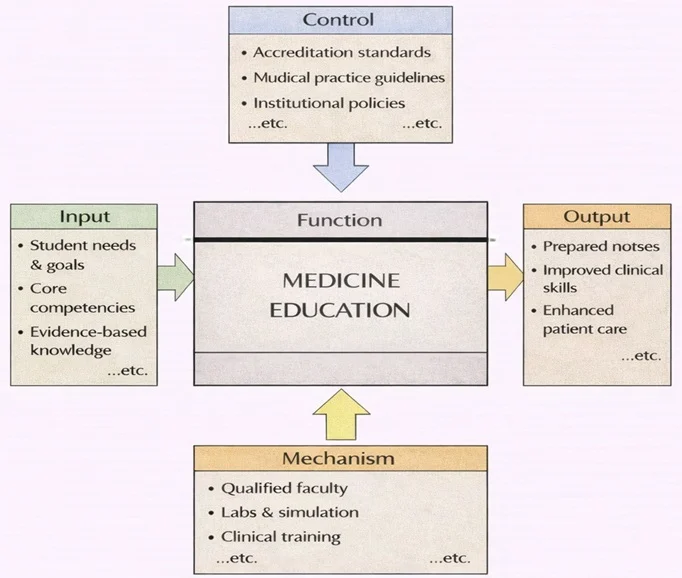
- What role do controls play within the IDEF0 functional system model of medicine education?Answer: Controls—such as accreditation standards, professional practice guidelines, and institutional policies—dictate what competencies must be taught and set safety, ethical, and legal thresholds that transform raw inputs into qualified, safe medical professionals.
- What is the primary mechanism driving antimicrobial resistance (AMR) in modern healthcare settings?Answer: Overuse and selective pressure from misuse of antibiotics in human medicine and livestock farming enable mutant bacterial strains possessing resistance genes (e.g., beta-lactamases) to survive and proliferate, passing resistant traits to subsequent generations.
- How does primary care serve as the gatekeeper within integrated healthcare delivery systems?Answer: Primary care provides early risk assessment, preventative screening, and initial diagnostic triage. By managing general illnesses and coordinating referrals to sub-specialists, it prevents system overload and ensures patient care is continuous and cost-effective.
- What is the significance of evidence-based practice (EBP) in daily clinical decision-making?Answer: EBP ensures clinicians integrate the best available clinical research trial data with clinical expertise and patient preferences, minimizing reliance on anecdotal habits and reducing adverse patient outcomes.
- Explain the biological concept of gene editing utilizing CRISPR-Cas9 technology in human disease.Answer: CRISPR-Cas9 utilizes a guide RNA molecule to target a specific genomic DNA sequence, allowing the Cas9 endonuclease enzyme to make double-stranded cuts. This enables precise insertion, deletion, or modification of pathogenic gene sequences directly at their chromosomal location.
Section 2: Thought-Provoking Analytical & Scenario Questions
- A rural clinic faces severe diagnostic delays due to lack of local radiologist coverage. How could implementing AI-driven imaging triage re-engineer their emergency workflow?Answer: Cloud-based machine learning algorithms could immediately evaluate digital X-rays and CT scans upon acquisition, automatically tagging life-threatening emergency anomalies such as pneumothorax or acute intracranial hemorrhage. This prioritizes urgent cases for remote tele-radiologist sign-off within minutes, drastically cutting door-to-treatment time for critical emergencies while optimizing local nursing and clinical triage resources.
- Evaluate the bioethical tension between individual autonomy and public health benefit during a global pandemic vaccine rollout.Answer: Autonomy asserts an individual’s right to refuse bodily interventions, whereas public health ethics operates on non-maleficence and beneficence to protect vulnerable populations via herd immunity. Managing this requires transparent risk communication, targeted educational outreach, and policy balances that minimize coercive mandates while protecting health system capacity.
- How does the rise of multi-morbidity in aging populations challenge traditional, single-disease clinical practice guidelines?Answer: Traditional guidelines target isolated conditions, but elderly patients often present with overlapping diseases (e.g., chronic kidney disease, heart failure, type 2 diabetes). Applying multiple single-disease guidelines simultaneously leads to polypharmacy, adverse drug interactions, and conflicting clinical goals, necessitating holistic, personalized geriatric management.
- Describe how telemonitoring and digital biomarkers transform chronic heart failure management.Answer: Wearable sensors and smart scales continuously record metrics such as daily weight fluctuation, heart rate variability, and oxygenation levels. Algorithms detect fluid retention early (e.g., sudden weight gain due to pulmonary congestion), allowing clinicians to adjust diuretic dosing remotely before acute decompensation requires hospitalization.
- In what ways might xenotransplantation (using genetically edited pig organs) solve organ shortages, and what physiological barriers must be overcome?Answer: Xenotransplantation offers a scalable source of donor organs. However, physiological barriers include hyperacute immune rejection mediated by human antibodies against porcine surface antigens (e.g., alpha-gal), potential transmission of porcine endogenous retroviruses (PERVs), and functional vascular incompatibilities. CRISPR knockouts of rejection antigens are critical to solving these issues.
- How does interdisciplinary teamwork between pharmacists, physicians, and nurses reduce hospital medication errors?Answer: Physicians prescribe therapeutics based on clinical pathology, clinical pharmacists verify dosages, renal clearances, and cross-reactivities, and nurses manage administration timings and real-time bedside symptom monitoring. This multi-layered cross-verification systematically intercepts prescribing and dosing errors.
- Analyze the potential socio-economic consequences if precision gene therapies remain priced at millions of dollars per dose.Answer: Exorbitant pricing creates severe health inequities where life-saving curative gene treatments are restricted to wealthy individuals or high-resource countries. This widens mortality and morbidity gaps between socio-economic classes and threatens to bankrupt public health insurance funds unless novel value-based pricing and manufacturing innovations emerge.
- Why is diagnostic clinical reasoning superior to simple pattern matching when dealing with atypical disease presentations?Answer: Simple pattern matching relies on classic symptoms that may be absent in elderly, immunocompromised, or diabetic patients (e.g., painless myocardial infarction). Structured diagnostic clinical reasoning uses probabilistic logic, hypothesis generation, and step-by-step exclusion based on underlying physiology, preventing misdiagnosis.
Section 3: Applied Step-by-Step Mathematical Calculations
- Calculation of Positive Predictive Value (PPV) in Diagnostic Testing: A screening test for a medical condition has a sensitivity of 90% and a specificity of 95%. In a population of 10,000 individuals where the disease prevalence is 2% (200 true cases), calculate the Positive Predictive Value (PPV).Answer: Step 1: Calculate True Positives (TP): TP = Sensitivity × Diseased Population = 0.90 × 200 = 180 individuals. Step 2: Calculate False Positives (FP): Non-diseased Population = 10,000 – 200 = 9,800. FP = (1 – Specificity) × Non-diseased Population = (1 – 0.95) × 9,800 = 0.05 × 9,800 = 490 individuals. Step 3: Calculate PPV using formula PPV = TP / (TP + FP): PPV = 180 / (180 + 490) = 180 / 670 ≈ 0.2687 or 26.87%. Thus, a patient with a positive test result has an approximately 26.87% probability of actually having the disease.
- Number Needed to Treat (NNT) Calculation: In a clinical trial for a new antihypertensive drug, the 5-year stroke rate was 8% in the control group (Control Event Rate, CER = 0.08) and 5% in the treatment group (Experimental Event Rate, EER = 0.05). Calculate the Absolute Risk Reduction (ARR) and the Number Needed to Treat (NNT).Answer: Step 1: Calculate Absolute Risk Reduction (ARR): ARR = CER – EER = 0.08 – 0.05 = 0.03 (or 3%). Step 2: Calculate Number Needed to Treat (NNT): NNT = 1 / ARR = 1 / 0.03 ≈ 33.33. Rounding up to the next whole person, NNT = 34. This means 34 patients need to be treated with the new drug for 5 years to prevent 1 additional stroke.
- Glomerular Filtration Rate (GFR) Adjustment for Body Surface Area: A patient’s absolute creatinine clearance is measured at 75 mL/min. The patient’s calculated Body Surface Area (BSA) is 2.05 m2. Standardize this patient’s GFR to the body surface area standard of 1.73 m2.Answer: Step 1: Use the adjustment formula: Standardized GFR = Measured GFR × (1.73 m2 / Patient BSA). Step 2: Substitute values into equation: Standardized GFR = 75 × (1.73 / 2.05). Step 3: Perform division and multiplication: 1.73 / 2.05 ≈ 0.8439. Standardized GFR = 75 × 0.8439 ≈ 63.29 mL/min/1.73 m2. The patient’s normalized GFR is approximately 63.29 mL/min/1.73 m2.
- Pharmacokinetic Half-Life ( t1/2 ) and Elimination Constant: A therapeutic drug has a first-order elimination rate constant (η) of 0.115 h-1. Calculate the biological half-life ( t1/2 ) of the drug using the constant ln(2) ≈ 0.693.Answer: Step 1: Use the first-order pharmacokinetics half-life formula: t1/2 = 0.693 / η. Step 2: Substitute the elimination rate constant η = 0.115 h-1: t1/2 = 0.693 / 0.115 ≈ 6.026 hours. The half-life of the therapeutic drug is approximately 6.03 hours.
- Calculation of Anion Gap in Serum Chemistry: A patient’s metabolic panel reveals Sodium (Na+) = 140 mEq/L, Chloride (Cl–) = 102 mEq/L, and Bicarbonate (HCO3–) = 18 mEq/L. Calculate the serum Anion Gap.Answer: Step 1: Use the serum Anion Gap formula: Anion Gap = [Na+] – ([Cl–] + [HCO3–]). Step 2: Add unmeasured serum anions: [Cl–] + [HCO3–] = 102 + 18 = 120 mEq/L. Step 3: Subtract from serum Sodium concentration: Anion Gap = 140 – 120 = 20 mEq/L. The calculated Anion Gap is 20 mEq/L (indicating a high anion gap metabolic acidosis).
- Body Mass Index (BMI) and Target Weight Shift: A patient has a mass of 95 kg and a height of 1.75 m. Calculate the patient’s current BMI, and determine the exact weight loss in kg required for the patient to reach the upper cutoff of the normal BMI range (24.9 kg/m2).Answer: Step 1: Calculate current BMI using formula BMI = weight / (height)2: Height squared = (1.75)2 = 3.0625 m2. Current BMI = 95 / 3.0625 ≈ 31.02 kg/m2. Step 2: Calculate target mass for BMI = 24.9 kg/m2: Target Mass = Target BMI × Height2 = 24.9 × 3.0625 ≈ 76.26 kg. Step 3: Calculate required weight loss: Weight Loss = Current Mass – Target Mass = 95 – 76.26 = 18.74 kg. The patient must lose approximately 18.74 kg to achieve a normal BMI.
- Mean Arterial Pressure (MAP) Calculation: A clinical vitals monitor measures a patient’s blood pressure as 135/85 mmHg (Systolic BP = 135 mmHg, Diastolic BP = 85 mmHg). Calculate the Mean Arterial Pressure (MAP).Answer: Step 1: Use the clinical MAP formula: MAP = Diastolic BP + (1/3) × (Systolic BP – Diastolic BP). Step 2: Calculate Pulse Pressure (PP): PP = 135 – 85 = 50 mmHg. Step 3: Calculate MAP: MAP = 85 + (50 / 3) = 85 + 16.67 = 101.67 mmHg. The patient’s Mean Arterial Pressure is approximately 101.67 mmHg.
- Pediatric Weight-Based Medication Dosing: A pediatric patient weighing 18 kg is prescribed Amoxicillin at a dosage of 40 mg/kg/day, divided into two equal doses every 12 hours. Calculate the exact dose in mg to be administered per individual administration.Answer: Step 1: Calculate total daily dose in mg: Total Daily Dose = 18 kg × 40 mg/kg/day = 720 mg/day. Step 2: Divide by the number of doses per day (2 doses): Single Dose = 720 mg / 2 = 360 mg. The patient should receive 360 mg of Amoxicillin per dose every 12 hours.