
Most people meet advertising as noise: a skippable clip, a banner that follows them, a slogan they half-remember. But the craft is closer to architecture than decoration. A campaign is a structure built to carry one idea—clearly—through many formats, deadlines, and distractions.
Imagine a simple brief: “Increase sign-ups.” The team jumps straight to headlines and visuals, and the work looks energetic… yet nothing moves. Often the failure isn’t creativity. It’s the missing spine: a specific audience tension, a single promise that feels true, and a reason the promise deserves belief. When those are weak, the ad becomes a costume without a person inside it.
Advertising is therefore a practical discipline in attention, meaning, and choice. You learn to translate a messy business problem into one sharply framed message. You learn how to test whether a claim is confusing, whether a visual is saying the opposite of your words, and whether a call-to-action is asking too much too soon. You also learn the ethics of influence: the thin line between persuasion and manipulation, and how trust is lost faster than it is earned.
This page is written like a small studio course. You will build one mini-campaign across print and mobile, not to “make something pretty,” but to practice the sequence that professionals repeat: interpret the brief, find an insight, form a single-minded proposition, design the key visual, then adapt the idea to different channels without breaking it.
Advertising is where creativity meets psychology, strategy, and technology to shape how people think and act. It’s more than selling—it’s storytelling with purpose. Great ads catch attention, stir emotion, and lead to action. Whether it’s boosting sales, building a brand, or changing public opinion, advertising connects messages with audiences in ways that are powerful and lasting.
In today’s fast-paced world, advertising is essential—not just for companies, but also for governments, nonprofits, and individuals. It appears in many forms: from TV commercials and billboards to social media content and mobile campaigns. As audiences split across platforms, advertisers must tailor their messages while keeping a clear brand voice. Success often comes through storytelling, humor, urgency, or emotion—all designed to hold attention in a noisy media landscape.
Advertising blends data with imagination. It draws on consumer psychology, market research, and trend analysis to shape campaigns. Tools like A/B testing, business analytics, and social listening help refine strategies in real time. Successful campaigns are rooted in a deep understanding of who the audience is—what they want, how they think, and where they spend their time. According to Nielsen, advertisers increasingly rely on clear metrics like impressions and click-through rates to measure results and improve performance.
Today’s advertisers must be flexible. While classic methods still matter, digital tools have changed the game. Social media has made engagement more personal. Ads now take many interactive forms—shoppable videos, gamified content, and AR filters turn viewers into participants. New technologies like AI-generated content and automated ad buying add speed and precision. Insights from WARC show how global advertisers adapt quickly to changing consumer habits and digital tools.
Advertising doesn’t just sell—it shapes culture. It influences what we wear, how we speak, and what we care about. It can highlight issues like sustainability, diversity, and public health. Whether from major brands, grassroots movements, or public health campaigns, strong ads can start conversations and spark change. At the same time, advertising fuels the global economy—driving consumer spending, supporting media, and creating jobs. According to Anadolu Agency, global ad spending is set to exceed $1 trillion annually, underscoring its central economic role.
Yet with its power comes responsibility. Concerns about false claims, data misuse, and manipulative tactics are growing. Audiences demand honesty and transparency. Ethical advertising respects privacy, tells the truth, and stays sensitive to cultural differences. Groups like the Interactive Advertising Bureau (IAB) promote standards that build trust while supporting innovation. In the long run, brands that stay authentic earn loyalty—not just attention.
As a field of study, advertising draws from business, media, psychology, and technology. Students learn copywriting, visual design, campaign strategy, and consumer insight. Staying current requires constant learning and adaptation. As shown in Adweek, trends like influencer marketing, sustainability, and immersive content are reshaping the industry. Career paths range from creative and strategy to data and media planning—matching the many channels through which stories are told.
Advertising mirrors the world while helping to shape it. Its influence goes beyond products—it touches culture, values, and the way people connect. As global markets grow and technology evolves, future success in advertising will depend on understanding people—their dreams, concerns, and what truly moves them. The brands that master both the art and the science of advertising will not only attract attention but also help shape the stories that define our time.
Explore Related Pathways in Arts, Design, and Media
Advertising rarely stands alone. It borrows the visual discipline of Graphic Design, the narrative instincts of Film and Media Studies, and the audience-awareness of Public Relations—then turns these ingredients into messages designed to travel.
As campaigns move across platforms, strategy becomes inseparable from execution. That is why modern advertising naturally overlaps with Digital Communication Strategies, where timing, channels, and measurable engagement shape creative decisions.
Fine & Performing Arts
Explore the craft side—how ideas become images, layouts, and brand signatures in Fine Arts, or leverage storytelling, presence, and emotion in Performing Arts.
Journalism
Sharpen your sense of ethics, framing, headlines, credibility, and what audiences accept as trustworthy communication by exploring Journalism.
Architecture
Train your mind to think in systems, constraints, and human experience with Architecture to strengthen the realism and depth of creative strategy.
Interactive Tool: Campaign Architecture Lab
Configure a campaign spine below to see how strategic alignment affects predicted performance and creative messaging in real time.
The Brief Is the Real Beginning
The first mistake beginners make is treating a brief like a formality. In real work, the brief is the invisible steering wheel. It decides what counts as “good,” what will be measured, who needs to be persuaded, and how much risk is acceptable. If the brief is vague, the campaign becomes a guessing game. If the brief is sharp, creativity becomes purposeful instead of random.
A useful brief is not long; it is specific. It clarifies the job the message must do, the audience’s current behavior, the desired next step, and the constraints that cannot be ignored. It also forces you to notice what the client may not say clearly: whether the true problem is awareness, trust, price sensitivity, distribution, convenience, or simply misunderstanding.
A practical “Brief Clarifier” checklist:
- Goal: What change do we want (belief, behavior, sign-up, trial, repeat)?
- Audience: Who exactly, and what do they already assume?
- Barrier: What stops them (doubt, effort, habit, cost, fear, status)?
- Offer: What is the promise (and what is it not)?
- Proof: Why should anyone believe us?
- Channel reality: Where will this live (and how will it be seen)?
- Constraints: Legal, brand rules, timing, budget, approvals.
- Success signal: What would convince us it worked?
When you can answer these questions in plain language, the creative work becomes easier. You stop “inventing ads,” and start building a message that has a destination.
Insight Before Ideas: Finding the Human Friction
Advertising is often taught as idea-generation. But strong campaigns rarely start with a clever line. They start with friction: a tension in the audience’s life that the product or service can honestly relieve. The job of insight is not to sound poetic; it is to sound recognizably true.
To find human friction, you look for what people want but struggle to obtain: time, certainty, status, comfort, control, belonging, or simplicity. You also look for what they fear: being judged, wasting money, making the wrong choice, missing out, or feeling powerless. A good insight names the hidden hesitation behind a decision.
Insight mining prompts (use any 5):
- “I want to buy this, but …” (complete the sentence 10 ways)
- What do people do instead of choosing this option?
- What social risk is attached to this choice (image, identity, pride)?
- What is the biggest effort cost (time, steps, learning curve)?
- What part of the promise feels unbelievable (and why)?
- What do first-time users misunderstand?
- What makes the audience postpone the decision?
- What “default habit” competes with us?
Once you find friction, you can craft a message that feels like it is reading the audience’s mind. That is the moment where persuasion begins to feel less like pushing, and more like helping.
One Promise, Many Formats: Cross-Channel Consistency
Modern advertising is rarely a single ad. It is an idea that must survive translation: from a poster to a short video, from a social post to a landing page, from a brand story to a call-to-action. The challenge is not variety—it is coherence. If the promise changes from channel to channel, you do not have a campaign; you have a collection.
Consistency does not mean repeating the same sentence everywhere. It means keeping the same “spine”: the same audience tension, the same promise, and the same reason-to-believe. Each format can express the idea differently, but the audience should feel it is the same message wearing different clothing.
A simple “Campaign Spine” template:
- Audience: (the specific group you are speaking to)
- Tension: (the friction they feel)
- Promise: (what changes for them)
- Proof: (why it is credible)
- Voice: (how it should feel: bold, calm, warm, precise, playful)
- Action: (the next step you want)
Cross-channel work also demands discipline about hierarchy. A billboard cannot carry an essay. A short video needs one clear beat. A landing page must answer doubts. The same campaign spine can express itself through different emphases—yet remain unmistakably one idea.
Why Campaigns Break When Teams Don’t Share One Spine
Campaign Strategy
Planning and executing multi-platform marketing campaigns to achieve specific business objectives.
- Market Research: Consumer behavior & trends.
- Goal Setting: Driving awareness or sales.
- Message Development: Crafting central themes.
Creative Development
Designing visuals, copy, and concepts that bring advertising messages to life across platforms.
- Visual Design: Graphics, video, animation.
- Copywriting: Persuasive headlines & scripts.
- Brand Alignment: Reflecting core identity.
Media Planning
Selecting effective channels and platforms to reach target audiences and maximize performance.
- Audience Analysis: Demographics & behaviors.
- Channel Selection: Social, TV, print, outdoor.
- Budget Allocation: Efficient distribution.




Advertising Workflows: Strategy → Creative → Media → Learning
Advertising is not one skill. It is a chain of work that must remain connected. If strategy is unclear, creative becomes decoration. If creative is strong but media is poorly chosen, the message never reaches the right people. And if nobody measures what happened, the team repeats mistakes with confidence.
Below is a practical way to understand the core functions inside advertising. Think of them as four “working parts” that keep the campaign spine coherent across channels.
Campaign Strategy
What it is: Planning and directing a multi-platform campaign so every piece of work pushes toward the same business goal.
What it includes: market research, goal definition, audience focus, message direction, and a clear “what success looks like” signal.
When it matters most: at the beginning—before ideas multiply and confusion becomes expensive.
Creative Development
What it is: Translating the campaign spine into words, visuals, and experiences that people can feel and remember.
What it includes: key visuals, layout systems, headlines, scripts, storyboards, and brand-aligned tone.
When it matters most: when attention is crowded—creative must clarify, not merely impress.
Media Planning
What it is: Choosing the channels and placements that best match the audience, the message format, and the budget.
What it includes: audience targeting, channel selection, budget allocation, timing, and frequency.
When it matters most: when a good message risks being delivered to the wrong crowd, at the wrong time, in the wrong shape.
Learning Loop (Testing & Optimization)
What it is: Turning results into improvement—so the campaign evolves rather than repeats itself.
What it includes: pre-tests for clarity, A/B comparisons, audience feedback, and post-campaign analysis that guides the next iteration.
Proof, Not Poetry: Reasons-to-Believe That Hold Up
Many ads fail not because the creative is weak, but because the audience does not believe the claim. “Better,” “faster,” and “premium” are not persuasive by themselves. They are invitations for skepticism. A reason-to-believe is the bridge between promise and trust.
Proof can be factual (data, tests, guarantees), experiential (demo, trial, before/after), social (reviews, experts, endorsements), or structural (how it is made, what standards it meets). The best proof is not the loudest; it is the one that neutralizes the audience’s main doubt.
Proof menu (choose 2–3 that fit your claim):
- Specificity: numbers, comparisons, clear limits (not vague superlatives)
- Mechanism: a simple explanation of why it works
- Trial: free sample, demo, return policy, guarantees
- Social evidence: reviews, community adoption, repeat usage
- Authority: standards, certifications, professional validation
- Transparency: what it does and doesn’t do (honesty builds trust)
Measurement That Improves Creativity (Not Just Reporting)
Measurement is often treated as a cold ending: the campaign runs, the numbers appear, and the story is over. But the most powerful use of measurement is earlier and warmer: it acts like feedback in rehearsal. It helps you discover which part of your message is unclear, which audience segment is responding, and where people lose interest.
Metrics by goal (a student-friendly map):
- Awareness: reach, frequency, branded search lift
- Understanding: message recall, survey questions, comment quality
- Engagement: saves, shares, watch time, meaningful replies
- Action: click-through rate, conversion rate, cost per action
- Retention: repeat purchase, subscription renewal, return visits
Ethics of Influence in the Age of Data
Advertising always shapes choices, but digital systems amplify the power and the risk. Data can help you speak more relevantly; it can also tempt you to exploit vulnerabilities. The ethical question is not whether you are persuasive. The question is whether you are persuasive with respect.
An ethical self-check (quick but serious):
- Would this message still feel fair if aimed at a younger sibling or elderly parent?
- Are we implying benefits we cannot deliver consistently?
- Are we hiding important conditions behind tiny text?
- Are we using fear, shame, or insecurity as the main engine?
- Would we be comfortable explaining our targeting choices publicly?
- Does the campaign build trust, or spend it?
Portfolio Build: A Mini-Campaign You Can Show
To learn advertising, you need more than explanations—you need a project that forces real decisions. Below is a mini-campaign structure you can complete in stages.
Mini-campaign assignment (recommended format):
- Brief (1 page): define goal, audience, barrier, offer, proof, channel reality, success signal.
- Insight (10 bullets): list audience frictions; choose one that feels sharp and true.
- SMP shortlist (15 → 3 → 1): write 15 single-minded propositions; shortlist and defend one.
- Proof plan (3 items): choose 2–3 reasons-to-believe; explain why they answer doubt.
- Key visual + headline: design one core execution (poster or static social).
- Adaptations (3 formats): create three variations (e.g., story, short script, banner).
- Landing page logic: outline what must be answered: promise, proof, objections, action.
- Reflection (300–500 words): what changed after feedback? what would you test next?
Advertising: Practice Track Overview
Learn how real campaigns come together: clarify the brief, find an insight, craft a single-minded proposition (SMP), turn it into ideas, and express those ideas across posters, social cards, and short video. You’ll finish with a mini-campaign you can show in a portfolio.
What You’ll Build
- Mini-Campaign: A2 poster + 1080×1080 + 1080×1920 + 6-sec bumper script, all from one idea.
- Headline Set: 12 options across three tones (e.g., practical, playful, provocative).
- Creative Case: One-pager that explains your audience, insight, SMP, idea, and mock results.
Core Skills You’ll Practice
- Briefing: Define audience, problem, SMP, mandatories, reasons-to-believe (RTBs).
- Ideation: Map idea territories; ladder claims from benefit → reason → proof.
- Copy & Art: Headlines, body, CTA; key visual (KV); layout for print and mobile.
- Light Measurement: Simple pre-tests and funnel goals; basic A/B thinking.
Advertising: Step-by-Step Lessons (Detailed Edition)
Lesson 1 — Read the Brief Like a Pro
Clear briefs prevent idea sprawl and rework. If the brief is fuzzy, the creative will be fuzzy.
Lesson 2 — Message House (From Insight to Proof)
Align copy and art around one promise with supporting benefits and proofs.
Lesson 3 — Craft a Single-Minded Proposition (SMP)
Rule: One promise, one idea, ≤12 words, plain language.
Lesson 4 — Map Idea Territories
Explore multiple creative routes: Metaphor, Demonstration, Social proof, Contrarian, Challenge, and Utility.
Lesson 5 — Headline Lab (12 Options)
Produce 12 headlines across 3 tones (practical, playful, provocative) paired with clear CTAs.
Lesson 6 — From Idea to Key Visual (KV)
Focus on one primary image, strong typographic hierarchy, safe areas, and high contrast.
Lesson 7 — Cross-Format Adaptation
Adapt key visuals across print (A2) and digital standard layouts (1080×1080, 1080×1920).
Lesson 8 — Six-Second Bumper Script
Structure for fast impact: 0–2s hook, 2–4s benefit, 4–6s CTA + brand lockup.
Lesson 9 — Pre-Test for Clarity
Gather rapid feedback from 3–5 people to verify offer clarity, duration, and action cues.
Lesson 10 — Light Measurement Plan
Track simple funnel steps: Impressions → CTR → CVR, optimizing variables sequentially.
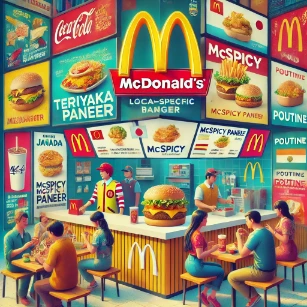
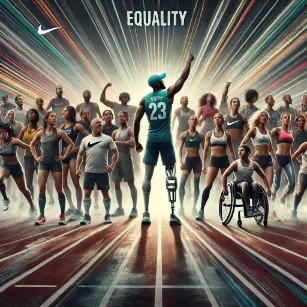
Campaign Gallery: What Real Ads Are Trying to Do




Modern Advertising Patterns: What Changed and Why It Matters





🎯 Career Guidance Tool
Is Advertising Right For You?
Explore career pathways, check your fit, and assess your skills — before you commit to a degree.
Explore Advertising Career Options →Advertising – Frequently Asked Questions
- What is advertising, in one sentence?
Advertising is planned, paid communication that turns a clear promise into messages and formats that reach a chosen audience and encourage a measurable next step. - Is advertising the same as marketing?
No. Marketing is broader (product, pricing, distribution, customer experience, brand strategy). Advertising is one tool within marketing, focused on communication. - Why do some campaigns fail even when the visuals look impressive?
Because the “spine” is weak. Beautiful execution cannot rescue a message people don’t understand or don’t believe. - What should a good advertising brief include?
A useful brief states the goal, target audience, main barrier, offer, required proof, channel reality, constraints, and success signal. - What is an SMP (single-minded proposition), and why does it matter?
An SMP is the one idea the campaign must communicate. It creates focus across all channels. - What counts as proof in advertising?
Proof can be data, demonstrations, guarantees, certifications, expert validation, or credible social evidence. - Do I need to be good at drawing or design to study advertising?
No. Many roles are strategy-, research-, writing-, or media-focused. - How do I choose channels without making the campaign feel scattered?
Keep one campaign spine, then adapt emphasis by format according to audience habits. - What basic numbers should I understand as a beginner?
Know reach, frequency, engagement rate, click-through rate (CTR), conversion rate (CVR), and cost per action (CPA). - What ethical mistakes should I avoid early?
Avoid misleading claims, hidden conditions, manipulative scarcity, and fear-based persuasion.
Rewind and Reflect: Key Questions in Advertising
- When you look back at an advertisement you remember, what exactly made it “stick”?
Was it a line of language, a visual cue, or an emotional response? Reflect on how it simplified a complex choice into one promise. - What is advertising really trying to change: awareness, belief, or behaviour?
Identify which layer a campaign targets to determine whether it seeks to gain attention, build trust, or prompt immediate action. - Where does creativity help most: grabbing attention, clarifying meaning, or building trust?
Analyze whether an ad’s creative elements function primarily as a visual hook, a explanatory metaphor, or an assurance of credibility. - How should advertisers treat attention: as something to capture, or something to earn?
Consider which messaging approaches feel like intrusive interruptions versus valuable, well-timed exchanges.