
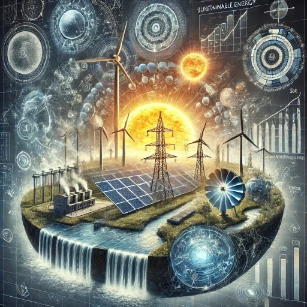
An illustration of Renewable and Sustainable Energy Thermodynamics, depicting solar panels, wind turbines, hydroelectric dams, and geothermal plants, with dynamic energy flow emphasizing thermodynamic efficiency and sustainability.
Thermodynamics Learning Pathway
Thermodynamics – Overview
Master the foundational principles governing energy, work, heat, and equilibrium across physical systems.
Classical Thermodynamics
Explore macroscopic state functions, pressure-volume behavior, and ideal/real gas relationships.
Laws of Thermodynamics
Study the Zeroth, First, Second, and Third laws shaping energy conservation and directionality.
Statistical Thermodynamics
Bridge quantum microstates and bulk thermodynamic properties using partition functions.
Engineering Thermodynamics
Apply thermal laws to power plants, refrigeration cycles, and real-world mechanical engines.
Heat Transfer
Understand the core mechanisms of thermal energy movement: conduction, convection, and radiation.
Thermodynamic Cycles
Analyze closed and open processes including Carnot, Rankine, Brayton, Otto, and Diesel cycles.
Non-Equilibrium Thermodynamics
Analyze dynamic systems governed by gradients, fluxes, and entropy production.
Phase Equilibria & Phase Transitions
Study Clausius-Clapeyron relations, triple points, latent heat, and phase stability.
Chemical Thermodynamics
Examine reaction spontaneity, Gibbs free energy, and equilibrium constants in chemical systems.
Thermodynamics of Materials
Explore phase diagrams, alloy solidification, defects, and thermal stability in material structures.
Renewable & Sustainable Energy Thermodynamics
Current page. Apply exergy analysis to solar, wind, geothermal, and bioenergy system optimization.
Computational Thermodynamics
Utilize CALPHAD methods and numerical simulations to model multi-component phase behavior.
The First and Second Laws of Thermodynamics in Renewable Energy
Energy Conversion and Storage in Renewable Systems
Exergy Analysis and Sustainability Metrics
Thermodynamics of Heat Transfer in Renewable Energy
Focus in Renewable and Sustainable Energy Thermodynamics
How the Study of Renewable and Sustainable Energy Thermodynamics Helps Prepare Students for University Studies
Core Topics Covered to Help Prepare for University Studies in Renewable and Sustainable Energy Thermodynamics
- Thermodynamic laws and their application in energy systems
- Energy conversion and storage technologies
- Exergy analysis and system efficiency optimization
- Heat transfer in renewable energy applications
- Sustainability assessment and environmental impact analysis
Common Challenges Faced in the Study of Renewable and Sustainable Energy Thermodynamics
Examples of Current Applications of Renewable and Sustainable Energy Thermodynamics in Society
- Solar Power: Thermodynamics governs the efficiency of solar panels and concentrated solar power (CSP) plants, which generate electricity from sunlight.

An illustration of solar power and thermodynamics, depicting solar panels converting sunlight into electricity and a concentrated solar power (CSP) plant using mirrors to generate thermal energy for electricity production.
- Wind Energy: Aerodynamic and thermodynamic principles optimize wind turbine blade design for maximum energy extraction.
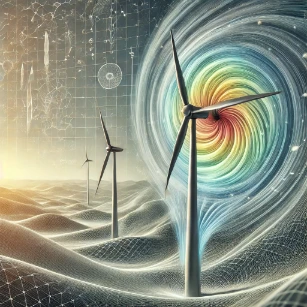
An illustration of wind energy and thermodynamics, showcasing modern wind turbines with aerodynamic blade designs, airflow patterns, and energy transfer to maximize wind power generation.
- Geothermal Energy: Heat transfer and fluid thermodynamics help in designing geothermal power plants that extract and utilize underground heat.

An illustration of geothermal energy and thermodynamics, depicting a geothermal power plant extracting underground heat, converting it into steam, and generating electricity through fluid dynamics and heat transfer.
- Hydropower: Hydroelectric plants use fluid dynamics and energy conversion principles to generate electricity efficiently.
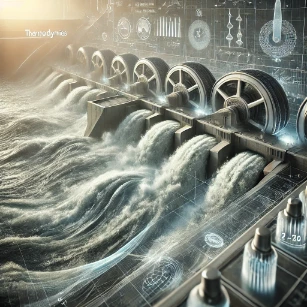
An illustration of hydropower and thermodynamics, depicting a hydroelectric power plant with flowing water driving turbines, converting kinetic energy into electricity using fluid dynamics and energy conversion principles.
Examples of Emerging Applications of Renewable and Sustainable Energy Thermodynamics in Society
- Hydrogen Economy: Thermodynamics plays a key role in optimizing hydrogen production, storage, and fuel cell technologies for zero-emission energy solutions.
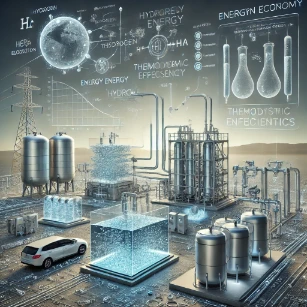
An illustration of the hydrogen economy and thermodynamics, showcasing hydrogen production via electrolysis, storage and transport infrastructure, and fuel cells generating clean electricity for zero-emission energy solutions.
- Artificial Photosynthesis: Inspired by natural processes, researchers are developing systems that use solar energy to convert water and carbon dioxide into synthetic fuels.
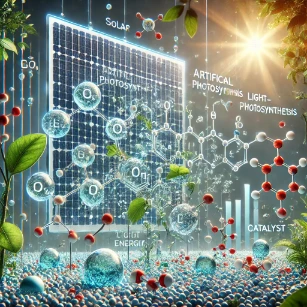
An illustration of artificial photosynthesis, depicting a system where solar energy drives chemical reactions to split water and convert carbon dioxide into synthetic fuels, inspired by natural plant processes.
- Phase-Change Thermal Storage: New materials that store and release heat efficiently are being integrated into renewable energy systems to provide continuous power supply.
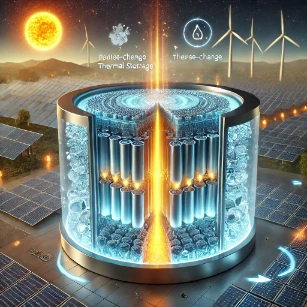
An illustration of phase-change thermal storage, depicting advanced materials absorbing and releasing heat efficiently within a renewable energy system, ensuring a continuous power supply.
- Waste Heat Recovery: Advances in thermoelectric generators and organic Rankine cycles allow industries to capture and reuse waste heat, improving sustainability.
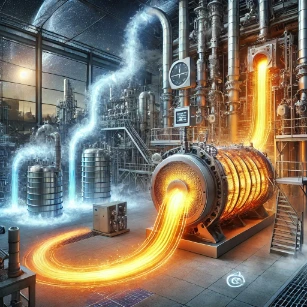
An illustration of waste heat recovery, showcasing thermoelectric generators and organic Rankine cycles capturing and reusing industrial waste heat to generate power, improving sustainability and energy efficiency.
Why Study Renewable and Sustainable Energy Thermodynamics
Supporting a Sustainable Energy Future
Efficiency and Resource Management
Thermodynamics of Energy Storage
Modeling and System Integration
Ethical and Global Context
Renewable and Sustainable Energy Thermodynamics Conclusion
Frequently Asked Questions: Renewable and Sustainable Energy Thermodynamics
1. What is meant by renewable and sustainable energy thermodynamics?
Renewable and sustainable energy thermodynamics applies the laws and concepts of thermodynamics to energy systems based on resources such as solar, wind, hydro, geothermal and biomass. It focuses on how efficiently these systems convert natural energy flows into useful work or heat, how much waste and entropy they generate, and how they can operate in a long-term sustainable way.
2. Why is thermodynamics important for understanding renewable energy systems?
Thermodynamics is essential because it sets the theoretical limits on how much useful energy can be extracted from sunlight, wind, flowing water or heat reservoirs. It explains efficiency, losses, and entropy production in devices like solar panels, wind turbines, hydroelectric plants and heat pumps, helping engineers design systems that make better use of available energy.
3. How do the First and Second Laws of Thermodynamics apply to renewable energy?
The First Law ensures that energy is conserved in renewable systems, so all electrical output, heat losses and stored energy must balance the incoming solar, wind or hydraulic energy. The Second Law explains why some of this input is inevitably degraded into less useful forms, limiting the maximum efficiency of conversion and shaping realistic performance targets for renewable technologies.
4. What thermodynamic limits affect solar energy conversion?
In solar thermal systems, thermodynamic limits arise from the temperature of the heat source and sink, so Carnot efficiency sets an upper bound on how much of the absorbed solar heat can become work. In photovoltaic systems, additional limits come from the semiconductor band gap and radiative losses, leading to theoretical efficiency limits and guiding the design of multi-junction and advanced solar cells.
5. How does thermodynamics help analyse wind and hydro power?
For wind and hydro, thermodynamics combines with fluid mechanics to describe how kinetic and potential energy of air or water is converted into mechanical shaft work and then electricity. Concepts like power coefficients, Betz limit, and losses in generators and gearboxes are all framed in terms of energy balances and irreversible processes that reduce ideal efficiency to realistic values.
6. What role do heat pumps and refrigeration cycles play in sustainable energy?
Heat pumps and efficient refrigeration cycles use thermodynamic principles to move heat from low temperature reservoirs to higher temperatures using external work, often powered by electricity from renewable sources. Their coefficient of performance (COP) can be greater than one, meaning that one unit of electrical energy can deliver several units of useful heating or cooling, which is crucial for low-carbon buildings and industry.
7. What is exergy and why is it important for sustainable energy analysis?
Exergy measures the maximum useful work that can be obtained from an energy source as it comes into equilibrium with its environment. In sustainable energy analysis, exergy helps identify where valuable energy quality is being destroyed by irreversibilities, guide better matching between energy sources and end uses, and highlight designs that reduce avoidable waste while still respecting the Second Law of Thermodynamics.
8. How do thermodynamics and energy storage relate in renewable systems?
Energy storage technologies such as batteries, pumped hydro, thermal storage tanks and hydrogen systems must obey the same thermodynamic laws as other devices. Thermodynamics helps quantify round-trip efficiency, losses during charging and discharging, and the entropy generated in each storage cycle, which are critical for integrating intermittent sources like solar and wind into reliable energy systems.
9. What is the connection between thermodynamics and the sustainability of energy systems?
Thermodynamics shows that every energy conversion process increases entropy and degrades energy quality, so a sustainable system must minimise unnecessary irreversibility, use high-quality energy sparingly, and rely on continuous natural flows such as solar radiation that are effectively inexhaustible on human time scales. It therefore supports strategies like efficiency first, waste heat recovery and careful matching of energy quality to tasks.
10. How can thermodynamics inform lifecycle and environmental assessments of renewable technologies?
Thermodynamic analysis can be extended beyond single devices to include the entire lifecycle of a technology, from material extraction and manufacturing to operation and recycling. By tracking cumulative energy use, exergy destruction and associated emissions, engineers and planners can compare technologies on an objective basis and choose options that deliver more useful energy services per unit of environmental impact.
11. Do renewable energy systems automatically satisfy the Second Law better than fossil-fuel systems?
Renewable systems draw on energy streams that are naturally replenished, but they still generate entropy and can still be thermodynamically inefficient if poorly designed. The Second Law applies equally to solar panels, wind turbines and biomass plants as to fossil-fuel power stations, so careful design is still needed to reduce losses and make best use of the available renewable resource.
12. Why should students learn thermodynamics in the context of renewable and sustainable energy?
Learning thermodynamics in the context of renewable and sustainable energy helps students see how abstract laws govern real-world questions of energy transition, climate change and technology design. It equips them to evaluate efficiency claims critically, understand system-level trade-offs, and contribute to designing low-carbon energy solutions as future scientists, engineers or policy makers.
Renewable and Sustainable Energy Thermodynamics: Review Questions and Answers
- What is renewable and sustainable energy thermodynamics?Answer: It is the study of energy transformations and efficiencies in systems that use renewable resources, applying thermodynamic principles to optimize energy conversion and minimize environmental impact.
- How does the First Law of Thermodynamics apply to renewable energy systems?Answer: The First Law, which states that energy is conserved, ensures that the energy input from renewable sources is accounted for in output work, heat transfer, and internal energy changes. This guides system efficiency and design.
- What role does entropy play in sustainable energy processes?Answer: Entropy measures disorder in a system and describes the irreversibility of energy conversion processes. In sustainable energy, minimizing entropy production is key to improving system efficiency and reducing waste heat.
- How can thermodynamic analysis improve the design of renewable energy devices?Answer: Thermodynamic analysis helps predict performance, optimize operating conditions, and identify losses in devices such as solar panels, wind turbines, and geothermal systems. This leads to enhanced efficiency and sustainability.
- What is the significance of the Carnot cycle in evaluating renewable energy systems?Answer: The Carnot cycle provides the theoretical maximum efficiency for a heat engine, serving as a benchmark to assess and improve the performance of practical renewable energy conversion systems.
- How do phase change materials, or PCMs, relate to sustainable energy thermodynamics?Answer: Phase change materials absorb and release latent heat during phase transitions. This makes them effective for thermal energy storage and temperature regulation in renewable energy systems, improving efficiency and stability.
- What is exergy analysis and why is it important in renewable energy applications?Answer: Exergy analysis quantifies the usable work potential of energy within a system. It identifies inefficiencies and areas for improvement, which is crucial for optimizing renewable energy systems and reducing environmental impact.
- How does the Second Law of Thermodynamics influence the efficiency of renewable energy systems?Answer: The Second Law limits the maximum efficiency achievable by any energy conversion process because entropy generation is unavoidable. It guides engineers to design systems that reduce irreversibilities and approach theoretical efficiency limits as closely as possible.
- In what ways do renewable energy systems benefit from computational thermodynamics?Answer: Computational thermodynamics uses simulations to model complex energy conversion processes. This enables the design, optimization, and scaling of renewable energy systems with improved performance and reduced costs.
- How do sustainable energy strategies incorporate thermodynamic principles to reduce environmental impact?Answer: Sustainable energy strategies apply thermodynamic concepts to enhance energy conversion efficiency, recover waste heat, and design processes that minimize energy losses. This leads to cleaner and more sustainable operations in power generation and industrial applications.
Renewable and Sustainable Energy Thermodynamics: Thought-Provoking Questions and Answers
- How could breakthroughs in renewable energy thermodynamics revolutionize global energy markets?Answer: Advances could lead to highly efficient, low-emission energy systems that reduce reliance on fossil fuels. Improved thermodynamic cycles and energy recovery methods may lower costs, drive widespread adoption of renewables, and reshape global energy policies toward sustainability.
- In what ways can exergy analysis transform the design of next-generation renewable energy systems?Answer: Exergy analysis pinpoints where energy degradation occurs. By minimizing these losses, designers can develop systems that maximize usable energy output, resulting in more efficient solar, wind, or geothermal installations with lower environmental footprints.
- How might integrating phase change materials with renewable technologies impact energy storage solutions?Answer: Integrating PCMs can enhance energy storage by maintaining stable temperatures and releasing or absorbing heat during phase transitions. This can improve the performance and reliability of renewable systems, particularly in solar thermal and building applications.
- What are the challenges in applying the Carnot efficiency limit to real-world renewable energy systems?Answer: Real systems face irreversibilities such as friction, heat loss, and material imperfections that prevent them from reaching the ideal Carnot limit. Overcoming these challenges requires innovative materials, advanced designs, and effective waste heat recovery strategies.
- How can computational modeling be used to optimize energy conversion in renewable systems?Answer: Computational modeling simulates the intricate processes of heat transfer, fluid dynamics, and chemical reactions in energy systems. This allows engineers to test various configurations, predict system performance, and optimize designs before physical implementation, saving time and resources.
- What implications does the Second Law of Thermodynamics have for the future of sustainable energy production?Answer: The Second Law sets a fundamental limit on energy conversion efficiency. Understanding these limits helps in designing systems that minimize energy loss, promoting the development of technologies that approach ideal efficiency and reduce environmental impact.
- How might advances in nanotechnology and thermodynamics lead to breakthroughs in renewable energy devices?Answer: Nanotechnology can improve material properties such as thermal conductivity and catalytic activity. When combined with thermodynamic principles, these advances may lead to more efficient solar cells, batteries, and fuel cells, significantly enhancing renewable energy performance.
- How do temperature fluctuations affect the performance and reliability of renewable energy systems?Answer: Temperature fluctuations can cause thermal expansion, stress, and inefficiencies in energy systems. Understanding these effects through thermodynamic analysis can lead to better insulation, adaptive control systems, and materials that maintain performance under varying conditions.
- What role does sustainability play in the thermodynamic analysis of energy systems?Answer: Sustainability in thermodynamic analysis focuses on maximizing energy efficiency, minimizing waste, and reducing environmental impact. It involves designing systems that conserve energy, use renewable resources, and reduce greenhouse gas emissions.
- How could improved heat transfer techniques enhance the efficiency of renewable energy systems?Answer: Enhanced heat transfer techniques can reduce thermal resistance and improve energy exchange rates. This leads to more effective cooling and heating in devices, better energy conversion in power cycles, and overall improved efficiency of renewable energy installations.
- In what ways can interdisciplinary research between thermodynamics and environmental science contribute to climate change mitigation?Answer: Interdisciplinary research can optimize energy systems, improve waste heat management, and design low-emission technologies. By integrating thermodynamic principles with environmental impact studies, researchers can develop sustainable solutions that address both energy needs and climate change challenges.
- What future innovations in computational thermodynamics might lead to breakthroughs in renewable energy system design?Answer: Future innovations could include advanced simulation algorithms, machine learning-enhanced models, and real-time monitoring systems. These tools will allow for precise optimization of energy flows, phase transitions, and system efficiency, ultimately leading to more robust and cost-effective renewable energy technologies.
Renewable and Sustainable Energy Thermodynamics: Numerical Problems and Solutions
- A solar panel receives solar radiation of 1000 W/m2. If the panel area is 2 m2 and efficiency is 20%, calculate the electrical power output.Solution:
- Calculate the power input: Pin = 1000 × 2 = 2000 W.
- Use Pout = η Pin.
- Substitute the efficiency: Pout = 0.20 × 2000.
- Calculate: Pout = 400 W.
Answer: 400 W - Calculate the energy produced in 5 hours by the solar panel in Problem 1.Solution:
- Use E = P t.
- Convert time: 5 h = 5 × 3600 = 18000 s.
- Substitute: E = 400 × 18000.
- Calculate: E = 7.2 × 10⁶ J.
Answer: 7.2 × 10⁶ J - A wind turbine has blade radius 20 m and wind speed 10 m/s. Calculate available wind power. Take ρ = 1.2 kg/m3.Solution:
- Calculate swept area: A = π r2 = π × 202 ≈ 1256 m2.
- Use wind power formula: P = (1/2) ρ A v3.
- Substitute: P = 0.5 × 1.2 × 1256 × 103.
- Calculate: P ≈ 7.54 × 10⁵ W.
Answer: 7.54 × 10⁵ W - If the turbine efficiency is 40%, calculate the actual power output.Solution:
- Use Pout = η Pavailable.
- Substitute: Pout = 0.4 × 7.54 × 105.
- Calculate: Pout ≈ 3.02 × 10⁵ W.
Answer: 3.02 × 10⁵ W - A geothermal plant extracts heat at 500 K and rejects heat at 300 K. Calculate the Carnot efficiency.Solution:
- Use η = 1 − (TC / TH).
- Substitute: η = 1 − (300 / 500).
- Calculate: η = 0.4 = 40%.
Answer: 40% - A solar thermal plant absorbs 1.5 × 10⁶ J of heat and produces 4.5 × 10⁵ J of work. Calculate the efficiency.Solution:
- Use η = W / Q.
- Substitute: η = (4.5 × 10⁵) / (1.5 × 10⁶).
- Calculate: η = 0.30 = 30%.
Answer: 30% - Calculate entropy change when 2000 J of solar heat is absorbed at 400 K.Solution:
- Use ΔS = Q / T.
- Substitute: ΔS = 2000 / 400.
- Calculate: ΔS = 5 J/K.
Answer: 5 J/K - A battery stores 5 kWh of energy. Convert this to joules.Solution:
- Use 1 kWh = 3.6 × 10⁶ J.
- Calculate: E = 5 × 3.6 × 106.
- Evaluate: E = 1.8 × 10⁷ J.
Answer: 1.8 × 10⁷ J - A hydroelectric plant has water flow rate 500 kg/s falling through 50 m. Calculate power output. Take g = 9.81 m/s2.Solution:
- Use P = m˙ g h.
- Substitute: P = 500 × 9.81 × 50.
- Calculate: P ≈ 2.45 × 10⁵ W.
Answer: 2.45 × 10⁵ W - If the system efficiency is 85%, calculate the usable power.Solution:
- Use Pusable = η Pinput.
- Substitute: Pusable = 0.85 × 2.45 × 105.
- Calculate: Pusable ≈ 2.08 × 10⁵ W.
Answer: 2.08 × 10⁵ W - A fuel cell produces 200 kJ of electrical energy while releasing 250 kJ of chemical energy. Calculate the efficiency.Solution:
- Use η = Eout / Ein.
- Substitute: η = 200 / 250.
- Calculate: η = 0.8 = 80%.
Answer: 80% - Calculate CO2 emissions avoided if a solar system replaces 107 J of fossil fuel energy, assuming 0.25 kg CO2 per MJ.Solution:
- Convert energy: 107 J = 10 MJ.
- Calculate avoided emissions: CO2 avoided = 10 × 0.25.
- Evaluate: CO2 avoided = 2.5 kg.
Answer: 2.5 kg CO2