
Cell physiology explores the vital functions and biochemical processes that enable cells to sustain life, communicate, and adapt to their environment. As a subfield of science, it forms a crucial part of the study of biology and plays a foundational role in the broader discipline of cell biology. Students of cell physiology investigate the dynamic processes that maintain homeostasis, regulate metabolism, and support survival. These include signal transduction pathways detailed in cell communication, and the regulated series of events known as the cell cycle.
Cellular behavior is also shaped during cell development, when physiological functions are assigned to different cell types. The structural components that support and enable cellular functions are explored in cell structure, while broader ecological relationships are addressed in ecology. The evolutionary significance of physiological adaptations is covered in evolutionary biology. These physiological mechanisms are often encoded in the genetic instructions inherited across generations, which are studied in genetics and genomics.
To understand how cellular functions are inherited and regulated, students delve into Mendelian genetics and molecular genetics. These topics help explain how genes control enzyme activity, transport mechanisms, and energy conversion in the cell. At the core of this is the structure and interaction of DNA and RNA, along with the processes of gene expression and protein synthesis. When these processes malfunction, it can lead to genetic mutation and altered cell behavior, which are crucial considerations in medical and research contexts.
The study of molecular basis of inheritance provides a framework for understanding how physiological traits are passed down and expressed. Such insights are complemented by investigations into molecular evolution and the use of molecular techniques in research. Applications in biotechnology and healthcare—such as those in applications of genetics in medicines and DNA technology—highlight how cell physiology knowledge is translated into real-world innovations.
On a population level, physiological traits are explored through population genetics and quantitative genetics, offering a broader lens on how cellular functions impact organisms and species. Through this interconnected web of knowledge, cell physiology empowers students to grasp life at its most fundamental level, forming a basis for future exploration in biological science and biomedical fields.
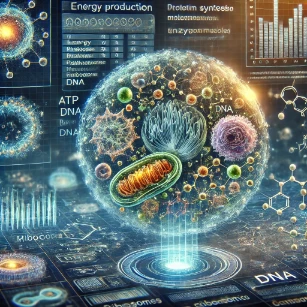
Cell Physiology and Biochemistry. It features a futuristic microscopic visualization of cells engaged in vital biochemical processes, including energy production in mitochondria, protein synthesis in ribosomes, and enzymatic activity. The background includes an advanced bioinformatics interface displaying real-time metabolic data and molecular interactions, emphasizing the complexity of cellular functions in sustaining life.
IDEF0 Functional Model: Cellular Metabolic & Membrane Transport System
- Inputs (Left): Extracellular Glucose, Oxygen (O2), Intracellular Na+/K+ Ions, ADP & Inorganic Phosphate.
- Controls (Top): Homeostatic pH/Temperature Bounds, Allosteric Enzyme Feedback, Membrane Potential Limits, Ion Channel Kinetics.
- Outputs (Right): Cellular ATP Energy Units, Carbon Dioxide (CO2) Waste, Restored Resting Potential (-70mV), Lactate/Pyruvate Metabolites.
- Mechanisms (Bottom): Na+/K+-ATPase Pumps, Mitochondrial Electron Transport Chains, Glycolytic Enzymes, Transmembrane Carrier Proteins.
Cell Biology – Overview
Frames cellular function as the integration of biochemical processes sustaining life across all organisms.
Cell Physiology (Current Topic)
Investigates metabolic pathways, membrane transport, and regulatory mechanisms that maintain cellular homeostasis and activity.
Cell Structure
Provides the physical framework that enables physiological processes to occur efficiently within organised compartments.
Cell Communication
Coordinates physiological responses through signalling pathways that regulate cellular activity.
Cell Cycle
Links physiological readiness to cell division, ensuring sufficient energy and resources for replication.
Cell Development
Modifies physiological pathways as cells specialise and adopt distinct functional roles.
Core Concepts in Cellular Bioenergetics & Physiology
Cell physiology explores the vital functions and biochemical processes that enable cells to sustain life, communicate, and adapt to their environment. Understanding metabolic pathways, active and passive membrane transport, and enzyme kinetics provides the foundation for comprehending whole-organism physiology and disease mechanisms.
Cellular Respiration and ATP Generation
Cellular respiration converts biochemical energy from nutrients into adenosine triphosphate (ATP) through three integrated metabolic pathways: Glycolysis in the cytoplasm, the Krebs Cycle in the mitochondrial matrix, and Oxidative Phosphorylation across the inner mitochondrial membrane.
Key Bioenergetic Equation — Aerobic Respiration:
C6H12O6 + 6 O2 → 6 CO2 + 6 H2O + ~30-32 ATP
Membrane Potential and Active Transport Mechanics
Selective plasma membrane permeability and primary active transport pumps establish vital electrochemical gradients. The Na+/K+-ATPase pump actively exports 3 Na+ ions and imports 2 K+ ions per ATP hydrolyzed, establishing the resting membrane potential (≈ -70 mV) necessary for secondary active transport and action potential propagation in excitable cells.
About This Interactive Simulator:
This interactive simulator models the resting membrane potential across a cellular membrane, demonstrating how adjusting intracellular K+ and extracellular Na+ ion concentrations affects Nernst equilibrium potentials and total Goldman-Hodgkin-Katz membrane voltage.
- Extracellular Na+ [Na+]out Slider: Controls external sodium ion concentration (range 50 to 200 mM).
- Intracellular K+ [K+]in Slider: Modifies internal potassium concentration (range 50 to 200 mM).
- Solid Blue Line: Renders the active calculated membrane potential baseline voltage.
- Dashed Gray Line: Represents the typical resting potential threshold (-70 mV) baseline.
- Labeled X-Axis Ticks: Displays explicit membrane voltage boundaries (mV) along the bottom margin to guide diagram reading.
Membrane Potential & Nernst Equilibrium Simulator
Applications of Cell Physiology
Cellular physiological principles inform major medical, pharmaceutical, and biotechnological innovations.
Clinical Diagnostics and Pharmacology
Targeting ion channels and active transport mechanisms provides therapeutic solutions for cardiac arrhythmias and hypertension. For example, digoxin inhibits Na+/K+-ATPase pumps to increase intracellular calcium in cardiac myocytes, enhancing heart muscle contraction.
Biotechnology and Industrial Bioenergetics
Metabolic engineering optimizes microbial fermentation pathways to maximize biofuel production, recombinant pharmaceutical yields (such as synthetic insulin), and industrial enzyme production.
Emerging Trends and Research in Bioenergetics
Modern physiological research focuses on systems-level metabolic dynamics:
1. Metabolic Reprogramming in Cancer (Warburg Effect): Investigating why malignant tumor cells shift toward aerobic glycolysis rather than oxidative phosphorylation, revealing new metabolic drug targets.
2. Mitochondrial Therapeutics: Developing targeted mitochondrial antioxidants and gene therapies to treat inherited mitochondrial respiratory chain disorders.
3. Single-Cell Electrophysiology & Patch-Clamping: Measuring ion channel currents in individual neurons with micro-electrode arrays to evaluate neurodegenerative disease models.
Pathological Disruption of Cell Physiology
Impaired cellular physiology leads to severe systemic disorders:
Mitochondrial Myopathies: Mutations in mitochondrial DNA disrupt oxidative phosphorylation, causing severe muscle weakness and neurological deficits.
Cystic Fibrosis: Defective CFTR chloride channels impair epithelial ion and water transport, causing viscous mucus accumulation in respiratory tissues.
Why Study Cell Physiology
Studying cell physiology builds core quantitative and biological capabilities:
Understands Life Maintenance Mechanics: Explains how cells maintain homeostasis, generate ATP energy, and transport essential nutrients.
Connects Cellular Function to Disease: Reveals how cellular metabolic and ion transport failures manifest as clinical pathologies.
Essential for Medical and STEM Careers: Provides foundational knowledge required for medicine, pharmacology, bioengineering, and biochemistry.
Cell Physiology — Conclusion
Cell physiology is a cornerstone of biological science that connects molecular biochemistry with tissue-level function. By regulating metabolic pathways, active ion transport, and signal transduction cascades, cells maintain the homeostatic balance required to sustain life. As bioenergetics, metabolomics, and ion channel pharmacology continue to advance, cell physiology will remain central to medical breakthroughs and biotechnological innovation.
Frequently Asked Questions
What is cell physiology?
Cell physiology is the study of how cells function, including how they generate energy, transport nutrients, regulate pH, respond to signals, and maintain internal homeostasis.
How does the Na+/K+-ATPase pump maintain cell homeostasis?
The sodium-potassium pump actively exports 3 Na+ ions and imports 2 K+ ions per ATP consumed, maintaining electrochemical gradients, resting membrane potential (≈ -70 mV), and cell volume.
What is the primary yield of ATP during aerobic cellular respiration?
Complete aerobic oxidation of 1 molecule of glucose yields approximately 30 to 32 ATP molecules, predominantly generated via oxidative phosphorylation in the mitochondria.
What is the difference between primary and secondary active transport?
Primary active transport uses ATP hydrolysis directly to pump solutes against gradients. Secondary active transport couples solute movement against a gradient with an ion moving down its established electrochemical gradient.
How do cells buffer intracellular pH?
Cells maintain physiological pH (≈ 7.2) using bicarbonate and phosphate chemical buffer systems, coupled with active Na+/H+ exchangers (NHE) and V-ATPase proton pumps.
Comprehensive Cell Physiology Practice & Assessment Module
Section 1: Foundational Review Questions
Primary Function of Mitochondria: What are the primary metabolic functions of mitochondria in eukaryotic cells?
Answer: Mitochondria generate ATP via oxidative phosphorylation, host the Krebs cycle in their matrix, regulate intracellular calcium levels, and control apoptotic pathways by releasing cytochrome c.Na+/K+-ATPase Pump Stoichiometry: What is the ion exchange stoichiometry and energy requirement of the sodium-potassium pump?
Answer: The pump exports 3 Na+ ions and imports 2 K+ ions against their concentration gradients per single molecule of ATP hydrolyzed.Net Products of Glycolysis: What are the net products resulting from the breakdown of 1 glucose molecule during glycolysis?
Answer: 2 pyruvate molecules, 2 net ATP molecules (via substrate-level phosphorylation), and 2 NADH molecules.Function of Lysosomes: How do lysosomes facilitate cellular digestion and waste recycling?
Answer: Lysosomes contain acid hydrolases (pH ≈ 4.5-5.0) that degrade cellular waste, damaged organelles (autophagy), and phagocytosed extracellular material.Role of Calmodulin in Calcium Signaling: How does calmodulin mediate intracellular Ca2+ responses?
Answer: Calmodulin binds four Ca2+ ions, undergoing a conformational change that enables it to bind and activate target enzymes like CaMKII and myosin light-chain kinase.Selective Permeability of the Lipid Bilayer: What molecules pass freely across the plasma membrane lipid bilayer without transport proteins?
Answer: Small, nonpolar, uncharged molecules like O2, CO2, N2, and lipophilic steroid hormones pass freely via simple passive diffusion.Action Potential Repolarization Phase: What ion channel activity drives the repolarization phase of a neuronal action potential?
Answer: Inactivation of voltage-gated Na+ channels coupled with the opening of voltage-gated K+ channels, causing rapid K+ efflux out of the neuron.Interactive Details & Summary: Toggle below to review self-assessment guidance on intracellular pH buffering.
Click to reveal self-assessment question on bicarbonate buffering mechanics
Question: How does carbonic anhydrase regulate cellular and blood pH?
Answer: Carbonic anhydrase reversibly catalyzes CO2 + H2O ↔ H2CO3 ↔ H+ + HCO3-, allowing rapid bicarbonate buffering of metabolic acid loads.
Section 2: Analytical & Scenario-Based Thought Questions
The Warburg Effect in Cancer Bioenergetics: Why do aggressive cancer cells favor aerobic glycolysis over oxidative phosphorylation despite lower ATP yield per glucose?
Answer: Glycolysis produces metabolic intermediates rapidly, diverting carbon skeletons into biosynthetic pathways (nucleotides, amino acids, lipids) required for rapid cell proliferation.Digitalis Glycosides and Cardiac Inotropy: How does digoxin inhibition of Na+/K+-ATPase increase heart muscle contraction strength?
Answer: Inhibiting Na+/K+-ATPase increases intracellular [Na+], reducing the driving force for the Na+/Ca2+ exchanger. Intracellular [Ca2+] rises, enhancing myofilament cross-bridge binding and cardiac contractility.Proton Motive Force Collapse via Uncouplers: What occurs to ATP synthesis and body temperature when mitochondrial uncoupling proteins (UCP1) leak protons across the inner membrane?
Answer: Protons bypass ATP synthase, collapsing the electrochemical gradient. Uncoupled electron transport releases potential energy as heat (non-shivering thermogenesis) while reducing ATP synthesis.Secondary Active Transport in Renal Glucose Reabsorption: How do SGLT2 cotransporters reabsorb glucose against steep concentration gradients in renal tubules?
Answer: SGLT2 couples glucose transport against its gradient with Na+ moving down its steep electrochemical gradient established by basolateral Na+/K+-ATPase pumps.Cytoskeletal Motor Deficits in Axonal Transport: Why do kinesin motor protein mutations selectively damage long motor neurons?
Answer: Axons can extend up to 1 meter. Kinesin transport deficits prevent anterograde delivery of synaptic vesicles and mitochondria from the soma to distal axon terminals, causing distal neurodegeneration.
Section 3: Numerical Problems & Step-by-Step Solutions
Nernst Equation Calculation for Potassium (K+):
Question: Calculate Nernst equilibrium potential EK at 37°C (61.5 mV factor) for K+ (z = +1) if [K+]out = 4.5 mM and [K+]in = 140 mM.
Solution:
Apply Nernst Equation: EK = (61.5 / z) · log10([K+]out / [K+]in)
Calculate concentration ratio: 4.5 / 140 = 0.03214.
Calculate logarithm: log10(0.03214) ≈ -1.4929.
Calculate Potential: EK = 61.5 · (-1.4929) ≈ -91.8 mV.
Stoichiometric ATP Calculation from Glucose Oxidation:
Question: Assuming full oxidation yields 32 ATP per glucose, calculate total ATP molecules generated from 0.5 moles of glucose (Avogadro's number NA = 6.022 × 10²³).
Solution:
Calculate moles of ATP: 0.5 moles glucose · 32 ATP/glucose = 16 moles of ATP.
Calculate ATP molecules: 16 moles · (6.022 × 10²³ molecules/mole) = 9.635 × 1024 ATP molecules.
Goldman-Hodgkin-Katz Membrane Voltage Calculation:
Question: Calculate membrane potential Vm at 37°C given [K+]out=5 mM, [K+]in=140 mM, [Na+]out=140 mM, [Na+]in=10 mM, with relative permeabilities pK=1.0 and pNa=0.04.
Solution:
Apply GHK Equation: Vm = 61.5 · log10 [ (pK[K+]out + pNa[Na+]out) / (pK[K+]in + pNa[Na+]in) ]
Numerator = (1.0 · 5) + (0.04 · 140) = 5 + 5.6 = 10.6.
Denominator = (1.0 · 140) + (0.04 · 10) = 140 + 0.4 = 140.4.
Ratio = 10.6 / 140.4 = 0.075498.
Vm = 61.5 · log10(0.075498) = 61.5 · (-1.122) ≈ -69.0 mV.
Enzymatic Reaction Rate via Michaelis-Menten:
Question: An enzyme has Vmax = 150 μmol/min and Km = 10 mM. Calculate rate V when substrate [S] = 30 mM.
Solution:
Apply Michaelis-Menten: V = (Vmax · [S]) / (Km + [S])
Substitute values: V = (150 · 30) / (10 + 30) = 4500 / 40 = 112.5 μmol/min.