
The molecular basis of inheritance provides the essential framework for understanding how genetic information is stored, replicated, and transmitted across generations. At its core lies the concept that DNA acts as the blueprint of life, governing both the structure and function of living organisms. To appreciate this, one must first explore the foundations of science and the principles of biology, which lay the groundwork for cellular and genetic processes. Through the study of cell biology, we begin to understand how hereditary material is maintained within complex systems of cell structure and transferred during the cell cycle.
During cell division and development, faithful replication and distribution of genetic material is critical, supported by precise cell communication and physiology. The interplay between inherited traits and environmental pressures can be observed in both ecology and evolutionary biology, where natural selection acts on the variations caused by mutations and recombination. Foundational knowledge in genetics allows us to link the inheritance patterns first identified in Mendelian genetics with the molecular mechanisms that explain them.
Advances in genomics and molecular genetics have unveiled the precise sequences of DNA and their functional elements. The double-helical structure of DNA and RNA, and the discovery of base pairing, replication enzymes, and error-correction mechanisms, help us explain how hereditary fidelity is achieved. Technologies such as DNA technology and molecular techniques in research provide tools to examine gene function and trace hereditary disorders.
Understanding the expression of genes and how information is converted into proteins through protein synthesis reveals how traits are manifested. When errors occur, they lead to genetic mutations, some of which are harmless, while others cause profound physiological effects. These mutations are central to understanding disease development and are increasingly targeted in applications of genetics in medicines. Meanwhile, insights into the molecular evolution of genes shed light on ancestral traits and genetic divergence across species.
The study of inheritance at a molecular level also bridges to larger population dynamics through population genetics, which analyzes gene frequencies, selection pressures, and gene flow. In tandem, quantitative genetics evaluates how multiple genes contribute to complex traits. These integrated approaches demonstrate that the molecular basis of inheritance is not merely about passing on genes—it is about decoding life’s continuity, variability, and adaptability through the lens of molecular biology.
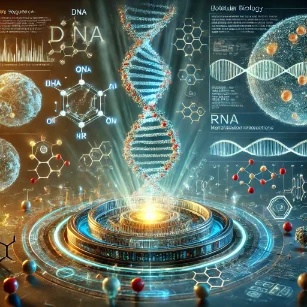
Molecular Genetics – Overview
Positions inheritance as the foundational biological mechanism that preserves and transmits genetic information across generations.
Inheritance Dynamics (Current Page)
Describes how genetic information encoded in DNA is faithfully passed from parent to offspring through molecular and cellular mechanisms.
DNA & RNA Structure
Provides the double-stranded template and RNA intermediates required to carry hereditary instructions through cell division.
Gene Expression Control
Determines how inherited alleles are functionally expressed across different tissue types and fluctuating environmental conditions.
Protein Synthesis Pathways
Translates inherited triplet codon sequences into functional structural and enzymatic proteins that dictate phenotypes.
Genetic Mutation Mechanics
Introduces sequence variations into inherited DNA, driving natural diversity, novel traits, or genetic pathologies.
Molecular Evolution Dynamics
Reflects long-term lineage transmission patterns reshaped over time by selection pressures, mutation rates, and genetic drift.
DNA Technology & Analysis
Analyzes hereditary patterns, pedigree maps, and linkage groups using high-precision molecular tools and genome sequencing.
Essential Molecular Techniques
Employs laboratory methodologies such as PCR and gel electrophoresis to isolate and analyze inherited alleles.
Medical Genetics Applications
Translates inheritance principles into clinical diagnostic screening, genetic counseling, and targeted gene therapies.
Mendelian Genetics at the Molecular Level
Mendelian genetics, which explains the inheritance of traits via dominant and recessive alleles, finds its molecular foundation in DNA and gene expression.
Genes and Alleles
Genes are specific sequences of DNA that code for functional proteins or functional RNA molecules. Alleles are different versions of a gene that arise due to sequence mutations in DNA. Dominant alleles typically produce fully functional proteins, whereas recessive alleles often result from loss-of-function mutations.
Molecular Explanation of Mendel’s Laws
Law of Segregation: During meiosis, homologous chromosomes separate, ensuring that each gamete receives only one allele of a gene. At the molecular level, this is achieved through the physical segregation of DNA molecules during anaphase I of meiosis.
Law of Independent Assortment: Different genes located on separate non-homologous chromosomes assort independently during gamete formation. Molecularly, this occurs due to the random alignment of maternal and paternal homologous chromosome pairs along the metaphase plate during metaphase I.
Molecular Example: In Mendel’s pea plant experiments, seed color is governed by a single locus. The dominant yellow seed allele encodes a functional enzyme active in pigment biosynthesis, whereas the recessive green seed allele contains a loss-of-function mutation that yields an inactive enzyme.
Linkage and Mapping of Genes on Chromosomes
Genes are located at physical positions (loci) on chromosomes, and their relative proximity influences inheritance patterns.
Genetic Linkage
Genes located close to each other on the same physical chromosome are syntenic and tend to be inherited together because they are less likely to be separated by recombination during meiotic crossing over. Linked genes deviate significantly from Mendel’s Law of Independent Assortment.
Recombination and Crossing Over
During prophase I of meiosis, non-sister chromatids of homologous chromosomes exchange reciprocal DNA segments in a process termed crossing over. The observed recombination frequency between two linked loci directly reflects their physical distance on the chromosome.
Genetic Mapping
By measuring recombination frequencies from test crosses, geneticists construct linear chromosome maps. Map distance is expressed in centimorgans (cM), where 1 cM represents a 1% recombination frequency. For instance, early linkage mapping in Drosophila melanogaster established relative chromosomal locations for genes governing eye color and wing morphology.
Role of Non-Coding DNA and RNA in Inheritance
While only approximately 1–2% of the human genome encodes polypeptide sequences, the remaining 98–99% consists of non-coding DNA. Non-coding DNA elements and functional non-coding RNAs play vital roles in regulating gene expression, maintaining chromatin architecture, and modulating inheritance mechanisms.
Non-Coding DNA Functions
Regulatory Sequences: Non-coding regions harbor promoters, enhancers, silencers, and insulators that govern the spatial, temporal, and quantitative expression of genes. Enhancers, for instance, recruit activator proteins and loop over long genomic distances to stimulate promoter activity.
Introns: Non-coding intervening sequences within pre-mRNA are excised during nuclear RNA splicing. Introns frequently house internal regulatory motifs, alternative promoters, and miRNA sequences.
Repetitive DNA: Tandem repeats (such as short tandem repeats, or STRs) and transposable elements contribute to structural genome evolution. Specialized repetitive DNA at chromosome ends, known as telomeres, caps and protects genomic DNA from end-degradation during replication cycles.
Non-Coding RNA (ncRNA)
Non-coding RNAs are functional RNA molecules transcribed from DNA that do not translate into proteins, serving essential regulatory roles:
MicroRNA (miRNA): Short single-stranded RNAs (≈22 nucleotides) that target complementary 3′ UTRs of mRNAs to inhibit translation or promote transcript degradation, serving critical roles in developmental timing and oncogenesis.
Long Non-Coding RNA (lncRNA): Transcripts greater than 200 nucleotides that modulate chromatin architecture, recruit histone-modifying complexes, and direct transcriptional silencing. A classic example is XIST, which coats and epigenetically silences one X chromosome in female mammals during dosage compensation.
Small Interfering RNA (siRNA): Double-stranded RNA intermediates that direct the RNA interference (RNAi) pathway to degrade target mRNA transcripts and defend against viral integration.
About This Interactive Simulator:
This interactive recombination frequency and genetic linkage simulator models how physical locus separation distance along a chromosome dictates meiotic crossing-over probability, parental allele retention, and recombinant offspring yield during a two-point test cross.
- Map Distance Slider (cM): Adjusts the physical distance between Gene A and Gene B (0 cM to 50 cM).
- Sample Size Slider: Controls the total simulated test-cross offspring population (100 to 2,000 progeny).
- Solid Blue Line: Displays the proportion of parental non-recombinant phenotypes observed in progeny.
- Dashed Red Line: Displays the proportion of recombinant phenotypes generated via meiotic crossing over.
Genetic Linkage & Recombination Frequency Simulator
Applications of Molecular Inheritance Principles
Translating inheritance mechanisms to molecular frameworks provides pivotal tools for clinical genetics, agricultural breeding, and evolutionary biology.
Explaining Genetic Continuity
The molecular basis of inheritance explains how double-stranded DNA transmits structural information across cell divisions and biological generations. Students learn how genes replicate semi-conservatively and how parental traits are passed to offspring. This provides a mechanistic understanding that extends classical Mendelian observations into molecular biology.
Mechanisms of DNA Replication
DNA replication ensures exact copy transmission of genetic material during cell division. Students explore the replisome complex, including DNA helicase, single-stranded binding proteins, primase, DNA polymerase δ/ε, and DNA ligase. Replication errors and uncorrected proofreading failures can directly induce somatic or germline mutations.
Chromosomal Basis of Inheritance
Genes reside at specific physical chromosomal loci that segregate and assort during meiotic divisions and fertilization. Students analyze how crossing over during prophase I and independent assortment during metaphase I generate genetic variation. This connects cytogenetic chromosome dynamics to molecular inheritance patterns.
Genetic Linkage and Mapping
Students investigate how syntenic genes physically close on the same chromosome are co-inherited and construct linkage maps based on recombination frequencies. Mapping helps locate loci associated with monogenic diseases and complex quantitative traits. These principles underpin genome-wide association studies (GWAS) and clinical risk prediction.
Integration with Molecular Tools
Studying inheritance utilizes molecular tools including restriction digestion, gel electrophoresis, PCR amplification, and next-generation sequencing. These methodologies allow researchers to directly visualize genetic variation, verify pedigrees, and identify disease alleles. Mastering these tools prepares students for advanced careers in biotechnology and genomic medicine.
Emerging Trends, Challenges & Future Directions
Modern inheritance studies are expanding through long-read single-molecule sequencing, spatial transcriptomics, and transgenerational epigenetics. Long-read platforms resolve complex structural variations, telomeric repeat expansions, and phased haplotype blocks that traditional short-read sequencing missed.
Concurrently, research into non-Mendelian transgenerational epigenetic inheritance investigates how maternal and paternal environmental factors (e.g., metabolic stress or toxin exposure) alter small RNA sperm cargo or germline DNA methylation states, subtly modifying offspring gene expression across generations. Major ongoing challenges include unraveling polygenic risk scores across diverse ancestral populations, interpreting non-coding variants of uncertain significance (VUS) in clinical settings, and distinguishing direct genetic inheritance from complex gene-environment interactions.
Frequently Asked Questions about Inheritance in Molecular Genetics
What does inheritance mean in molecular genetics?
In molecular genetics, inheritance refers to the process by which nuclear and organellar DNA sequences are transmitted from parents to offspring, directing the synthesis of functional proteins and functional non-coding RNAs that dictate phenotypic traits across generations.
How are chromosomes and genes related to inheritance?
Genes are functional nucleotide sequences located at specific loci along linear double-stranded DNA molecules. These DNA molecules are packaged with histones into physical structures called chromosomes, which undergo meiotic segregation and fertilization to pass one set of parental chromosomes to offspring.
What is the difference between autosomal and sex-linked inheritance?
Autosomal inheritance involves genes located on non-sex chromosomes (autosomes), affecting males and females in equal proportions. Sex-linked inheritance involves loci residing on sex chromosomes (primarily the X chromosome), displaying distinct phenotypic ratios and carrier states between sexes.
How do dominant and recessive alleles affect patterns of inheritance?
Dominant alleles express their phenotype in both homozygous and heterozygous states (often encoding functional enzymes or structural units), whereas recessive alleles express their phenotype only in the homozygous state (often representing loss-of-function variants).
What are non-Mendelian patterns of inheritance?
Non-Mendelian patterns include incomplete dominance, codominance, multiple alleles, epistasis, polygenic inheritance, mitochondrial maternal inheritance, and genomic imprinting, where phenotypic ratios deviate from classical Mendelian ratios.
How does recombination contribute to genetic inheritance?
Recombination (crossing over) during prophase I of meiosis physically exchanges DNA segments between non-sister homologous chromatids, shuffling linked alleles and generating novel combinations of parental traits in gametes.
What role does inheritance play in genetic disorders?
Inheritance governs how pathogenic alleles are transmitted through families following autosomal dominant, autosomal recessive, X-linked, or mitochondrial transmission patterns, enabling clinical risk prediction and pedigree evaluation.
Why is understanding inheritance important for future studies and careers?
Mastering inheritance mechanics provides the necessary foundation for advanced studies in genomics, cell biology, and biotechnology, supporting professional careers in clinical genetic counseling, molecular medicine, and agricultural breeding.
Interactive Review Questions (Interactive Collapsibles)
Click on each review topic below to expand detailed breakdowns of Mendelian segregation, non-Mendelian modifications, and molecular pedigree analysis.
1. Mendel's Laws and Molecular Chromosome Segregation
Mendel's Law of Segregation states that allele pairs separate during gamete formation, represented molecularly by homologous chromosome disjunction in meiosis I. The Law of Independent Assortment applies to unlinked loci on non-homologous chromosomes, driven by random metaphase I alignment. Dihybrid test crosses involving unlinked loci yield classic 9:3:3:1 phenotypic ratios.
2. Non-Mendelian Inheritance: Codominance, Epistasis, and Polygenic Traits
Incomplete dominance yields intermediate blended phenotypes in heterozygotes (e.g., pink snapdragons). Codominance displays both parental alleles distinctly (e.g., ABO blood type AB). Epistasis involves gene interaction where an allele at one locus masks expression at another (e.g., Labrador retriever coat color ee epistatic masking). Polygenic inheritance involves multiple additive genes driving continuous quantitative variation (e.g., human height).
3. Sex-Linked vs. Autosomal Inheritance and Pedigree Mapping
Autosomal dominant traits appear vertically in every generation with equal sex incidence. Autosomal recessive traits often skip generations, requiring carrier parents. X-linked recessive traits affect males disproportionately due to hemizygosity (e.g., hemophilia A), whereas mitochondrial traits are inherited exclusively through maternal lineage egg cytoplasm.
Practice & Assessment Module: Molecular Basis of Inheritance
Foundational Concept Review
What are Mendel’s Laws of Inheritance, and how do they explain the transmission of traits from parents to offspring?
Answer: Mendel’s Law of Segregation states that allele pairs separate during gamete formation so that each gamete carries one allele. The Law of Independent Assortment states that alleles of unlinked genes segregate independently during meiosis. At the molecular level, segregation is driven by homologous chromosome disjunction in meiosis I, and independent assortment is driven by random metaphase I alignment.How does a dihybrid cross differ from a monohybrid cross, and what phenotypic ratio is typically expected from a dihybrid cross following independent assortment?
Answer: A monohybrid cross tracks a single gene locus (yielding a 3:1 phenotypic ratio in heterozygous crosses). A dihybrid cross tracks two unlinked gene loci simultaneously. Following independent assortment, a dihybrid cross between double heterozygotes (e.g., RrYy × RrYy) yields a classic 9:3:3:1 phenotypic ratio.What are sex-linked traits, and how do they differ from autosomal traits in terms of inheritance patterns? Provide an example of a sex-linked trait.
Answer: Sex-linked traits are governed by genes residing on sex chromosomes (primarily the X chromosome). They differ from autosomal traits because males (XY) are hemizygous and express X-linked recessive traits when receiving a single mutant allele, whereas females (XX) require two mutant alleles to express the trait. Hemophilia A is a classic X-linked recessive disorder.How can pedigree analysis be used to determine the mode of inheritance of a particular trait, and what key patterns would indicate autosomal dominant versus autosomal recessive inheritance?
Answer: Pedigree mapping traces traits across generations. Autosomal dominant traits show vertical transmission (appearing in every generation without skipping), affect both sexes equally, and require an affected parent. Autosomal recessive traits show horizontal transmission (often skipping generations), affect both sexes equally, and typically arise from unaffected carrier parents.What is incomplete dominance, and how does it differ from codominance? Provide an example of each type of inheritance.
Answer: Incomplete dominance produces an intermediate blended phenotype in heterozygotes (e.g., red RR and white rr snapdragons yielding pink Rr offspring). Codominance results in simultaneous expression of both parental alleles without blending (e.g., ABO blood group IAIB expressing both A and B surface antigens).What is genetic linkage, and how does it affect the expected ratios of traits inherited together? How can geneticists determine the degree of linkage between two genes?
Answer: Genetic linkage occurs when loci physically co-localize on the same chromosome, co-inheriting more frequently and violating independent assortment. Linkage skews progeny ratios toward parental combinations. Geneticists measure linkage by calculating recombination frequency from test crosses, where 1% recombination equals 1 centiMorgan (cM) map distance.What is epistasis, and how does it differ from gene linkage? Provide an example of an epistatic interaction.
Answer: Epistasis is a functional gene interaction where an allele at one locus masks or modifies phenotypic expression at a second distinct locus. Gene linkage refers to physical co-localization on a single chromosome. In Labrador retrievers, the recessive ee genotype is epistatic to the B/b locus, producing yellow coats regardless of black or brown alleles.How does polygenic inheritance differ from Mendelian inheritance, and what characteristics of traits typically follow polygenic patterns? Provide an example of a polygenic trait.
Answer: Polygenic inheritance involves multiple additive gene loci governing a single phenotypic trait, producing continuous quantitative variation (bell-shaped population distribution) strongly influenced by environment. Mendelian traits involve single loci with discrete phenotypic classes. Human height and skin pigmentation are polygenic traits.What is a pedigree, and how can it be used to identify carriers of a recessive genetic disorder within a family? Provide a simple example.
Answer: A pedigree is a formal family tree mapping phenotypes across generations. Unaffected parents of an affected autosomal recessive offspring (aa) can be identified as obligate heterozygous carriers (Aa). For example, if two unaffected parents produce a child with cystic fibrosis (aa), both parents are confirmed carriers.What is pleiotropy, and how can it complicate the analysis of genetic traits? Provide an example of a pleiotropic gene.
Answer: Pleiotropy occurs when a single gene locus influences multiple, seemingly unrelated phenotypic systems. It complicates genetic analysis because a single mutation produces complex multisystemic pathology. Marfan syndrome is caused by a mutation in the FBN1 gene (fibrillin-1), affecting skeletal, ocular, and cardiovascular systems.
Analytical & Scenario-Based Problems
What is non-Mendelian inheritance, and what are some examples of non-Mendelian inheritance patterns?
Answer: Non-Mendelian inheritance encompasses genetic transmission modes that deviate from simple single-locus dominant/recessive ratios. Examples include incomplete dominance, codominance, multiple alleles, epistasis, polygenic continuous traits, mitochondrial maternal inheritance, and parent-of-origin genomic imprinting.How does genomic imprinting affect gene expression, and what are some diseases associated with imprinting errors?
Answer: Genomic imprinting causes monoallelic gene expression dictated by parent-of-origin, driven by DNA methylation during gametogenesis. Deletion or silencing of the paternal 15q11-q13 region causes Prader-Willi syndrome, whereas deletion or silencing of the maternal 15q11-q13 region causes Angelman syndrome.How do Punnett squares aid in predicting the probability of offspring inheriting specific traits, and what are their limitations?
Answer: Punnett squares visually map gametic combinations to calculate genotype and phenotype probabilities. Limitations include inefficiency with polygenic traits, inability to model tight linkage without recombination adjustments, and lack of accounting for epigenetic or environmental modifications.What are multiple alleles and how do they contribute to genetic diversity? Provide examples of traits controlled by multiple alleles.
Answer: Multiple alleles exist when a population harbors three or more alternative sequence variants at a single gene locus (though individuals carry only two). This expands phenotypic diversity. Examples include human ABO blood groups (IA, IB, i alleles) and Drosophila eye color locus variants.What are mitochondrial and cytoplasmic inheritance, and how do they differ from nuclear inheritance in terms of genetic transmission?
Answer: Mitochondrial inheritance involves circular mtDNA located in mitochondria transmitted exclusively through maternal egg cytoplasm. Nuclear inheritance involves biparental linear chromosomes. Mitochondrial diseases (e.g., LHON) affect both male and female offspring but are transmitted exclusively by mothers.How does mitochondrial inheritance affect the expression of mitochondrial diseases, and why are these diseases exclusively passed from mothers to their offspring?
Answer: Mitochondria are passed exclusively through the oocyte during fertilization, as sperm mitochondria are degraded. Phenotypic expression depends on heteroplasmy (ratio of mutant to wild-type mtDNA copies per cell) and threshold effects in high-energy tissues like brain and muscle.How does gene linkage violate Mendel’s Law of Independent Assortment, and what are the consequences for genetic inheritance?
Answer: Gene linkage violates independent assortment because loci on the same chromosome travel together into gametes unless separated by crossing over. This generates excess parental phenotypes and reduced recombinant phenotypes compared to the expected 1:1:1:1 test-cross ratio.How do sex-linked traits differ from autosomal traits, and what implications do they have for inheritance patterns in males and females?
Answer: Sex-linked traits reside on sex chromosomes. X-linked recessive traits show higher incidence in hemizygous males (XY) who inherit a single mutant allele from carrier mothers, whereas females (XX) require two mutant alleles to exhibit the trait.What is the relationship between recombination frequency and physical chromosomal distance?
Answer: Recombination frequency is directly proportional to physical distance between loci at small distances. One centiMorgan (cM) equals 1% recombination frequency. As physical distance increases beyond 50 cM, independent assortment masks linkage.Why does non-coding DNA play a major role in complex inheritance patterns?
Answer: Non-coding DNA houses cis-regulatory elements (promoters, enhancers) and non-coding RNA genes (miRNA, lncRNA). Mutations in these regulatory regions alter gene expression levels, driving complex quantitative trait variation without modifying protein primary structure.How does dosage compensation operate in mammalian females to equalize X-linked gene expression?
Answer: Mammalian female dosage compensation occurs via random X-chromosome inactivation during early embryogenesis. The lncRNA XIST coats one X chromosome, recruiting heterochromatin-modifying complexes to condense it into a transcriptionally silent Barr body.What is the difference between penetrance and expressivity in human genetics?
Answer: Penetrance is the proportion of individuals carrying a specific genotype who express the corresponding phenotype. Expressivity refers to the degree or severity of phenotypic expression among individuals displaying the trait.
Quantitative & Mathematical Problems
In a test cross between a double heterozygous fruit fly (AaBb) and a double homozygous recessive fly (aabb), 1,000 total progeny are scored: 425 AaBb, 415 aabb, 80 Aabb, and 80 aaBb. Calculate the recombination frequency and the map distance between Gene A and Gene B in centimorgans (cM).
Solution:
Parental progeny = 425 (AaBb) + 415 (aabb) = 840.
Recombinant progeny = 80 (Aabb) + 80 (aaBb) = 160.
Total progeny = 1,000.
Recombination Frequency (RF) = (160 / 1,000) × 100% = 16%.
Map Distance = 16 cM (or 16 map units).A dihybrid cross between two pea plants heterozygous for seed shape (R/r) and seed color (Y/y) produces 800 total F2 offspring. Assuming unlinked genes and complete dominance, calculate the expected number of plants exhibiting round green seeds.
Solution:
In a classic 9:3:3:1 dihybrid cross, the proportion for dominant-recessive phenotype (Round Green, R-yy) is 3/16.
Expected Count = (3 / 16) × 800
Expected Count = 3 × 50 = 150 plants.Two linked loci, X and Y, are separated by a map distance of 12 cM. If a test cross (XY/xy × xy/xy) generates 500 progeny, how many recombinant offspring are expected?
Solution:
Recombination Frequency = 12 cM = 12% = 0.12.
Total Progeny = 500.
Expected Recombinants = 500 × 0.12 = 60 recombinant progeny.In a self-cross of a snapdragon plant with pink flowers (Rr exhibiting incomplete dominance), 400 seeds are collected and germinated. Calculate the expected number of red (RR), pink (Rr), and white (rr) offspring.
Solution:
Monohybrid cross genotypic ratio for Rr × Rr is 1 RR : 2 Rr : 1 rr.
Expected Red (RR) = (1/4) × 400 = 100 plants.
Expected Pink (Rr) = (2/4) × 400 = 200 plants.
Expected White (rr) = (1/4) × 400 = 100 plants.A man with blood type AB (IAIB) marries a woman with blood type O (ii). Calculate the theoretical percentage chance that their child will have blood type A, blood type B, blood type AB, or blood type O.
Solution:
Cross: IAIB × ii.
Gametes from father: IA, IB. Gametes from mother: i.
Possible genotypes of offspring: 50% IAi (Type A) and 50% IBi (Type B).
Blood Type A: 50% chance.
Blood Type B: 50% chance.
Blood Type AB: 0% chance.
Blood Type O: 0% chance.In Labrador retrievers, coat color exhibits recessive epistasis (9 black : 3 brown : 4 yellow). If 320 puppies are born from matings between double heterozygous parents (BbEe × BbEe), calculate the expected number of yellow puppies.
Solution:
Proportion of yellow puppies (ee genotype) = 4/16 (or 1/4).
Expected Yellow Puppies = (1 / 4) × 320
Expected Yellow Puppies = 80 puppies.An X-linked recessive gene causes red-green color blindness. A carrier female (XCXc) and an unaffected male (XCY) have children. Calculate the probability that a male child (son) will be colorblind.
Solution:
Cross: XCXc × XCY.
Gametes for sons receive Y from father and either XC or Xc from mother.
Son genotypes: 50% XCY (unaffected) and 50% XcY (colorblind).
Probability among male children = 50% chance (or 0.5).Three loci (A, B, and C) reside on the same chromosome in the order A - B - C. The map distance between A and B is 10 cM, and between B and C is 15 cM. Calculate the expected frequency of double crossover recombinants assuming no chromosomal interference.
Solution:
Recombination Frequency (A-B) = 10% = 0.10.
Recombination Frequency (B-C) = 15% = 0.15.
Expected Double Crossover Frequency = RF(A-B) × RF(B-C)
Expected Double Crossovers = 0.10 × 0.15 = 0.015 or 1.5%.