
Evolutionary biology is the foundational discipline that explores how life has diversified and adapted through time. It builds on principles from science and draws extensively from biology to understand the origin and transformation of species. By tracing genetic, molecular, and ecological changes across generations, evolutionary biology offers a comprehensive view of life’s dynamic history. Insights from ecology help contextualize how environmental pressures influence evolutionary outcomes, while studies in cell biology provide a microscopic view of the structures and processes that undergo evolutionary modifications.
Evolutionary patterns become clearer through examining the roles of cell communication, cell cycles, and cell development, all of which contribute to organismal variation and heredity. Internal regulatory processes explored in cell physiology and the anatomical framework described in cell structure also reveal important evolutionary adaptations.
A core component of evolutionary biology is genetics, which investigates how traits are inherited and modified. This includes classical studies in Mendelian genetics and modern fields such as genomics. The mechanisms behind inheritance are unraveled through molecular genetics, where the roles of DNA and RNA, DNA technology, and gene expression are closely examined.
Variation within populations, driven by genetic mutation, sets the stage for natural selection. Understanding the molecular basis of inheritance clarifies how such variations are passed on, while molecular evolution provides a timeline for these genetic changes. The use of molecular techniques in research continues to enhance our understanding of evolutionary processes by enabling precise comparisons across species and time.
The production of proteins, critical to phenotypic traits, is detailed in protein synthesis studies. How these proteins affect traits within populations is further explored in population genetics and modeled through quantitative genetics. Real-world implications of evolutionary insights are evident in applications of genetics in medicines, which use evolutionary principles to predict disease resistance and inform personalized treatment plans.
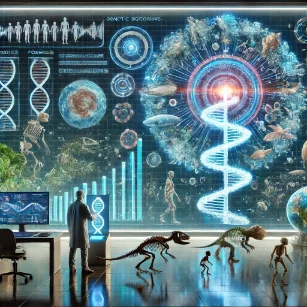
Biology – Overview
Serves as the foundational umbrella domain, synthesizing cellular, physiological, and genetic principles to explain the broader mechanisms governing living organisms.
Ecology
Examines ecosystem dynamics and environmental selective pressures that directly dictate evolutionary trajectories and adaptive fitness within populations.
Evolutionary Biology (Current Focus)
Investigates how populations diversify and adapt across generations through natural selection, genetic drift, gene flow, and mutation.
Genetics
Provides the mechanical substrate of inheritance, detailing how gene transmission, mutation, and molecular variation feed into microevolutionary change.
Cell Biology
Explores the microscopic structures, division cycles, and signaling pathways that undergo molecular modifications throughout evolutionary timelines.
Physiology
Analyzes systemic organ functions and regulatory adaptations that emerge as functional responses to specific ecological and survival challenges.
Kinesiology
Applies biomechanical and physiological evolutionary insights to understand human movement, biomechanical efficiency, and physical performance.
Key Objectives of Evolutionary Biology
- Understanding the Mechanisms of Evolutionary Change: Investigating the processes of mutation, natural selection, genetic drift, and gene flow that drive evolution at the genetic and phenotypic levels.
- Tracing the History of Life: Reconstructing the evolutionary relationships among species and identifying common ancestors through the study of fossils, comparative anatomy, and molecular data.
- Exploring Adaptation: Examining how organisms evolve traits that enhance survival and reproduction in their specific environments.
- Explaining Biodiversity: Understanding how speciation and extinction shape the diversity of life over time.
- Connecting Microevolution and Macroevolution: Studying how small-scale genetic changes within populations (microevolution) contribute to large-scale evolutionary patterns, such as the emergence of new taxa (macroevolution).
Foundations of Evolutionary Biology
- Darwin’s Theory of Evolution by Natural Selection: In 1859, Charles Darwin’s On the Origin of Species laid the foundation for understanding evolution. Darwin proposed that:
- Species evolve through gradual change over time.
- Natural selection acts on heritable variations, favoring traits that improve survival and reproduction.
- Mendelian Genetics and the Modern Synthesis: In the early 20th century, the integration of Darwinian evolution with Mendelian genetics formed the Modern Synthesis. This framework explained how genetic inheritance and variation underlie evolutionary change.
- Molecular Evolution: The discovery of DNA as the molecule of inheritance in the mid-20th century allowed evolutionary biologists to study genetic changes at the molecular level, providing deeper insights into evolutionary mechanisms.
- Neutral Theory and Genetic Drift: Motoo Kimura’s neutral theory of molecular evolution (1968) highlighted the role of random genetic changes (neutral mutations) and genetic drift in shaping genetic diversity.
Mechanisms of Evolution
- Natural Selection: The process by which certain traits become more common in a population because they confer advantages in survival or reproduction.
- Mutation: Random changes in DNA sequences introduce new genetic variation, providing the raw material for evolution.
- Genetic Drift: Random fluctuations in allele frequencies, especially in small populations, can lead to evolutionary change.
- Gene Flow: The movement of genes between populations through migration promotes genetic diversity and prevents populations from becoming genetically isolated.
- Speciation: The formation of new species occurs when populations become reproductively isolated and accumulate distinct genetic variations over time.
Major Themes in Evolutionary Biology
-
Adaptation and Natural Selection:
- Adaptive traits improve an organism’s fitness in its environment.
- Examples include the beak shapes of Darwin’s finches and the camouflage of peppered moths during the Industrial Revolution.
-
Evolutionary Developmental Biology (Evo-Devo):
- Examines how changes in developmental genes and pathways drive evolutionary changes in body plans and structures.
- For example, changes in Hox genes are linked to the diversification of animal forms.
-
Molecular Evolution:
- Studies changes at the DNA, RNA, and protein levels to understand evolutionary relationships and functional adaptations.
- Examples include the evolution of antibiotic resistance and the origins of genetic novelty.
-
Phylogenetics and Systematics:
- Reconstructing the evolutionary tree of life to map relationships among species.
- Molecular phylogenetics uses DNA and protein sequences to infer evolutionary histories.
-
Coevolution:
- Examines reciprocal evolutionary influences between interacting species, such as predator-prey dynamics, host-parasite relationships, and mutualism (e.g., flowers and pollinators).
-
Human Evolution:
- Investigates the origins of modern humans, including the evolution of bipedalism, brain size, and culture.
- Explores genetic evidence from ancient DNA and fossils.
-
Extinction and Mass Extinctions:
- Studies the causes and consequences of species extinction, including past mass extinction events like the one that wiped out the dinosaurs.
Why Study Evolutionary Biology
Explaining the Diversity of Life: Evolutionary biology explores how species have changed over time through natural selection and genetic variation. It provides the framework for understanding biological diversity. This knowledge connects all branches of biology, from genetics to ecology, helping students appreciate the unity and complexity of life.
Foundations of Modern Biology: The theory of evolution underpins concepts in genetics, development, and behavior. It explains how traits are inherited and how populations adapt to environments. Students learn how evolutionary processes shape life on Earth, making it essential for any biological or biomedical education.
Insights into Human Origins: Evolutionary biology provides evidence for the origin and development of Homo sapiens. It helps students understand the biological and cultural factors that make us human. This knowledge is relevant in anthropology, medicine, and public health, promoting a deeper understanding of our place in the natural world.
Applications in Medicine and Biotechnology: Understanding evolution is crucial for addressing antibiotic resistance, vaccine development, and emerging diseases. It informs strategies to combat rapidly evolving pathogens, making evolutionary biology important for careers in medicine and global health while supporting advancements in genetic engineering and personalized medicine.
Research and Analytical Thinking: Evolutionary biology develops skills in critical thinking, hypothesis testing, and data analysis. Students engage with fossil records, molecular phylogenies, and population models. These skills are transferable to many scientific and analytical fields, empowering students to explore the patterns and processes of life scientifically.
About This Interactive Simulator:
This dynamic simulator models population allele frequency changes over time under the joint influence of Natural Selection, Genetic Drift, Mutation, and Gene Flow. It allows students to explore how population size and selective coefficients determine whether natural selection or genetic drift dominates the evolutionary trajectory of an allele.
- Solid Line (Allele A Frequency – p): Tracks the real-time frequency of allele A across generations (ranging from 0.0 to 1.0).
- Dashed Line (Hardy-Weinberg Expected Baseline): Illustrates the theoretical allele frequency baseline under zero evolutionary forces (p0).
- Interactive Controls: Adjust Population Size (N), Selection Coefficient (s), Mutation Rate (u), and Migration Rate (m) to observe stochastic versus deterministic evolutionary outcomes.
Population Genetics & Allele Frequency Simulator
Applications of Evolutionary Biology
-
Medicine:
- Understanding the evolution of pathogens informs strategies to combat antibiotic resistance and emerging diseases.
- Insights into human genetics and evolution aid in personalized medicine and understanding genetic disorders.
-
Agriculture:
- Evolutionary principles guide the development of pest-resistant crops and sustainable farming practices.
- Artificial selection in crop and livestock breeding mimics natural selection.
-
Conservation Biology:
- Evolutionary biology helps prioritize species for conservation based on genetic diversity and evolutionary potential.
- Understanding evolutionary processes aids in restoring ecosystems and managing invasive species.
-
Biotechnology:
- Directed evolution techniques optimize enzymes and other biomolecules for industrial and medical applications.
-
Climate Change and Adaptation:
- Studying evolutionary responses to changing environments helps predict the adaptability of species to climate change.
Emerging Trends, Challenges & Future Directions
Evolutionary biology is a vibrant and expanding field, continuously reshaped by new discoveries and technologies. Advancements in genomics, bioinformatics, and computational modeling have opened up new avenues for studying evolution on unprecedented scales. For example, ancient DNA research has transformed our understanding of human prehistory, while genome-wide association studies reveal the genetic basis of adaptation in diverse organisms.
As we face global challenges like biodiversity loss and climate change, evolutionary biology offers critical insights into how species adapt and ecosystems respond to environmental pressures. It remains central to our understanding of life’s past, present, and future, offering a unifying framework for all of biology.
Frequently Asked Questions
What is evolutionary biology?
Evolutionary biology is the branch of biology that studies how populations of living organisms change and diversify over time, examining processes such as natural selection, genetic drift, mutation, gene flow, and speciation that shape the diversity of life on Earth.
What are the main mechanisms of evolution studied in evolutionary biology?
The main mechanisms are natural selection, mutation, genetic drift, and gene flow. These mechanisms influence how genetic variation is passed on and how populations change over generations, leading to adaptation, divergence, or sometimes extinction.
What is natural selection and how does it work?
Natural selection is a process by which individuals with certain heritable traits that give them a survival or reproductive advantage tend to produce more offspring. Over time, those advantageous traits become more common in the population, driving evolutionary change.
What is speciation and why is it important in evolutionary biology?
Speciation is the process by which one ancestral population splits into two or more genetically distinct populations that can no longer interbreed. It is how new species arise and is central to explaining the diversity of life on Earth.
How does genetic variation arise within populations?
Genetic variation arises through mutation, recombination during sexual reproduction, and through the mixing of genes by gene flow between populations. This variation provides the raw material on which natural selection, drift, and other evolutionary forces act.
Why is evolutionary history and common ancestry important?
Studying evolutionary history helps scientists trace how present species descended from common ancestors, revealing relationships among organisms and explaining similarities and differences in their traits. This shared ancestry underlies much of biological classification, comparative biology, and the understanding of adaptation.
What is the role of evolutionary biology in understanding biodiversity and adaptation?
Evolutionary biology helps explain how diverse species adapt to different environments, how new species emerge, and why traits are distributed the way they are. It shows how interactions between genetic variation and environmental pressures produce the rich tapestry of life we observe today.
How does evolutionary biology connect to other biological fields and real-world issues?
Evolutionary biology connects with genetics, ecology, developmental biology, paleontology, and more. Its insights are important for fields like conservation biology, medicine (e.g. understanding disease evolution), agriculture (e.g. crop or pest adaptation), and understanding how organisms might respond to environmental change.
End-of-Page Practice Module
Section 1: Foundational Review Questions
-
Theory of Natural Selection Mechanisms:
Answer: Natural selection requires heritable variation, differential survival/reproduction, and fitness advantages. Over generations, beneficial traits increase in frequency within a population, driving adaptation to specific environmental pressures. -
Genetic Drift Dynamics:
Answer: Genetic drift operates via random sampling of alleles during reproduction. Its effects are most pronounced in small populations, where bottleneck or founder events can lead to the random fixation or total loss of alleles independent of their adaptive fitness. -
Modes of Speciation:
Answer: Speciation occurs via allopatric (geographic isolation), sympatric (ecological/behavioral isolation in the same area), peripatric (small isolated peripheral founder group), and parapatric (divergence across continuous geographic gradients) modes. -
Gene Flow Impacts:
Answer: Gene flow introduces new alleles into recipient populations, increasing local genetic variation while homogenizing differences between distant populations, which can counteract speciation unless adaptive selection is strong. -
Evidence from Homologous Structures:
Answer: Homologous structures, such as vertebrate forelimbs, share a common structural layout inherited from a shared ancestor, demonstrating evolutionary divergence into different functional adaptations (e.g., swimming, flying, walking). -
Vestigial Structures as Evolutionary Remnants:
Answer: Vestigial structures (such as whale pelvic bones or the human coccyx) are reduced anatomical features that have lost their primary ancestral function, illustrating structural modification over time. -
Antibiotic Resistance in Bacteria:
Answer: Bacteria acquire resistance via random mutations or horizontal gene transfer. Antibiotic exposure acts as a strong selective pressure, killing susceptible bacteria while allowing resistant strains to survive, multiply, and dominate the population.
Section 2: Analytical & Scenario-Based Questions
-
Scenario 1: Industrial Melanism Shift
Question: How does tree trunk darkening during industrial pollution illustrate directional selection?
Answer: Darkening trunks select against light moths due to avian predation. Dark moths gain a camouflage advantage, increasing their survival rate and causing allele frequencies for dark pigmentation to rise rapidly over successive generations.
-
Scenario 2: Island Founder Event
Question: Why do island populations established by a few seed-carrying birds exhibit reduced genetic diversity compared to mainland populations?
Answer: The small founder population carries only a fraction of the original gene pool's alleles. Subsequent genetic drift in isolation further accelerates allele fixation, reducing overall heterozygosity and genetic diversity.
-
Scenario 3: Sexual Selection vs. Natural Selection Constraints
Question: Why do peacocks maintain elaborate, heavy tails despite the increased risk of predation?
Answer: Sexual selection via female mate choice favors exaggerated tail displays. The reproductive advantage of securing mates outweighs the increased survival handicap, establishing an evolutionary equilibrium between sexual and natural selection.
-
Scenario 4: Sympatric Host-Shift Speciation
Question: How can flies feeding on two different fruit types in the same orchard diverge into distinct species without geographic barriers?
Answer: Differences in fruit ripening times create temporal and behavioral reproductive isolation. Flies mate exclusively on their preferred host plant, restricting gene flow and leading to sympatric divergence.
-
Scenario 5: Convergent Evolution Analysis
Question: Why are the streamlined body forms of sharks (fish) and dolphins (mammals) considered analogous rather than homologous?
Answer: Sharks and dolphins evolved streamlined shapes independently in response to identical hydrodynamic selective pressures of aquatic locomotion, rather than inheriting the trait from a common streamlined ancestor.
-
Scenario 6: Neutral Theory in Molecular Clocks
Question: How do neutral mutations allow scientists to estimate the divergence time between two species?
Answer: Neutral mutations accumulate in non-coding DNA at a relatively constant rate driven by genetic drift. By measuring sequence differences between species, researchers can calculate time elapsed since their last common ancestor.
-
Scenario 7: Conservation Bottlenecks
Question: Why are cheetahs vulnerable to emerging epidemic diseases despite having recovered to thousands of individuals?
Answer: Historical population bottlenecks dramatically reduced cheetah genetic diversity, resulting in nearly identical major histocompatibility complex (MHC) immune genes across individuals, leaving the population susceptible to single pathogens.
Section 3: Numerical Problems & Calculations
-
Hardy-Weinberg Equilibrium Calculation:
In a population of 1,000 beetles, 160 exhibit a recessive brown phenotype (q2). Calculate the frequency of the dominant allele (p) and the expected number of heterozygous individuals.
Answer: q2 = 160 / 1000 = 0.16 → q = √0.16 = 0.40.
p = 1 - q = 1 - 0.40 = 0.60.
Heterozygote frequency (2pq) = 2 × 0.60 × 0.40 = 0.48.
Expected heterozygous beetles = 0.48 × 1,000 = 480 individuals. -
Selection Coefficient & Fitness:
If genotype AA has a relative fitness (w) of 1.0 and genotype aa has a relative fitness of 0.85, calculate the selection coefficient (s) against the aa genotype.
Answer: Fitness relationship: w = 1 - s.
0.85 = 1 - s → s = 1 - 0.85 = 0.15 (15% selective disadvantage against aa). -
Mutation-Selection Balance:
Estimate the equilibrium frequency (q̂) of a lethal recessive allele with mutation rate u = 1 × 10⁻⁶ and selection coefficient s = 1.0.
Answer: Formula: q̂ = √(u / s).
q̂ = √((1 × 10⁻⁶) / 1.0) = √(10-6) = 0.001 (0.1% allele frequency). -
Fixation Probability of Neutral Allele:
In a diploid population of 250 individuals, a novel neutral mutation arises. What is the initial fixation probability of this new mutation?
Answer: Diploid gene pool size = 2N = 2 × 250 = 500 alleles.
Fixation probability for a neutral allele = 1 / (2N) = 1 / 500 = 0.002 (0.2%). -
Mean Population Fitness:
Given genotype frequencies f(AA) = 0.25, f(Aa) = 0.50, f(aa) = 0.25 and relative fitness values wAA = 1.0, wAa = 0.9, waa = 0.6, calculate the mean fitness (w̄) of the population.
Answer: w̄ = (0.25 × 1.0) + (0.50 × 0.9) + (0.25 × 0.6)
w̄ = 0.25 + 0.45 + 0.15 = 0.85. -
Genetic Drift Variance in Allele Frequency:
For a population size N = 50 with an initial allele frequency p = 0.5, calculate the variance in allele frequency (σ2) after one generation due to genetic drift.
Answer: Formula: σ2 = (p × q) / (2N).
q = 1 - 0.5 = 0.5; 2N = 100.
σ2 = (0.5 × 0.5) / 100 = 0.25 / 100 = 0.0025. -
Rate of Divergence via Molecular Clock:
Two species show a 4% sequence divergence across a locus with a known mutation rate of 1 × 10⁻⁸ substitutions per site per year. Calculate the time since their last common ancestor.
Answer: Divergence rate = 2 × u × t (accounting for two diverging lineages).
0.04 = 2 × (1 × 10-8) × t
0.04 = (2 × 10⁻⁸) × t
t = 0.04 / (2 × 10⁻⁸) = 2,000,000 years (2 million years).