
Physical chemistry is the branch of chemistry that blends the principles of physics and chemical systems to explain the fundamental mechanisms behind matter and energy. It provides the mathematical and theoretical framework to analyze chemical phenomena such as thermodynamics, kinetics, quantum chemistry, and molecular interactions. By integrating concepts from science, students gain a holistic view of how atomic and molecular systems behave under various physical conditions.
This field is crucial for understanding the dynamics of life at the molecular level. In biochemistry and biology, for instance, the rates of metabolic reactions, diffusion of ions across membranes, and energy transformations all depend on physical chemistry principles. Topics like energy and metabolism and homeostasis rely heavily on thermodynamic and equilibrium models, while signal propagation in neurons—explored in signal communication—involves electrochemical gradients and transport kinetics.
Beyond living systems, physical chemistry supports the advancement of technologies in industrial chemistry through the optimization of reaction conditions and catalyst design. Understanding chemical kinetics and thermodynamics also strengthens the design of efficient industrial processes and environmentally friendly alternatives. This has deep relevance to environmental chemistry and applications like emissions control and pollutant modeling.
IDEF0 System Framework: Physical Transformation & Energy Dynamics
The IDEF0 model below structures physical chemical phenomena into functional energy/matter inputs, governing thermodynamic controls, quantum/kinetic mechanisms, and resultant state outputs.
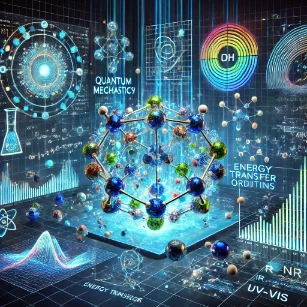
Explore the cluster links below to understand how physical chemistry integrates across the broader chemistry and physical sciences curriculum:
Chemistry – Overview
Frames physical chemistry as the foundation explaining how chemical systems behave through energy and motion.
Inorganic Chemistry
Uses physical principles to understand crystal field splitting, bonding, and reactivity of inorganic compounds.
Organic Chemistry
Applies reaction kinetics, transition state theory, and thermodynamics to carbon-based chemical systems.
Analytical Chemistry
Relies on physical chemistry principles in spectroscopy, chromatography, calorimetry, and electrochemical measurements.
Biochemistry
Explains biological metabolic reactions, enzyme kinetics, and protein folding through thermodynamic frameworks.
Environmental Chemistry
Uses physical chemistry to model atmospheric gas transport, radiative energy flow, and environmental pollution kinetics.
Industrial Chemistry
Optimises commercial chemical manufacturing using process reaction kinetics, heat transfer, and energy efficiency.
Core Principles: Thermodynamic Spontaneity & Arrhenius Kinetics
The thermodynamic feasibility and spontaneity of a chemical system at constant temperature and pressure are determined by the Gibbs Free Energy change (ΔG):
Gibbs Free Energy Equation:
ΔG = ΔH – T × ΔS
Where ΔH represents enthalpy change (kJ/mol), T is absolute temperature (Kelvin), and ΔS is entropy change (J/mol·K). A negative ΔG (ΔG < 0) indicates a thermodynamically spontaneous reaction. Complementarily, the temperature dependence of reaction rate constants k is quantified by the Arrhenius Equation:
Arrhenius Rate Law Equation:
k = A × e–Ea / (R × T)
Key Areas of Physical Chemistry
Physical chemistry is structured around five fundamental theoretical pillars:
-
Thermodynamics:
Examines relationships between heat, work, energy, and matter in chemical systems. Focuses on the Laws of Thermodynamics, Gibbs Free Energy (ΔG), and phase equilibrium diagrams. -
Quantum Chemistry:
Applies quantum mechanics to describe electron configurations, atomic orbitals, chemical bonding, and electromagnetic radiation absorption in spectroscopy. -
Chemical Kinetics:
Investigates the rates of chemical transformations, reaction mechanisms, activation energy barriers (Ea), and catalytic rate acceleration. -
Statistical Mechanics:
Connects microscopic quantum molecular motion to macroscopic thermodynamic properties using statistical probability distributions. -
Molecular Interactions & Surface Science:
Studies intermolecular forces (hydrogen bonding, van der Waals, dipole interactions), solution behavior, and interfacial surface catalysis.
Why Study Physical Chemistry
Linking Chemistry with Physics
Explain complex chemical transformations through physical laws, mathematical modeling, and rigorous thermodynamic principles.
Thermodynamics and Equilibrium
Master entropy, free energy changes, and chemical equilibrium to evaluate reaction spontaneity and energy efficiency.
Kinetics and Reaction Mechanisms
Analyze reaction rates, rate laws, transition states, and catalytic pathways to optimize industrial chemical reactors.
Quantum Chemistry & Computational Modeling
Apply quantum mechanics, molecular orbital theory, and computational simulations (DFT, MD) to predict material properties.
About This Interactive Simulator:
This interactive simulator models the temperature dependence of chemical reaction rate constants using the Arrhenius equation. Adjust activation energy (Ea) and temperature (K) to observe real-time rate constant k variation.
- Activation Energy (Ea): Controls the energy barrier height required for colliding molecules to undergo chemical reaction (kJ/mol).
- System Temperature (T): Modifies thermal kinetic energy of reactant particles in Kelvin (K).
Interactive Arrhenius Reaction Kinetics Simulator
Applications of Physical Chemistry in Science & Technology
Physical chemistry underpins transformative technologies across clean energy, pharmaceuticals, and environmental engineering:
In energy conversion and battery engineering, electrochemistry optimizes ion transport kinetics and electrode interface thermodynamics in lithium-ion and solid-state batteries. Photovoltaic solar cells and hydrogen fuel cells rely on precise semiconductor bandgap tuning and catalytic mechanism optimization.
In pharmaceutical engineering, physical chemistry models thermodynamic solubility, drug-receptor binding affinity, and dissolution rate kinetics, enabling structure-based drug discovery and stable drug formulation.
In materials science and nanotechnology, physical chemistry governs polymer rheology, semiconductor band structures, and surface catalysis at nanoscale interfaces using Scanning Tunneling Microscopy (STM) and Atomic Force Microscopy (AFM).
In environmental and climate science, physical principles model atmospheric gas absorption spectra, ocean carbon dioxide dissolution equilibria, and pollutant phase-transfer thermodynamics.
Interactive Concept Review
Click on each header below to expand detailed structural explanations and review foundational physical chemistry concepts:
How do thermodynamics and kinetics jointly determine reaction feasibility and rate?
What is the physical significance of entropy in spontaneous chemical processes?
How does Quantum Mechanics explain molecular bonding and spectroscopy?
Emerging Trends, Challenges & Future Directions
Physical chemistry is advancing rapidly through computational power and ultrafast experimental instrumentation:
- Computational Quantum Chemistry & DFT: Utilizing Density Functional Theory (DFT) and Molecular Dynamics (MD) simulations to predict chemical reaction pathways and design novel materials in silico.
- Femtosecond Ultrafast Laser Spectroscopy: Deploying time-resolved laser pulses to capture transient reaction transition states and photochemical electron transfer dynamics in real time.
- Single-Molecule Surface Catalysis: Utilizing Atomic Force Microscopy (AFM) to manipulate individual surface atoms and map catalytic reactions at liquid-solid interfaces.
- Clean Energy Electrochemical Storage: Engineering solid-state battery electrolytes and electro-catalysts for zero-emission green hydrogen production.
Glossary
Thermodynamics: The branch of physical science dealing with relations between heat, work, energy, and equilibrium in matter.
Chemical Kinetics: The study of reaction rates, factors affecting reaction speeds, and step-by-step reaction mechanisms.
Quantum Chemistry: The branch of chemistry applying quantum mechanics to atomic and molecular electronic structure.
Gibbs Free Energy: A thermodynamic state function (ΔG = ΔH - TΔS) measuring the maximum reversible work obtainable from a system at constant temperature and pressure.
Frequently Asked Questions
What is physical chemistry?
Physical chemistry is the branch of chemistry that blends physics and mathematics to explain the energy, structure, kinetics, and quantum mechanisms of matter.
How is physical chemistry different from other chemistry branches?
While organic and inorganic chemistry focus on specific substance classes, physical chemistry establishes universal quantitative mathematical models governing all chemical behavior.
What is the difference between thermodynamics and kinetics?
Thermodynamics answers whether a reaction can occur spontaneously at equilibrium, while kinetics answers how fast the reaction will proceed.
Summary
Physical chemistry provides the foundational mathematical and physical framework explaining how matter behaves, transforms, and interacts with energy. By combining thermodynamics, chemical kinetics, quantum mechanics, and statistical mechanics, physical chemists establish universal quantitative models that govern all chemical subdisciplines.
Serving as an interdisciplinary bridge between physics and chemistry, physical chemistry underpins modern technological innovation across renewable energy storage, pharmaceutical design, materials science, and environmental climate modeling. It equips scientists to manipulate molecular interactions with high precision.
As computational chemistry, ultrafast laser spectroscopy, and green energy technology continue to advance, physical chemistry remains central to solving global scientific challenges and driving future industrial innovation.
3-Part Practice Module & End-of-Page Exercises
Section 1: Foundational Concept Review Questions
-
What is physical chemistry and how does it differ from other branches of chemistry?
Answer: Physical chemistry studies the physical properties and quantitative principles of chemical systems. It differs by emphasizing mathematical models connecting energy, structure, and kinetics across all chemical disciplines. -
How does thermodynamics explain energy transformations in chemical reactions?
Answer: Thermodynamics analyzes enthalpy (ΔH), entropy (ΔS), and Gibbs free energy (ΔG) to predict reaction spontaneity and heat exchange at equilibrium. -
What is the significance of quantum mechanics in understanding atomic behavior?
Answer: Quantum mechanics models electron probability distributions, wavefunctions, and quantized molecular energy levels, explaining chemical bonding and spectroscopic properties. -
How do reaction kinetics help in understanding chemical reaction mechanisms?
Answer: Kinetics measures reaction velocity, rate laws, and activation energy barriers to elucidate step-by-step elementary reaction pathways and transition states. -
What role does spectroscopy play in analyzing chemical substances?
Answer: Spectroscopy measures electromagnetic radiation absorption/emission, providing detailed structural information regarding molecular vibrations, electronic transitions, and bonding. -
What is the importance of studying phase transitions in physical chemistry?
Answer: Phase transition analysis explains state changes under varying temperature/pressure, revealing intermolecular force strength and informing material design. -
How do intermolecular forces influence physical properties?
Answer: Hydrogen bonding, van der Waals forces, and dipole interactions govern macroscopic boiling points, viscosity, surface tension, and solubility.
Section 2: Analytical & Scenario-Based Thought Questions
-
How does the interplay between thermodynamics and kinetics determine reaction feasibility and rate?
Answer: Thermodynamics determines if a reaction is spontaneous at equilibrium (ΔG < 0), while kinetics determines the speed based on activation energy. A spontaneous reaction can proceed slowly if the activation barrier is high. -
In what ways can quantum mechanical principles be applied to predict chemical reactivity?
Answer: Molecular orbital theory calculates highest occupied (HOMO) and lowest unoccupied (LUMO) orbital energies to predict nucleophilic and electrophilic reaction sites. -
How do advances in ultrafast spectroscopy transform our understanding of chemical reactions?
Answer: Femtosecond laser spectroscopy captures short-lived transition states and bond-breaking events in real time, revealing exact photochemical mechanisms. -
How does entropy relate to the spontaneous behavior of isolated chemical systems?
Answer: Entropy measures energy dispersal; spontaneous processes in isolated systems increase total entropy (ΔS > 0) by evolving toward greater statistical disorder. -
What role does computational physical chemistry play in modern industrial research?
Answer: Density Functional Theory and Molecular Dynamics simulate reaction pathways, accelerating drug discovery, catalyst design, and battery electrolyte screening. -
In what ways do pressure and temperature influence reaction thermodynamics and kinetics?
Answer: Temperature increases molecular kinetic energy and reaction rates via the Arrhenius equation, while pressure shifts gaseous equilibrium positions per Le Chatelier's principle. -
How might future innovations in physical chemistry impact renewable energy technologies?
Answer: Optimizing electrochemistry and interfacial charge transfer will yield high-efficiency solid-state batteries, perovskite solar cells, and green hydrogen catalysts.
Section 3: Numerical Problems & Step-by-Step Calculations
-
Gibbs Free Energy Calculation: Calculate ΔG° for a reaction at 298 K with enthalpy change ΔH° = -92.2 kJ/mol and entropy change ΔS° = -198.7 J/(mol·K). Is the reaction spontaneous?
Solution: Step 1: Convert ΔS° to kJ/(mol·K): -198.7 / 1000 = -0.1987 kJ/(mol·K). Step 2: State Gibbs formula: ΔG° = ΔH° - T × ΔS°. Step 3: Substitute values: ΔG° = -92.2 - (298 × -0.1987) = -92.2 + 59.21 = -32.99 kJ/mol. Step 4: Since ΔG° < 0, the reaction is spontaneous at 298 K. -
Arrhenius Activation Energy Calculation: A reaction rate constant doubles from 0.02 s-1 at 300 K to 0.04 s-1 at 310 K. Calculate activation energy Ea (R = 8.314 J/mol·K).
Solution: Step 1: Use two-temperature Arrhenius equation: ln(k2 / k1) = (Ea / R) × (1/T1 - 1/T2). Step 2: Substitute values: ln(2) = (Ea / 8.314) × (1/300 - 1/310). Step 3: Calculate temperature difference factor: (310 - 300) / (300 × 310) = 10 / 93000 = 0.00010753 K-1. Step 4: Solve for Ea: 0.69315 = (Ea / 8.314) × 0.00010753 ⇒ Ea = (0.69315 × 8.314) / 0.00010753 = 53,589 J/mol = 53.59 kJ/mol. -
Thermodynamic Equilibrium Constant Relationship: Calculate equilibrium constant Keq at 298 K for a reaction with standard Gibbs free energy ΔG° = -11.4 kJ/mol.
Solution: Step 1: Convert ΔG° to J/mol: -11,400 J/mol. Step 2: Use thermodynamic relationship formula: ΔG° = -R × T × ln(Keq). Step 3: Solve for ln(Keq): ln(Keq) = -(-11,400) / (8.314 × 298) = 11,400 / 2477.57 = 4.601. Step 4: Exponentiate to find Keq: Keq = e4.601 ≈ 99.6. -
Photon Energy Calculation (Planck Relation): Calculate the energy of a photon emitted during a spectroscopic transition at frequency ν = 6.0 × 10¹⁴ Hz (Planck constant h = 6.626 × 10⁻³⁴ J·s).
Solution: Step 1: State Planck energy relation: E = h × ν. Step 2: Substitute values: E = (6.626 × 10⁻³⁴ J·s) × (6.0 × 10¹⁴ s-1). Step 3: Compute photon energy: E = 3.976 × 10⁻¹⁹ Joules. -
First-Order Integrated Rate Law: A reactant decays via first-order kinetics with k = 0.05 min-1. If initial concentration C0 = 1.0 M, calculate concentration after 20 minutes.
Solution: Step 1: State first-order rate law: Ct = C0 × e-kt. Step 2: Calculate exponent: -k × t = -0.05 × 20 = -1.0. Step 3: Evaluate decay factor: e-1.0 ≈ 0.3679. Step 4: Compute final concentration: C20 = 1.0 × 0.3679 = 0.368 M. -
Ideal Gas Equation State Calculation: Find the volume occupied by 3.0 moles of an ideal gas at 300 K under pressure P = 2.0 atm (R = 0.0821 L·atm/(mol·K)).
Solution: Step 1: State ideal gas equation: P × V = n × R × T. Step 2: Rearrange for Volume V: V = (n × R × T) / P. Step 3: Substitute values: V = (3.0 × 0.0821 × 300) / 2.0 = 73.89 / 2.0. Step 4: Compute volume: V = 36.95 Liters. -
Nernst Equation Cell Potential: Calculate cell potential E at 298 K for a reaction with standard potential E° = 1.10 V and reaction quotient Q = 0.10 (n = 2 electrons transferred).
Solution: Step 1: State Nernst equation at 298 K: E = E° - (0.0592 / n) × log10(Q). Step 2: Substitute values: E = 1.10 - (0.0592 / 2) × log10(0.10). Step 3: Evaluate logarithm: log10(0.10) = -1.0. Step 4: Compute final potential: E = 1.10 - (0.0296 × -1.0) = 1.10 + 0.0296 = 1.130 V.